Handstand Hold On Wall
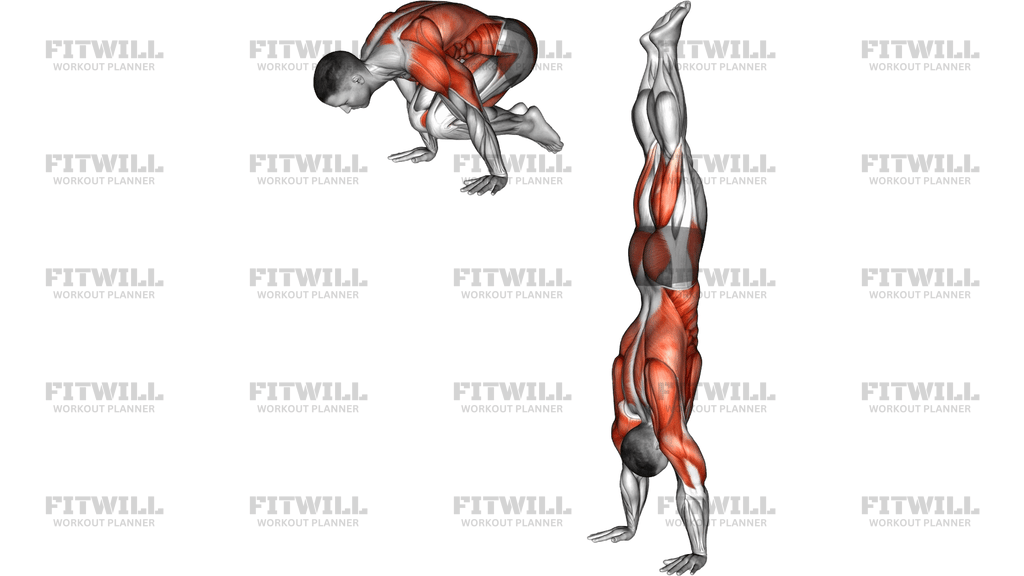
Handstand Hold On Wall is a wall-supported inversion hold that builds shoulder strength, scapular control, and whole-body tension using body weight. The exercise trains you to support yourself overhead with the wrists, shoulders, trunk, and hips stacked so the line from hands to feet stays steady instead of collapsing into the lower back or drifting away from the wall.
Because this is an isometric hold, the quality of the setup matters as much as the time spent upside down. The hands need to be planted firmly, the shoulders need to stay elevated, and the core has to stay braced so the body does not banana backward or kick away from the wall. A cleaner line usually means more useful shoulder loading and less dumping into the lumbar spine.
The wall gives you a reference point, but it should not become a crutch. Use it for balance and position, not for hanging passively. Press the floor away, keep the elbows straight, and make the upper back active so the shoulders feel lifted around the ears without shrugging forward. If the hold turns into a soft arch or a bent-arm stall, the set is too long or the setup is too wide.
This exercise is useful for gymnastic prep, calisthenics, overhead strength work, and shoulder stability training. It can also be a practical way to build confidence upside down before moving to freestanding handstands. Start with short holds you can keep neat, then add time only when the line, breathing, and wall contact stay controlled from start to finish.
Treat the hold like a full-body skill, not just a shoulder exercise. Wrists, shoulders, glutes, and core all need to stay organized at the same time. If you feel sharp wrist pain, shoulder pinching, or uncontrolled pressure in the neck, come down and adjust the hand spacing, wall distance, or total hold time before trying another rep.
Good progression usually comes from better position, not longer suffering. Once you can hold the shape cleanly, increase the challenge by extending the time a little, reducing how much you lean into the wall, or practicing tighter kick-ups and steadier exits. The goal is a repeatable inverted line that teaches the shoulders to support the body without losing control of the trunk or the neck.
[ Workout Log & Planner ]
Put your next workout in Fitwill
Keep your plan and training log ready when you are.


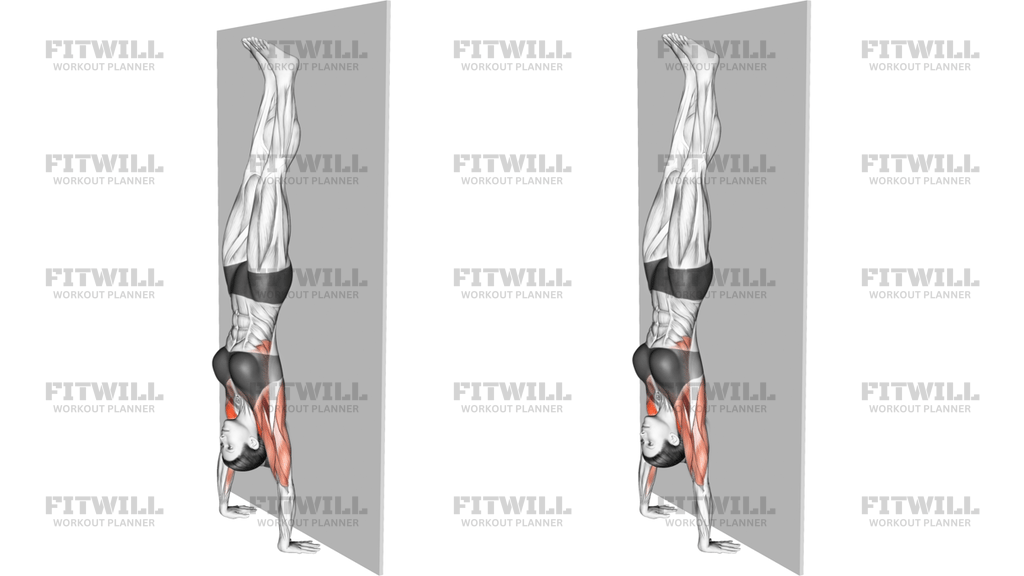
Instructions
- Place your hands on the floor shoulder-width apart, fingers spread, with your shoulders set over your wrists and the wall within kicking distance behind you.
- Kick up or walk your feet into the wall until your body is inverted and the wall is giving you light support.
- Lock your elbows and press the floor away so your shoulders stay elevated and active.
- Tuck your ribs slightly, squeeze your glutes, and keep your pelvis from dumping into a lower-back arch.
- Point your toes and lengthen through the legs so the body stays in one straight line from hands to feet.
- Keep your head neutral and look between your hands instead of cranking your neck back.
- Breathe in small controlled breaths while holding tension through the shoulders and trunk.
- Hold the position for the planned time without letting the hips shift, the elbows bend, or the shoulders collapse.
- To finish, lower one foot at a time or come down under control the same way you went up.
Tips & Tricks
- Keep only light contact with the wall; if you are leaning hard into it, the line is probably too open.
- Press through the fingertips to help control balance and stop yourself from tipping over your hands.
- Stack the wrists, shoulders, hips, and ankles as closely as you can instead of letting the feet drift behind you.
- Squeeze the glutes hard enough to keep the ribs from flaring and the low back from arching.
- Keep the elbows fully straight so the shoulders and upper back have to do the work.
- Use short sets if your hold turns into a wobble; quality drops fast once the shoulder line collapses.
- If the wrists get overloaded, shorten the hold and check hand spacing before adding time.
- Exit the wall with control instead of dropping out of the hold when balance starts to fade.
Frequently Asked Questions
What muscles does Handstand Hold On Wall work?
It mainly challenges the shoulders and upper back, with strong help from the triceps, core, glutes, and wrists to keep the body stacked.
Can beginners perform this exercise?
Yes, but beginners should start with short wall-supported holds and a controlled kick-up or wall walk before trying long sets.
Should I face the wall or have my back to it?
Either setup can work, but the key is keeping the body stacked and the wall contact light rather than hanging on the wall passively.
Why do my ribs flare during the hold?
The core and glutes are not keeping the pelvis tucked enough, so the lower back takes over and the body starts to arch.
How long should I hold the handstand on the wall?
Use a hold time you can keep crisp, often around 10 to 30 seconds per set, then add time only if the line stays stable.
Why are my wrists getting tired so quickly?
Your hands may be too far apart, your shoulders may not be stacked enough, or you may be leaning too much into the wall and dumping load into the wrists.
Is this exercise more about strength or balance?
It is both. The wall reduces balance demands, but you still need enough shoulder strength and body tension to hold a clean line.
How do I progress this movement?
Progress by improving your line, reducing wall dependence, and extending the hold only after the shoulders and trunk stay organized.