Sit Wall
Sit Wall is an isometric lower-body exercise that locks the thighs into a sustained hold while the torso stays braced against a wall. The position makes the quads do most of the work, with the glutes, calves, and core helping you stay stacked and steady. It is simple to learn, but the exact foot distance, knee angle, and back position determine whether the hold feels stable or turns into unnecessary joint stress.
The wall gives you a fixed reference point, which is why this movement is useful for building positional strength and leg endurance. When the feet are too close to the wall, the knees drift far forward and the quads take a harsher load. When the feet are too far away, the sit becomes too shallow and you lose the intended tension through the thighs.
A good Sit Wall starts before you sink into the hold. Press the whole back into the wall, set the feet flat and roughly hip-width apart, then slide down until the hips and knees are close to a 90-degree bend or slightly above it if you are still building tolerance. The shins should stay mostly vertical, the knees should track over the toes, and the chest should stay lifted rather than collapsing toward the thighs.
Because this is an isometric exercise, the quality of the hold matters more than how long you can survive with poor position. Keep the pressure spread through the heels and midfoot, breathe in a controlled rhythm, and avoid letting the knees cave inward or the lower back peel off the wall. The hold should feel like a strong, organized wall sit, not a squat that is sinking deeper rep by rep.
Sit Wall fits well as accessory work, a finish to a leg session, or a low-equipment option when you want meaningful thigh work without machines or weights. It is especially useful for beginners who need a clear bodyweight pattern, and for experienced lifters who want quad endurance, knee-friendly strength exposure, or a simple burn-out after heavier squats. If the knees, hips, or low back feel irritated, shorten the hold, raise the torso slightly, or stop before the position breaks down.
[ Workout Log & Planner ]
Put your next workout in Fitwill
Keep your plan and training log ready when you are.


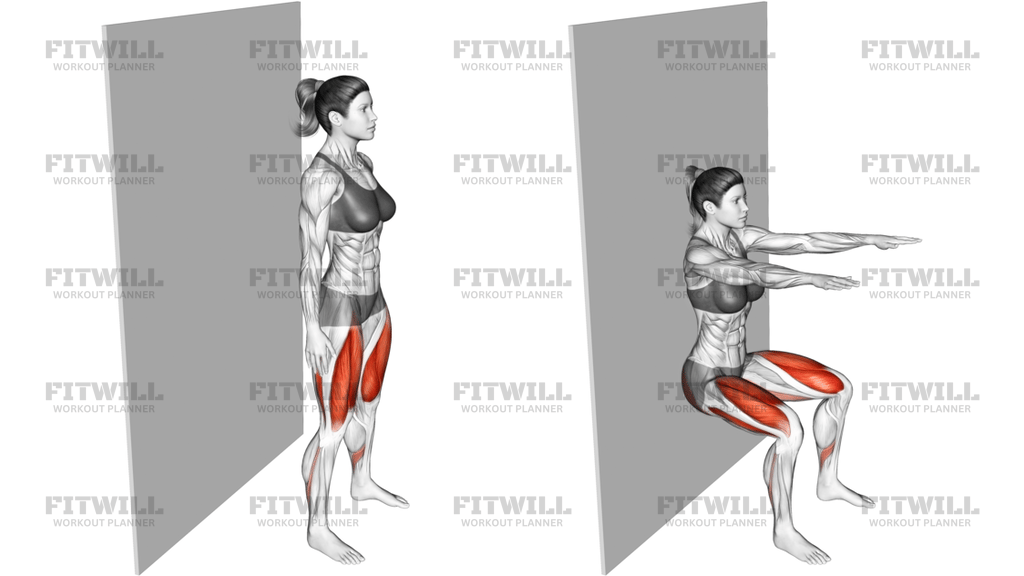
Instructions
- Stand with your back against a sturdy wall and place your feet about one to two foot-lengths out from the base.
- Set your feet roughly hip-width apart with both heels flat and your toes pointing straight ahead or slightly out.
- Brace your trunk, keep your ribcage stacked over your pelvis, and slide down the wall in a controlled motion.
- Lower until your thighs are close to parallel with the floor, or stop higher if that is the deepest position you can control.
- Press your entire back into the wall and keep your knees tracking over your second and third toes.
- Hold the sit with your weight spread through your heels and midfoot while your thighs stay visibly working.
- Breathe in short, steady breaths without letting your torso collapse or your lower back arch away from the wall.
- When the hold ends, drive through your feet and slide back up the wall under control before stepping away.
Tips & Tricks
- Set your feet about one to two foot-lengths from the wall before you slide down; if they are too close, your knees will drift forward and the hold gets harsher on the joints.
- Aim for shins that stay mostly vertical so the thighs, not the knees, are taking the main load.
- Keep the low back and mid-back pressed into the wall; if your ribs flare or your pelvis tips forward, reset the hold higher.
- Hold your arms straight out only as long as it helps balance; if the shoulders start to shrug, let the hands rest lightly on the thighs or keep the arms lower.
- Press through the heels and midfoot rather than the toes so the quads stay loaded without tipping you forward.
- Choose a depth that you can maintain without the knees caving inward or sliding too far past the toes.
- Breathe in short, steady cycles instead of holding your breath for the full set, especially on longer wall-sit holds.
- Stop the set when the knees wobble, the back peels off the wall, or you can no longer keep the thighs at the same height.
Frequently Asked Questions
What muscles does Sit Wall work most?
Sit Wall mainly targets the quadriceps. The glutes, calves, and core help hold the position and keep your trunk steady against the wall.
How low should I sit in a Sit Wall?
A good starting point is around a 90-degree bend at the knees and hips, or slightly higher if that feels cleaner. The goal is to keep your back flat on the wall and your shins mostly vertical.
Why do my knees hurt during Sit Wall?
Your feet may be too close to the wall, or you may be dropping lower than you can control. Step the feet forward a little and shorten the hold if the knee joint feels pinched or strained.
Can beginners do Sit Wall?
Yes. Beginners should start with a higher hold, shorter time, and a stance that lets them keep the whole back against the wall without shaking or collapsing.
Should my knees go past my toes in Sit Wall?
A small amount is normal, but the knees should not shoot far forward. If they do, move the feet farther from the wall until the lower legs are more vertical.
How long should I hold Sit Wall?
Hold it long enough to challenge the thighs without losing position. Most people start with 20-45 seconds, then build time only while the back stays flat and the knees stay aligned.
Is Sit Wall good for runners?
Yes. It can build quad endurance and leg position strength that carries over to sustained efforts like running, hiking, or cycling.
How can I make Sit Wall harder?
Increase hold time, lower to a deeper bend, or hold a weight plate on your thighs only if you can still keep the torso and knees in good position.