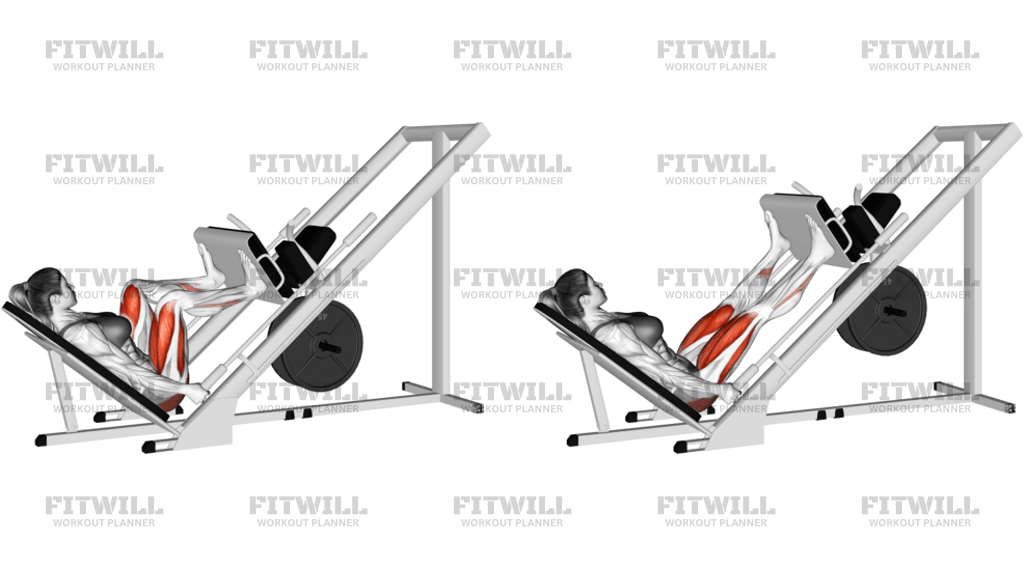
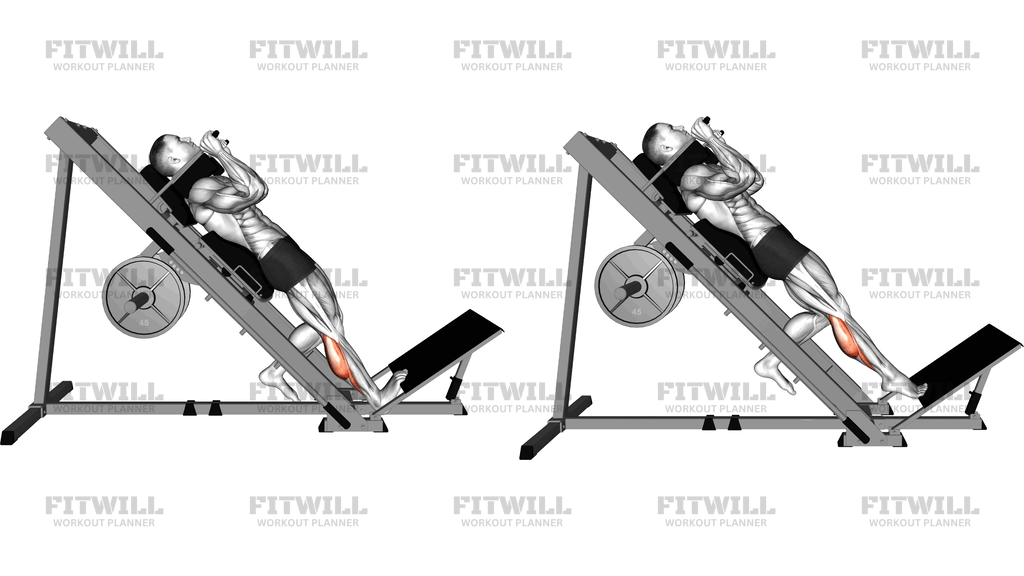
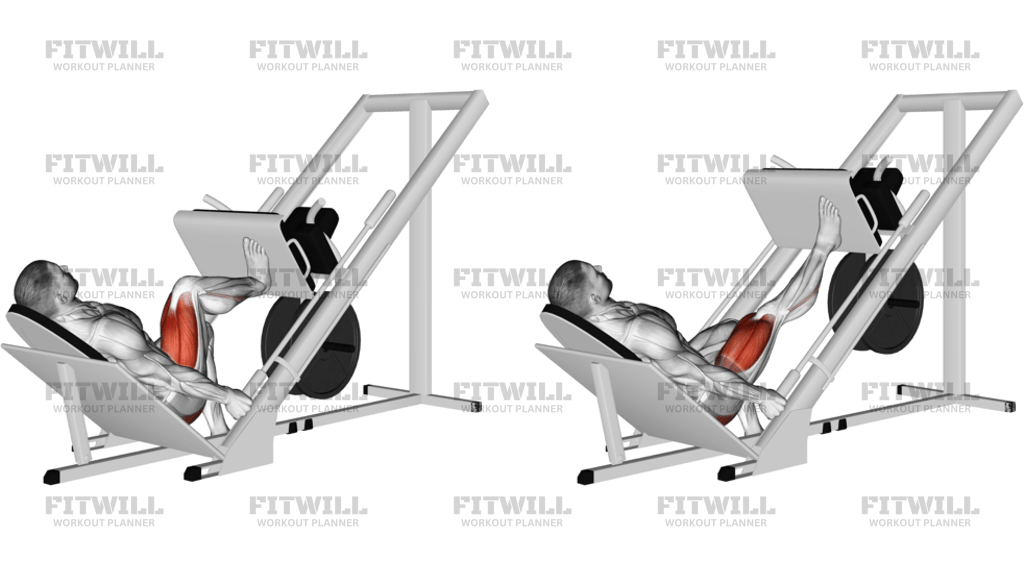
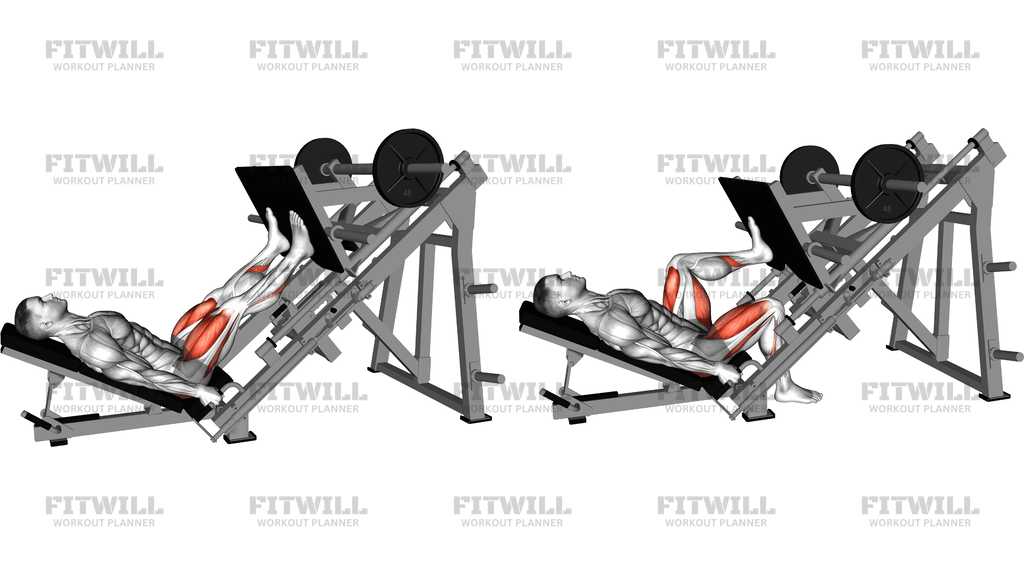
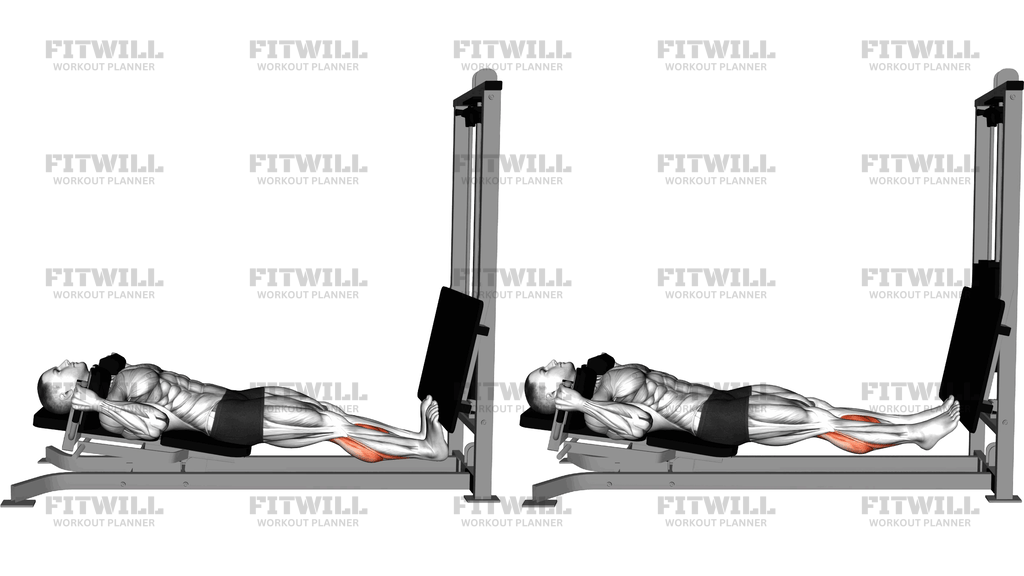
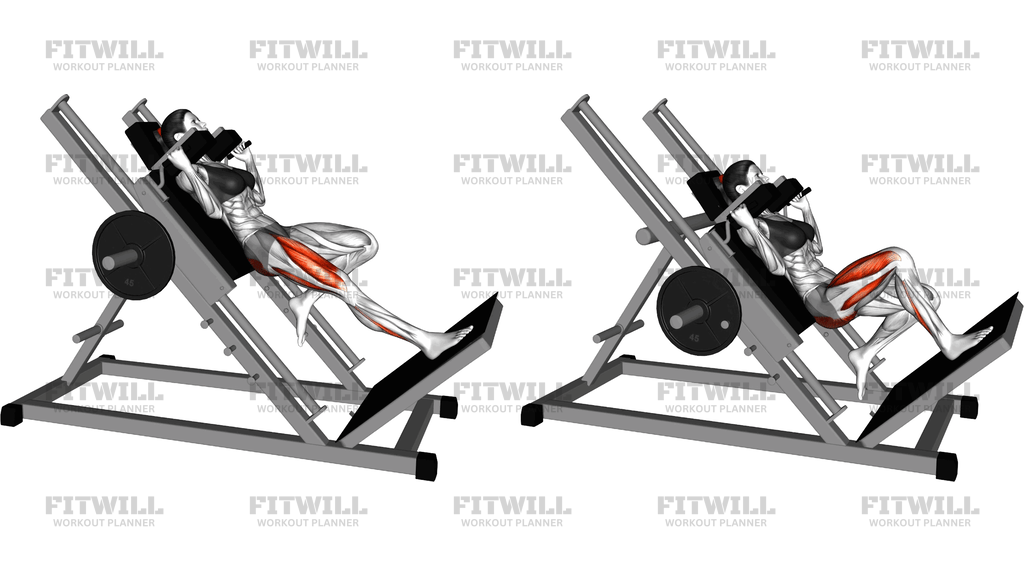
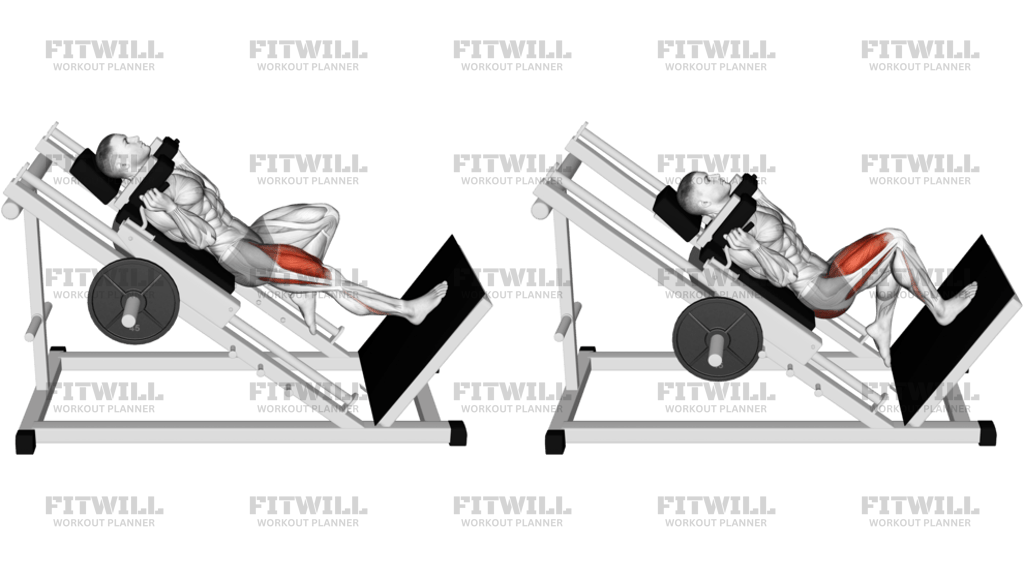
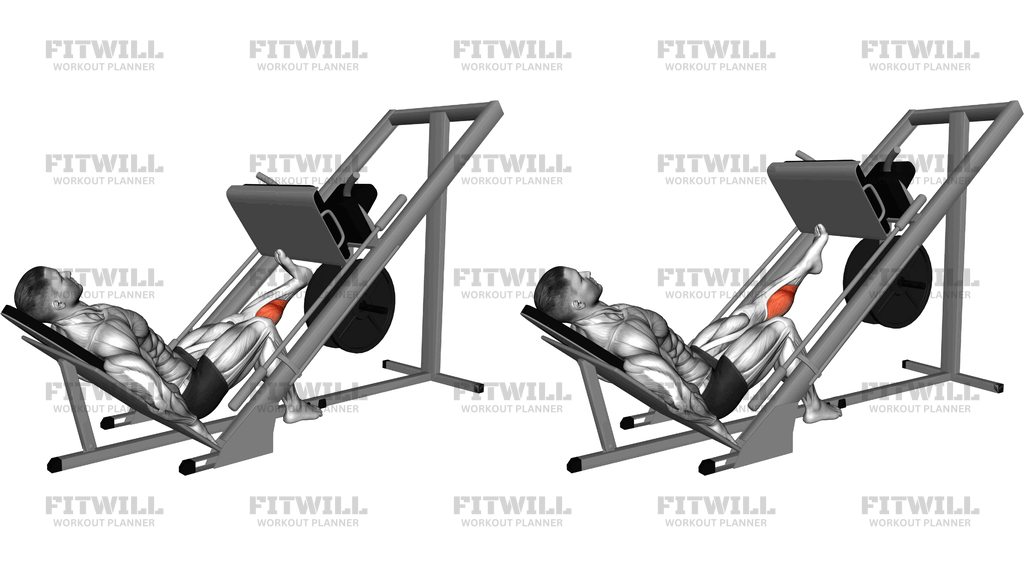
Sled Angled Single Leg Press
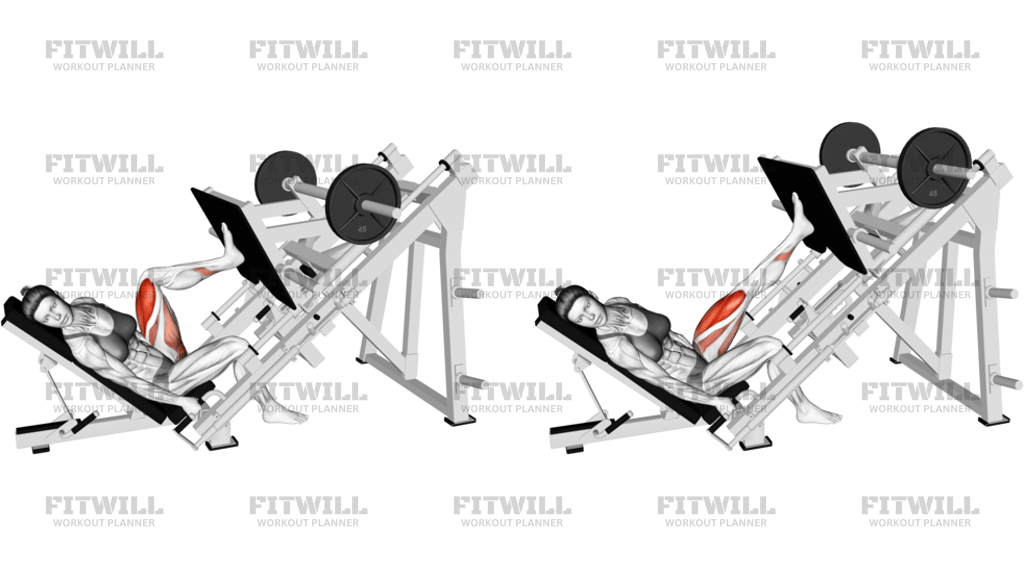
Sled Angled Single Leg Press is a unilateral leg-press variation done on an angled sled machine with one foot working at a time. It trains the leg and hip on the pressing side while forcing the trunk and pelvis to stay square on the pad. Because the sled moves on rails, the exercise is easier to load than a free-weight single-leg squat, but the single-leg position still exposes side-to-side strength or stability differences.
The main training effect is concentrated on the working leg, especially the quadriceps and glutes, with hamstrings, adductors, and core muscles helping keep the pelvis steady. The non-working leg stays out of the way so the pressing side does the real work instead of letting the body twist or push off unevenly. Foot placement matters: a slightly lower foot position usually biases the front of the thigh more, while a slightly higher position brings more hip and glute contribution.
Good reps start with a solid seat position and a foot that is fully planted on the platform. Keep the heel down, the knee tracking in line with the toes, and the pelvis heavy against the pad. Press the sled away by driving through the mid-foot and heel, then lower it under control until you reach the deepest position you can own without the low back curling or the hip lifting off the pad.
This is a strong accessory movement for building unilateral leg strength, addressing left-right imbalances, and adding volume without the balance demands of a split squat. It also works well for athletes or lifters who want harder leg work while keeping the torso supported. Use a load and range that let you keep the sled path smooth, the knee steady, and the return phase controlled from the first rep to the last.
[ Workout Log & Planner ]
Put your next workout in Fitwill
Keep your plan and training log ready when you are.


Instructions
- Sit into the sled machine with your back and head supported, hips square on the pad, and one foot placed flat and centered on the platform.
- Tuck the non-working leg out of the sled path so it does not push into the plate or help drive the rep.
- Set the working knee in line with the toes and keep the heel grounded before you start the press.
- Brace your trunk, then unlock the sled by bending the working knee until you are in the starting position with steady tension.
- Drive through the mid-foot and heel to press the sled up the rails until the working leg is almost straight, but do not snap into a hard lockout.
- Keep the pelvis heavy and level on the pad as the sled moves so the working side does not twist you off-center.
- Lower the sled slowly and let the knee bend as far as you can control without the low back rounding or the hip lifting.
- Match your breathing to each rep: exhale as you press, inhale as you lower, and keep the movement smooth.
- Finish the set, then re-rack the sled before bringing the non-working leg back into position.
Tips & Tricks
- Keep the entire foot planted; if the heel pops up, the load is too heavy or the foot is too low on the platform.
- A slightly lower foot placement usually shifts more work to the front of the thigh, while a slightly higher foot position brings more hip and glute demand.
- Do not let the working knee cave inward as the sled moves; track it over the second and third toes.
- If one hip starts to lift off the pad, shorten the depth and keep the pelvis level.
- Use a slower lowering phase than pressing phase so the sled does not drop you into the bottom position.
- Stop just short of hard knee lockout to keep tension on the working leg instead of resting on the joint.
- Keep the free leg relaxed and clear of the footplate so it does not turn the movement into a two-leg press.
- Choose a load that lets you keep the same sled path and hip position on every rep, not just the first one.
- If your lower back rounds at the bottom, reduce range of motion before you reduce control.
- Treat this as unilateral strength work, not a bounce out of the bottom.
Frequently Asked Questions
What does the Sled Angled Single Leg Press train?
It mainly trains the pressing leg, with a strong emphasis on the quadriceps and glutes plus support from the hamstrings, adductors, and core.
Why do I have to keep one leg out of the way?
Keeping the non-working leg clear makes the pressing side do the work and helps you notice shifts in pelvic control or side-to-side strength.
Where should my foot sit on the platform?
Start with the working foot centered and fully planted. A slightly lower placement biases the quads more, while a slightly higher placement brings in more hip and glute work.
How deep should I lower the sled?
Lower until you can keep the heel down, the pelvis heavy, and the low back from rounding. Depth is useful only if you can own it.
Should I lock my knee at the top?
No. Finish the press with a soft knee, not a hard snap into lockout, so the leg stays loaded and controlled.
What are the most common mistakes?
The biggest issues are letting the knee cave inward, lifting the heel, twisting the hips, and dropping too deep before you can control the sled.
Is this easier than a single-leg squat?
Usually yes, because the sled supports your torso and guides the path. That makes it a good option for building unilateral leg strength with less balance demand.
Can beginners use this exercise?
Yes. Start with a light load, a shorter range of motion, and very deliberate control while you learn where the sled and pelvis should stay.
What should I feel if the setup is right?
You should feel the working leg doing most of the work, with the hip and trunk staying steady instead of the body shifting from side to side.