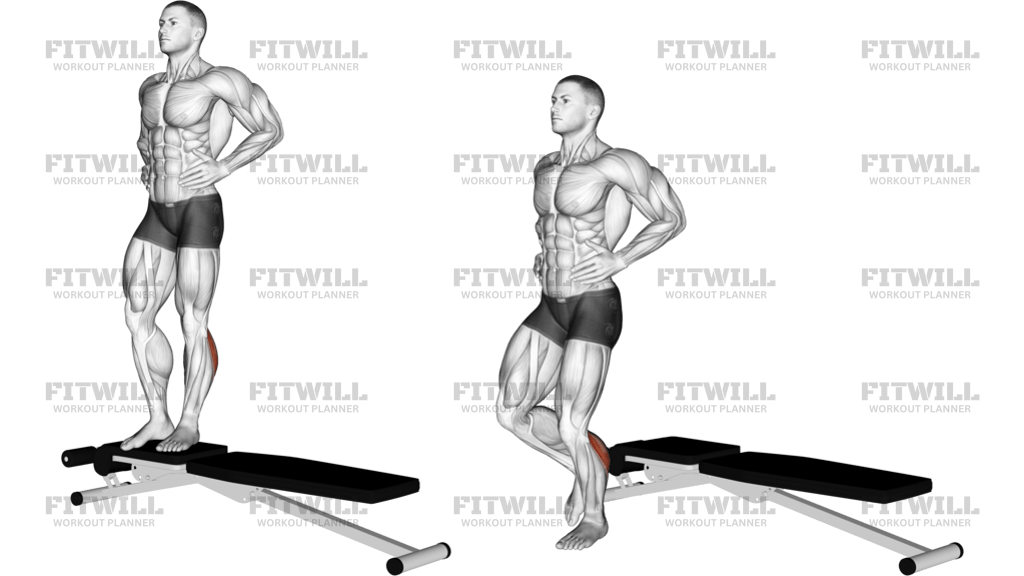
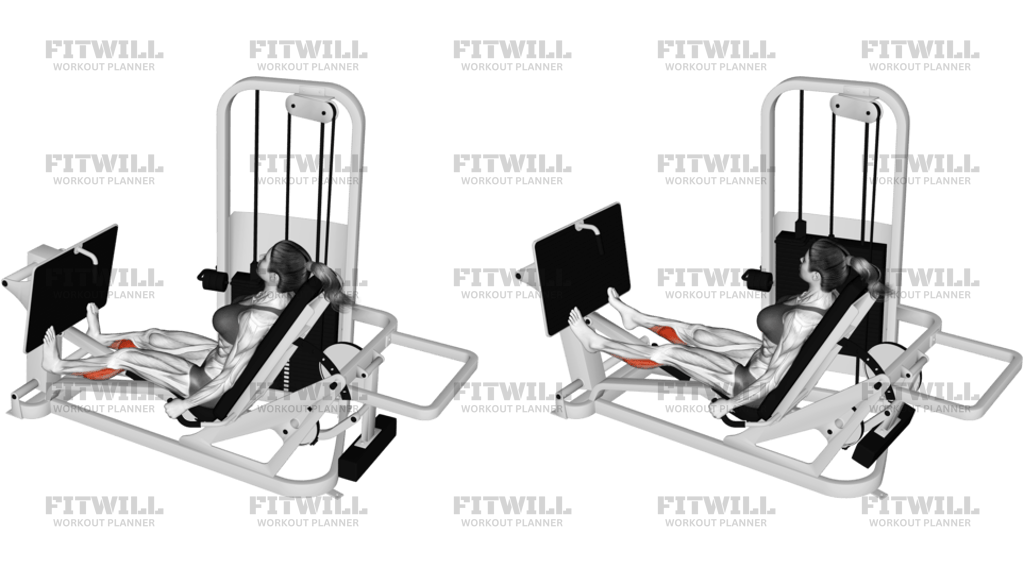
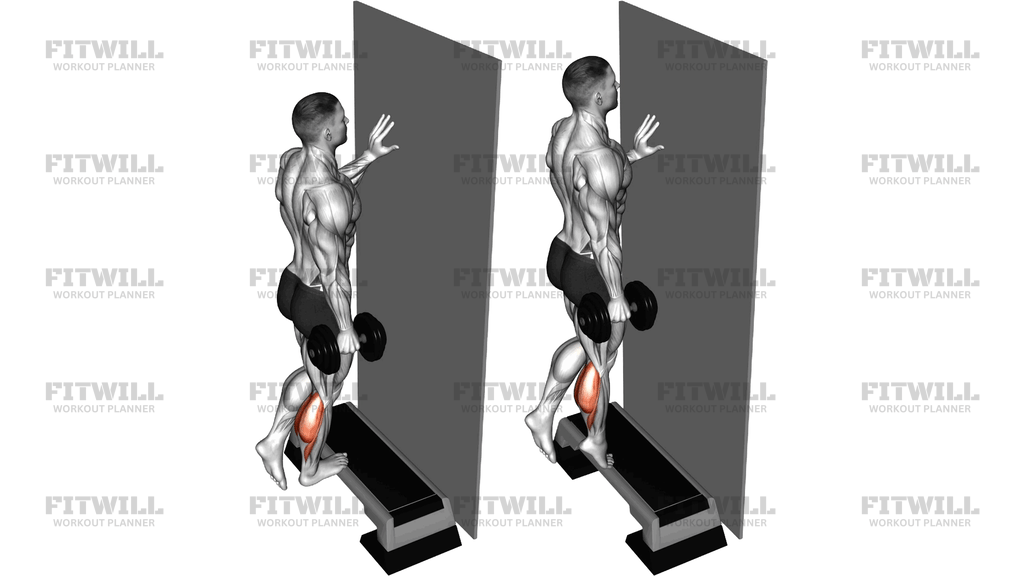
Lever Calf Press Plate Loaded
Lever Calf Press (Plate Loaded) is a seated calf exercise where you press a plate-loaded lever away by extending the ankles. The machine keeps the torso and hips supported, so the work stays focused on the lower leg instead of turning into a balance drill. That makes it a useful option for building calf size, ankle strength, and repeatable tension through a controlled range of motion.
The seated position changes the emphasis compared with standing calf work. With the knees bent and the thighs supported, the calves can be trained with a strong stretch at the bottom and a hard squeeze at the top while the upper body stays quiet. That is why setup matters: if your feet are too far forward, too high, or twisted on the platform, the lever path changes and the tension leaves the calves.
A good rep starts with the balls of the feet planted on the platform and the heels free to drop. Keep the knees lined up with the toes, hold the seat or side handles if available, and press through the big toe mound and second toe. Drive the footplate away by pointing the ankles, then pause briefly when the calves are fully shortened before lowering under control.
The bottom position is where this exercise earns its value. Let the heels sink only as far as you can control, because a rushed bounce usually steals tension from the calves and can irritate the ankles. The goal is not to fling the sled through a short range, but to create clean, repeatable reps with a steady stretch, a smooth press, and a controlled return.
This exercise fits well as accessory work after squats, leg press, deadlifts, or other lower-body lifts, especially when you want direct calf training without much spinal loading. It works for moderate or higher repetitions as long as the tempo stays honest and the machine does not slam into the stop. If the ankles start wobbling, the heels twist, or the range shortens dramatically, the set is already too heavy for useful calf work.
[ Workout Log & Planner ]
Put your next workout in Fitwill
Keep your plan and training log ready when you are.


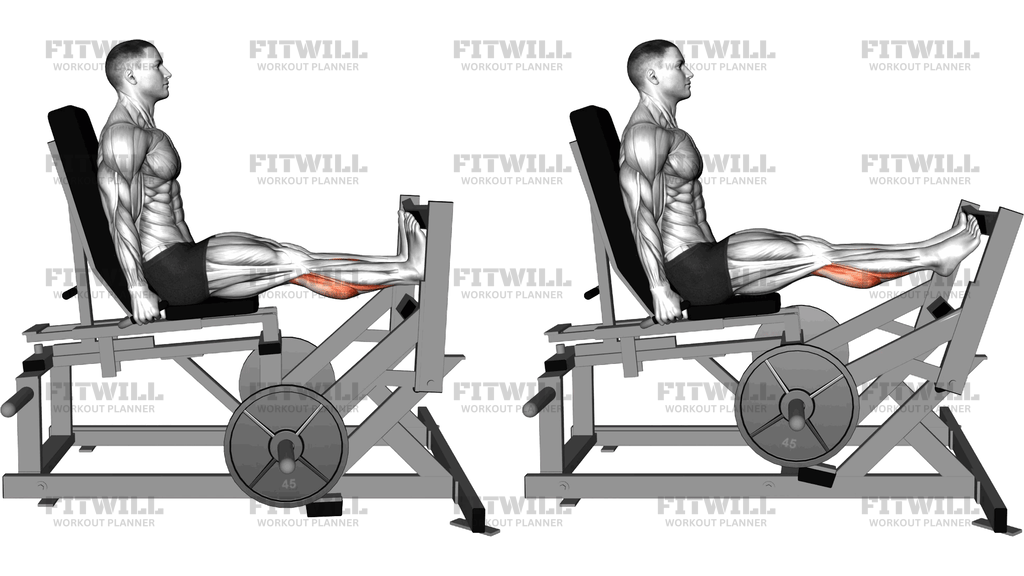
Instructions
- Sit back in the machine with your lower back and hips supported against the pad.
- Place the balls of both feet on the foot platform and let the heels hang free enough to move through a full ankle range.
- Set your knees in line with your toes and keep both feet parallel or only slightly turned out.
- Grip the side handles or the seat frame so your hips stay anchored while the ankles move.
- Start from a controlled bottom position with the heels lowered to a comfortable calf stretch.
- Press through the big toe mound and second toe to drive the platform away by pointing the ankles.
- Squeeze at the top for a moment without locking the knees or bouncing the lever.
- Lower the platform slowly until the calves lengthen again, then repeat for the planned reps.
Tips & Tricks
- Keep pressure through the first two toes so the lever rises from the ankles instead of rolling to the outside edge of the feet.
- Let the heels drop only as far as you can control; a shorter stretch is better than letting the ankles collapse and bounce.
- Do not lock the knees at the top, because this is an ankle-dominant movement, not a leg drive.
- Use a slower lowering phase than pressing phase so the calves stay under tension instead of resting on the way down.
- Set the machine stop before the set if it has one, so the platform cannot crash into the frame or your feet.
- Keep your lower back glued to the pad; sliding forward reduces calf tension and usually means the load is too high.
- Turn the toes out only slightly if needed for comfort, but avoid a wide turnout that changes the ankle line.
- End the set when the top range becomes a hip push or the heels start wobbling from side to side.
Frequently Asked Questions
What muscles does Lever Calf Press (Plate Loaded) work most?
It primarily targets the calves, with the seated knee angle placing extra emphasis on the soleus while still involving the gastrocnemius.
Is this the same as a seated calf raise?
It is the plate-loaded lever version of a seated calf raise. The goal and body position are similar, but the resistance path is guided by the machine.
Should my heels go below the foot platform?
Yes, if your ankle mobility and the machine setup allow it. A controlled heel drop creates the stretch that makes the rep effective.
How much should I bend my knees?
Keep the knees supported in the seated position shown by the machine and let the ankles do the movement. The knees should stay mostly fixed during each rep.
Why do I feel this in my arches or feet?
Some foot tension is normal, but cramping usually means too much load or too much pressure shifting to the inside of the foot. Reduce the weight and keep the pressure centered under the big toe mound.
What is the most common mistake on this machine?
Bouncing out of the bottom or cutting the stretch short. The calves respond best when the lowering phase is slow and the top squeeze is deliberate.
Can I use heavy weight on this machine?
Yes, but only if the heel path stays smooth and the ankles do not twist. If the range shortens or the feet start shifting, the load is too high.
Where should I place this in my workout?
It fits well near the end of a lower-body session or after your main lifts as direct calf accessory work.