Cable Kneeling Shoulder External Rotation
Cable Kneeling Shoulder External Rotation is a cable-based shoulder isolation exercise that trains the rotator cuff through a controlled arc while you stay kneeling and mostly motionless. The cable keeps tension on the shoulder through the entire rep, which makes it useful for warm-ups, prehab work, and accessory training when you want cleaner control rather than heavy loading.
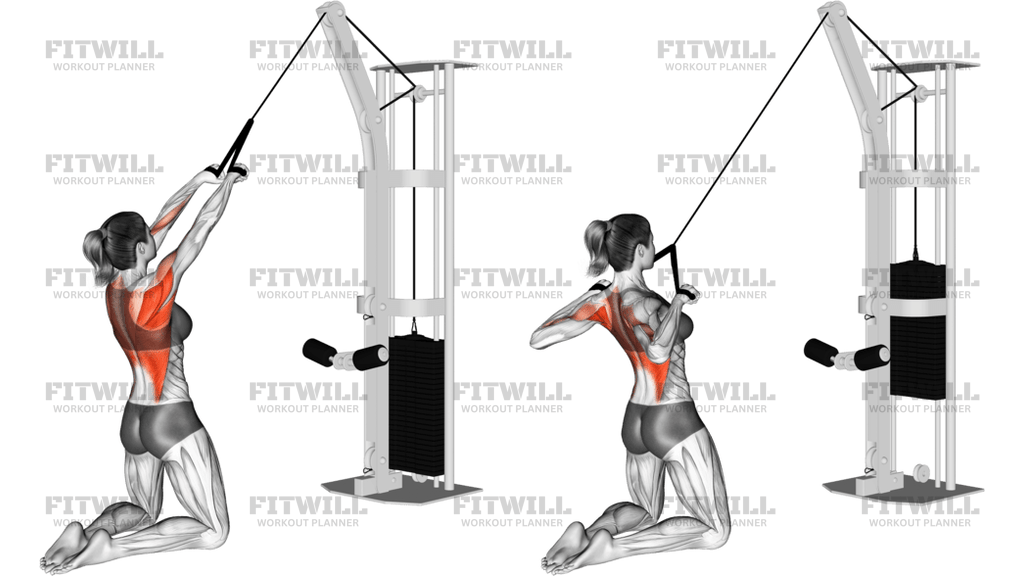
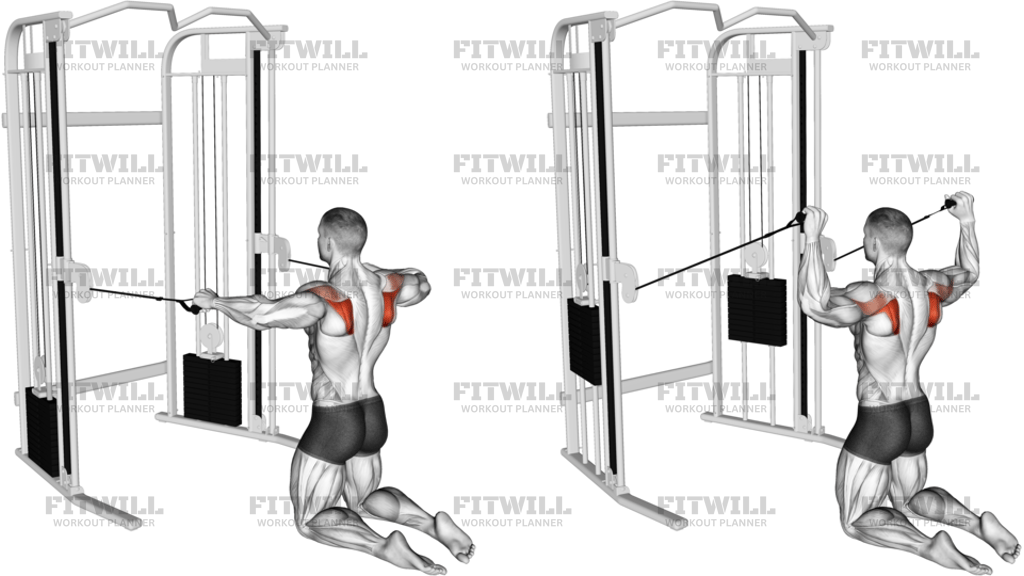
The image shows a kneeling setup with the upper arm held out from the torso and the elbow bent, so the key job is to rotate from the shoulder joint without letting the torso twist, the elbow drift, or the wrist bend back. Cable Kneeling Shoulder External Rotation is especially useful for building strength and coordination in the small stabilizers that help keep the shoulder centered during pressing, pulling, and overhead work.
This movement is not about speed or load. The value comes from keeping the upper arm still, moving the forearm through a smooth external rotation, and finishing each rep with the shoulder still feeling organized rather than yanked open. If the pulley is too heavy or the setup is too low, people usually start shrugging, leaning, or turning the chest to cheat the range.
Because the position is kneeling, the lower body is taken out of the lift and the pelvis can stay quiet. That makes it easier to feel the shoulder work and easier to spot compensation. A pad under the knees, a tall torso, and a light load usually make this exercise much more productive than trying to force a bigger range with the stack.
Cable Kneeling Shoulder External Rotation fits well on upper-body days, shoulder health blocks, or as a primer before benching, overhead pressing, or throwing work. Use it when you want the shoulder to rotate cleanly under light resistance and stop the set if the front of the shoulder pinches, the elbow drops, or the motion turns into a body English rep instead of a strict rotator cuff drill.
[ Workout Log & Planner ]
Put your next workout in Fitwill
Keep your plan and training log ready when you are.


Instructions
- Set the cable pulley around shoulder height, attach a single handle, and kneel on both knees beside the stack with a pad under your knees if needed.
- Hold the handle with the working elbow bent to about 90 degrees and lifted level with your shoulder, while your upper arm stays fixed in line with the shoulder.
- Square your chest and ribs, keep your torso tall, and set your wrist straight so the handle sits in the palm instead of folding the hand back.
- Start with the forearm across your body or slightly in front of you, depending on the cable direction, and keep the elbow pinned at shoulder height.
- Rotate the forearm outward until the hand opens away from the midline and the shoulder reaches the end of its comfortable external rotation range.
- Pause briefly at the end range without shrugging or letting the elbow drift backward.
- Return the handle slowly until the forearm comes back across the body under control and the cable stays taut the whole time.
- Breathe out as you rotate open and breathe in as you return, keeping the neck loose and the torso still for every rep.
- Reset the shoulder position before the next repetition instead of letting the cable yank you into the start.
Tips & Tricks
- Keep the upper arm at shoulder height the whole time; if it drops, the exercise turns into a cheat rep.
- Use a very light stack. This movement should feel precise and smooth, not like a max-effort press.
- A towel or knee pad helps if the floor is hard, because a stable kneeling base makes the shoulder work easier to isolate.
- If the handle pulls your wrist back, rotate your grip so the knuckles stay stacked over the forearm.
- Stop a little short of any pinching in the front of the shoulder; the cable should load the rotator cuff, not jam the joint.
- Do not let the ribs flare or the chest twist toward the stack when the cable gets heavy.
- A slower return usually produces better shoulder control than forcing the handle back quickly.
- If one side moves faster than the other, do the reps one arm at a time so each shoulder hits the same range.
- Keep the elbow angle fixed at roughly 90 degrees; changing the bend turns the drill into a different movement.
Frequently Asked Questions
What muscles does Cable Kneeling Shoulder External Rotation work?
It mainly targets the rotator cuff external rotators, especially the infraspinatus and teres minor, with the rear deltoid and scapular stabilizers assisting.
Why do I need to kneel for Cable Kneeling Shoulder External Rotation?
Kneeling removes lower-body cheating and makes it easier to keep the torso quiet, which helps you isolate the shoulder rotation.
Should my elbow stay up at shoulder height?
Yes. The elbow should stay level with the shoulder so the forearm can rotate without the upper arm swinging around.
How heavy should the cable be?
Very light to moderate at most. If the stack makes you twist, shrug, or lose the elbow position, it is too heavy for this drill.
Is Cable Kneeling Shoulder External Rotation good for beginners?
Yes, as long as the load is light and the range is pain-free. It is a good way to learn shoulder control before heavier pressing work.
What if I feel a pinch in the front of the shoulder?
Reduce the range, lower the load, and make sure the elbow stays fixed instead of drifting behind the body. If the pinch persists, switch to a different variation.
Can I do this with a band instead of a cable?
Yes. A band can work as a simpler substitute, but the cable gives smoother tension through the full rotation.
What is the biggest form mistake on the handle?
Letting the wrist bend back or the hand do the work instead of rotating cleanly from the shoulder.