Cable Kneeling Shoulder External Rotation
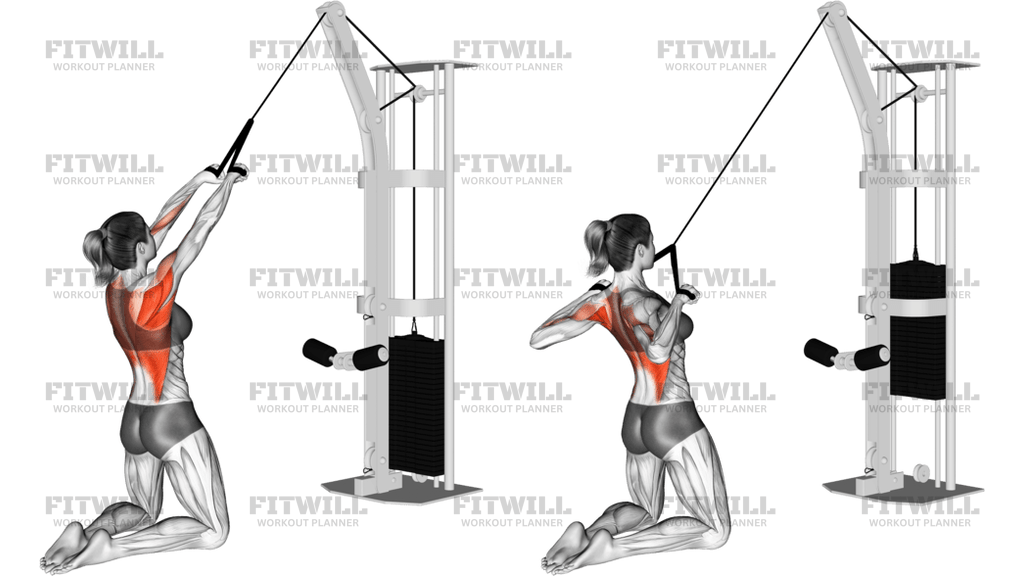
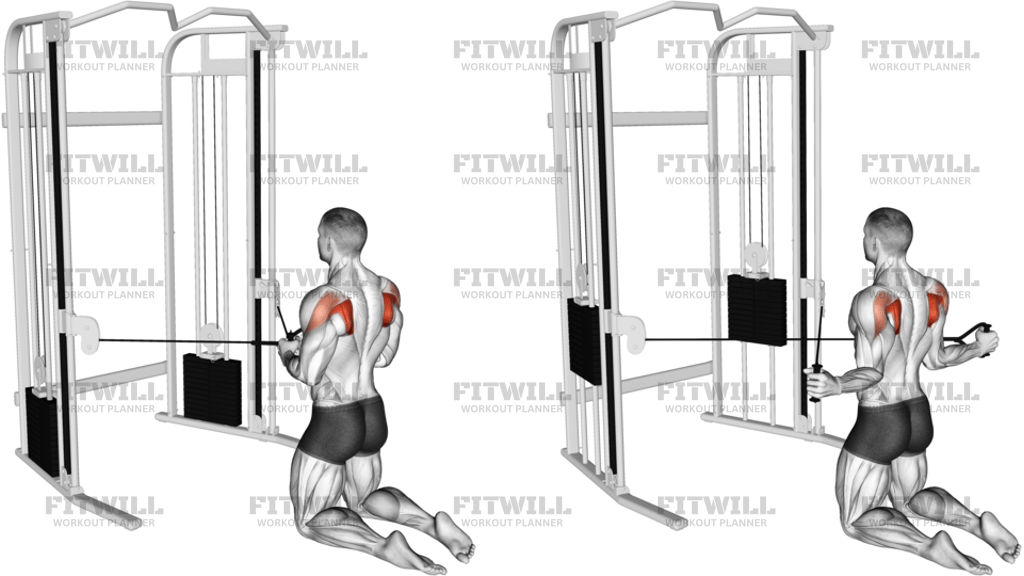
Cable Kneeling Shoulder External Rotation is a kneeling cable exercise that trains shoulder external rotation control with the torso kept quiet. It is most useful for building the small stabilizing muscles of the rotator cuff, especially when you want cleaner shoulder mechanics for pressing, overhead work, throwing, or general shoulder health. The kneeling position reduces body English so the repetition stays focused on the shoulder instead of the hips, ribs, or legs.
Set the pulley low, attach a single handle, and kneel beside the cable so the working arm can start with the elbow bent and tucked close to the side. The forearm begins across the front of the body, then rotates outward while the upper arm stays fixed against the ribs. That setup matters because the exercise only does its job when the shoulder turns without the elbow drifting or the torso twisting to help.
A good rep feels smooth and controlled from the first inch of motion. Rotate the forearm outward until you reach the strongest pain-free end range, then pause briefly before returning the handle back across the body under tension. Keep the shoulder down, the wrist neutral, and the ribs stacked so the cable resistance stays on the shoulder instead of being redirected by momentum.
This exercise works well as a warm-up, accessory drill, or rehab-style strength movement when you need low-load precision rather than heavy loading. It is usually best performed for moderate to higher repetitions with strict technique and a light-to-moderate cable setting. If the elbow leaves your side, the lower back arches, or the neck starts to tense, the load is too heavy or the setup needs to be adjusted.
Use Cable Kneeling Shoulder External Rotation as a repeatable, side-to-side control exercise. Match the range and tempo on both shoulders, and stop the set as soon as the shoulder starts to roll open or the cable starts pulling you out of position. The goal is not to move more weight, but to keep the external rotation clean enough that the rotator cuff does the work through the whole set.
[ Workout Log & Planner ]
Put your next workout in Fitwill
Keep your plan and training log ready when you are.


Instructions
- Set the cable pulley low and clip on a single handle attachment.
- Kneel on both knees beside the stack with your torso tall and your hips stacked over your knees.
- Hold the handle in the working hand and bend that elbow to about 90 degrees.
- Tuck the upper arm against your side so the elbow stays pinned to your ribs.
- Start with the forearm across the front of your stomach and the wrist neutral.
- Brace your ribs down, then exhale as you rotate the forearm outward away from your body.
- Stop at the farthest pain-free point without letting the elbow drift or the shoulder shrug.
- Pause briefly, then inhale and return the handle slowly back across the body under control.
Tips & Tricks
- Keep the elbow glued to the same spot on your ribs; if it floats, the load is too heavy.
- Let the hand travel in an arc while the upper arm stays quiet.
- Choose a pulley height that lets you start across the stomach without shrugging the shoulder.
- If you feel the lower back arching, tighten the glutes and shorten the range.
- A slow return matters here because the external rotators work hard on the way back to the start.
- Light resistance should still feel challenging; this is a precision movement, not a strength test.
- Keep the wrist neutral so the forearm rotates cleanly instead of bending backward.
- Use the same tempo on both sides so the weaker shoulder does not get rushed.
Frequently Asked Questions
What muscles does Cable Kneeling Shoulder External Rotation train?
It primarily trains the rotator cuff external rotators, especially the muscles that help the shoulder stay centered and stable during pressing and overhead work.
Why is this version done on both knees?
Kneeling removes leg drive and makes it easier to keep the ribs stacked, the torso still, and the shoulder doing the work instead of the hips.
Should my elbow move away from my side during the rep?
No. The upper arm should stay tucked against your ribs while only the forearm rotates outward and back.
How far should I rotate the handle outward?
Rotate only as far as you can keep the shoulder down and the elbow pinned. Stop before the torso twists or the shoulder rolls open.
Is this more of a warm-up or a strength exercise?
Both, but it is usually used as a light accessory or warm-up drill with controlled reps rather than heavy loading.
What should I do if I feel it in my neck?
Lower the load, relax the shoulder away from the ear, and make sure the ribcage is not flaring up to help the rep.
What is a good substitute if I do not have a cable machine?
A banded external rotation or side-lying dumbbell external rotation can provide a similar shoulder-rotation focus.
How many reps should I use?
Moderate to higher reps usually work best because the movement is small and technical. Use a load that keeps each rep smooth.