Kneeling Sartorius Stretch
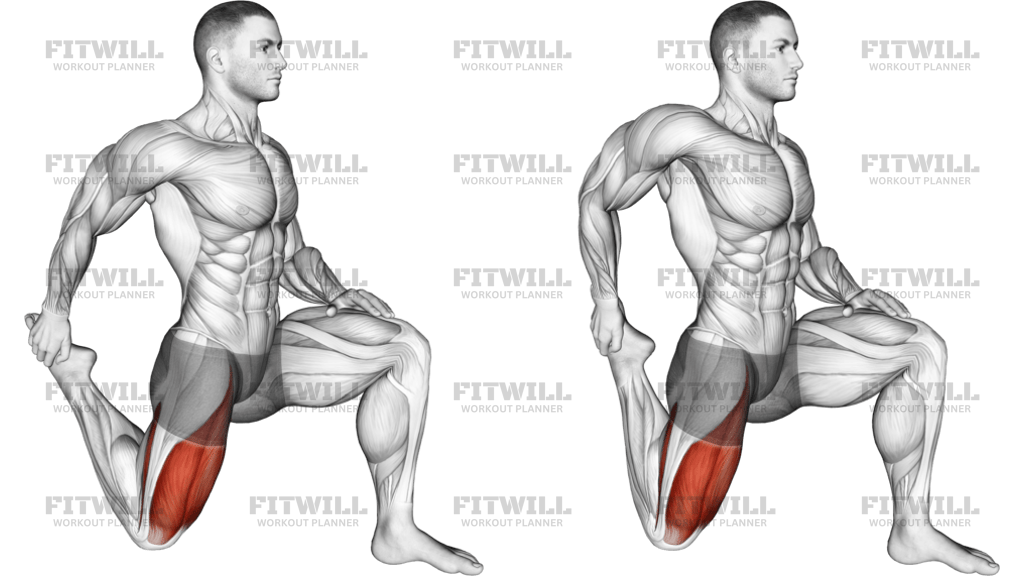
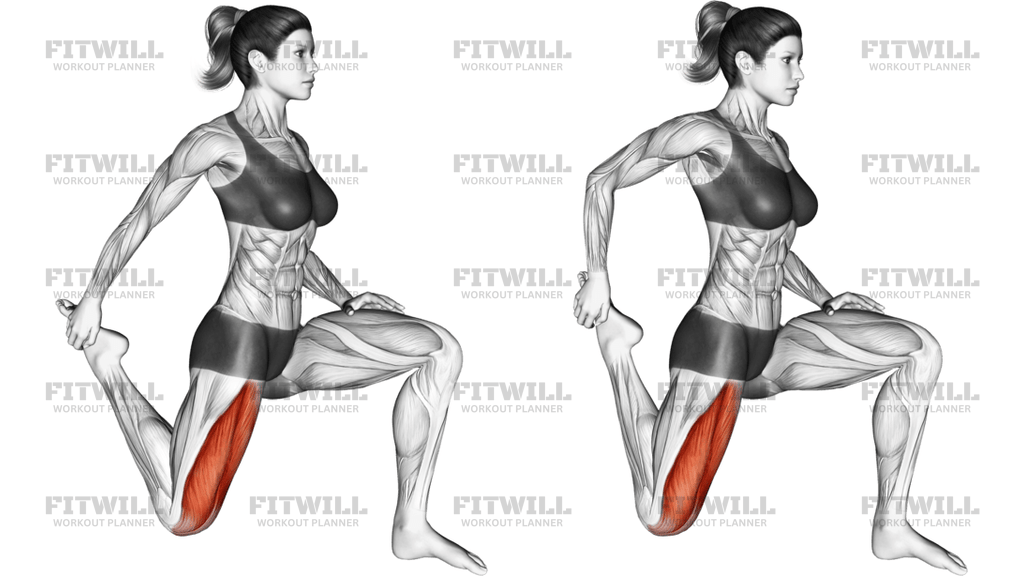
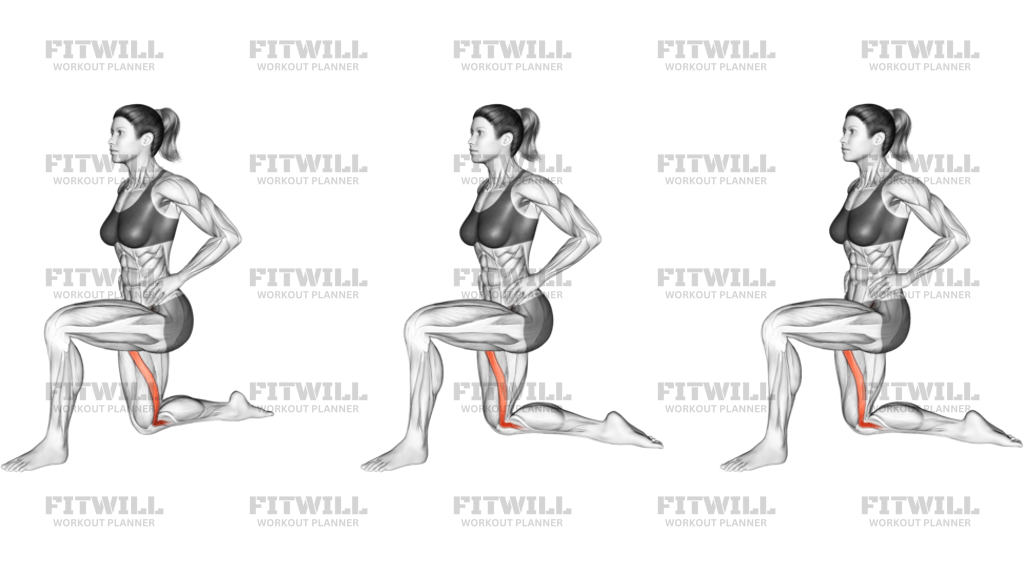
The Kneeling Sartorius Stretch is a half-kneeling mobility drill for the thigh and hip, performed on an exercise mat with body weight only. The image shows a tall kneeling setup with one knee down, the opposite foot planted in front, and the pelvis held upright while the hips gently move forward. That position is useful when you want to open the front line of the trailing leg without collapsing into the lower back.
This stretch is aimed at the sartorius, a long strap-like muscle that helps position the hip and knee. In this setup, you should feel the work along the front and inner side of the kneeling thigh, with the exact line of tension changing slightly depending on how far forward you shift and how much you rotate the pelvis. The goal is not to force a dramatic lunge, but to find a clear, repeatable stretch that stays comfortable from side to side.
The setup matters because the rear knee, front foot, and pelvis determine where the tension goes. Keep the front foot flat and the front shin close to vertical, stack the torso over the hips, and keep both hip bones facing forward. From there, a small forward glide of the hips is usually enough to create the stretch. If you arch the low back or twist the pelvis open, the sensation shifts away from the target and the movement becomes less useful.
Use slow breathing to let the tissues settle. Hold the end position long enough to feel a steady pull, then ease out without bouncing or changing shape. This exercise works well in a warm-up, cool-down, or recovery block when you want to restore hip mobility and make the front of the thigh feel less restricted before squats, lunges, running, or long seated work.
It is a simple drill, but it still rewards precision. Start with a short, mild hold, then gradually increase the range only if the line of tension stays smooth and pain-free. If the knee or hip feels pinchy, shorten the stance, reduce the forward shift, or stop and reset rather than trying to push through it.
[ Workout Log & Planner ]
Put your next workout in Fitwill
Keep your plan and training log ready when you are.


Instructions
- Kneel on the mat with one knee down and the other foot planted in front so the front shin is nearly vertical.
- Keep your torso tall and place your hands on your hips or on the front thigh for balance.
- Square both hip bones toward the front before you move deeper into the stretch.
- Slide your hips forward a few inches until you feel tension along the front and inner side of the kneeling thigh.
- Keep the back knee and shin relaxed on the floor instead of driving the knee or foot into the mat.
- Maintain a light tuck of the pelvis so the stretch stays in the thigh and hip, not the lower back.
- Breathe slowly for the full hold and let the exhale soften the stretch instead of forcing it.
- Ease back out with control, then repeat on the other side with the same stance length and posture.
Tips & Tricks
- A short stance usually makes the stretch more manageable than an exaggerated lunge.
- If you feel it mostly in your low back, reset with a stronger pelvic tuck and less forward glide.
- Keep the front foot planted; letting that heel lift changes the stretch and reduces control.
- The best sensation is a steady line through the kneeling thigh, not a sharp pinch at the hip or knee.
- Do not let the front knee collapse inward, because that often twists the pelvis off target.
- Use the exhale to soften into the stretch after you are already set, not to jerk yourself deeper.
- If the rear knee is uncomfortable, add more mat padding or reduce the amount of bodyweight on that side.
- Hold both sides for the same amount of time so the hips do not become uneven from side to side.
Frequently Asked Questions
What does the Kneeling Sartorius Stretch target most?
It targets the sartorius and the front line of the trailing hip and thigh, especially when the pelvis stays square and the hips glide forward.
Which leg should I feel stretching?
You should feel it in the kneeling rear leg, not the front leg that is supporting you in the half-kneeling stance.
How far forward should I move my hips?
Only move far enough to create a clear but comfortable pull in the front or inner thigh of the kneeling leg. A small shift is usually enough.
Why do my hips want to twist open?
That usually means the stance is too wide or the stretch is being forced. Re-square the pelvis and reduce the range before trying again.
Can I use this as a warm-up before leg training?
Yes. It works well before squats, lunges, running, or any session where you want the front of the hip and thigh to feel freer.
What if I feel pressure in my lower back instead of my thigh?
Bring your ribs down, tuck the pelvis slightly, and shorten the forward shift. The stretch should stay in the hip and thigh, not the spine.
Is it normal to feel this around the knee too?
A mild front-of-thigh sensation can travel toward the knee, but the stretch should not create sharp knee pain. If it does, reduce the range or add padding.
How long should I hold the stretch?
Use a steady hold long enough for the tissue to relax, then repeat on the other side. Short, controlled holds are usually better than forcing a long painful one.