Lever Seated Single Leg Press Version 2
Lever Seated Single Leg Press Version 2 is a machine-based thigh exercise that lets you train one leg at a time while the back stays supported against the pad. The leverage setup gives you a clear pressing path, which makes it useful for building quadriceps strength, side-to-side balance, and cleaner leg drive than a rushed free-standing movement. Because only one leg is working, small setup errors show up quickly in the hip, knee, and pelvis, so the start position matters as much as the press itself.
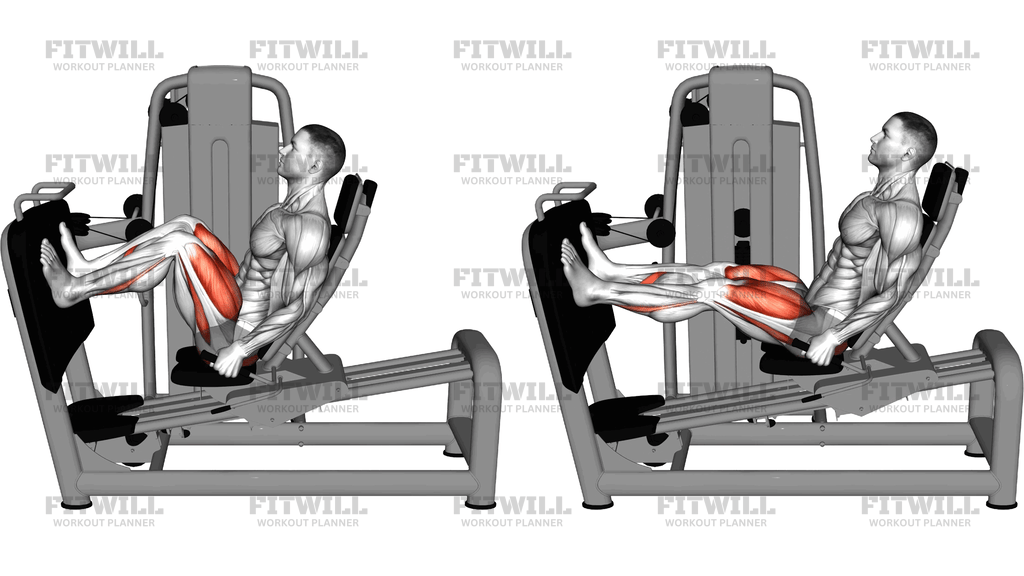
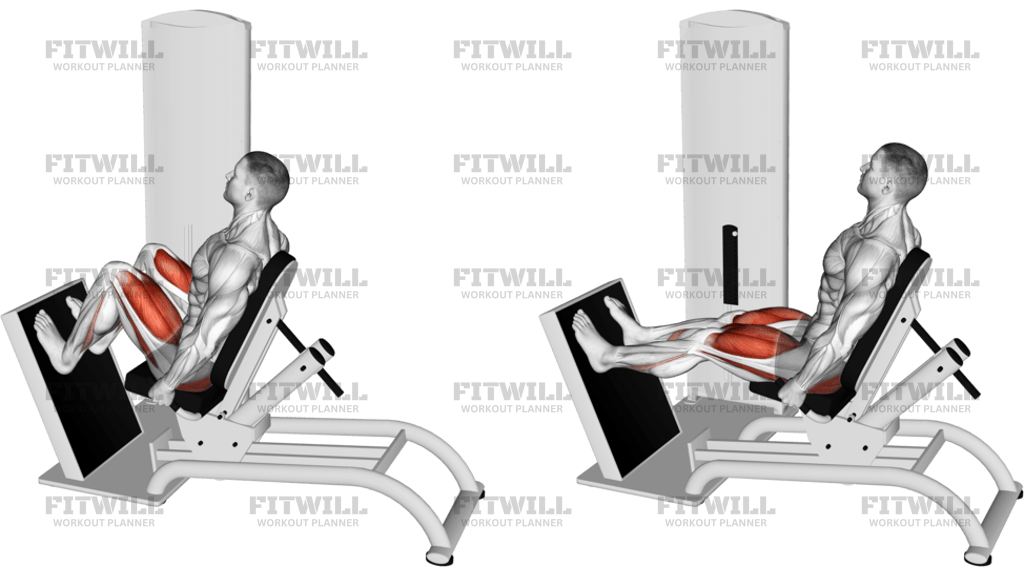
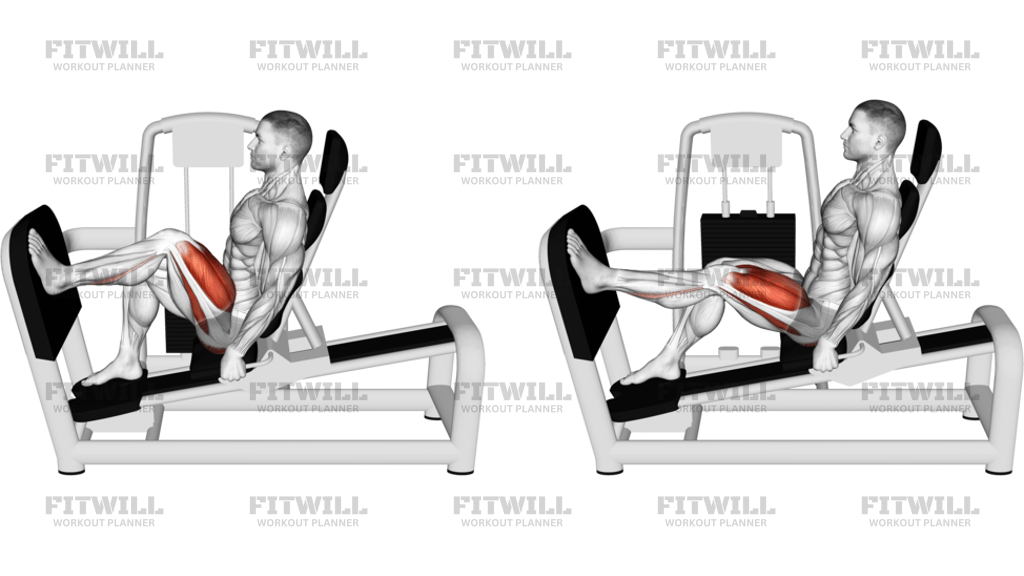
The image shows a seated, back-supported press with one foot on the platform and the other leg kept out of the pressing path. That arrangement shifts the main demand to the working quadriceps while the glutes, adductors, hamstrings, and trunk help keep the pelvis level and the torso pinned to the backrest. In practical terms, this is a lower-body strength accessory that also helps expose left-to-right differences in range, control, and force output.
Set the seat so the working knee starts bent but not jammed too tightly into the chest, then plant the foot so the knee can track in line with the toes as you press. A solid rep starts by bracing the trunk and keeping both hips heavy against the seat. If the pelvis twists, the lumbar spine rounds, or the non-working leg starts helping, the load is too heavy or the setup needs adjustment.
Press through the midfoot and heel until the leg is nearly straight, but stop short of snapping the knee into lockout. On the way back, let the sled or platform return under control so the thigh stays loaded instead of bouncing off the bottom. The goal is smooth, repeatable tension through the full pain-free range, not a fast shove from the top or a sloppy rebound from the bottom.
Use this movement when you want focused quad work without the balance demands of standing single-leg patterns. It works well in a strength block, hypertrophy session, rehab-style progression, or as an accessory after squats or hinges. Beginners can use it safely if they keep the load light, the seat position consistent, and the reps slow enough to keep the knee tracking cleanly and the pelvis from shifting.
Fitwill
Log Workouts, Track Progress & Build Strength.
Achieve more with Fitwill: explore over 9600 exercises with images and videos, access built-in and custom workouts, perfect for both gym and home sessions, and see real results.
Start your journey. Download today!




Instructions
- Adjust the seat so your back and hips stay pressed into the pad and the working knee starts bent without forcing your thigh into your chest.
- Place one foot on the platform so the knee lines up with the middle toes, and keep the other leg bent and clear of the press path.
- Grip the handles or side support firmly enough to keep your torso quiet, then brace your abdomen before the first rep.
- Drive the platform away by pressing through the heel and midfoot of the working leg.
- Keep the working knee tracking in the same line as the toes as the leg extends.
- Stop just short of hard lockout so the quad stays loaded and the knee does not snap back into the joint.
- Lower the platform slowly until the thigh returns to the start position with control.
- Exhale as you press and inhale as you lower, then repeat for the planned reps.
Tips & Tricks
- Set the seat before loading the set; if the working knee starts too close to the chest, the rep usually turns into a hip tuck instead of a clean quad press.
- Keep the non-working leg relaxed and out of the way so it does not help rotate the pelvis or push off the frame.
- Press through the heel and the base of the big toe rather than the toes alone to keep the knee from drifting inward.
- Do not chase a full knee lockout if it makes the sled bounce; a soft finish keeps tension on the quadriceps.
- If your hips peel off the pad near the bottom, reduce the range slightly and keep the pelvis glued to the seat.
- Use a slower lowering phase than the press phase so the machine does not drop you into the bottom position.
- A lighter load with a cleaner knee path is better than a heavier load that twists the torso or shortens the range.
- If one side is weaker, match the same seat setting and depth on both legs so the comparison stays honest.
Frequently Asked Questions
What muscles does Lever Seated Single Leg Press Version 2 work most?
The quadriceps do most of the work, with the glutes, adductors, and trunk helping keep the pelvis steady.
Why use the single-leg version instead of a two-leg press?
It makes side-to-side differences easier to spot and lets each leg work through its own range without the stronger side taking over.
Where should my foot sit on the platform?
Place it far enough up that the heel stays down and the knee tracks over the middle toes without the hip tucking under at the bottom.
Should I lock out my knee at the top?
No hard snap is needed. Finish the rep with a strong leg but keep a small amount of softness so the joint does not take the load.
Can beginners use this machine safely?
Yes, if they start with a light load, keep the back flat on the pad, and avoid letting the pelvis twist during the press.
What is the biggest form mistake?
The most common problem is letting the hips roll or the torso lift off the pad when the platform gets heavy.
How deep should the lowering phase be?
Lower only as far as you can while keeping the pelvis pinned and the working knee controlled. More depth is not better if the lower back rounds.
What should I do if one leg feels much stronger?
Keep the same seat position on both sides and match the weaker side's range and tempo. Let the weaker leg set the standard for the set.