Cable Seated Reverse Shrug
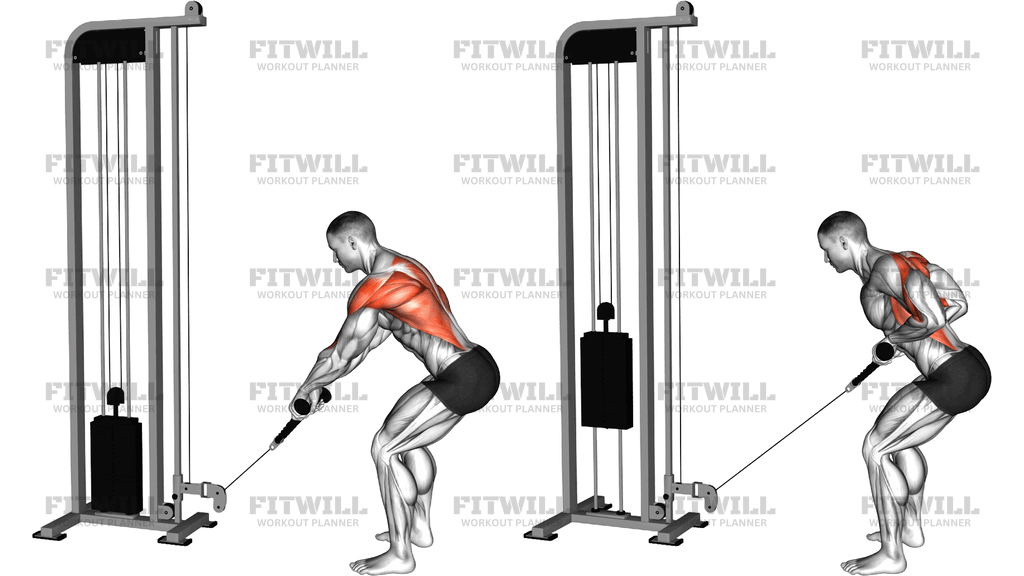
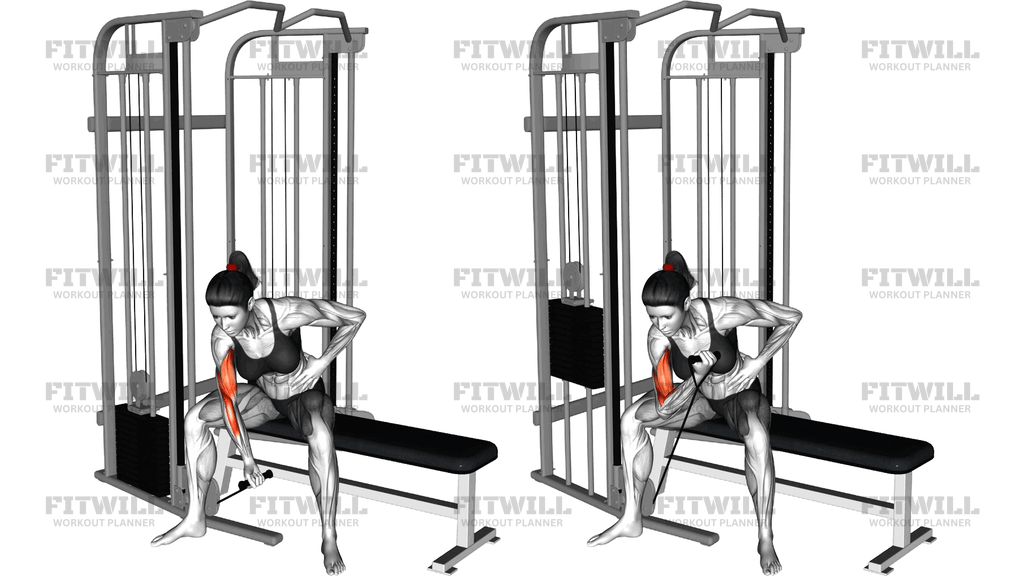
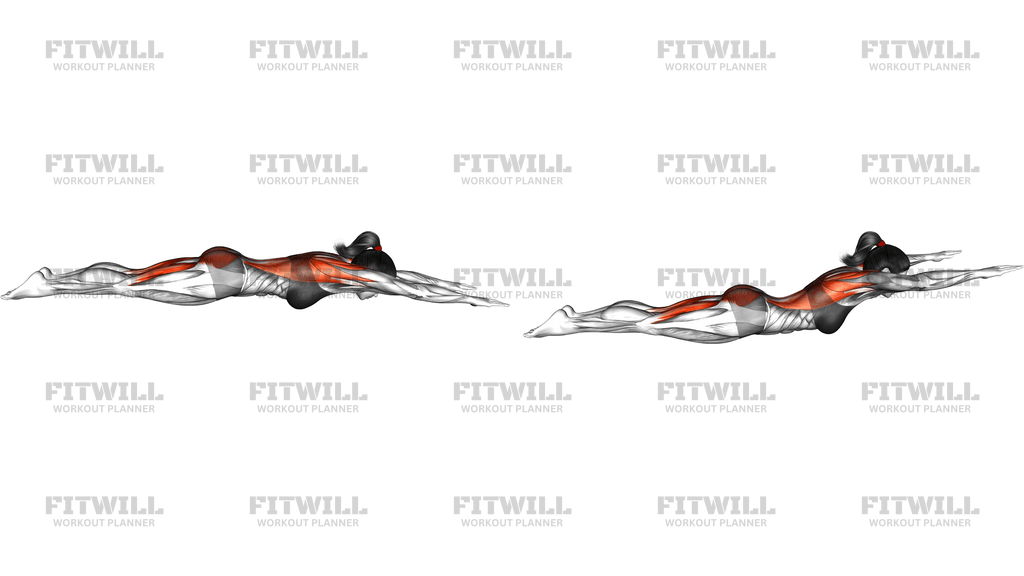
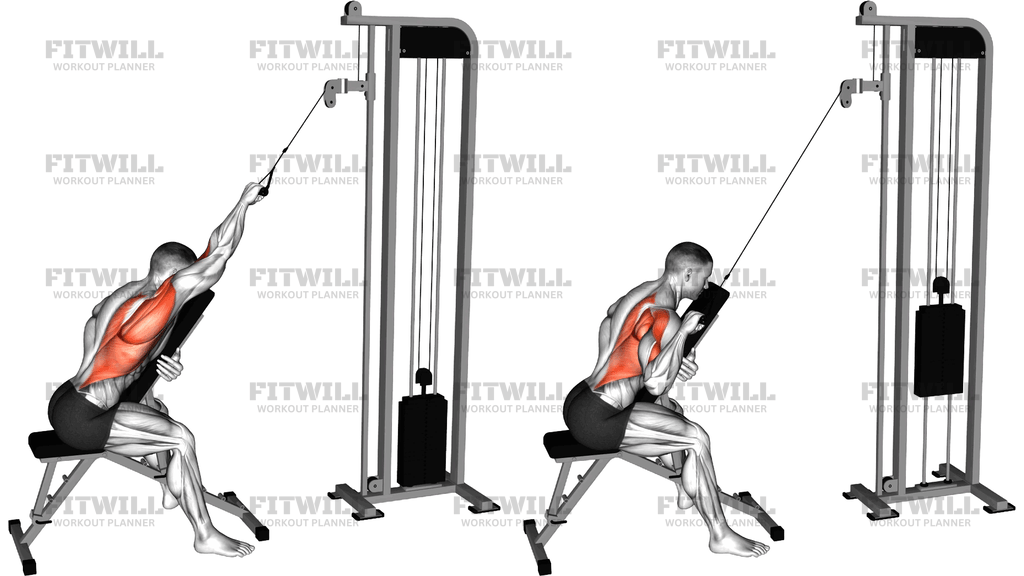
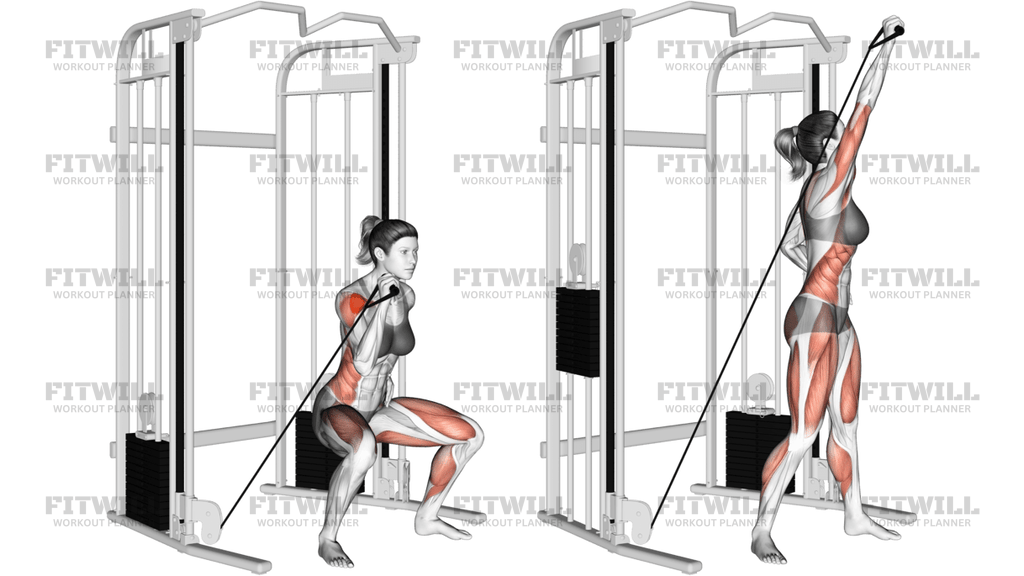
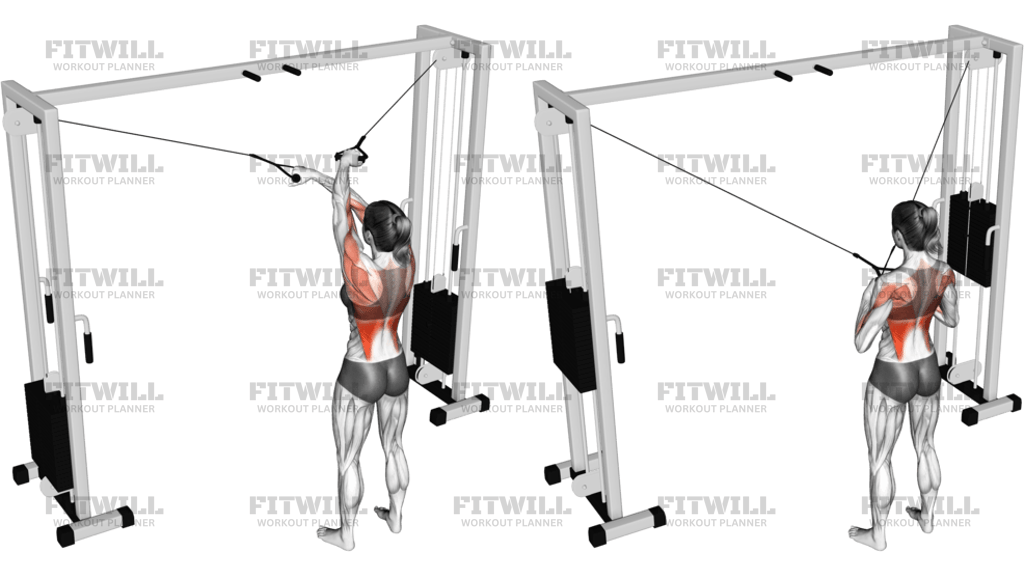
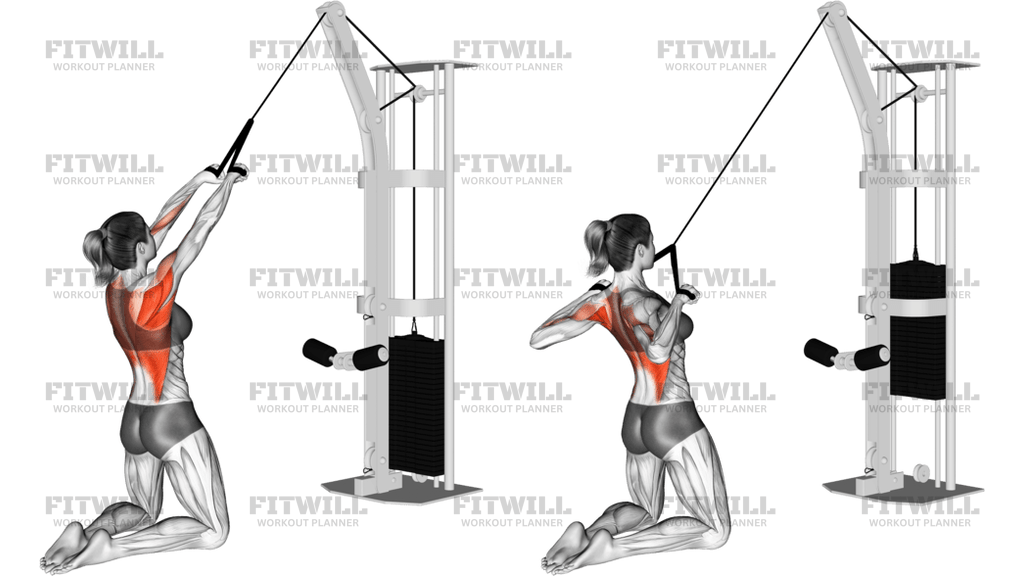
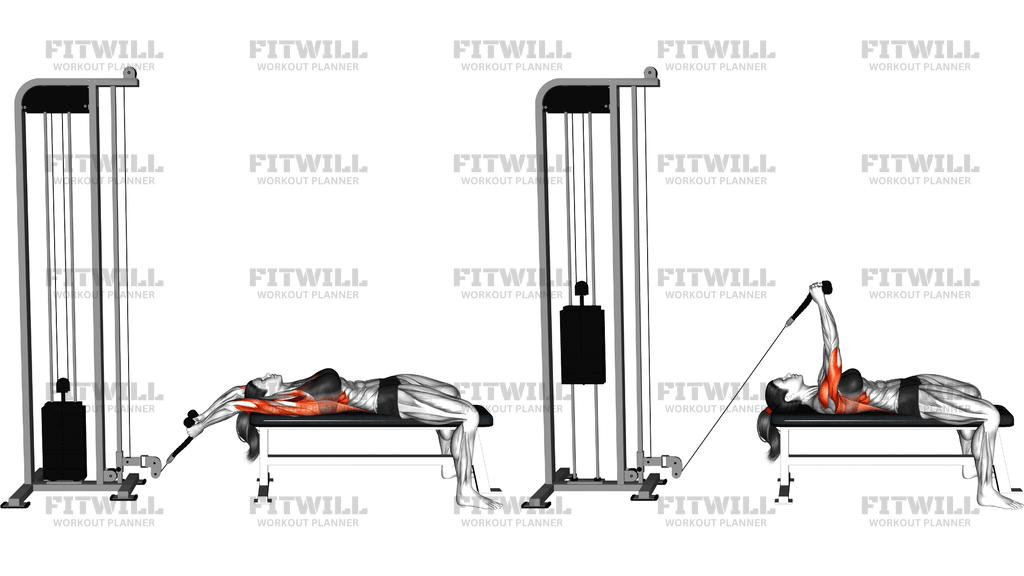
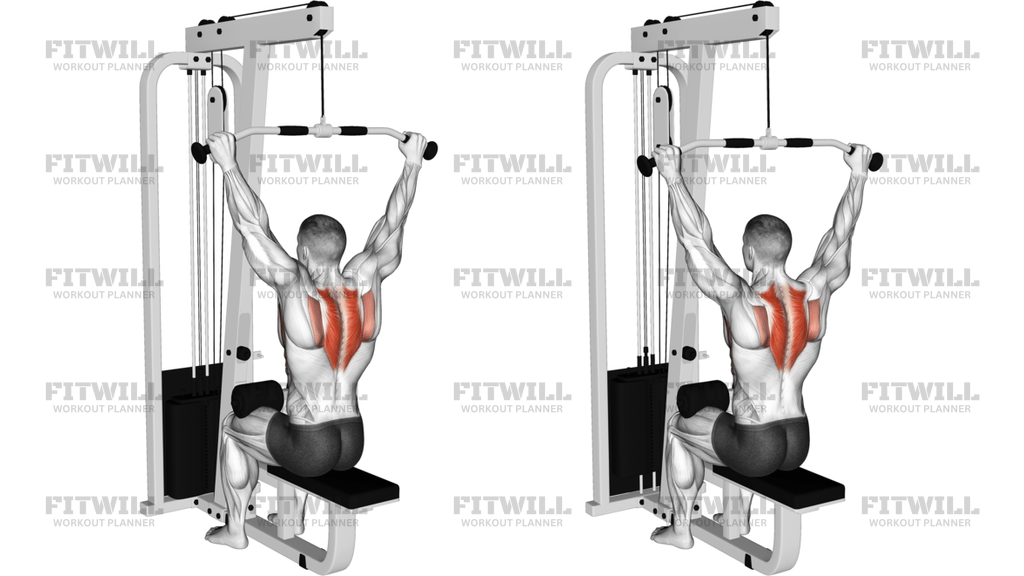
Cable Seated Reverse Shrug is a seated cable exercise for the upper back that trains shoulder depression against a fixed overhead handle. In the image, the lifter sits upright under a high pulley with a wide bar, then resists the urge to bend the elbows and instead draws the shoulders down away from the ears. That small scapular motion is the point of the exercise. It is not a row and not a pulldown. The arms stay long while the shoulder girdle does the work.
This movement is useful when you want to build control in the muscles that stabilize and depress the shoulder blades, especially the lower traps and nearby upper-back support muscles. Because the range is short, the setup matters more than in many other lifts. If the bench height, grip width, or torso angle is off, the exercise quickly turns into a mix of arm pulling, leaning back, or neck tension. A clean setup keeps the cable line stacked over the shoulders and makes the shrug travel feel smooth instead of forced.
A good repetition starts from a tall seated position with the chest stacked, ribs down, and the neck long. From there, the shoulders glide downward as if you are trying to slide them toward your back pockets while the hands simply stay connected to the bar. The elbows should remain almost straight the whole time. At the bottom, pause briefly to feel the upper back finish the rep, then let the shoulders rise back under control without snapping the weight stack.
Cable Seated Reverse Shrug works well as an accessory or prehab-style drill when your goal is better scapular control for pulling, pressing, or overhead work. It can also be a light strength exercise for people who need more awareness of shoulder position. Keep the load modest, the motion deliberate, and the neck relaxed. If the movement becomes jerky or you feel it in the traps near the neck more than between and below the shoulder blades, the weight is too heavy or the setup needs adjustment.
[ Workout Log & Planner ]
Put your next workout in Fitwill
Keep your plan and training log ready when you are.


Instructions
- Set a bench under the high pulley, sit tall, and grasp the wide bar with an overhand grip slightly wider than shoulder width.
- Plant your feet flat, keep your knees bent and torso upright, and let your arms hang long with the cable taut overhead.
- Stack your ribs over your pelvis, brace lightly, and keep your neck neutral before you start the rep.
- Without bending your elbows, draw your shoulders down and slightly back as if you are trying to put them in your back pockets.
- Let the bar stay overhead while the shoulder blades move; do not turn the rep into a pulldown or row.
- Reach the bottom position with the shoulders depressed and the chest tall, then pause for a brief squeeze.
- Reverse the motion slowly and allow the shoulders to rise until you are back to the start under control.
- Exhale through the working phase, inhale on the return, and repeat for smooth, even repetitions.
Tips & Tricks
- Choose a load light enough that the shoulders move before the elbows or torso do.
- Keep the elbows nearly straight; if they bend, the set is drifting into a lat-pull pattern.
- Think about lengthening the neck as the shoulders drop so you do not shrug upward with the traps.
- A slightly wider bar usually makes it easier to keep the arms quiet and the shoulder blades honest.
- Do not lean back to finish the rep; the bench and cable should do the stabilizing, not your hips.
- The range is small, so a short pause at the bottom is more useful than chasing extra motion.
- If you feel the front of the shoulders or biceps more than the upper back, reduce the load and reset the posture.
- Keep the descent slow enough that the weight stack does not slam when the shoulders rise.
Frequently Asked Questions
What does Cable Seated Reverse Shrug train most?
It mainly trains shoulder depression and upper-back control, especially the lower trapezius and nearby scapular stabilizers.
Is this the same as a pulldown?
No. In this exercise the elbows stay almost straight and the shoulders move down; a pulldown bends the elbows to bring the bar toward the body.
Should my elbows bend during the rep?
They should stay nearly straight. A little softening is fine, but elbow bend means the arms are taking over the movement.
Where should I feel the exercise?
You should feel it along the upper back and around the shoulder blades, not as a biceps curl or a neck shrug.
Can beginners do seated reverse shrugs?
Yes. It is beginner-friendly when the load is light and the motion stays small and controlled.
Why do I feel tension in my neck?
Usually the load is too heavy or the shoulders are being lifted instead of depressed. Reset tall and think about pulling the shoulders down, not up.
How heavy should I use the cable stack?
Use a light-to-moderate load that lets you keep the bar steady overhead and move only the shoulder blades.
What is the biggest form mistake?
Turning it into a row or pulldown by bending the elbows, leaning back, or yanking the bar down with momentum.