Side Lying Internal Rotation
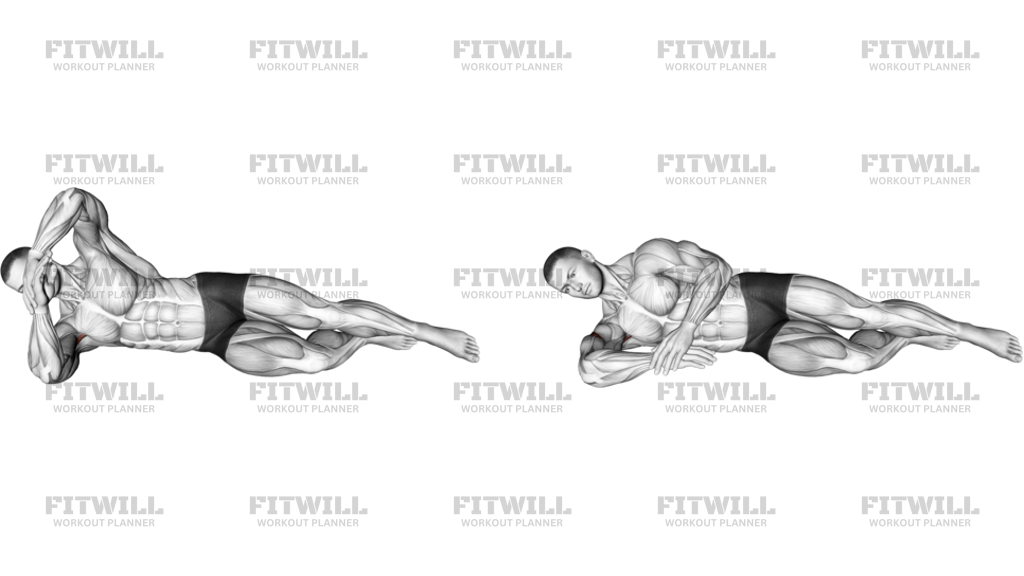
Side Lying Internal Rotation is a shoulder-control drill that trains the muscles responsible for turning the upper arm inward while the elbow stays fixed at the side. In the image, the athlete lies on one side, supports the head with the lower arm, and keeps the working elbow bent to about 90 degrees so the forearm can rotate through a short, controlled arc. That setup matters because the exercise is meant to isolate shoulder rotation, not shoulder hiking, trunk twisting, or wrist movement.
This movement is useful for building control in the rotator cuff and the deeper internal rotators of the shoulder, especially when you want cleaner joint mechanics for pressing, throwing, swimming, or overhead work. The resistance should stay light enough that the forearm can move smoothly from the open position to the closed position without losing the elbow position or rolling the torso backward.
Start with the upper arm close to the rib cage, the elbow supported by a towel or the floor, and the forearm pointed upward or slightly behind the body depending on the setup. From there, rotate the forearm inward until the hand approaches the stomach or lower ribs, then lower it back with slow control. The elbow should act like a hinge point; if it drifts away from the body, the shoulder stops being the main limiter and the rep turns into a compensation drill.
Side Lying Internal Rotation works well as a warm-up, rehab-style accessory, or low-load strength exercise when shoulder control matters more than load. It is usually best done for moderate to higher reps with strict tempo, short pauses, and no momentum. Stop the set if the shoulder pinches, the rib cage lifts, or the wrist starts leading the motion instead of the upper arm.
Because the range is small and the target is precise, quality matters more than weight. Clean reps should look almost identical from the first rep to the last: elbow still, torso quiet, neck relaxed, and the hand moving in a smooth arc. That consistency is what makes the exercise useful for shoulder health and for reinforcing better internal rotation mechanics.
Fitwill
Log Workouts, Track Progress & Build Strength.
Achieve more with Fitwill: explore over 9600 exercises with images and videos, access built-in and custom workouts, perfect for both gym and home sessions, and see real results.
Start your journey. Download today!




Instructions
- Lie on your side on the floor or a bench and rest your head on the lower arm so your neck stays relaxed.
- Place the working upper arm along your rib cage and bend that elbow to about 90 degrees.
- Support the working elbow on a towel or pad so it stays level with your side instead of drifting behind you.
- Hold a very light dumbbell or use the prescribed resistance with the forearm pointed upward to start.
- Stack the shoulders and keep the ribs down so the torso does not roll backward during the rep.
- Rotate the forearm inward until the hand reaches the stomach or lower ribs.
- Pause briefly at the end range without letting the elbow leave your side.
- Lower the forearm back to the start slowly and keep the shoulder doing the work, not the wrist.
- Exhale as you rotate inward and inhale as you return to the starting position.
Tips & Tricks
- Keep a towel under the elbow if your upper arm wants to slide away from your ribs.
- Let the shoulder rotate while the elbow stays pinned; the hand should move, not the upper arm.
- Choose a very light dumbbell first, because heavy load usually turns this into a rushed cheating drill.
- Do not let the wrist flex or extend to fake more range.
- If the front of the shoulder pinches, shorten the range and stop before the hand reaches the torso.
- Use a slow return of two to three seconds so the shoulder has to control the opening phase.
- Keep the chest quiet and avoid rolling the top shoulder backward to gain extra motion.
- A small pause at the end range makes the exercise more honest and exposes sloppy setup fast.
Frequently Asked Questions
What does Side Lying Internal Rotation train most?
It emphasizes the shoulder's internal rotators, especially the subscapularis, while the rotator cuff helps stabilize the joint.
Do I need a dumbbell for the side-lying version?
A light dumbbell is common, but the real goal is controlled inward rotation against whatever light resistance the program uses.
Where should my elbow be during the rep?
Keep the elbow bent and tucked to the side, with a towel or pad under it if needed so it does not drift away from your ribs.
How far should the forearm rotate inward?
Only rotate until the hand reaches the stomach or lower ribs, or earlier if your shoulder starts to pinch.
Why does my torso keep rolling backward?
That usually means the load is too heavy or the shoulder is losing control. Reduce the resistance and keep the ribs stacked.
Can beginners do this exercise safely?
Yes, it is beginner-friendly when the load stays light and the elbow remains fixed to the side.
What is the most common form mistake on this movement?
The most common mistake is letting the elbow drift or turning the rep into a torso twist instead of a shoulder rotation.
When is this exercise most useful?
It fits well in warm-ups, rehab-style work, or accessory blocks when shoulder control matters more than load.