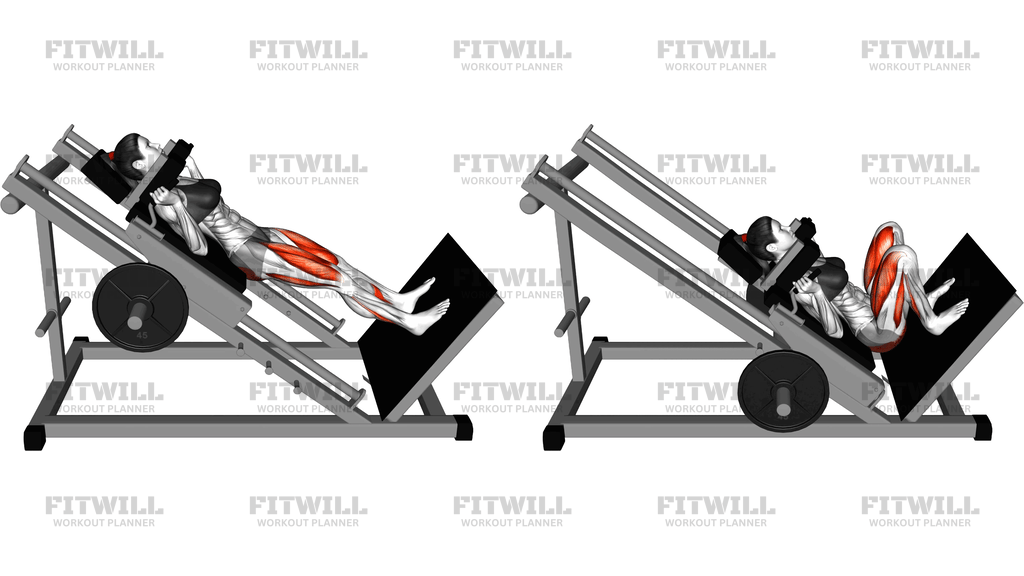
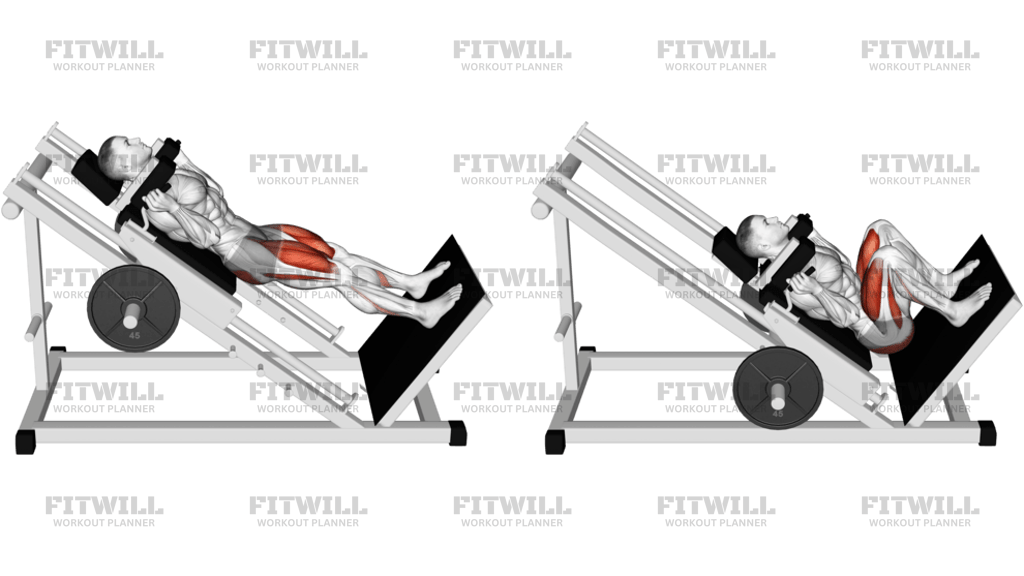
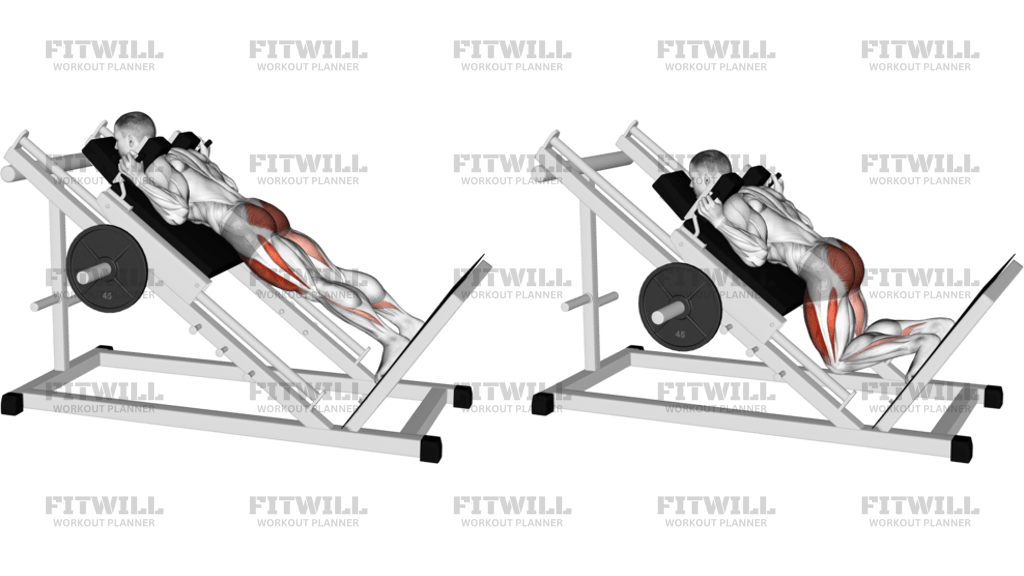
Sled One Leg Hack Squat
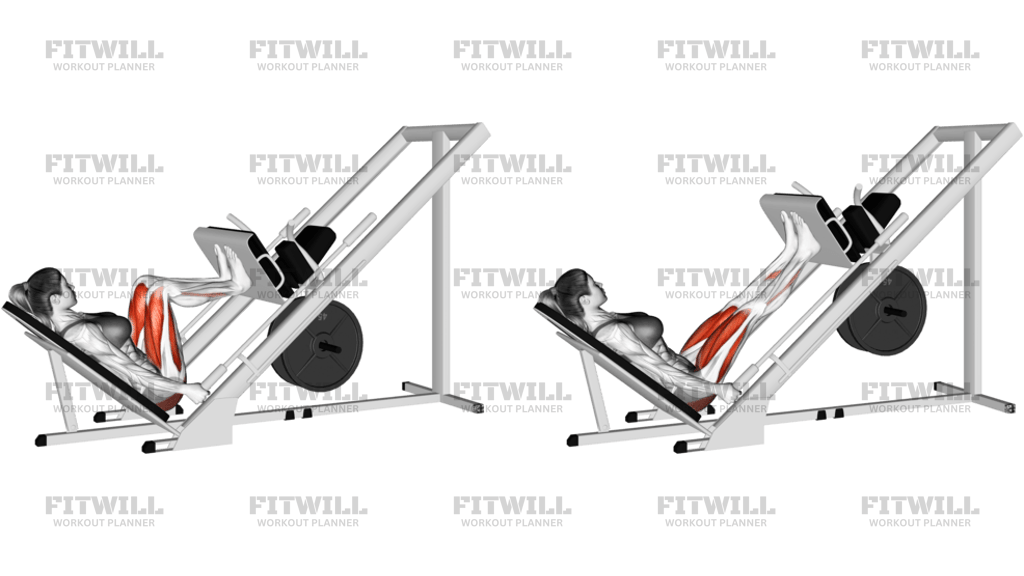
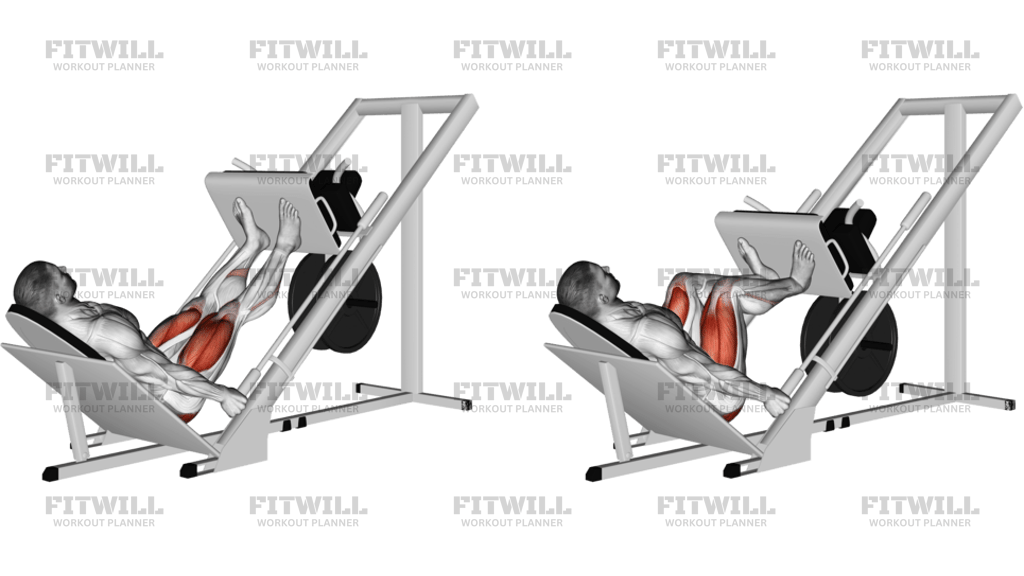
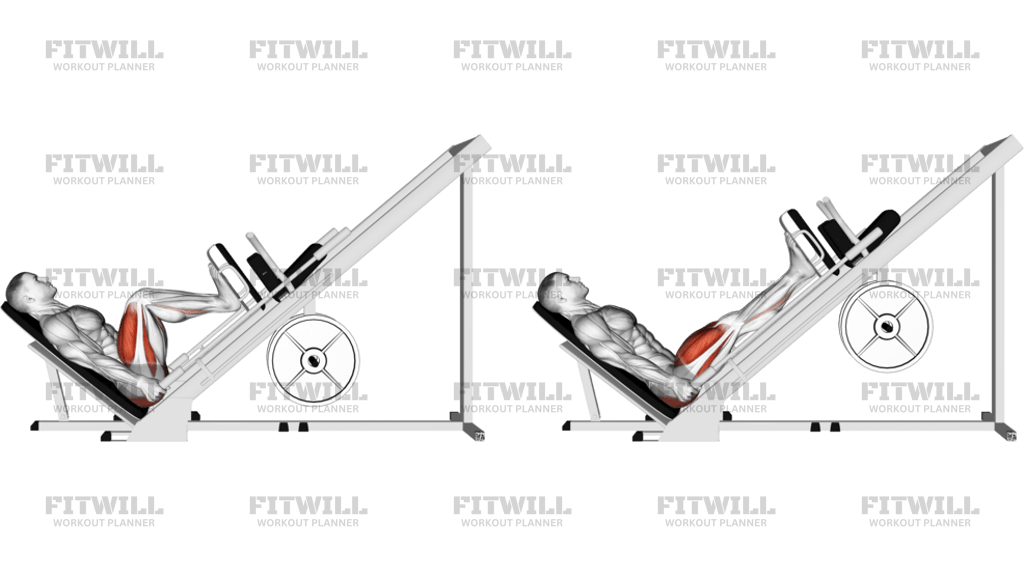
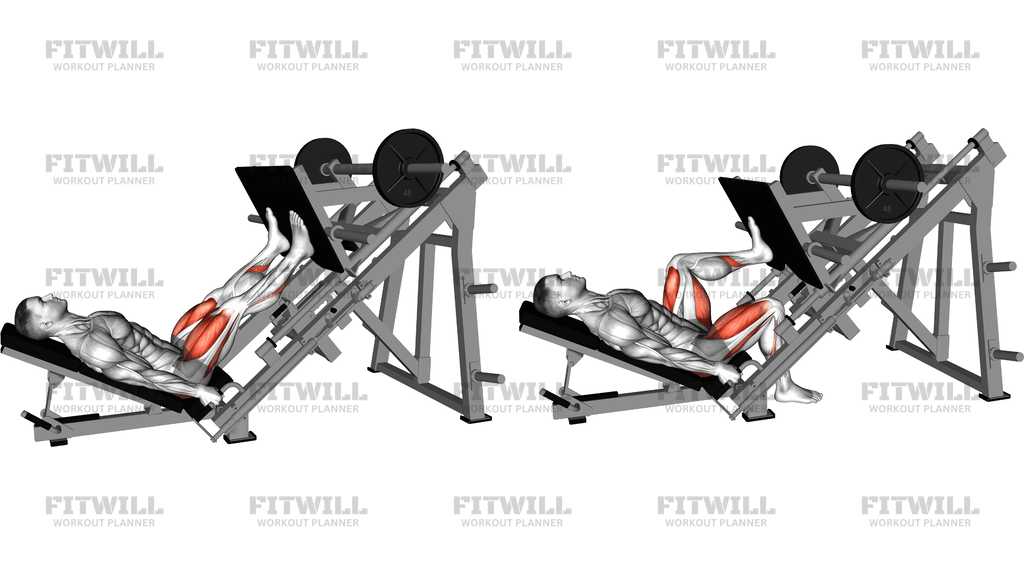
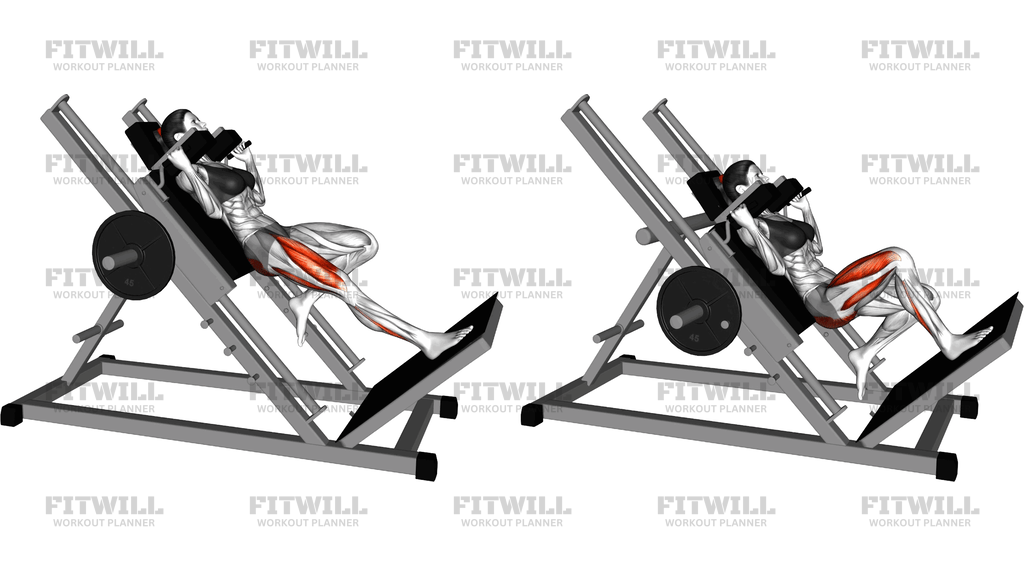
The Sled One Leg Hack Squat is a unilateral version of the classic hack squat, performed on a 45-degree plate-loaded sled machine. Instead of placing both feet on the platform, you position a single foot at the center of the plate while the other leg hangs relaxed beside the sled. Your back stays flat against the padded backrest and your shoulders sit firmly under the shoulder pads, so the machine guides the entire path of the movement while one leg does all of the work.
This exercise is a strong choice for lifters who want to even out strength differences between legs, or who want deep quad work without loading the spine the way a back squat does. Because the sled tracks on fixed rails, you can push close to your limits on one leg while the machine handles stability for you. That makes it especially useful after an injury comeback, during a unilateral strength block, or for anyone whose weaker side tends to get hidden by the stronger leg in bilateral squats.
The primary target is the quadriceps, which work hard both to control the descent and to drive the sled back up. The glutes and hamstrings assist at the hip, the adductors help stabilize the thigh, and the calf of the working leg keeps the foot planted squarely on the platform. The suspended non-working leg should stay relaxed; gripping or tensing it usually throws off your balance and shortens the range on the working side.
Setup details matter more here than in the two-legged version. Because a single foot carries the entire load, the foot needs to sit flat and centered on the platform, roughly in line with your hip, so the knee tracks over the middle of the foot rather than caving inward. Your low back and hips should stay in full contact with the pad, since any twisting or shifting sideways means the weight has become too heavy or the range has gone too deep for the current set.
Execution is straightforward once the position is locked in: release the safeties, lower under control until the working knee reaches a deep but comfortable bend, then drive through the whole foot to extend the leg without snapping the knees into lockout. Breathe in on the way down, exhale as you press up, and complete all repetitions on one side before switching legs. Start noticeably lighter than your two-legged hack squat weight, because one leg will not move anything close to what both can.
In practice, the Sled One Leg Hack Squat fits best as a secondary lower-body lift placed after your main squat or leg press work. It pairs well with split squats and lunges for a unilateral-focused day, or it can serve as the primary quad movement for lifters with back or shoulder discomfort who tolerate machine-based squatting better than free-weight options.
[ Workout Log & Planner ]
Put your next workout in Fitwill
Keep your plan and training log ready when you are.


Instructions
- Load the sled with weight plates on both sides and set the machine to a starting height you can safely unrack from a standing position.
- Step onto the platform with one foot placed flat and centered on the plate, about hip-width in from the edge, then set your shoulders firmly under the pads and press your entire back against the backrest.
- Let the non-working leg hang relaxed off the platform beside the sled, and take hold of the side handles for a secure grip.
- Brace your core and unrack the sled, then press up slightly to release the safety stops and rotate them out of the way.
- Inhale and lower the sled by bending the working knee, keeping the knee tracking in line with the middle of the foot and your hips and shoulders square to the front.
- Descend until the knee reaches a deep, controlled bend without your lower back or hips rounding or twisting off the pad.
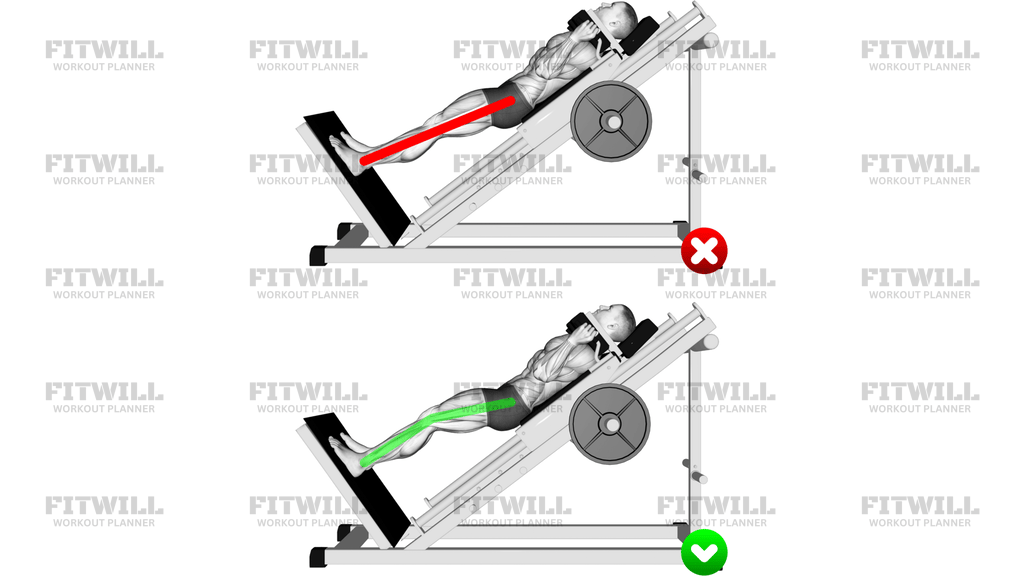
- Exhale and drive through the whole foot — heel and midfoot equally — to press the sled back up, stopping just short of a hard knee lockout.
- Keep the tempo controlled on every rep, especially on the way down, and avoid letting the sled bounce out of the bottom.
- Complete all planned repetitions on the working leg, re-rack the sled onto the safety stops, then carefully switch legs and match the repetitions on the other side.
Tips & Tricks
- Start with roughly half of your usual two-legged hack squat load; a single leg loses the contribution of the other side plus the stabilization help, so the jump in difficulty is larger than most people expect.
- If your knee drifts inward as you descend, narrow the foot slightly and consciously press the outside of the foot into the platform — this is the most common technical fault on this exercise.
- Keep the free leg genuinely relaxed. Flexing or swinging it creates rotation through the hips and pulls the working side off the pad.
- Do not chase depth at the cost of hip position. The moment your pelvis starts to tuck or lift off the backrest, that is your working range for that day.
- Avoid slamming into full lockout at the top. Keeping a slight bend in the knee keeps constant tension on the quads and protects the joint under load.
- If you feel the work shifting into your lower back, check that both shoulders are evenly under the pads; leaning into one shoulder is a common compensation when the working leg is the same side as your stronger arm.
- Hold the side handles firmly but do not pull on them — pulling rotates the torso and changes the sled path.
- Warm up the working knee with a few bodyweight single-leg squats to a box or a light set before loading the sled, since unilateral leg work exposes stiffness quickly.
- Film yourself from the front occasionally to confirm the knee tracks over the foot; from your own viewpoint, inward drift is hard to feel.
Frequently Asked Questions
Which muscles does the Sled One Leg Hack Squat work?
The quadriceps are the main mover, with the glutes and hamstrings assisting at the hip and the calf keeping the foot stable on the platform. The adductors also help control the thigh as you descend.
How is the Sled One Leg Hack Squat different from a regular hack squat?
Only one foot is on the platform, so the working leg handles the entire load and any left-to-right strength difference gets exposed instead of averaged out. The non-working leg hangs free beside the sled.
Is the Sled One Leg Hack Squat suitable for beginners?
It can be, but beginners should start with the two-legged hack squat first to learn the machine's path. Once that feels stable, light single-leg sets are a good way to build balanced strength early.
Where should my foot be placed on the platform?
Place it flat and centered on the plate, roughly in line with your hip, with the whole foot in contact. A higher placement shifts some work toward the glutes, while a lower placement emphasizes the quads.
Why does my knee cave inward during this exercise?
Single-leg loading challenges hip control more than the two-legged version, so the thigh tends to rotate in when the glutes fatigue. Reduce the weight and focus on pressing the knee out over the middle of the foot.
How much weight should I use compared to my normal hack squat?
Expect to use considerably less — often half or less of your bilateral load. Build up gradually and let the weaker leg set the standard for both sides.
What can I substitute if my gym has no hack sled?
Bulgarian split squats, single-leg leg press, or dumbbell step-ups all train one leg at a time in a similar way. The sled simply adds a fixed path and back support, which makes heavier unilateral loading easier to control.
Should I do both legs in an alternating pattern or all reps on one side first?
Finish all repetitions on one leg before switching. Alternating mid-set lets the first leg partially recover and hides the difference between sides.
Is it safe for my knees and lower back?
The sled supports your back and fixes the movement path, which keeps spinal loading relatively low, but the working knee and hip take the full force. Use a controlled tempo, respect your current range of motion, and stop if you feel sharp joint pain rather than muscle effort.