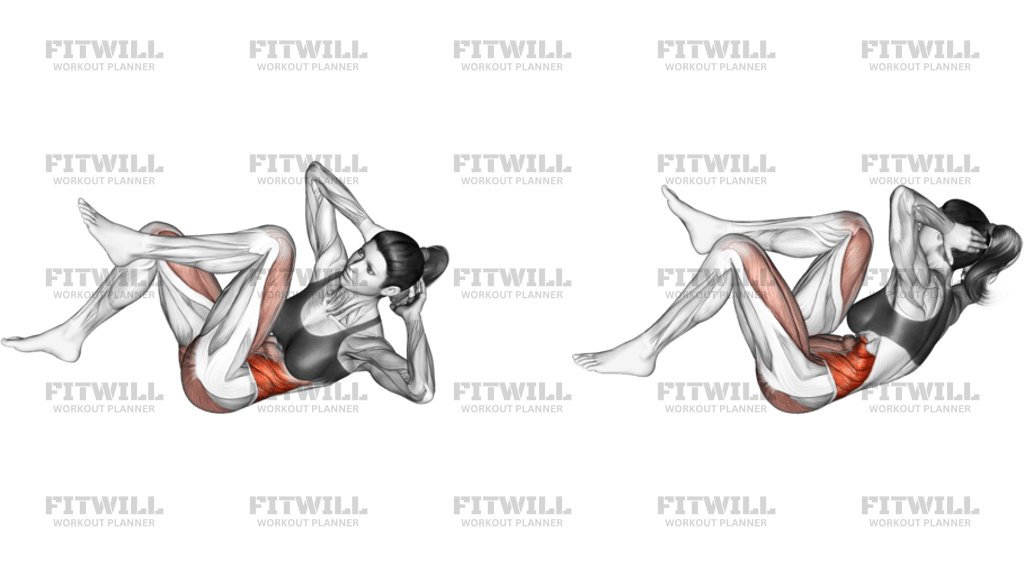
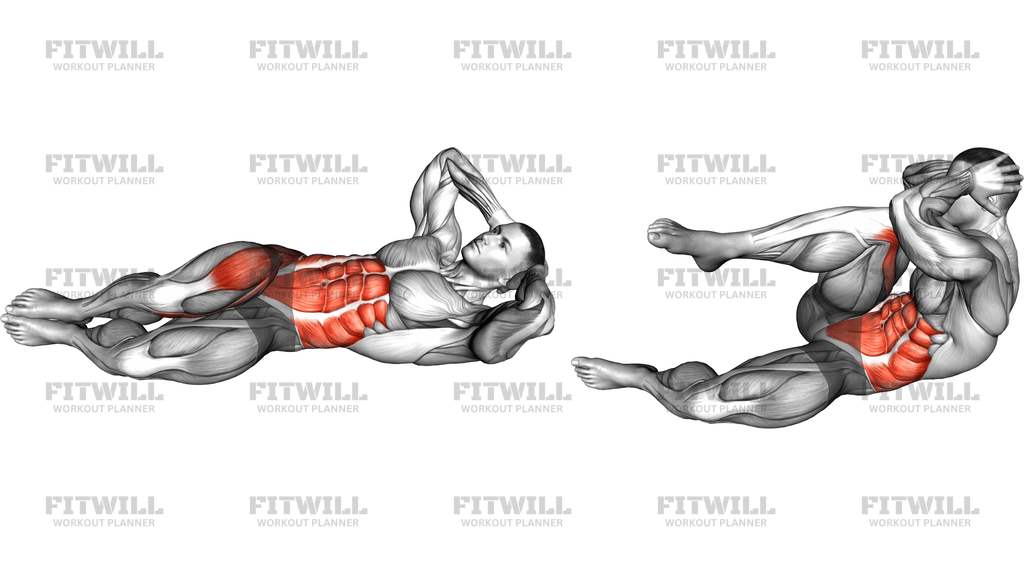
Standing Side To Cross Crunch
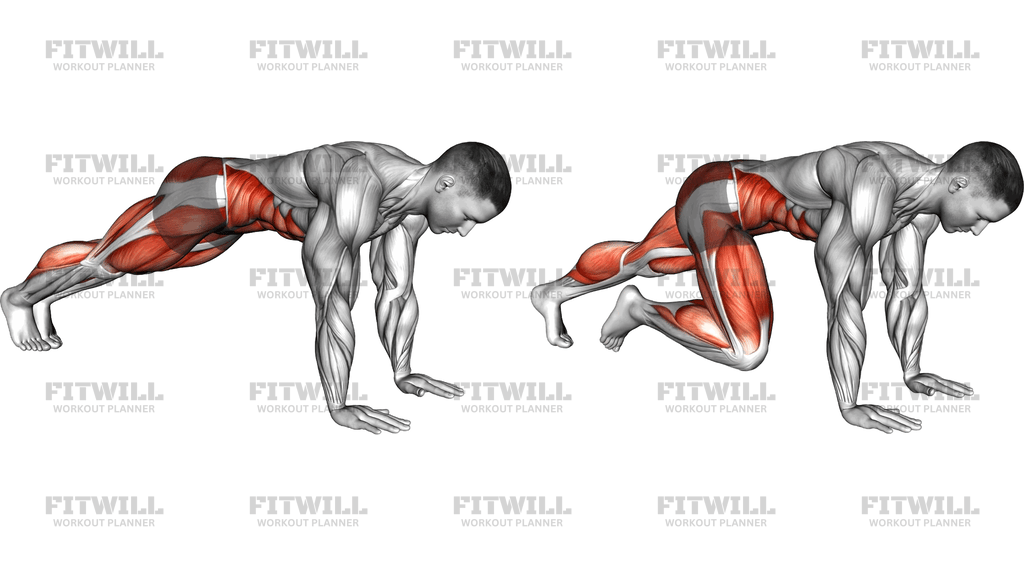
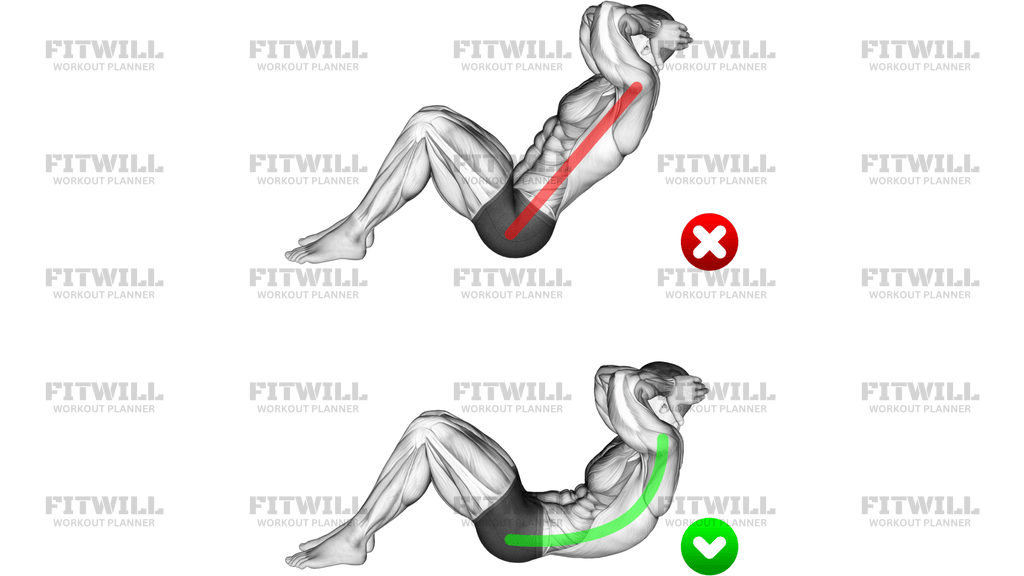
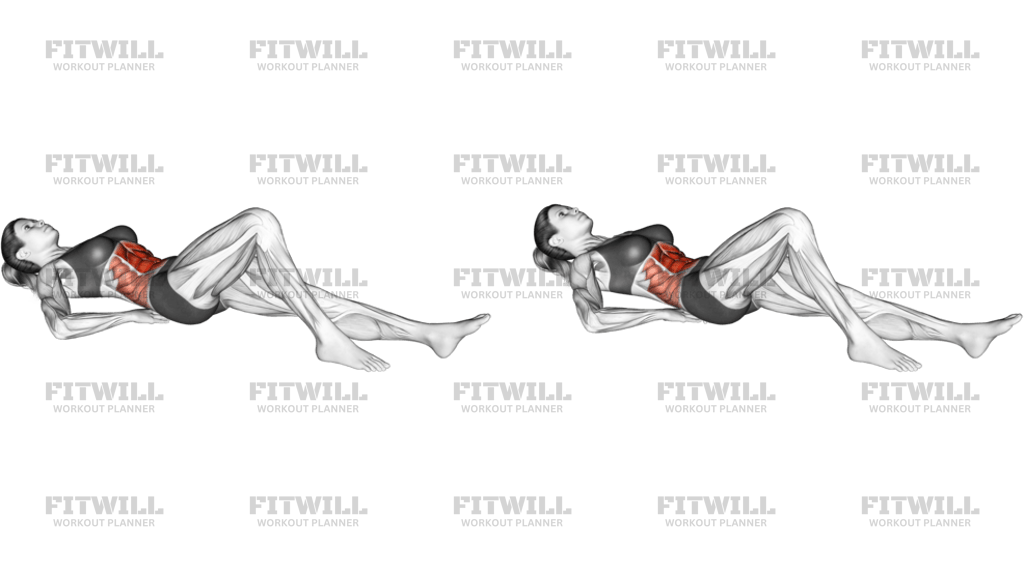
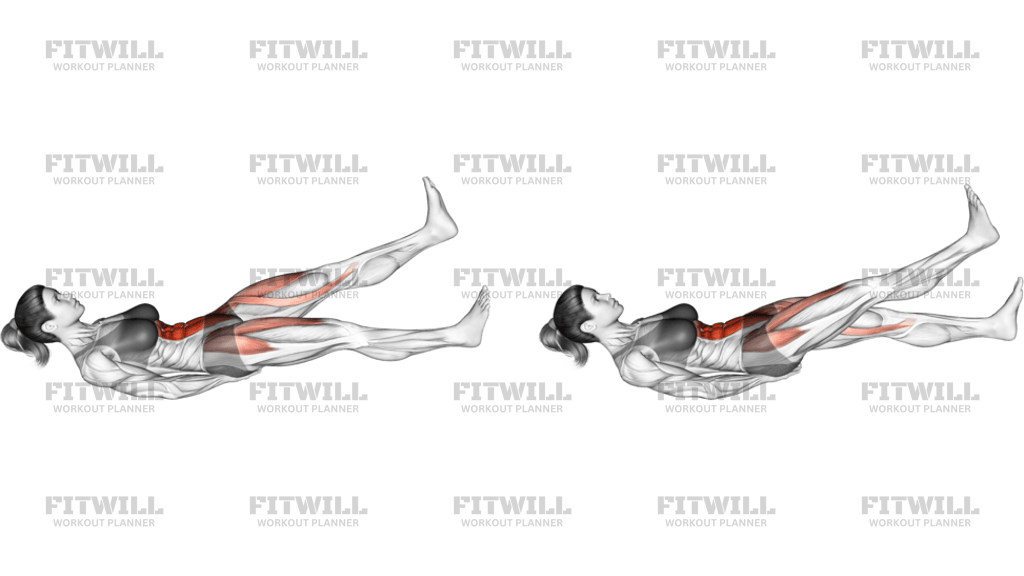
The Standing Side To Cross Crunch is a bodyweight core exercise performed from an upright stance with your hands lightly placed behind your head. Instead of lying on the floor like a traditional crunch, you stay on your feet and alternately crunch one side of your torso down while driving the opposite knee up, letting your elbow travel toward that rising knee. The highlight map of the movement shows exactly where the work happens: the entire abdominal wall, with the obliques along the sides of the waist taking the largest share, plus the hip flexors on the leg that lifts.
This movement suits anyone who wants to train the core without getting down on the floor, which makes it especially practical for home workouts, hotel rooms, warm-ups, or group classes where mat space is limited. It is also a friendly option for people who find floor crunches uncomfortable on the neck or lower back, because the standing position lets you control the amount of spinal flexion and rotation with your whole body rather than just your trunk. Because you balance on one leg briefly during each rep, you also get light demand on the standing hip and ankle stabilizers.
The setup matters more than it looks. Your hands belong behind your head for support only, never for pulling your neck forward, and your feet should be set about hip-width to shoulder-width apart so you have a stable base to shift over. When the exercise is done well, the crunch comes from the ribs and pelvis moving toward each other on one side, not from simply swinging the elbow across the body. The knee and elbow should meet roughly at the level of your midsection, and the torso folds diagonally rather than collapsing forward.
To execute it, brace your midsection, then lift your right knee across your body while simultaneously side-bending and slightly rotating your torso so your left elbow draws down toward that knee. Squeeze the side of your waist at the top, then lower the leg with control and repeat on the other side. That alternating left-right rhythm is what gives the exercise its name, and moving side to side without resting keeps the obliques under continuous tension while your heart rate climbs modestly.
In practice, the Standing Side To Cross Crunch works well as a mid-set core finisher, a dynamic warm-up drill before lifting or running, or a high-repetition waist exercise in circuit training. Start with controlled reps of ten to fifteen per side and only speed up once you can keep the movement crisp. If you feel it mostly in your hip flexors or your neck, shorten the range and focus on pulling your ribs toward your pelvis rather than reaching hard with the elbow. Keep your lower back neutral at the bottom of each rep and avoid jerking the torso sideways to generate momentum.
Fitwill
Log Workouts, Track Progress & Build Strength.
Achieve more with Fitwill: explore over 9600 exercises with images and videos, access built-in and custom workouts, perfect for both gym and home sessions, and see real results.
Start your journey. Download today!




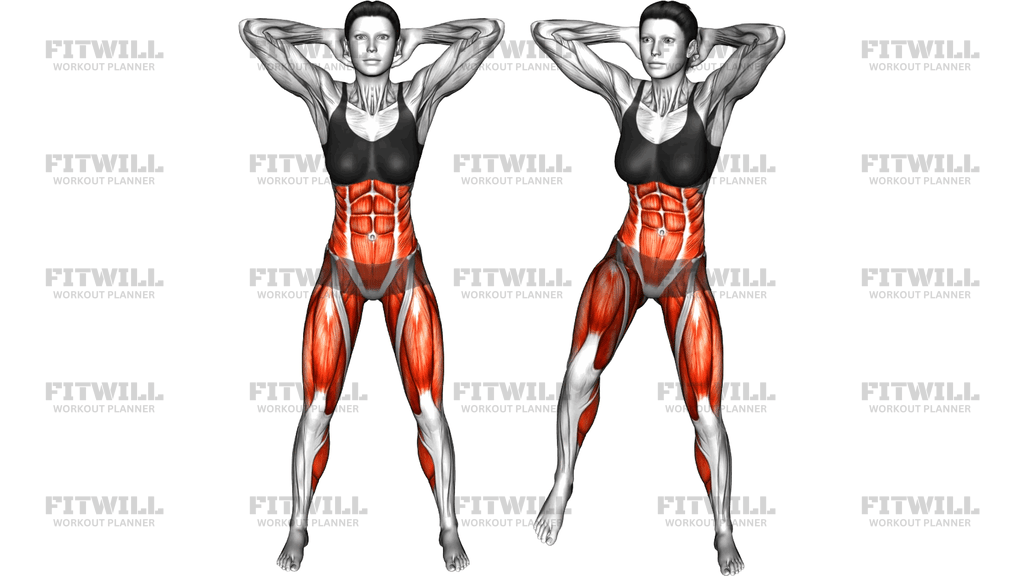
Instructions
- Stand tall with your feet about hip-width to shoulder-width apart and place your fingertips lightly behind your head with your elbows flared out wide.
- Shift your weight slightly onto one leg and engage your core as if bracing for a light nudge to the waist.
- Keep your chest lifted and your gaze forward so your head stays neutral and your hands never pull on your neck.
- Drive your right knee up and across the front of your body while crunching your left elbow down and inward to meet it, folding your torso diagonally.
- Squeeze the side of your waist at the top so your lower ribs and the lifted knee come as close together as your range allows.
- Lower your right leg back to the floor under control and return your torso fully upright before starting the next rep.
- Repeat immediately on the other side, lifting the left knee toward the right elbow, and continue alternating sides.
- Exhale as you crunch the knee and elbow together, and inhale as you return to the tall standing position.
- Complete equal reps on both sides, then finish the set by standing upright and releasing your hands from behind your head.
Tips & Tricks
- The most common fault is yanking the head forward with the hands. Keep your fingertips resting behind your head as light supports and let the obliques do the folding.
- If your elbow swings across your chest instead of your torso actually shortening on one side, the obliques stop doing the work. Cue yourself to pull the bottom of your ribs toward your hip bone on the crunching side.
- Avoid leaning your whole body sideways like a metronome. The torso should hinge diagonally toward the lifted knee, not tip over on a straight line.
- Balance wobbling between reps usually means your feet are too close together. Widen your stance slightly and press the big toe of the standing leg into the floor.
- Keep the working knee traveling up and across toward the opposite elbow rather than straight up, so the cross-body rotation pattern stays intact.
- Do not rush the return. Letting the leg drop quickly turns the exercise into a leg swing and steals tension from the waist between reps.
- If your hip flexors dominate and your abs stay quiet, reduce how high you lift the knee and exaggerate the side crunch instead, even if the elbow and knee never touch.
- Stop the set if your lower back starts arching and hollowing each time you lower the leg. That is a sign of fatigue in the trunk, not something to push through.
Frequently Asked Questions
What muscles does the Standing Side To Cross Crunch work?
The main muscles are the obliques on the sides of your waist, with strong support from the rectus abdominis across the front of your trunk. The hip flexors of the lifting leg assist on every rep, and the standing leg's hip and ankle stabilizers work lightly to keep you upright.
How is the Standing Side To Cross Crunch different from a regular floor crunch?
A floor crunch flexes the spine straight forward while you lie down, whereas this version is performed standing and combines side-bending with a diagonal knee-to-elbow pattern. That makes it more oblique-focused and removes the need for a mat.
Should my elbow actually touch my knee?
Touching is a nice bonus, not the goal. Aim to bring the lower ribs and the lifted knee toward each other, and stop wherever your range allows without pulling your head forward or rounding your lower back.
Is the Standing Side To Cross Crunch good for beginners?
Yes, it is quite approachable because it uses no equipment and the range is easy to scale. Beginners can lift the knee lower and make the crunch smaller, focusing on feeling the side of the waist contract rather than chasing a big elbow-to-knee meeting.
Why do I feel this more in my hip flexors than my abs?
When the knee drives up hard without the torso folding, the hip flexors take over the movement. Reduce the knee height and put more emphasis on crunching your ribs down toward your pelvis so the abdominal wall does its share of the work.
How many reps should I do of the Standing Side To Cross Crunch?
Ten to fifteen controlled reps per side is a solid starting point. If you use it in a circuit or as a finisher, you can go higher, as long as each rep still shows a clear torso fold and a controlled leg return.
Can I keep my hands somewhere other than behind my head?
You can place your fingertips at your temples or extend your arms overhead and reach the working elbow toward the knee, but avoid interlocking your fingers behind your skull and pulling. The hands are there to support the head, not to drive the crunch.
What can I substitute if standing balance is difficult?
Try the same cross-body crunch pattern lying on your back as a bicycle crunch, or hold onto a sturdy chair back or wall with one hand while performing the standing version. Both keep the diagonal crunch pattern while reducing the balance demand.
Is it safe for my lower back?
For most people it is a gentle option because you control the amount of flexion and rotation while standing. Keep the movement smooth, avoid swinging your torso for momentum, and stop if twisting with a lifted knee causes discomfort.