Stepback Opposite Grab
Stepback Opposite Grab is a standing stretch that combines a rear step-and-cross foot position with an overhead reach in which one hand takes hold of the opposite wrist. The stepped-back leg lengthens the front of the hip, while the crossed overhead grip lets you gently pull yourself into a long side stretch. Because the lower body anchors you and the upper body drives the lengthening, you feel it along the waist, up through the ribs and lats, and into the shoulder of the reaching arm.
This movement is useful as a warm-up primer before lower-body training, as a reset between sets of squats or lunges, or as part of a cool-down after running, cycling, or group cardio classes. It suits people who sit for long hours, since the stepback position opens the hip flexors of the rear leg while the overhead grab counters the rounded, compressed posture of desk work. It needs no equipment and very little floor space, so it travels well to hotel rooms, offices, or the edge of a training floor.
Setup matters more here than it looks. The crossed rear foot is what separates this from a plain side bend: placing the ball of the back foot behind and slightly across the standing leg tips your pelvis and adds a rotational element, so the stretch reaches the outer hip and the side of the waist instead of stopping at the low back. If your feet are simply apart, the same arm position produces a much shallower stretch and the hip flexors of the rear leg get little benefit.
To execute it well, step one foot back and slightly across, settle the ball of that foot down with the heel lifted, and square your hips forward before you reach. Raise the arm on the same side as the stepping leg, cross it overhead, and wrap the opposite hand around its wrist. From there, pull the gripped wrist gently across and over as you lengthen through the side of your body, breathing steadily rather than forcing the lean.
The most common faults are shrugging the reaching shoulder, arching the lower back instead of lengthening the waist, and twisting the hips to chase a bigger range. Keep the reach long, the ribs down, and the pelvis quiet. Hold each side for twenty to thirty seconds, come out of the position the same way you went in, and always repeat on the second side so the stretch stays balanced.
Fitwill
Log Workouts, Track Progress & Build Strength.
Achieve more with Fitwill: explore over 9600 exercises with images and videos, access built-in and custom workouts, perfect for both gym and home sessions, and see real results.
Start your journey. Download today!




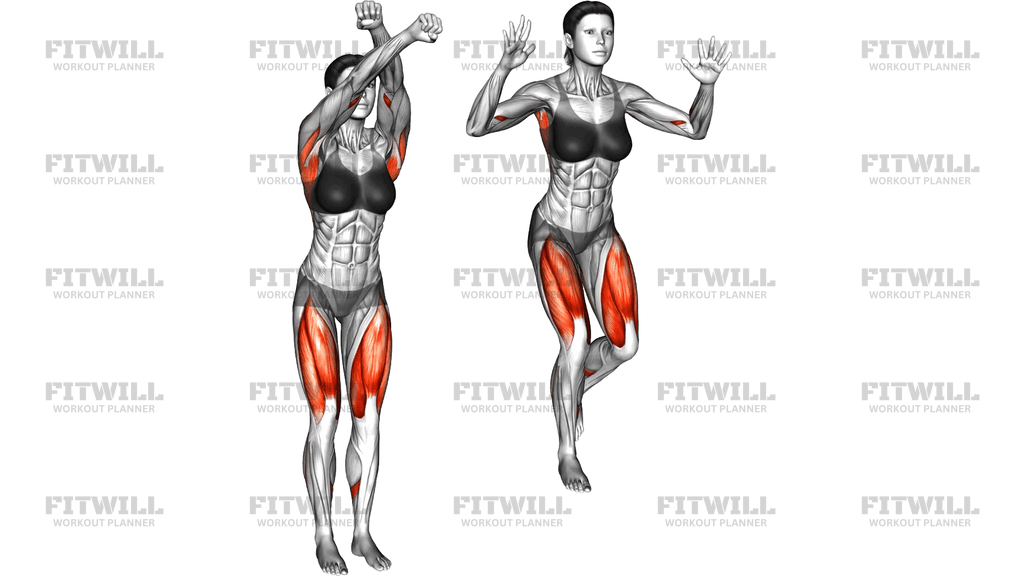
Instructions
- Stand tall with your feet hip-width apart, arms relaxed at your sides, and your weight even across both feet.
- Step your right foot back and slightly across behind your left leg, placing the ball of the right foot on the floor with the heel lifted.
- Square your hips to the front and soften both knees slightly so you are stable before you reach.
- Raise your right arm overhead and cross it toward the midline of your body.
- Wrap your left hand around your right wrist and hold a firm but comfortable grip.
- Exhale and gently pull the right wrist across and over, lengthening the right side of your body from hip to fingertips.
- Keep your ribs down and your hips facing forward; hold the position for twenty to thirty seconds while breathing steadily.
- Release the grip slowly, lower the arm, and step the right foot back to center.
- Repeat the full sequence on the other side, stepping the left foot back and grabbing the left wrist with the right hand.
- Perform one to two stretches per side, resetting your stance fully between reps.
Tips & Tricks
- If you feel the stretch only in your lower back, lengthen through the waist first by reaching up before you pull across; the arch of the low back often substitutes for a real side stretch.
- Do not let the reaching shoulder creep toward your ear. Press the shoulder down away from the hand to keep the stretch in the lat and waist rather than trapping it in the neck.
- The crossed rear foot should sit lightly on the ball of the foot. If your balance wobbles, widen the gap between the feet slightly instead of twisting the hips to steady yourself.
- Keep the front knee soft. Locking it makes the stance rigid and reduces how far the pelvis can settle into the stepback position.
- Pull the wrist across with steady pressure, not a jerk. The opposite-hand grab is for control, so a slow two-second pull into position works better than yanking for extra range.
- If gripping the wrist bothers your hand or forearm, hold just above the elbow or simply reach the arm overhead and across without the grab.
- Breathe out as you pull into the stretch and keep the breath rhythm going; holding your breath usually tightens the ribs and shortens the reach.
- Do this on a firm, non-slip surface. A slick gym floor under the ball of the rear foot is the most common setup problem with this stretch.
- Match the hold time on both sides. The side that feels tighter often tempts you to linger, which gradually creates an imbalance.
Frequently Asked Questions
What muscles does the Stepback Opposite Grab stretch?
The main targets are the obliques and the side-body line running from the hip through the ribs and lats. The stepback position also lengthens the hip flexors of the rear leg, and the overhead grip takes the reaching shoulder into a full overhead stretch.
Why does the back foot cross behind instead of just stepping straight back?
The cross adds a slight rotational tilt to the pelvis, which turns a plain side reach into a diagonal stretch that reaches the outer hip and waist. With the foot simply behind, the stretch stays shallower and mostly linear.
Is the Stepback Opposite Grab suitable for beginners?
Yes, it is a low-load bodyweight stretch that most people can perform safely. Beginners should shorten the stance, use a lighter pull on the wrist, and prioritize keeping the hips squared over getting a deep lean.
How long should I hold each side?
Twenty to thirty seconds per side works well for a cool-down or standalone stretch. For a brief warm-up version, hold for ten to fifteen seconds and add a slow breath cycle while you are in position.
My wrist hurts when I grab it overhead. What can I do instead?
Slide your grip down to just above the elbow of the reaching arm, or skip the grab entirely and reach the arm long overhead while still stepping back. You lose a little leverage but keep the stretch.
Should I feel this in the front of the back leg's hip?
A mild lengthening sensation in the front of the rear hip is normal and often desirable, since the stepback puts the hip flexors on stretch. If it becomes sharp or pinches at the front of the hip, shorten the step and reduce the lean.
What is the most common mistake with this stretch?
Arching the lower back and shrugging the reaching shoulder. Both fake extra range while the waist and lats do less work, so keep the ribs down and the shoulder pressed away from the ear throughout the hold.
When is the best time to use the Stepback Opposite Grab in a workout?
It works as a gentle warm-up before leg days, as a standing reset between sets of squats or lunges, and as a cool-down after cardio. Because it is low intensity, it also fits well as a midday movement break.
Do I need to do both sides every time?
Yes. The crossed stance and one-sided grab create an asymmetric stretch, so performing the same hold on the other side keeps the hips and waist working evenly from session to session.