Chin Tuck Hold
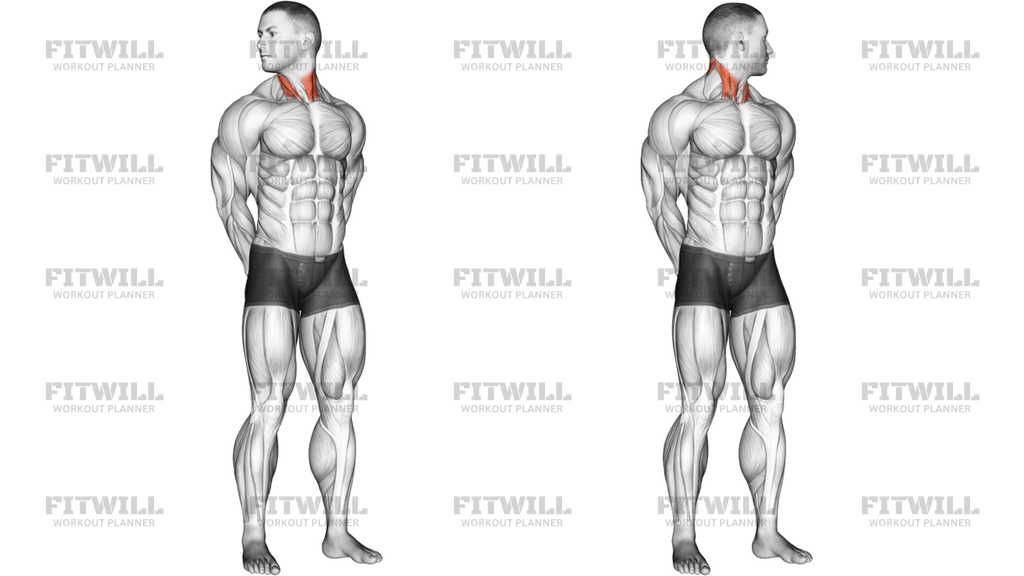
The Chin Tuck Hold is a simple standing isometric exercise that trains the deep muscles at the front of the neck by holding the head in a gently retracted position. Instead of moving through repetitions, you draw the chin straight back so the head stacks over the shoulders, then hold that aligned position while breathing normally. It looks almost like nothing is happening from the outside, which is exactly why it is so easy to do anywhere and so often done poorly.
This movement is most useful for people who spend long hours at a desk, driving, or looking down at a phone, positions that gradually encourage a forward head posture. In that posture, the deep neck flexors at the front of the neck become underactive while the muscles along the back of the neck and upper shoulders, such as the upper traps and levator scapulae, end up working overtime. Holding a proper chin tuck for time retrains the front of the neck to do its job again and gives the overworked back-of-neck muscles a chance to lengthen and settle.
Because it is an isometric hold, the emphasis is on endurance and control rather than strength through range. The deep neck flexors are small postural muscles, so they respond best to longer, moderate-effort holds rather than forceful contractions. A quality set might last ten to thirty seconds, repeated a few times, and the goal is a steady, comfortable hold, never a strained one.
Setup matters more than it appears. Stand tall with feet about hip-width apart, arms relaxed at your sides, and imagine a string lifting the crown of your head toward the ceiling. The chin should travel straight backward, level with the floor, not downward toward the chest. If you nod or crunch forward, you shift work away from the deep neck flexors and lose the benefit of the hold.
A helpful cue is to think of making a subtle double chin: the jaw stays relaxed, the mouth stays closed, and the head glides back until the ear lines up over the shoulder. Some people like to place two fingers lightly on the chin to feel the backward glide, or to stand with the back of the head near a wall for feedback on how far back the head actually sits.
Keep the effort moderate and pain-free throughout. You may feel gentle working sensations at the front of the neck and some release across the top of the shoulders, which is expected. Sharp pain, dizziness, tingling, or radiating symptoms are signs to stop and reassess, and anyone with a recent neck injury or cervical spine condition should get clearance from a qualified professional before adding holds like this to their routine.
[ Workout Log & Planner ]
Put your next workout in Fitwill
Keep your plan and training log ready when you are.


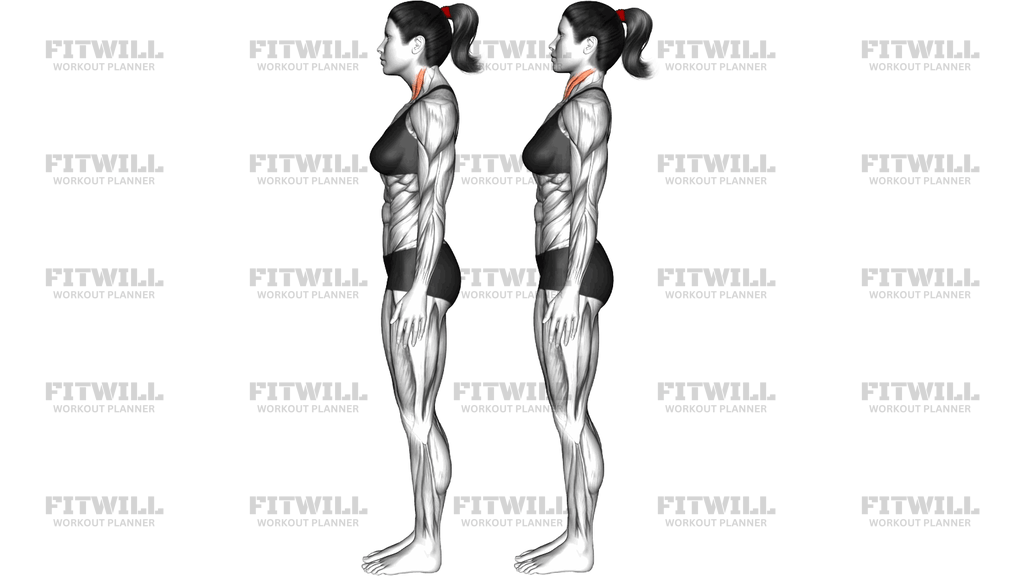
Instructions
- Stand tall with your feet about hip-width apart, weight even across both feet, and let your arms hang relaxed at your sides.
- Check your starting posture from the side: the ear should sit roughly over the shoulder, and your gaze should be level with the horizon, not tilted up or down.
- Soften your shoulders down and back so they are not shrugged toward your ears, and keep your jaw loose with your mouth closed.
- Glide your chin straight back, level with the floor, as if making a subtle double chin. Avoid tilting the head down or nodding.
- Once the ear lines up over the shoulder and you feel a gentle engagement at the front of the neck, hold that position isometrically.
- Keep breathing slowly and evenly through the hold. Do not brace your jaw or hold your breath.
- Maintain relaxed shoulders and a tall spine for the duration of the hold, typically ten to thirty seconds depending on your comfort and control.
- Release the hold slowly by letting the head glide forward to your natural resting position, without letting it snap or slump forward.
- Pause briefly, reset your posture, and repeat for your planned number of sets, staying within a moderate, comfortable effort.
Tips & Tricks
- The most common mistake is turning the hold into a neck crunch: if your chin drops toward your chest, you are nodding instead of retracting. Keep your gaze level while the head glides back.
- Watch for shoulder substitution. If your upper traps tighten or your shoulders creep toward your ears, drop your shoulders first and restart with a smaller, smoother glide.
- Keep the effort around three to four out of ten. Gripping the position hard at the front of the neck usually means the superficial muscles are taking over from the deep neck flexors.
- If you cannot tell how far back your head is, perform the first few holds with the back of your head a few centimeters from a wall and lightly touch it at the end position for feedback.
- Jaw tension is a quiet failure point. Keep your teeth apart slightly, lips closed, and tongue resting on the roof of the mouth so the jaw does not clamp during the hold.
- Short, frequent holds during the workday tend to work better than one long session, since the deep neck flexors are endurance-oriented postural muscles.
- If the standing version is hard to coordinate, practice the same glide lying on your back first, then transfer the feeling to standing.
- Stop if you feel lightheaded or notice tingling into the arms. A smaller range of retraction is usually the fix, not pushing through symptoms.
Frequently Asked Questions
What muscles does the Chin Tuck Hold work?
The primary target is the deep neck flexors at the front of the neck, which hold the head in the retracted position. The upper traps and levator scapulae across the top of the shoulder blade are involved as they lengthen and settle while the head stays aligned.
How long should I hold the Chin Tuck Hold?
Most people do well with holds of ten to thirty seconds for two to four sets. Start shorter, around ten seconds, and only extend the hold as long as you can keep the position comfortable and steady.
Is the Chin Tuck Hold good for forward head posture from desk work?
It is one of the most common exercises prescribed for that purpose because it directly trains the deep neck flexors that tend to weaken with prolonged forward head positions. Consistent practice alongside general posture habits matters more than any single session.
Should my chin move down or straight back during the hold?
Straight back, level with the floor. If your chin drops toward your chest, you are nodding, which shifts the work away from the deep neck flexors and reduces the benefit.
Can beginners do the Chin Tuck Hold?
Yes, it is very beginner-friendly since it uses no equipment and low force. Beginners should focus on a small, smooth glide and short holds, and can practice the movement lying on the back first if standing coordination feels awkward.
Why do my upper traps feel tight during the Chin Tuck Hold?
Tight traps usually mean the shoulders are shrugged or the retraction is too forceful, so the superficial muscles are compensating. Drop the shoulders, reduce the effort, and use a gentler glide so the front of the neck does the holding.
Can I do the Chin Tuck Hold sitting instead of standing?
Yes, the same glide and hold works seated, as long as you sit tall with the ribcage stacked over the pelvis. Slouching while seated tends to push the head forward and makes a clean retraction harder to feel.
How often should I practice the Chin Tuck Hold?
Because it is a low-load isometric for postural muscles, it can be done most days, and short sessions spread through the day often work well for desk workers. Give the muscles the same recovery respect you would any exercise if the neck feels fatigued.
Is it normal to feel the front of the neck working?
Yes, a gentle working sensation deep at the front of the throat is the intended effect. Sharp pain, pressure, dizziness, or tingling into the arms is not expected, and any of those symptoms means you should stop and reduce the range or effort.