Lying Alternate Toe Touch
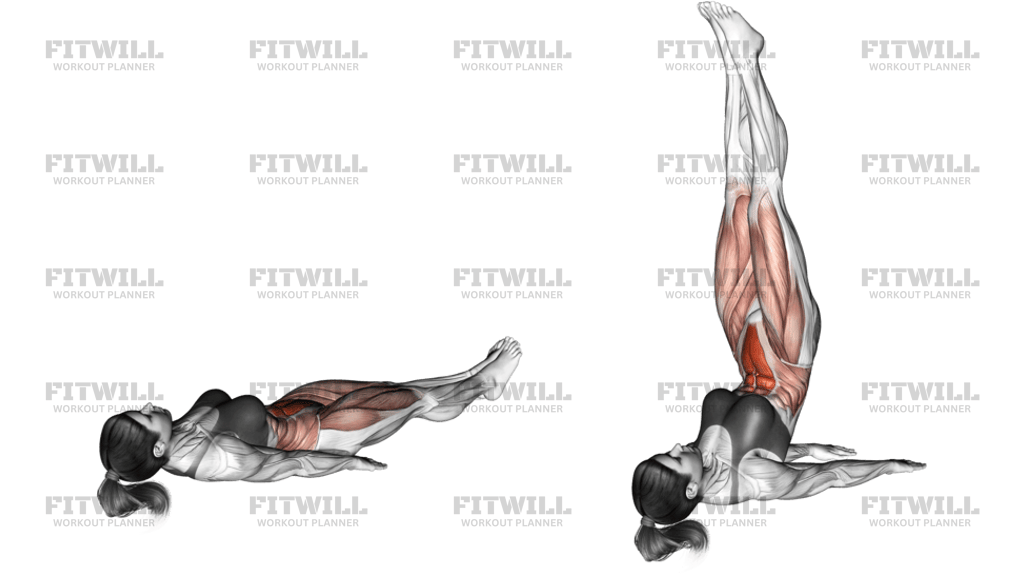
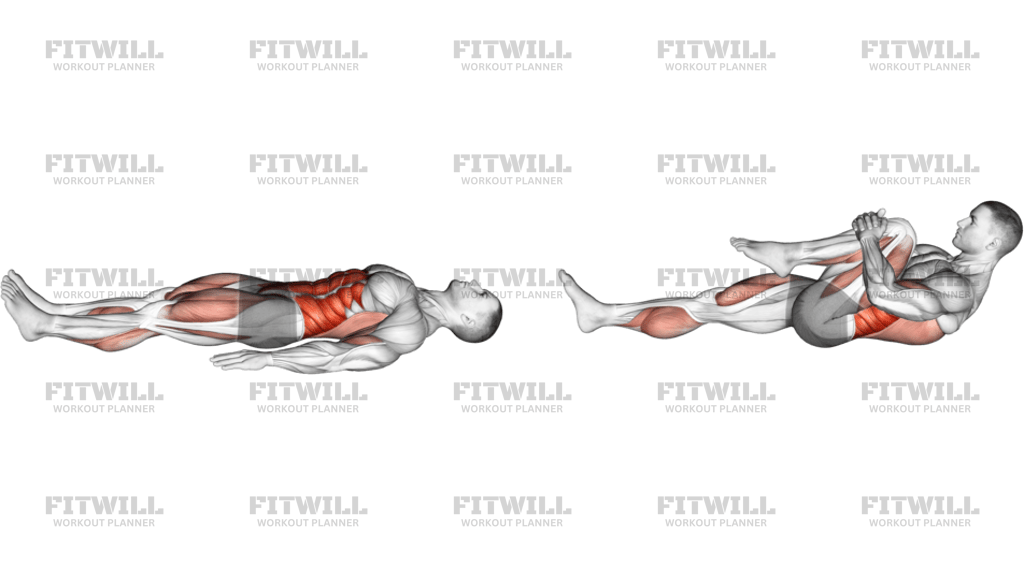
The Lying Alternate Toe Touch is a bodyweight core exercise performed on your back with your legs raised straight up toward the ceiling. From that position, you crunch your upper body off the floor and reach one hand toward the opposite foot, then repeat on the other side without letting your torso drop back down. The alternating pattern turns a simple crunch into a rotation-and-reach movement that asks more from your obliques than a standard straight crunch.
This movement is useful for almost anyone training at home, since all it needs is a bit of floor space and ideally an exercise mat. It fits well into core circuits, ab finishers, and warm-up routines, and it is a common choice in Pilates-style training where controlled spinal flexion is emphasized. Because your legs stay vertical, the position also teaches you to keep your pelvis steady while your limbs move, which carries over to better trunk control in everyday lifting and sport.
The main muscles worked are the abs, especially the rectus abdominis, which drives the crunch. The obliques on the side you are reaching with work to rotate and side-flex the trunk, and the hip flexors help hold your legs upright and assist slightly as you curl up. Your thighs stay engaged isometrically to keep the legs extended toward the ceiling.
Setup matters more than most people expect. Lie flat on your back with your legs pointing straight up and only a very slight bend in the knees if you need it. Press your lower back gently toward the floor before you start, and keep your arms relaxed rather than yanking your head. If your hamstrings pull your pelvis off the floor or your back arches away from the ground, bending the knees slightly is a smart adjustment.
To execute it well, lift your shoulder blades off the floor first, then reach one hand toward the toes on the opposite side, keeping the other arm relaxed at your side or lightly supporting your head. Lower back down with control and immediately reach with the other hand. The lift should come from your ribcage curling up and across, not from swinging your arm or pulling on your neck.
A few practical points keep this safe and effective. Move at a pace you can fully control, keep breathing throughout the reach, and stop short of any pinching in the neck or low back. Beginners can shorten the range by lifting less of the torso, while more advanced lifters can slow the tempo or pause briefly at the top of each reach.
[ Workout Log & Planner ]
Put your next workout in Fitwill
Keep your plan and training log ready when you are.


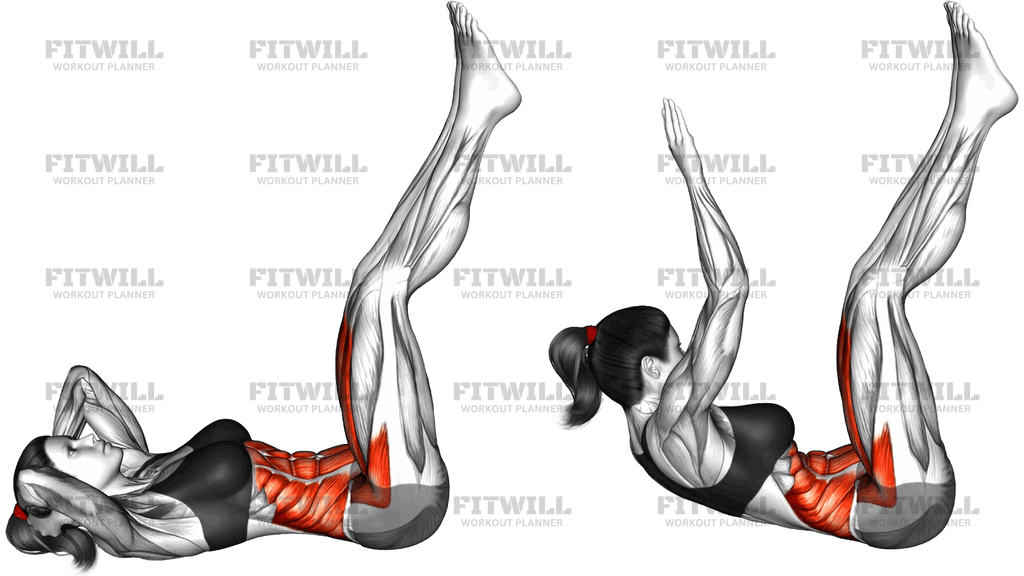
Instructions
- Lie on your back on an exercise mat with your legs raised straight up so your feet point at the ceiling.
- Place one hand lightly behind or beside your head and let the other arm rest relaxed, with your head and neck in a neutral position.
- Gently draw your lower back toward the mat and brace your abs before any movement begins.
- Exhale as you curl your shoulder blades off the floor and reach one hand up and across toward the toes on the opposite side.
- At the top, your shoulder blade on the reaching side should be lifted and your hand aimed at or near the opposite foot, with your eyes on your hand rather than the ceiling.
- Lower your torso back toward the mat with control, keeping your legs vertical and your pelvis still.
- Without fully relaxing, repeat the curl and reach with the other hand toward the opposite foot.
- Continue alternating sides for your target number of reps, breathing out on each reach and in as you lower.
- When finished, bend your knees and lower your legs slowly to the floor to reset before standing up.
Tips & Tricks
- Do not pull your head forward with your hand; if your neck fatigues before your abs, support your head more lightly or reduce how far you reach.
- The most common error is swinging the arm across without actually curling the ribcage; the shoulder blade on the reaching side must come off the mat for the abs to do the work.
- Keep your legs pointing straight up the entire set. If your hamstrings pull your pelvis off the floor, add a slight knee bend instead of lowering the legs.
- Move both sides at the same tempo. Rushing one side usually means that oblique is weaker or stiffer, so slow down and match the reps.
- Avoid letting your lower back arch or your hips rock side to side as you alternate; pressing the sacrum lightly into the mat keeps the tension on your abs.
- Reach toward the foot, not just straight up. The cross-body angle is what engages the obliques on the working side.
- If your hamstrings feel tight at the start, do a few knee-bent versions first and progress to straighter legs over time.
- Stop each rep before your torso slams back down; lowering under control keeps the abs under tension and protects the spine.
Frequently Asked Questions
What muscles does the Lying Alternate Toe Touch work?
The abs, particularly the rectus abdominis, do most of the work as you curl up. The obliques assist strongly because of the cross-body reach, and the hip flexors help hold your legs vertical.
Is the Lying Alternate Toe Touch good for beginners?
Yes, it is beginner friendly because it uses no equipment and a short range of motion is enough to feel it. New lifters can bend the knees slightly and reach only partway toward the foot.
Why do my legs drift away from vertical during the Lying Alternate Toe Touch?
That usually means your hip flexors and thighs are tiring, or your hamstrings are tight and pulling on your pelvis. Bend the knees slightly and reset your legs to vertical before each side.
Should I hold the back of my head during this exercise?
You can rest a hand lightly behind your head for support, but never pull on it. Your neck should stay neutral and the curl should come from your ribcage, not your chin.
How is the Lying Alternate Toe Touch different from a regular crunch?
A regular crunch lifts the torso straight up, while the alternate toe touch adds a diagonal reach toward the opposite foot, which brings the obliques into the movement and trains rotation control.
Can I do the Lying Alternate Toe Touch without a mat?
You can, but a mat or carpeted surface makes the position far more comfortable on your spine and shoulder blades. There is no stability benefit to doing it on a hard floor.
How many reps of the Lying Alternate Toe Touch should I do?
Ten to twenty total reaches, alternating sides, works well for most people. Prioritize smooth, controlled reps over a high number, and stop when your form starts to slip.
My neck gets sore before my abs during this exercise, what should I change?
You are likely lifting too high or tensing your neck to reach farther. Reduce the height of the curl, keep your gaze toward your hand rather than straight up, and support the head more gently.
What can I substitute if the reach feels too difficult?
A straight crunch with both arms reaching toward your knees is the easiest substitute. You can also do the toe touch with bent knees and a shorter reach, progressing as your abs get stronger.