Ring Eccentric Leg Curl With Yoga Block And Towel
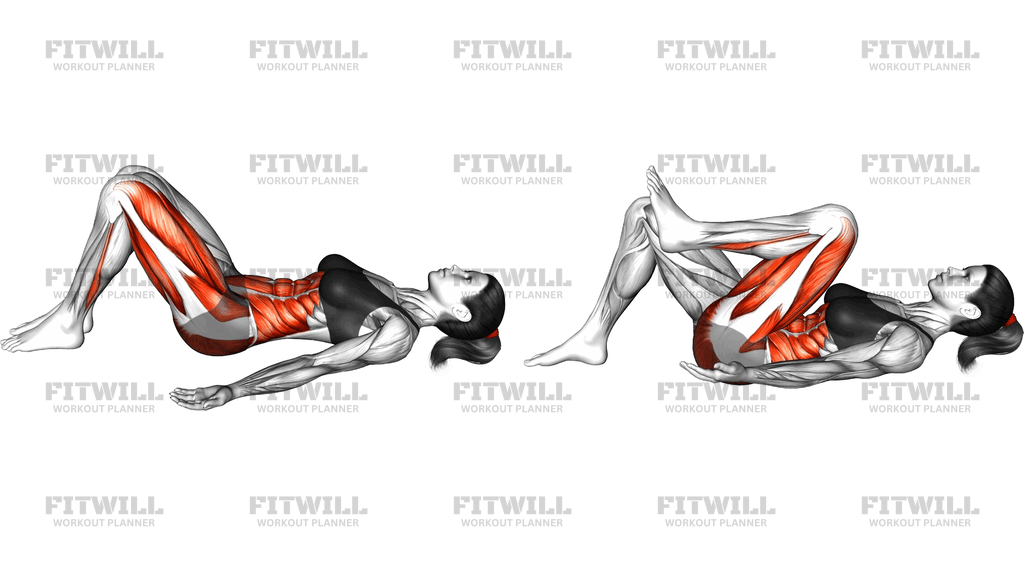
The Ring Eccentric Leg Curl With Yoga Block And Towel is a supine bodyweight leg curl built around one thing: a slow, deliberate lengthening of the hamstrings. You lie on your back, place your heels either in a pair of rings hung a few inches off the floor or on a folded towel over a smooth surface, and squeeze a yoga block between your knees. From there you pull your heels toward your hips and then resist the way back out with maximum control, spending most of the set in the eccentric phase where the hamstrings do their heaviest work.
The yoga block is not decoration. Squeezing it keeps your knees from drifting apart, which is the most common compensation when the hamstrings fatigue. It also lights up the inner thighs and forces your glutes and trunk to hold a stable pelvis while your legs move. Remove the block and most people will let the knees flare, the hips twist, and the hamstrings quietly hand the job off to momentum.
This setup suits lifters who train at home or travel, gymnastic-ring owners who want a direct hamstring builder, and anyone rehabbing toward heavier curling work, since the load is simply your own body and the tempo can be scaled infinitely. Eccentric-focused work like this is also a practical bridge for people who cannot yet complete full curl-ups with control on rings or sliders.
To execute it well, keep your hips extended and your ribs down, curl until your knees stack over your ankles or your heels are as close to your hips as the setup allows, then push the return out over three to five slow seconds. Breathing stays steady: exhale as you pull the heels in, inhale through the slow extension.
Expect your hamstrings to work hard near full extension, which is where the eccentric stress is greatest. Start with fewer reps than you think you need — delayed soreness from slow eccentrics is real — and stop the set as soon as the block starts slipping or your knees begin to splay.
[ Workout Log & Planner ]
Put your next workout in Fitwill
Keep your plan and training log ready when you are.


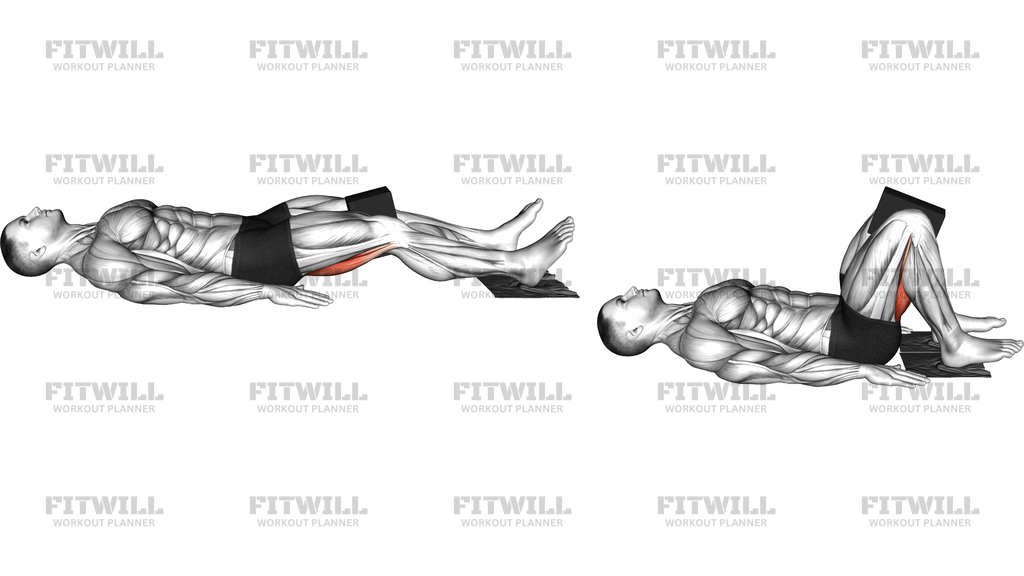
Instructions
- Lie on your back on the floor with your arms at your sides, palms down, and place a yoga block between your knees so it is held snugly without squeezing your legs fully together.
- Rest your heels in a pair of rings hung a few inches off the floor, or place your heels on a folded towel laid over a smooth floor so they can slide freely.
- Brace your core gently, tuck your ribs, and press your lower back toward the floor so your pelvis stays neutral throughout the set.
- Squeeze the glutes slightly to extend your hips, and keep the block compressed between your knees as the reference position.
- Exhale and pull your heels toward your hips, bending your knees until your heels are directly under or slightly past your knees, keeping the block from slipping.
- Pause briefly at the top with your knees fully bent and your hamstrings shortened.
- Inhale and extend your legs slowly, resisting the slide or ring movement over three to five seconds until your legs are nearly straight.
- Stop just before your heels touch down or your hips sag, keeping tension in the hamstrings at the long position.
- Reset your brace and the block between your knees, then begin the next curl.
- Breathe continuously — exhale on the curl in, inhale on the slow eccentric extension — and end the set when you can no longer keep the block in place or control the lowering speed.
Tips & Tricks
- If the yoga block slides out during the set, your knees are flaring — a sign the hamstrings are fatigued and the adductors are losing their share of the work. End the set rather than letting the form go.
- Squeezing the block too hard can cause your hips to shift side to side; hold it firmly but let the pressure come from the inner thighs, not a full-body clamp.
- On the towel version, a slick floor like wood or tile makes the eccentric smooth; on carpet, use a larger towel or switch to rings, or the towel will grip and jerk your heels.
- Do not let your hips drop as the legs extend. If your lower back arches away from the floor at the end of the rep, shorten the range and stop the extension a few inches earlier.
- The eccentric is the point of this exercise. If you slide your heels out in one second, you are doing a regular slider curl, not the eccentric version — count a slow three to five seconds per lowering.
- Point your toes slightly toward your shins to keep the calves from contributing, or leave the ankles relaxed if you feel a cramp in the back of the lower leg.
- Keep your arms passive at your sides. Pressing the palms into the floor to help curl the heels in turns this into a hip thrust and reduces hamstring involvement.
- If your heels slip inside the rings, angle the rings so the lower strap cradles the back of the ankle, or loop a small towel around the strap for grip.
- Because eccentric work causes more soreness than concentric work, start with two or three sets of five reps and build up across a few weeks.
Frequently Asked Questions
Which muscles does the Ring Eccentric Leg Curl With Yoga Block And Towel work?
The hamstrings are the primary movers, working hardest as they lengthen under tension during the slow extension. The glutes, calves, inner thighs, and core muscles assist by holding the pelvis and knees in position.
Why is a yoga block squeezed between the knees during this leg curl?
The block keeps your knees from splaying apart as the hamstrings fatigue, which preserves the line of pull and adds inner thigh involvement. It also gives you an instant feedback signal: when the block slips, the set is done.
Can I use a towel instead of rings for this exercise?
Yes. Place a folded towel under your heels on a smooth floor and let it slide as you curl and extend. Rings are slightly harder because they add a small stability demand, while the towel version is easier to control.
What does the eccentric emphasis mean in the Ring Eccentric Leg Curl With Yoga Block And Towel?
It means you deliberately slow down the lengthening phase — the part where your legs extend away from your hips — typically taking three to five seconds. The shortening phase is pulled in at normal speed, so most of the tension time lands on the eccentric.
Is this exercise suitable for beginners?
Yes, with adjustments. Beginners can reduce the extension range so the heels only travel halfway out, use a two-second lowering, and keep the hips lower to the floor. Full-range ring versions are better attempted once the towel variation feels controlled.
Why do my hamstrings cramp during the Ring Eccentric Leg Curl With Yoga Block And Towel?
Cramping usually happens near full extension, where the hamstrings work at a long muscle length under high tension. Shorten the range slightly, stay well hydrated, and build up volume gradually over several weeks.
What is the most common mistake in this exercise?
Letting the knees flare outward and the block drop, which shifts work away from the hamstrings. The second most common is rushing the return so it becomes a fast slider curl instead of a controlled eccentric.
What can I use if I do not have a yoga block?
A small, firm cushion or a rolled towel of similar thickness works as a substitute. The object just needs to stay in place between your knees so you can tell immediately when your knees start to drift.
How should I breathe during this movement?
Exhale as you pull your heels toward your hips and inhale slowly through the controlled extension. Avoid holding your breath, especially during the long eccentric phase, since it makes bracing and pacing harder.
Is it safe to train heavy eccentric leg curls when my hamstrings are already sore?
No. Eccentric work produces more next-day soreness than typical training, so stacking another hard eccentric session on already sore hamstrings usually degrades form. Wait until soreness has mostly cleared before the next session.