Barbell Banded Hip Thrust
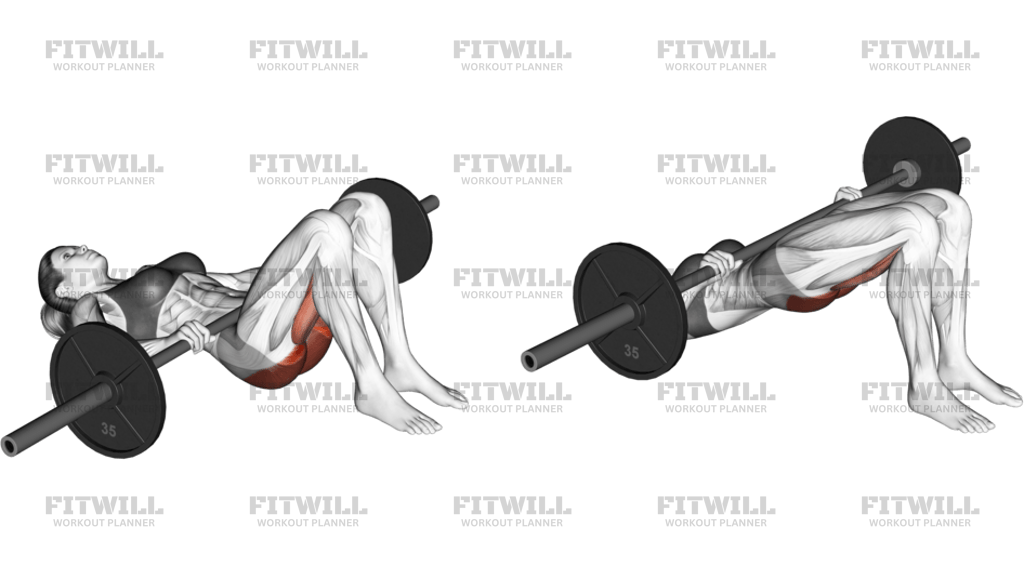
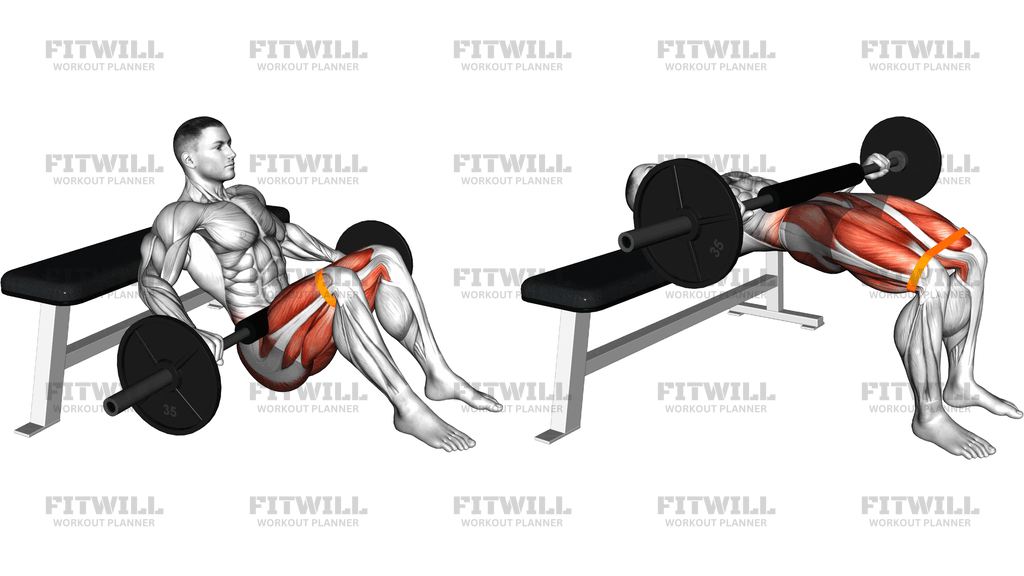
The Barbell Banded Hip Thrust is a loaded horizontal hip extension performed with your upper back anchored on a bench, a barbell padded across your hips, and a resistance band looped around both knees just above the joint. You drive through your feet to lift your hips until your body forms a straight line from shoulders to knees, then squeeze at the top and lower under control. The band is the key difference from a standard barbell hip thrust: it pushes your knees inward, forcing you to actively press them out against the tension throughout every rep.
This exercise is one of the most effective ways to load the glutes heavily while sparing the lower back. Because the torso stays supported on the bench and the movement happens almost entirely at the hips, you can push near-maximal effort on the glutes without relying on spinal strength the way you would in a deadlift or good morning. The added band work also biases the gluteus medius and upper glute fibers, which control knee tracking and hip stability — an area many lifters neglect.
People who benefit most include strength athletes looking to build hip extension power for squats and deadlifts, anyone chasing glute size and shape, and lifters who struggle to feel their glutes in conventional hinge patterns. It is also a popular choice in rehab-adjacent settings because the position is stable, repeatable, and easy to progress gradually through plates, band tension, or pause reps.
Setup quality determines everything here. The bar must sit on the crease of your hips — not your abdomen or thighs — with a foam pad or folded towel to keep the pressure tolerable. Your shoulder blades should rest near the edge of the bench, feet flat and far enough forward that your shins stay roughly vertical at the top. If your feet are too close, your knees drift forward and the quads take over; too far, and the hamstrings dominate.
Execution comes down to one idea: push the knees out against the band while driving the hips up. If the band is doing the work and your knees cave, you lose most of the glute bias. Expect to feel this in the glutes primarily, with support from the hamstrings and quads, and mild bracing work in the core and lower back. Keep the ribs down and avoid arching your lower back at the top — the finish position is a glute squeeze, not a back extension.
A practical safety note: the bar can roll toward your head or feet when you sit down or stand up, so use a spotter for heavy sets or set up with the bar already loaded and wedged against your hips from a seated position. Control the descent rather than dropping the hips, both to protect the pelvis from the bar and to get the most out of every rep.
[ Workout Log & Planner ]
Put your next workout in Fitwill
Keep your plan and training log ready when you are.


Instructions
- Sit on the floor with your upper back against a flat bench, a resistance band looped around both legs just above the knees, and a barbell with a foam pad positioned across the crease of your hips.
- Grip the bar on both sides to hold it in place, plant your feet flat on the floor about hip-width apart, and walk your feet forward until your shins will be close to vertical at the top.
- Lean back so your shoulder blades rest on the edge of the bench, and press your knees outward against the band to feel tension before you lift.
- Brace your core and tuck your chin slightly, keeping your ribs stacked over your pelvis.
- Drive through your heels and push your knees out against the band as you raise your hips toward the ceiling.
- Continue lifting until your torso and thighs form a straight line from shoulders to knees, with a strong glute squeeze at the top.
- Pause briefly at the top while keeping outward knee pressure against the band, then lower your hips under control until they hover just above the floor.
- Exhale as you drive up, inhale as you lower, and keep the band tension active during the entire descent.
- After your final rep, keep holding the bar with one hand while you shift your hips sideways off the bar, then sit up to reset or rack the weight.
- Reset your foot position and knee alignment against the band before starting the next repetition if either drifted during the set.
Tips & Tricks
- If the bar digs into your hip bones, the pad is positioned too high or too low — it should sit directly on the crease where your thigh meets your pelvis, not on your stomach.
- Knees caving inward is the most common failure with the band setup; consciously push your knees out before you even start the lift, not just at the top.
- Overextending at the top by arching your lower back steals work from the glutes — stop when your torso and thighs are level and squeeze, don't chase extra height.
- If your heels lift as you drive, your feet are set too far forward; slide them closer so the heel stays planted through the whole rep.
- Excessive soreness in the hamstrings usually means your feet are too far away or you're pulling with the hips instead of driving through the heels.
- Push the floor apart with your feet — thinking about pressing outward through your whole foot helps recruit the gluteus medius along with the band cue.
- Round your upper back slightly over the bench edge and grip the bar firmly so the shoulders create a stable shelf; a wobbly anchor makes heavy sets unpredictable.
- For heavy loads, wedge the bar into your hips while seated and stand your shoulders into the bench in one motion, or use a spotter to help position the bar.
- If the band slips down your thighs, use a flat loop band placed just above the knees rather than a narrow tube band, and keep it stretched at all times.
Frequently Asked Questions
What muscles does the Barbell Banded Hip Thrust work?
The glutes are the primary mover, with the hamstrings and quads assisting hip extension and knee stability. The band around the knees adds extra demand on the gluteus medius and outer hip muscles that control knee tracking.
Why use a band around the knees instead of a regular Barbell Hip Thrust?
The band pushes your knees inward, so you have to actively press them out the entire time. This keeps constant tension on the upper glutes and outer hips and prevents the knees from collapsing, which is where form often breaks down on heavy thrusts.
Where exactly should the barbell sit on my body?
Position the padded bar in the crease of your hips, right where your thigh meets your pelvis. If it sits on your abdomen it becomes uncomfortable and encourages rounding, and if it sits mid-thigh it limits your range of motion.
Is the Barbell Banded Hip Thrust suitable for beginners?
Yes, but start light or with a bodyweight version first to learn the knee-out cue and the straight-line finish position. Once you can keep your knees pressed against the band and avoid arching your back at the top, add plates gradually.
How high should I lift my hips at the top?
Lift until your shoulders, hips, and knees form a straight line — no higher. Extending beyond that usually means you're arching your lower back rather than finishing with a glute squeeze.
How far apart should my feet be with the band setup?
About hip-width works for most people, wide enough that the band is stretched but not so wide that the band does the stabilizing for you. The outward pressure should come from your own effort, with the band as resistance.
What should I do if the barbell rolls during the set?
Keep both hands on the bar throughout the rep to stabilize it, and hold it with one hand while you slide your hips off the bar at the end of the set. For heavy weights, a spotter can help you get into and out of position safely.
Can I substitute anything if I don't have a barbell?
You can perform the banded hip thrust with a dumbbell or kettlebell held across the hips, or use just the band for lighter resistance. A Smith machine also works well because the fixed bar path makes solo setup easier.
Why do I feel my quads more than my glutes?
Your feet are most likely set too close to the bench, which pushes your knees over your toes and shifts effort toward the quads. Walk your feet forward until your shins are close to vertical at the top and drive through your heels.
Is it safe for the lower back?
When performed with a braced core and a controlled range ending at a straight line, it is one of the more lower-back-friendly ways to load the hips heavily. Discomfort typically comes from overextending at the top or letting the pelvis tilt as the weight descends, so control both ends of the rep.