Cable Incline Single Arm Lat Pulldown
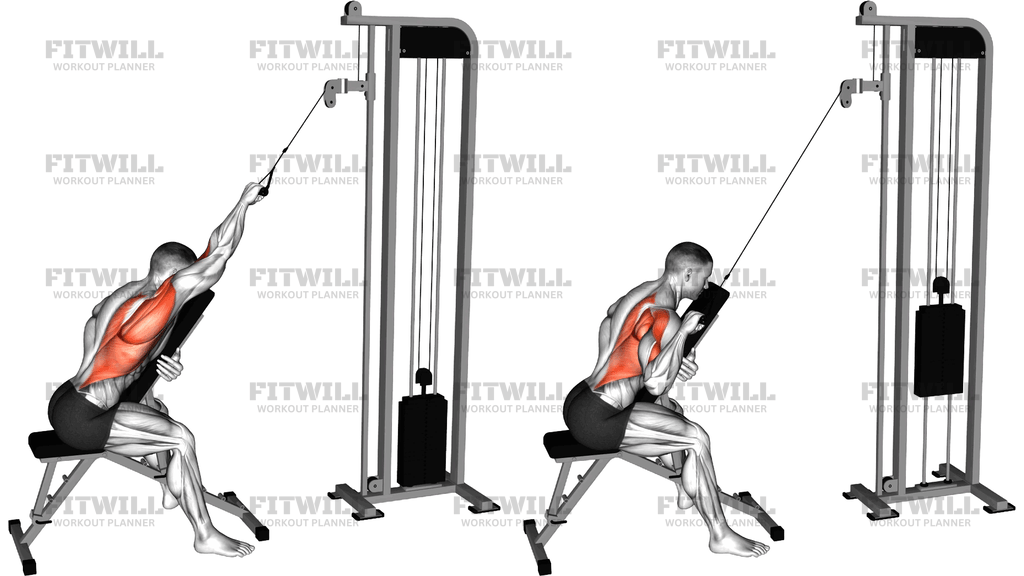
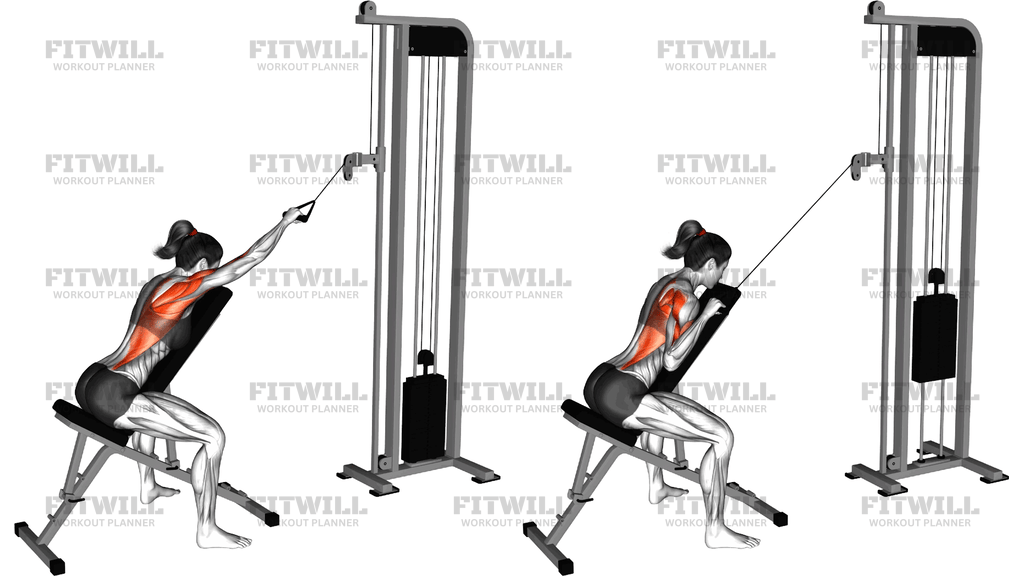
The Cable Incline Single Arm Lat Pulldown is a chest-supported variation of the classic lat pulldown. You sit facing a high cable pulley with your chest braced against an incline bench, hold a single handle in one hand, and pull your elbow down and back toward your ribs until your hand finishes near chest height. Because the bench takes your torso out of the movement, your lat has to do the work instead of your lower back or momentum.
This setup is especially useful for lifters who tend to swing or lean on regular pulldowns, and for anyone trying to fix a side-to-side strength difference. Training one arm at a time also gives you a longer, cleaner stretch at the top, since the working arm can reach fully overhead without the other hand or a bar getting in the way. That makes it a good choice for people with limited shoulder mobility who struggle to set their shoulders on a wide bar.
The main muscle worked is the latissimus dorsi on the working side, supported by the teres major, rhomboids, and mid and lower traps as the shoulder blade pulls down and in. The biceps and forearm muscles assist through the pull and get meaningful work as grip helpers, but the intent should always be to drive with the elbow, not the hand.
Setup matters more here than in a standard pulldown. Position the incline bench far enough from the machine that the cable clears your head and pulls in a slightly diagonal line from above, then settle your chest firmly against the pad with feet planted wide for stability. If the bench is too close, the cable rubs your face; too far, and you drift off the pad as you pull.
To execute well, start each rep with the arm fully extended and the shoulder blade allowed to rise slightly into a stretch. Initiate by drawing the elbow down past your ribcage, keeping the chest glued to the bench, and pause briefly at the bottom before letting the arm travel back up under control. Resist the urge to rotate the torso toward the handle, since that rotation steals work from the lat.
You will see this movement in back-focused sessions, in programs built around balanced upper-body pulling, and in rehab-adjacent training where a supported torso and lighter unilateral load are preferred. It pairs well with rows on the same day and works as a substitute when a lat pulldown machine with a wide bar is unavailable.
[ Workout Log & Planner ]
Put your next workout in Fitwill
Keep your plan and training log ready when you are.


Instructions
- Set an incline bench to roughly 30-45 degrees and place it about one arm's length in front of a cable machine, facing the weight stack.
- Attach a single handle to the highest pulley, select a light-to-moderate weight, and straddle the bench so your chest and the front of your shoulders rest against the pad.
- Grip the handle with one hand, palm facing in, and let that arm extend up and out toward the pulley until you feel a stretch along the side of your back.
- Plant your feet on the floor on either side of the bench and brace your core so your torso stays quiet against the pad.
- Pull the handle down by driving your elbow toward your hip, keeping it close to your body, until your hand finishes around lower chest or upper rib height.
- Squeeze the lat hard for a beat at the bottom without shrugging or twisting your torso toward the handle.
- Slowly let the handle travel back up along the same line until the arm is fully extended and the lat stretches again.
- Exhale as you pull down and inhale as you return the weight with control.
- Complete all reps on one side, then re-grip and match the reps on the other arm, keeping the weight honest so both sides move at the same tempo.
Tips & Tricks
- Think of your hand as a hook. If the pull feels like it is happening in your forearm and biceps only, lighten the load and refocus on driving the elbow down past your ribs.
- The most common fault with this setup is lifting the chest off the pad to help finish the rep. If the pad loses contact, the weight is too heavy for your lat to move alone.
- Do not let the shoulder blade stay locked down through the whole set. Allowing a small upward drift at full extension gives the lat a better stretch and a longer working range.
- Keep a slight bend in the working elbow at the top rather than locking it straight and hanging on the joint.
- If the cable scrapes your head or shoulder, move the bench a few inches farther from the machine so the line of pull comes from slightly higher and more forward.
- Match the tempo on both arms and start with your weaker side. Stopping the strong arm at the weaker side's rep count keeps the difference from growing.
- Avoid pulling the handle toward the middle of your chest like a row. The pulldown path should be steep, with the elbow finishing near your hip for the lat to do most of the work.
- Reset your chest against the pad after every rep or two rather than letting your posture slowly slump forward as the set gets tiring.
Frequently Asked Questions
Which muscles does the Cable Incline Single Arm Lat Pulldown work?
The latissimus dorsi on the working side is the primary mover, with help from the teres major, rhomboids, and lower traps as the shoulder blade pulls down. The biceps and forearms assist throughout the pull.
Why use an incline bench instead of sitting upright for a pulldown?
The pad supports your chest, which blocks swinging, leaning, and torso rotation that commonly creep into upright pulldowns. This keeps the tension on the lat instead of letting momentum or the lower back contribute.
Is the Cable Incline Single Arm Lat Pulldown suitable for beginners?
Yes. The bench provides stability, the single handle keeps the movement simple to learn, and starting with a light weight makes it easy to feel the lat working. Beginners should prioritize the stretch and elbow path over load.
How should my feet be positioned during this exercise?
Straddle the bench with a foot planted on each side of the seat, knees bent and weight distributed through your feet. This wide base keeps you anchored so the pull does not drag you forward off the pad.
How far from the cable machine should I place the incline bench?
About an arm's length, so the cable pulls from slightly above and in front of your working shoulder without rubbing your head or face. Adjust a few inches at a time until the line feels clean at full stretch.
My biceps fatigue before my back feels anything. What should I change?
Reduce the weight, keep a looser grip on the handle, and focus on initiating with the elbow rather than the hand. If the problem persists, a lifting strap can take grip out of the equation entirely.
What can I substitute if my gym has no single handle or spare incline bench?
A standard single-arm lat pulldown seated on the machine's own seat, or a one-arm dumbbell row on a bench, trains the same lat pattern. The incline version is simply the most supported way to do it.
Is it safe to do this exercise with a shoulder issue?
The supported torso and single-arm range make it gentler than many pulling variations, but clearance depends on the specific issue. Start very light, keep the range pain-free, and check with a qualified professional if you have an existing injury.
How many reps and sets should I use for the Cable Incline Single Arm Lat Pulldown?
Two to four sets of 8-15 reps per arm works well, matching reps on both sides. The chest-supported setup tolerates moderate loads with strict form better than heavy grinding attempts.