Seated Shoulder Stretch
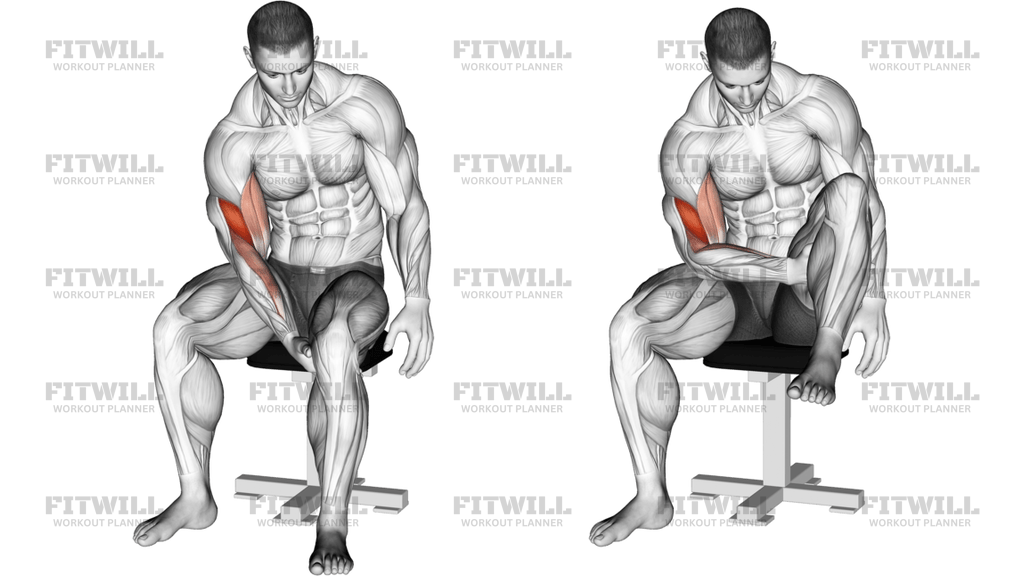
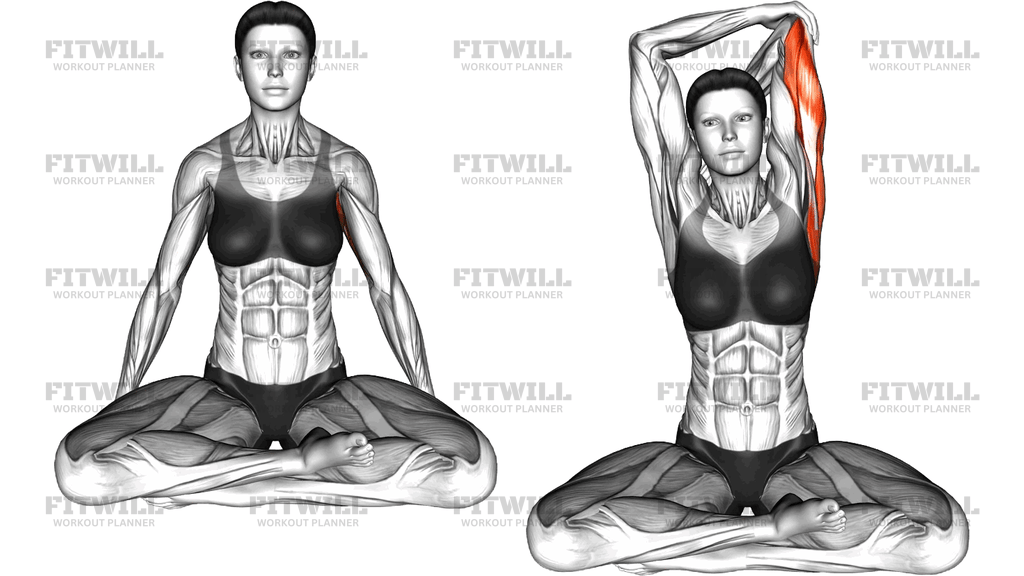
The Seated Shoulder Stretch is an overhead stretch performed from a cross-legged seated position. You raise one arm overhead, bend the elbow so the hand drops behind your head or between your shoulder blades, then use the opposite hand to gently guide the elbow deeper into the stretch. The target area is the deltoid complex on the stretched side, with the triceps and the muscles around the shoulder blade and upper back assisting in the lengthening.
This stretch is especially useful for anyone whose shoulders spend long hours in a shortened, forward position — desk workers, drivers, and people who carry bags on one shoulder all tend to accumulate tension across the upper back and shoulder girdle. It is also a common cooldown choice after pressing movements like overhead presses, push-ups, and bench work, and after pulling sessions such as pull-ups and rows, where the shoulders and triceps have been heavily loaded.
The seated, cross-legged base matters more than it might seem. Sitting on the floor with the legs folded encourages a tall, neutral spine and keeps the hips stable, which stops you from leaning or twisting to fake extra range. Because the stretch happens overhead with the arm fixed behind the head, the shoulder capsule, the deltoids, and the long head of the triceps are all placed under tension at once — something a standing doorway stretch or a cross-body arm pull cannot replicate in quite the same way.
To get the most from it, think of length before depth. Sit tall, lift the chest, and let the raised elbow travel back rather than dragging it hard toward the opposite side. The stretch should feel like a broad, comfortable pull along the back of the arm and outer shoulder, never a sharp pinch at the front of the shoulder or the neck. Breathing stays slow and steady, and most people hold each side for 20 to 40 seconds, repeating two to three times.
One practical note on range: if you cannot reach your elbow with the opposite hand, hold wherever along the forearm you can, or simply let the arm hang behind the head and work on lowering it gradually over weeks. If sitting cross-legged is uncomfortable on your hips or knees, the same stretch works perfectly well from a chair or a kneeling position — the upper-body setup does not change.
Fitwill
Log Workouts, Track Progress & Build Strength.
Achieve more with Fitwill: explore over 9600 exercises with images and videos, access built-in and custom workouts, perfect for both gym and home sessions, and see real results.
Start your journey. Download today!




Instructions
- Sit on an exercise mat or the floor in a cross-legged position, sitting bones grounded and spine tall.
- Rest your hands on your knees or thighs, relax the shoulders down away from the ears, and take one steady breath to settle.
- Raise your right arm overhead and bend the elbow so your right hand drops behind your head, fingers pointing down toward your upper back.
- Reach your left hand up and place it on the right elbow, or as far along the upper arm as you can comfortably reach.
- Brace your core lightly and keep your ribs stacked over your hips so your torso does not lean or rotate to the side.
- Gently draw the right elbow back and slightly toward the center of your head until you feel a stretch along the back of the right arm and the outer shoulder.
- Hold the end position for 20 to 40 seconds, breathing slowly and letting the tension ease with each exhale.
- Release the left hand first, then slowly straighten the right arm back overhead before lowering it to your side.
- Shake out the right arm briefly, then repeat the full sequence on the left side.
- Complete two to three rounds per side, or alternate arms if you are using this as a short mid-day tension break.
Tips & Tricks
- Avoid pulling the elbow straight across toward the opposite ear — the goal is to draw it back and down, which targets the triceps and deltoid instead of jamming the shoulder joint.
- If your ribs flare forward when you pull, exhale and gently draw the lower belly in; a flared rib cage usually means you are arching the lower back to fake extra range.
- Keep the neck long and the chin level. If the head tilts toward the stretching arm, the upper traps take over and the neck can feel pinched.
- Can't reach the elbow? Hold the forearm instead, or drape a towel over the shoulder and grip the towel ends — the towel bridges the gap while your flexibility improves.
- Keep the raised hand relaxed. Squeezing the fist or tensing the wrist behind the head reduces the stretch on the triceps and adds unnecessary tension.
- Expect one side to be tighter, usually your non-dominant arm. Start with the tighter side and match the other side to it rather than pushing both to maximum.
- Never bounce or pulse in the end position — this stretch works best with a steady, passive hold and slow breathing.
- If you feel a pinching sensation at the front of the shoulder rather than a stretch at the back of the arm, reduce how far the elbow travels back and slightly turn the palm of the raised hand.
- Warm shoulders stretch better. After pressing or pulling workouts, or after a few arm circles, is the ideal time — cold, first-thing-in-the-morning shoulders need a gentler angle.
Frequently Asked Questions
Which muscles does the Seated Shoulder Stretch target?
The primary target is the deltoids of the stretched arm, with the triceps — especially the long head, which crosses the shoulder — taking a large share of the stretch. The upper traps and lats on the same side also lengthen as the arm is held overhead.
Why is the stretch done seated cross-legged instead of standing?
The folded-leg seat locks the hips in place, which makes it much harder to lean, sway, or twist your way into fake range. That keeps the stretch honest and focused on the shoulder and arm rather than the torso.
I can't reach my elbow behind my head. Is that a problem?
Not at all. Grip wherever you can reach on the upper arm or forearm, or loop a towel over the shoulder and hold the towel ends with both hands. Your range behind the head will improve with consistent practice.
How long should I hold the Seated Shoulder Stretch?
Twenty to forty seconds per side works well for most people, repeated two to three times. If you are cooling down after a pressing session, longer holds closer to 40 seconds feel especially good.
Should I feel it in my neck?
You should feel the stretch along the back of the arm and the outer shoulder, not in the neck. If your neck is involved, the elbow is probably being pulled too far across, or your head is tilting — keep the chin level and reduce the pull.
Is this a good stretch before or after a workout?
It works best after training or as a standalone flexibility session, when the muscles are warm. Before heavy pressing, keep holds short and gentle, around 10 to 15 seconds, so you lengthen the shoulder without dulling its responsiveness.
What's the most common mistake with this stretch?
Yanking the elbow hard toward the opposite side and arching the lower back to deepen the pull. Both habits shift stress away from the shoulder — keep the spine tall and let the elbow travel back instead of across.
Can I do this stretch in a chair if sitting on the floor hurts my knees?
Yes. Sit tall on a firm chair with both feet flat, and keep the exact same upper-body setup. The arm position and stretch effect are identical.
Is the Seated Shoulder Stretch safe if I've had a shoulder injury?
It can be, but the overhead position needs to be cleared first. Work well within a pain-free range, skip any pulling on the elbow, and check with a qualified professional if pinching or pain shows up at any angle.