Cable Lateral Pulldown With Mag Grip
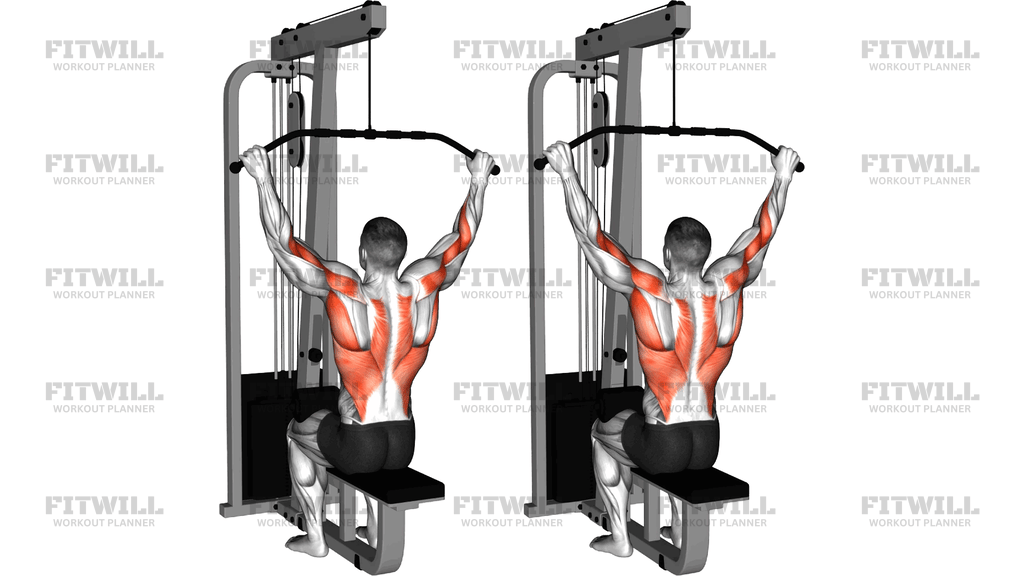
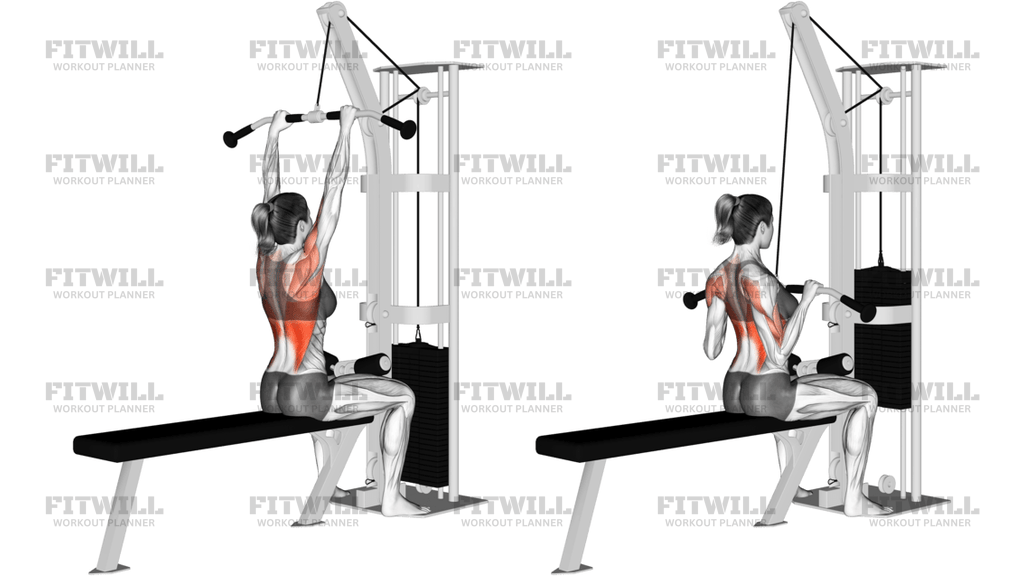
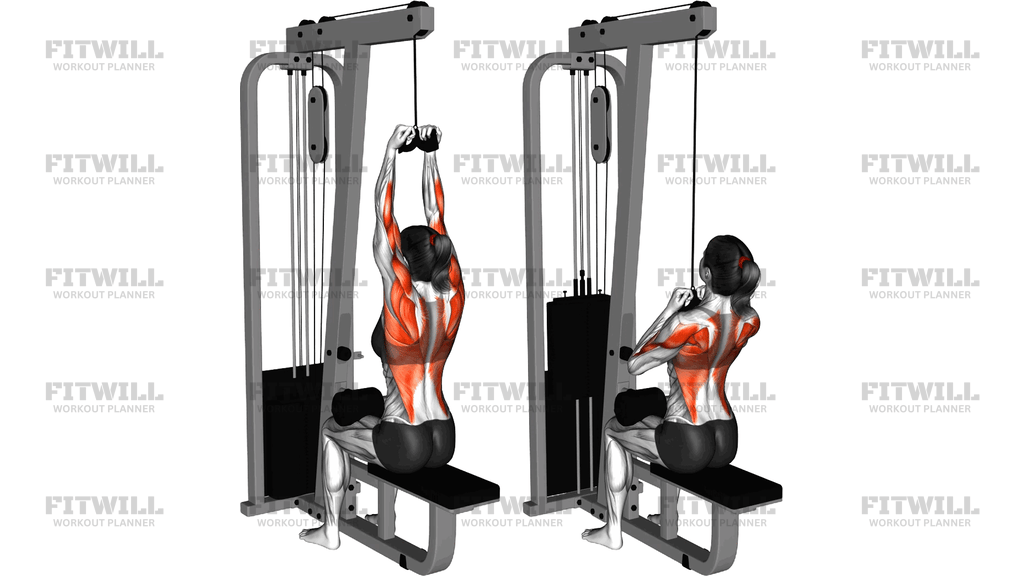
The Cable Lateral Pulldown With Mag Grip is a seated vertical pulling exercise performed on a lat pulldown machine using a close-grip mag attachment, which keeps your hands in a neutral, palms-facing position a few inches apart. You sit with your thighs secured under the knee pads, reach up to the handle, and pull it down toward your upper chest before controlling it back up on a long cable. The close neutral grip changes the feel compared with a wide bar: your elbows travel close to your sides, and most of the work shifts into the lats and teres major rather than the upper-back muscles that dominate wide-grip pulling.
This version suits lifters who want to bias the lats without the shoulder stress a fully wide grip can create. Because the neutral palm position is friendlier to the shoulder joint and the wrists sit naturally, it is a comfortable option for people with cranky shoulders or those who find a straight bar awkward. It is also a solid stepping stone toward pull-ups, since it trains the same vertical pull pattern with an adjustable load.
The primary muscles worked are the latissimus dorsi, with strong assistance from the teres major, the biceps, and the muscles of the upper back that pull the shoulder blades down and together at the bottom of each rep. Your forearms and grip handle the attachment throughout, and your core works quietly to keep your torso from swinging as the weight stack moves.
Setup matters more than most people realize. Adjust the knee pads so your legs are pinned firmly, choose a seat height that lets your arms fully extend at the top without your shoulders shrugging up to your ears, and keep the thigh pads in contact with your legs for the whole set. If your body floats up when the weight returns, the pad pressure or the load is wrong, and your back loses the tension it needs.
To execute the movement well, lean your torso back only slightly, around 10 to 15 degrees, and pull the handle down to your upper chest by driving your elbows down and back, not by yanking with your hands. Squeeze briefly at the bottom, then let the handle rise slowly until your arms are fully extended and you feel a stretch across your back before starting the next rep.
You will see this exercise used in hypertrophy back days, in beginner programs that build pulling strength safely, and as an accessory for people chasing their first strict pull-up. Keep the reps controlled, avoid leaning back excessively to move heavier weight, and treat it as a back exercise rather than an arm exercise and it will reward you.
[ Workout Log & Planner ]
Put your next workout in Fitwill
Keep your plan and training log ready when you are.


Instructions
- Sit on the seat of a lat pulldown machine with the mag grip handle attached to the high pulley, and set the thigh pads so your legs are pinned snugly under them.
- Grip the mag handle with both hands in a neutral, palms-facing position, hands roughly shoulder-width apart on the two sides of the attachment.
- Stand slightly to reach the handle, sit back down, and let your arms extend fully overhead so you feel a stretch in your lats with your shoulders pulled slightly up toward the handle.
- Brace your core, lift your chest, and lean your torso back about 10 to 15 degrees, keeping that angle fixed for the whole set.
- Pull the handle down toward your upper chest by driving your elbows down and back, letting your wrists stay relaxed so your arms act as hooks.
- Finish each rep with the handle just below your chin at your upper chest, elbows tucked close to your sides, and your shoulder blades pulled down and together.
- Pause for a beat in the bottom position and squeeze your back before releasing.
- Return the handle upward in a slow, controlled motion, letting your arms straighten completely and your lats stretch at the top without letting your shoulders crash up.
- Exhale as you pull down and inhale as the handle rises back to the start.
- Complete your set, then stand up carefully to return the weight stack under control rather than letting it slam down.
Tips & Tricks
- Do not turn this into a row: if the handle ends up at your belly instead of your upper chest, you have pulled too far and shifted work away from the lats.
- A common mistake is leaning back further and further each rep to move heavier weight. Lock your torso angle early and let your arms and back do the pulling.
- Keep your wrists neutral and loose on the mag handle. Gripping as hard as you can causes your forearms and biceps to take over before your lats fatigue.
- Think about leading with your elbows, not your hands. This single cue fixes most of the arm-dominant pulling people do on this machine.
- If your knees rise when the weight returns, the thigh pads are too loose or the load is too heavy. Re-tighten the pads or reduce the weight so you stay seated.
- Let your arms straighten fully at the top of every rep. Cutting the stretch short is one of the most common ways lifters shortchange lat development on pulldowns.
- Avoid shrugging your shoulders up at the top. Keep them slightly depressed so the tension stays on your back instead of your upper traps.
- A brief one-second squeeze at the bottom does more for back growth than rushing through extra reps, so pause instead of bouncing between reps.
- Use a full-length thumb grip around the handle rather than a false grip so the attachment never slips out during heavy sets.
Frequently Asked Questions
What muscles does the Cable Lateral Pulldown With Mag Grip work?
The primary muscle is the latissimus dorsi, supported by the teres major, biceps, rhomboids, and rear shoulders. The neutral close grip keeps the emphasis on the lats more than a wide-grip pulldown would.
Is the mag grip better than a wide bar for lats?
It is not universally better, but it biases the lats strongly because the elbows pull close to your sides and the neutral palm position is comfortable for the shoulders. Rotating between the two grips gives you the most complete back development.
Can beginners use the Cable Lateral Pulldown With Mag Grip?
Yes, it is one of the most beginner-friendly back exercises because the machine stabilizes your torso and the weight is fully adjustable. Start light, learn to feel your lats stretch and contract, and add weight only when the movement feels smooth.
How far should I lean back during the pulldown?
About 10 to 15 degrees is enough. Leaning far back turns the movement into a row, shifts work away from the lats, and usually means the load is too heavy.
Why do I feel this more in my biceps than my back?
Your grip and arms are dominating the pull. Loosen your hold slightly, focus on driving your elbows down and back, and use a weight you can control with strict form so the lats have to contribute.
Should my elbows stay close to my body with the mag grip?
Yes, with the neutral mag grip your elbows naturally track down close to your sides, and that path is what targets the lats. Flaring the elbows wide defeats the purpose of choosing this handle.
How does this exercise help with pull-ups?
It trains the same vertical pull through the same joints with a load you can scale, making it a practical way to build pulling strength before your body weight becomes the resistance. The neutral grip also closely matches many pull-up handle positions.
What can I substitute if my gym has no mag grip attachment?
A V-bar handle or a close neutral-grip pulldown attachment works almost identically, and a single cable handle done one arm at a time is another option. Keep the same seated position and elbow path.
Is it safe for my shoulders?
The neutral grip and moderate hand width are generally shoulder-friendly because they avoid the extreme positions of very wide grips. Keep the pull in front of your body toward your upper chest, stay in a range without pinching or pain, and reduce the load if your shoulders complain.