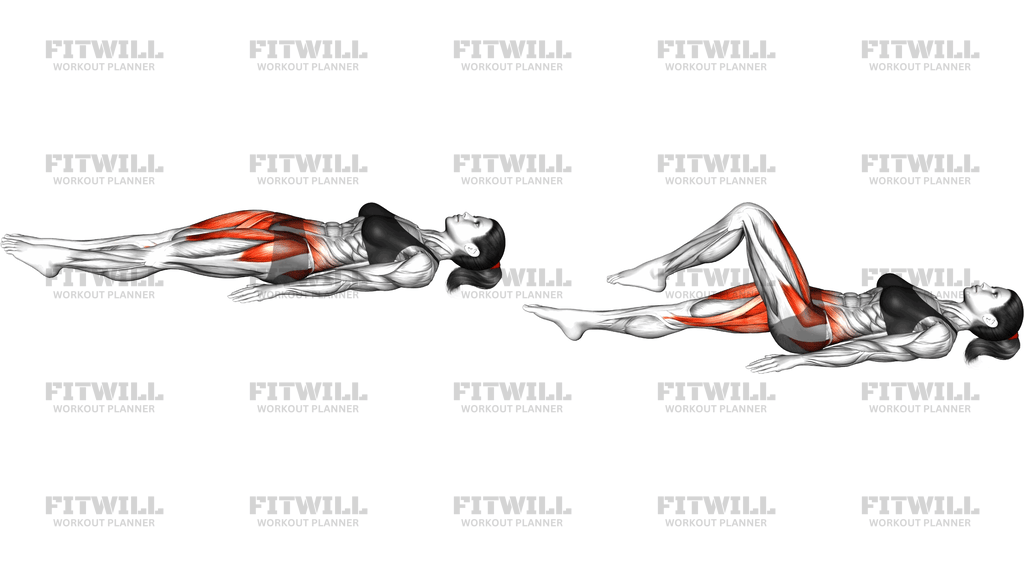
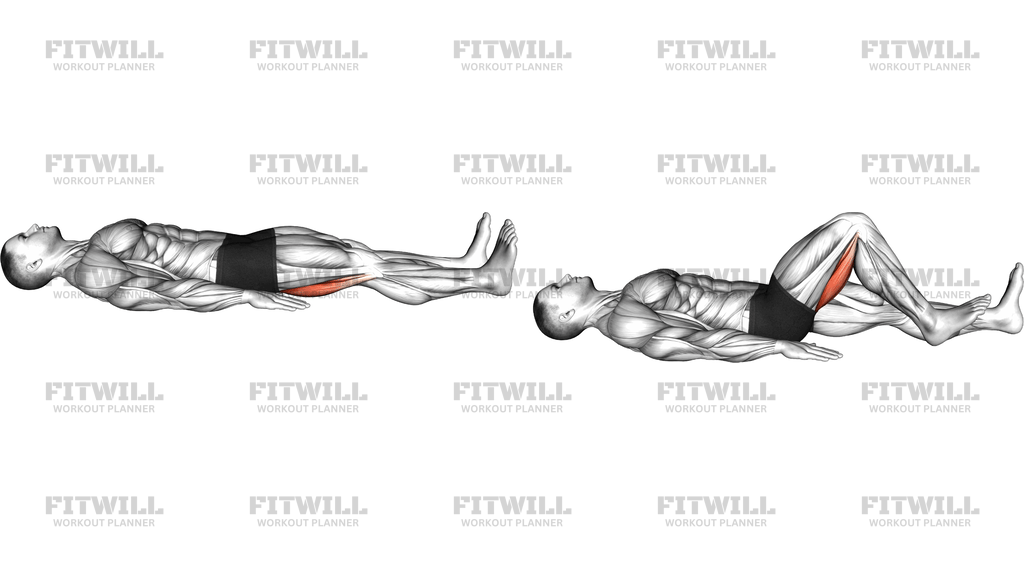
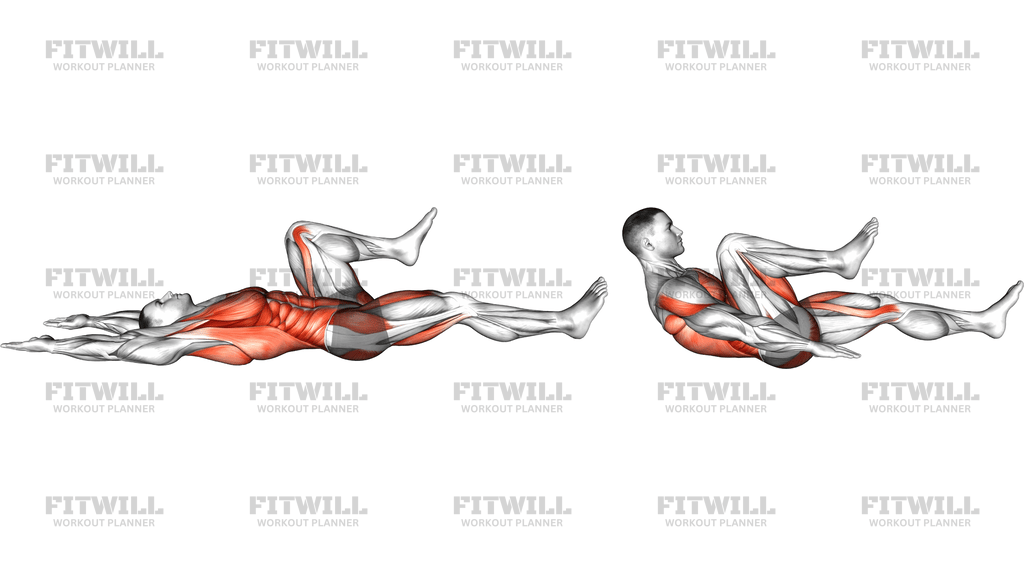
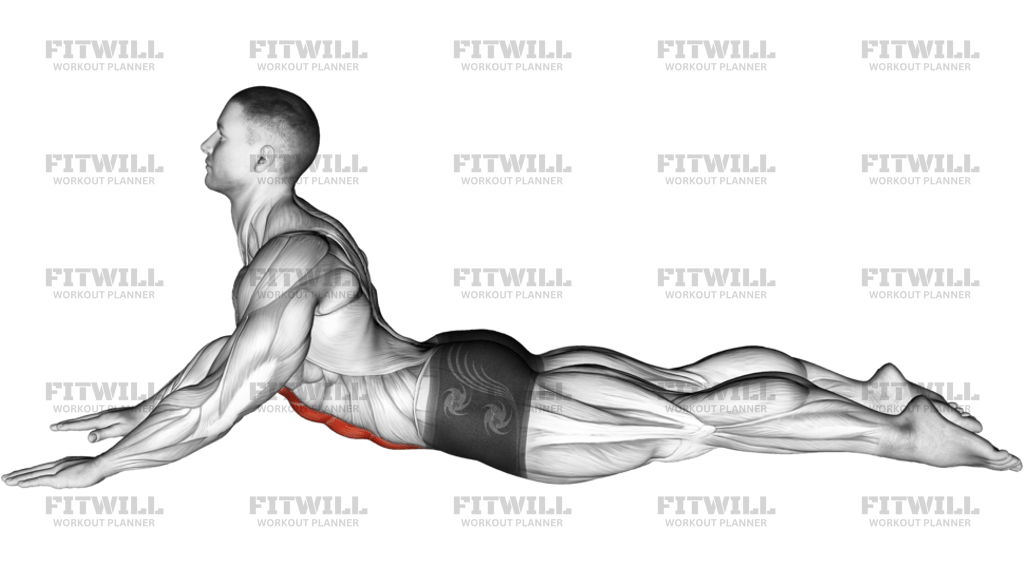
Lying Knee Hugs Circle
Lying Knee Hugs Circle is a supine mobility drill performed on the floor. You lie flat on your back, draw both knees in toward your chest, clasp your hands around your shins or behind your thighs, and then guide the knees through slow, controlled circles. Because your back stays supported by the floor the entire time, the movement isolates the hips without asking your spine to stabilize a load, which makes it one of the gentler ways to open up the hip area.
The main work happens at the hip joint. Pulling the knees in actively engages the hip flexors, and the circling motion takes the hip through a smooth range of flexion, slight abduction, and adduction. The lower abdominals help control the pace of each revolution, and the glutes and lower back muscles work to keep your pelvis settled on the mat instead of rocking with the legs.
This exercise is especially useful as a warm-up before squats, lunges, running, or any lower body session, and it works just as well as an evening unwind after long hours of sitting. People with stiff hips from desk work often find that a couple of slow sets in each direction restores a surprising amount of comfortable range. It is also a common choice in low-impact routines and beginner programs because there is no equipment beyond a mat and no load on any joint.
Setup matters more than it looks. Lie with your whole back, pelvis, and head in contact with the floor, legs extended and arms resting at your sides. When you draw the knees in, your hands should support the weight of the legs rather than your hip flexors muscling them up alone. If your tailbone lifts or your lower back flattens and strains as the knees come toward you, you have pulled them in too far or too fast.
To execute the movement well, think of drawing small, smooth circles with your knees rather than big sweeping ones. The knees travel together as a unit, the feet stay relaxed, and the head and shoulders stay heavy on the mat. Reverse direction after your planned number of circles so both rotational patterns get trained.
A few practical points keep this safe and effective. Move at a pace you could hold a conversation through; jerky, fast circling turns a mobility drill into momentum practice. Never yank the knees in with a sharp tug, and if a circle size or range causes pinching at the front of the hip, shrink the circle until it disappears. Stop and switch to a single-knee version if both knees together compress the lower back uncomfortably.
Fitwill
Log Workouts, Track Progress & Build Strength.
Achieve more with Fitwill: explore over 9600 exercises with images and videos, access built-in and custom workouts, perfect for both gym and home sessions, and see real results.
Start your journey. Download today!




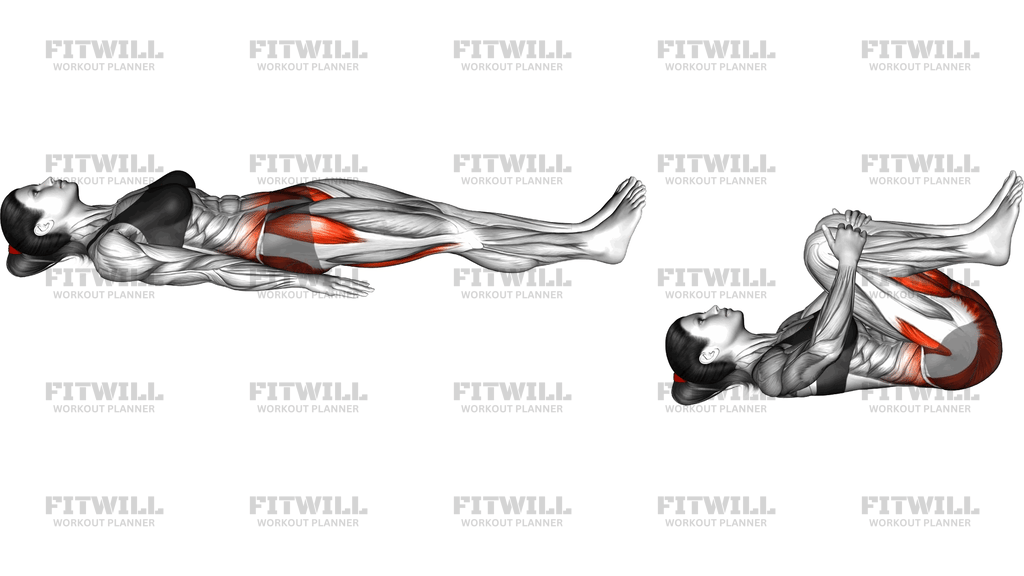
Instructions
- Lie flat on your back on an exercise mat with your legs extended, feet together, and arms resting at your sides.
- Keep the back of your head, your shoulders, and your entire pelvis in contact with the floor before you start moving.
- Exhale and draw both knees up toward your chest, then clasp your hands around your shins or place them behind your thighs for support.
- Gently pull the knees in until you feel a mild stretch across the hips and glutes, keeping your tailbone heavy on the mat.
- Release your clasp slightly and begin guiding both knees through small, smooth circles, keeping the feet close together and the knees traveling as one unit.
- Continue circling for the planned number of repetitions, letting the hands float lightly on the shins so the hips, not your grip, guide the motion.
- Breathe steadily throughout the circles, inhaling and exhaling at an even pace without holding your breath.
- Complete your circles in one direction, then reverse and repeat in the opposite direction for the same number of repetitions.
- To finish, slow the circles down, gently hug the knees in for a final second, then lower both feet back to the mat with control and rest before your next set.
Tips & Tricks
- Start with circles the size of a dinner plate. Most people who go big immediately end up rocking their pelvis off the floor, which defeats the purpose of the supported setup.
- If your tailbone lifts as the knees travel to one side, your circle is too wide or your hips are tight. Shrink the range rather than forcing the path.
- Keep the shoulders relaxed and the upper back glued to the mat. Tensing up and shrugging toward your ears is a common giveaway that you are pulling with your arms instead of moving from the hips.
- The hands are there to cradle the legs, not to crush them into your chest. A death grip on the shins usually means the hip flexors are being skipped in favor of arm strength.
- Pause for one breath at the top of each circle if your hips feel especially tight in the morning; the extra second lets the stretch register before you continue.
- If you feel pinching at the front of one hip during the circle, bring that knee slightly less deep into flexion and keep the circles smaller on that side.
- Do not let the feet drift apart as the knees circle. Keeping the knees and feet tracking together keeps the motion at the hips instead of twisting through the lower back.
- Move slowly enough that each full circle takes two to three seconds. Speed hides restrictions and turns a mobility drill into a momentum exercise.
Frequently Asked Questions
Which muscles does Lying Knee Hugs Circle work?
The hip flexors, particularly the iliopsoas, do most of the active work as the knees draw in and circle. The lower abdominals control the pace, while the glutes and lower back muscles stabilize the pelvis on the mat.
Is Lying Knee Hugs Circle a strength exercise or a stretch?
It sits in between, but it functions primarily as a dynamic mobility and stretch drill. The muscles work lightly to move the hips, while the circling path takes them through a comfortable range rather than loading them.
Can beginners do Lying Knee Hugs Circle?
Yes, it is one of the most beginner-friendly hip mobility drills because the floor supports the spine and there is no load. Beginners should simply start with smaller circles and fewer repetitions per direction.
Why do my hips pinch at the front during the circles?
A pinch at the front of the hip usually means the knee is being pulled too deep into flexion or the circle is too large for your current range. Reduce the circle size and bring the knees in slightly less; if the pinch continues, stop and try a single-knee variation.
Should my lower back stay flat on the mat during Lying Knee Hugs Circle?
Your pelvis and sacrum should stay settled on the mat throughout the circles. Some people naturally keep a small gap under the lower back, and that is fine as long as the tailbone does not lift or rock with the knees.
How many circles should I do in each direction?
Five to ten controlled circles in each direction works well as a warm-up. The quality of the path matters far more than the count, so stop when the motion becomes sloppy or rushed.
Can I use Lying Knee Hugs Circle before squatting or running?
Yes, it is a good warm-up choice because it takes the hips through flexion and rotation without fatigue. Pair it with a few leg swings or bodyweight squats to fully prepare for loaded lower body work.
What can I substitute if lying down is not comfortable?
A standing knee hug, where you balance on one leg and pull the other knee to your chest, covers similar range. Seated knee-to-chest pulls also work when getting to the floor is the problem.
Is it normal for my abs to feel this during the exercise?
A mild working sensation in the lower abdominals is normal because they control the legs as the knees circle. It should feel like gentle effort, not strain; if you feel it cramping, support the thighs more with your hands and slow down.