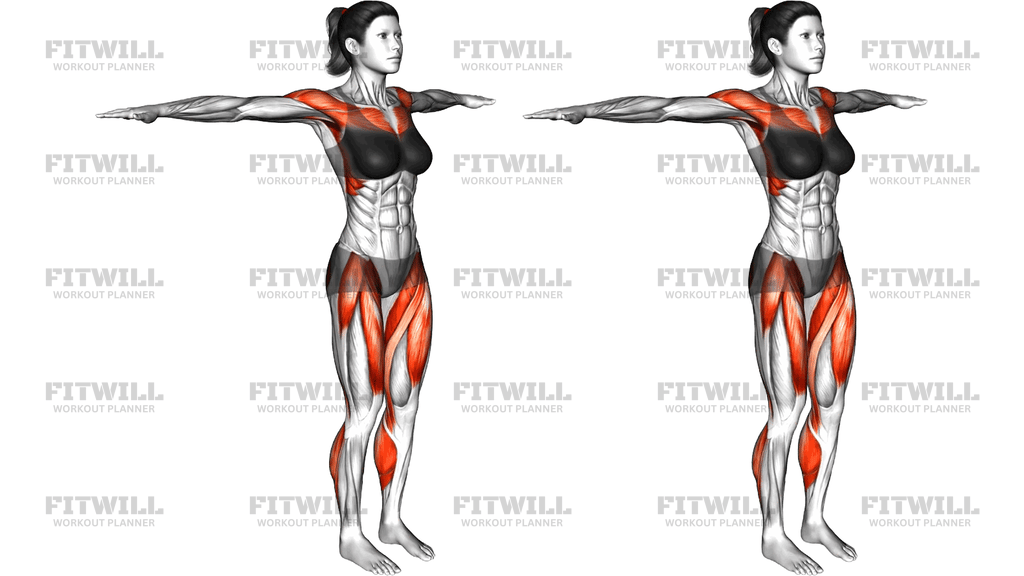
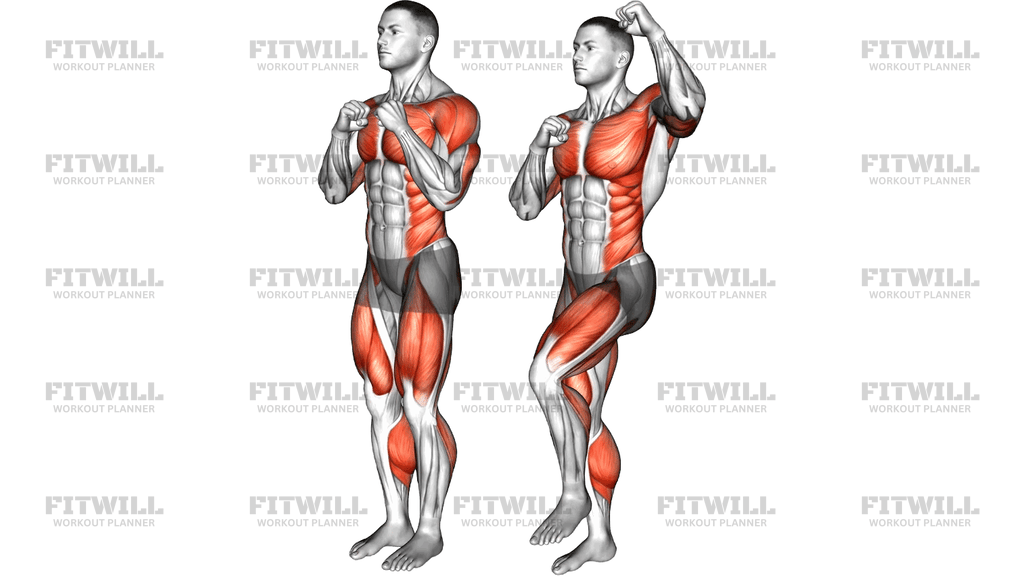
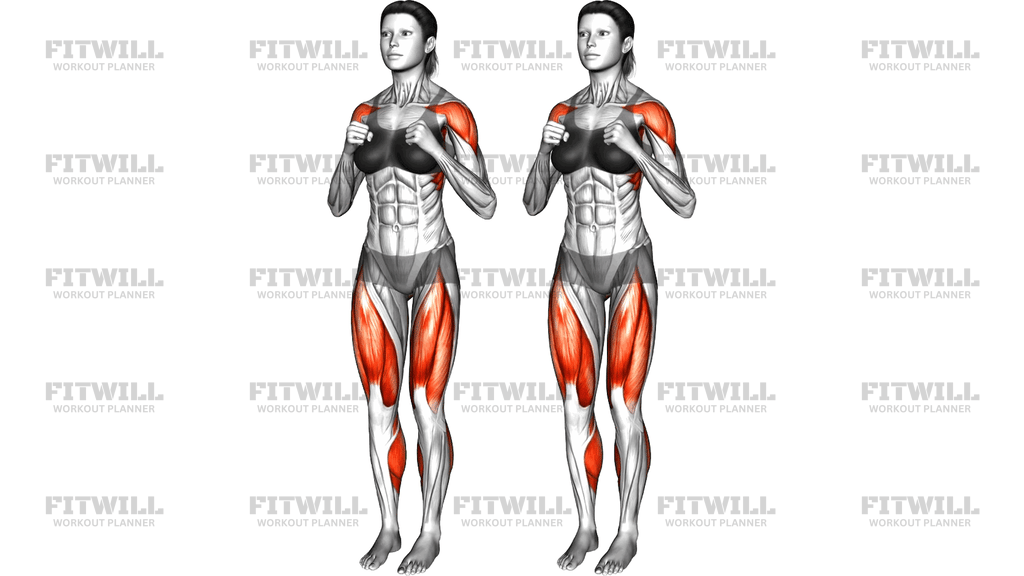
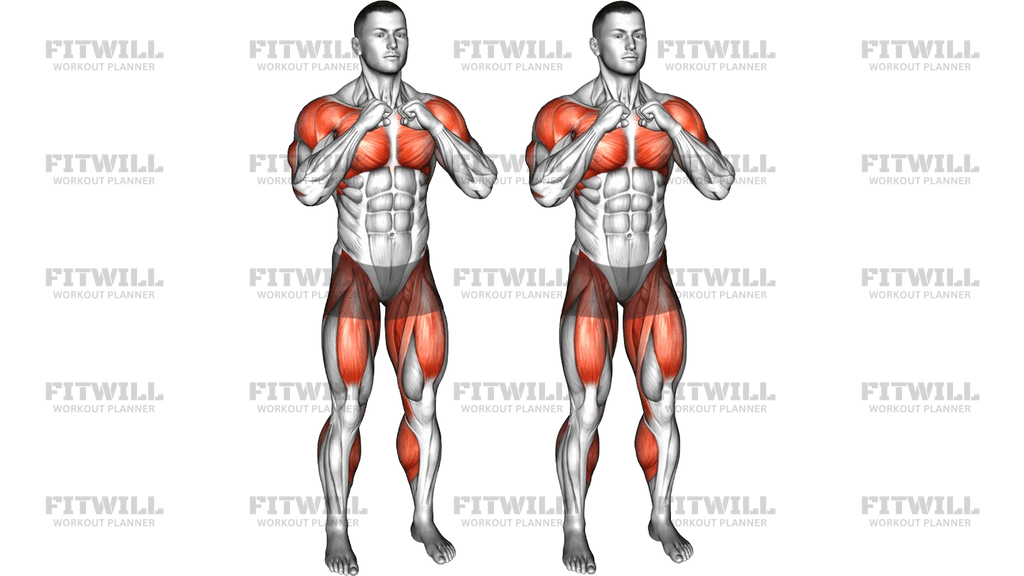
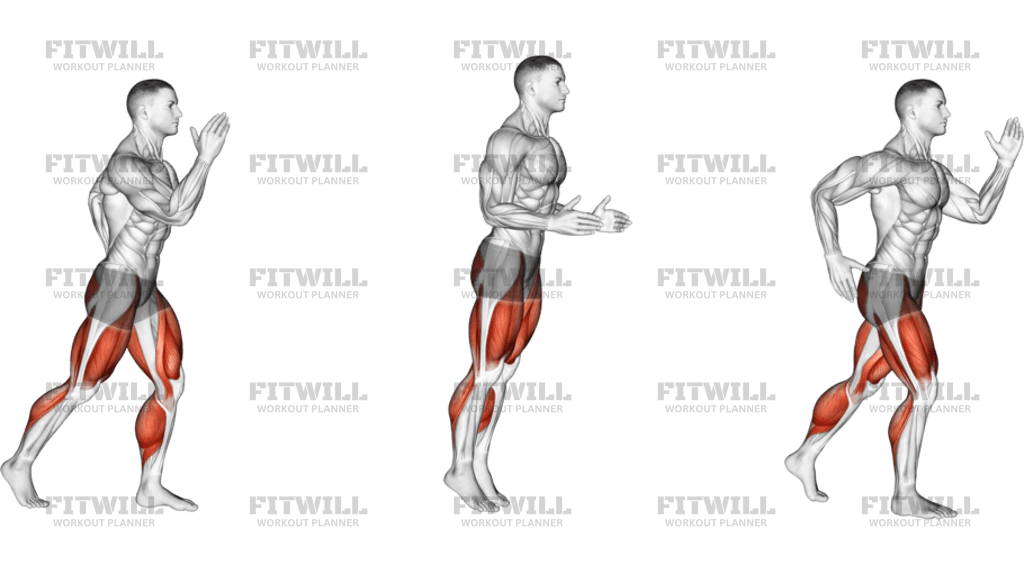
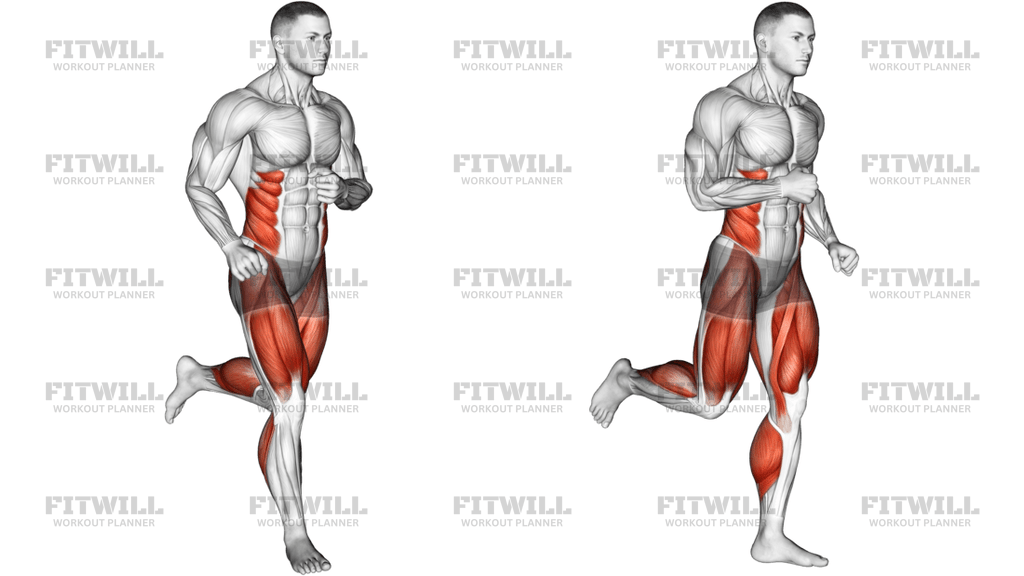
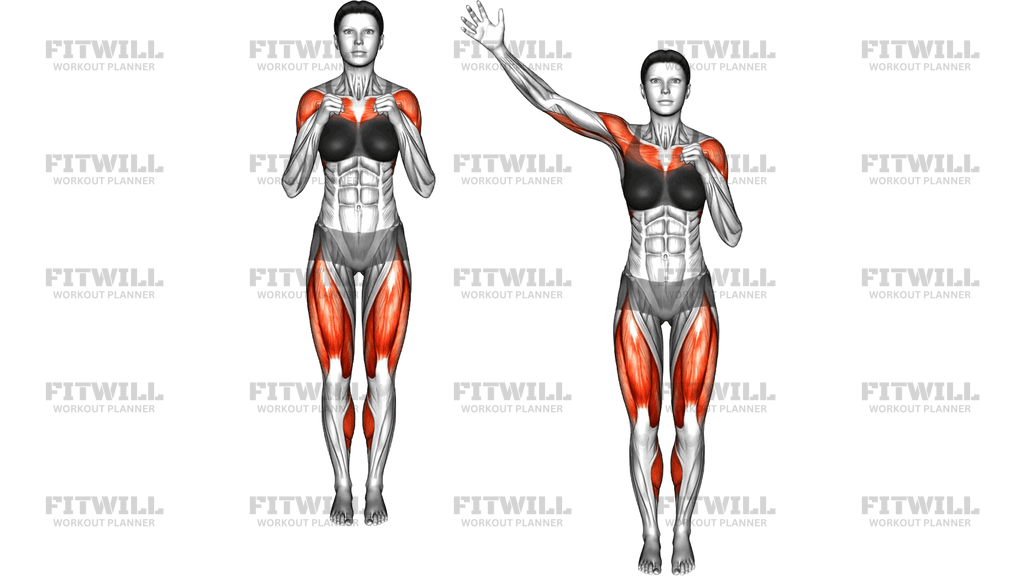
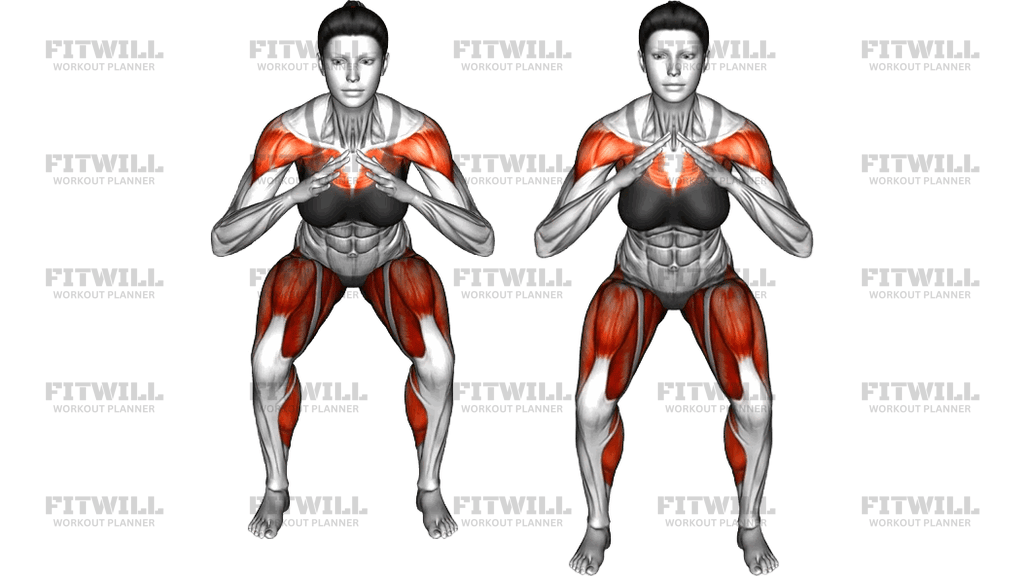
Side To Side Punches
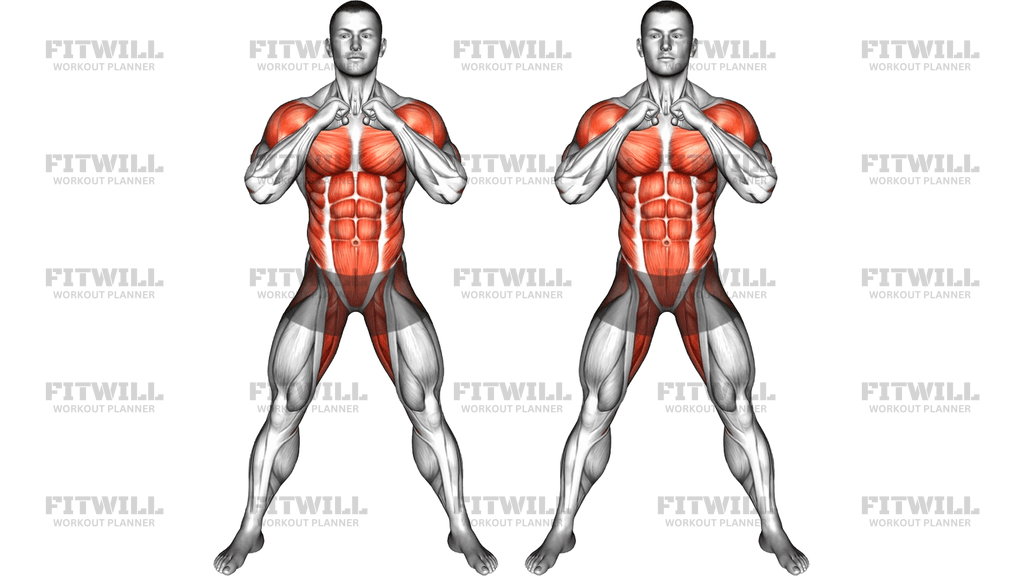
Side To Side Punches are a standing bodyweight movement where you throw alternating punches out to each side while shifting your weight between a wide stance. Unlike a straight jab-cross combination aimed forward, the punches travel laterally, so your torso rotates and your hips load from one leg to the other with every rep. It is a common drill in boxing conditioning classes, warm-ups, and cardio circuits because it raises your heart rate quickly while demanding coordination between your upper and lower body.
This movement suits a wide range of people: beginners can do it slowly as a low-impact conditioning drill, and more advanced trainees can speed it up or add light hand weights for a greater challenge. Because there is no impact from jumping, it is a reasonable choice for people who want cardio work that is easier on the knees and ankles.
The main work comes from the shoulders and arms, which drive each punch, while the obliques and deep core control the rotation and keep your ribcage from simply swinging. Your legs stay active the entire time; the wide stance, slight knee bend, and constant weight shifts engage the quads, glutes, and hip stabilizers far more than a stationary punch drill would.
Setup matters more than it looks. A stance that is too narrow takes the legs out of the movement and makes balancing harder, while standing too upright removes the core rotation that gives this drill its value. Fists should start at chest or chin height, elbows tucked, in a guard-like position before each punch extends.
To execute well, punch deliberately to the side at roughly shoulder height, let the opposite knee bend as your weight shifts onto that leg, and pull the hand straight back to guard rather than letting it drift. Keep the movement rhythmic: one side, then the other, at a pace you can sustain with clean form.
Common use cases include warm-ups before upper body training, finishers at the end of a session, interval work such as 30 seconds on and 30 seconds off, and general conditioning at home with no equipment. Stay controlled, avoid locking out the elbows or snapping the joints at full extension, and stop if you feel any shoulder pinching.
[ Workout Log & Planner ]
Put your next workout in Fitwill
Keep your plan and training log ready when you are.


Instructions
- Stand with your feet noticeably wider than shoulder width, toes turned out slightly, and distribute your weight evenly across both feet.
- Raise both fists to chest or chin height with elbows tucked close to your ribs, and soften your knees into a shallow athletic stance.
- Brace your core as if preparing for a light push, and keep your chest tall and gaze forward.
- Punch your right arm straight out to the right side at about shoulder height, rotating your torso slightly with the punch.
- As the right arm extends, shift your weight onto your right leg and let the left knee bend a little more.
- Pull the right fist back to guard and immediately punch the left arm out to the left side, shifting your weight onto the left leg.
- Continue alternating sides in a steady rhythm, keeping each punch at a controlled speed rather than flailing.
- Exhale sharply on each punch and inhale briefly as the hand returns to guard.
- Keep your hips square and your spine neutral throughout; your torso should rotate, not bend sideways at the waist.
- To finish, slow the pace over a few reps, bring both fists back to guard, step your feet together, and let your breathing settle.
Tips & Tricks
- A common mistake is punching downward or letting the arm drop below chest level, which strains the shoulder; aim each punch at roughly shoulder height.
- Do not let the extended elbow snap into full lockout at the end of the punch; stop just short of full extension to protect the joint.
- If your lower back feels the work, you are probably leaning sideways instead of rotating; think about turning your ribcage toward the punching side rather than bending at the waist.
- Keep your knees bent the whole set. Standing tall with straight legs turns this into an arm-only drill and removes most of the leg and core demand.
- If you lose balance during fast weight shifts, narrow your stance slightly or slow the tempo until the pattern feels stable.
- Avoid shrugging the punching shoulder up toward your ear; keep the shoulder blade settled as the arm extends.
- Start with 20 to 30 second intervals and build up. Most people's shoulders fatigue before their legs on this drill, and sloppy punches late in a set do little good.
- For extra challenge, hold very light weights or wear weighted gloves, but only once you can keep the punches clean at speed with empty hands.
Frequently Asked Questions
What muscles do Side To Side Punches work?
The shoulders and arms drive each punch, while the obliques and deep core handle the rotation and weight shifts. The quads, glutes, and hip stabilizers stay active throughout because of the wide stance and constant side-to-side transfer.
Are Side To Side Punches good for beginners?
Yes. Because they are low impact and require no equipment, beginners can start slowly and focus on the rotation and weight shift. Speed and duration can be added once the pattern feels natural.
How wide should my stance be for Side To Side Punches?
Start with feet clearly wider than shoulder width and toes turned out slightly. If you feel wobbly during the weight shifts, narrow the stance a little; if it feels too easy, take it wider and sit lower.
How is this different from a standard jab-cross combination?
The punches travel out to the sides rather than straight forward, which forces your torso to rotate and your weight to shift laterally between legs. That makes it more of a core and conditioning drill and less of a straight punching skill drill.
Why do my shoulders burn so quickly during Side To Side Punches?
The shoulders perform most of the work of extending the arm on every rep, and they get very little rest during continuous alternating punches. Shorten your intervals or slow the tempo until your shoulder endurance improves.
Should I bend sideways at the waist when punching to each side?
No. The movement should come from rotation through the torso and a weight shift through the hips, not from leaning or bending sideways. Bending sideways loads the lower back and reduces the core benefit.
How long should I perform Side To Side Punches in a workout?
Work in intervals of 20 to 45 seconds, resting between rounds, or use it as a steady warm-up drill for a couple of minutes. Adjust the duration based on whether your goal is conditioning or warming up the shoulders and core.
Can I add weights to Side To Side Punches?
Light dumbbells or weighted gloves can increase the demand once your form is solid at speed. Avoid heavy weights, since fast punching with load in the hands puts unnecessary stress on the shoulder and elbow joints.
Is Side To Side Punches safe for people with knee problems?
The drill is low impact, but the repeated weight shifts do load the knees. Keep the knee bend shallow, track the knee over the toes on the loaded leg, and reduce range or speed if any knee discomfort appears.