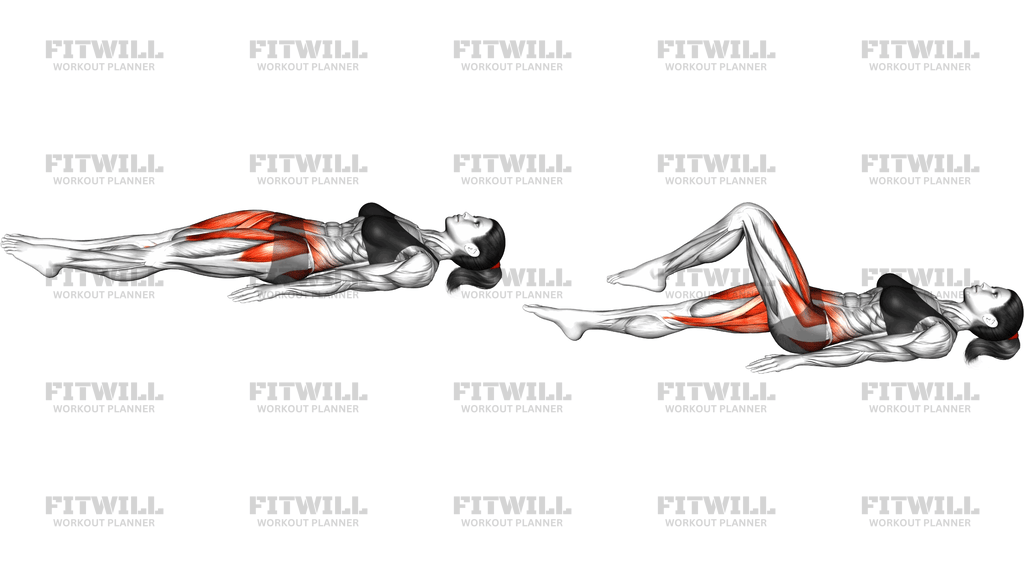
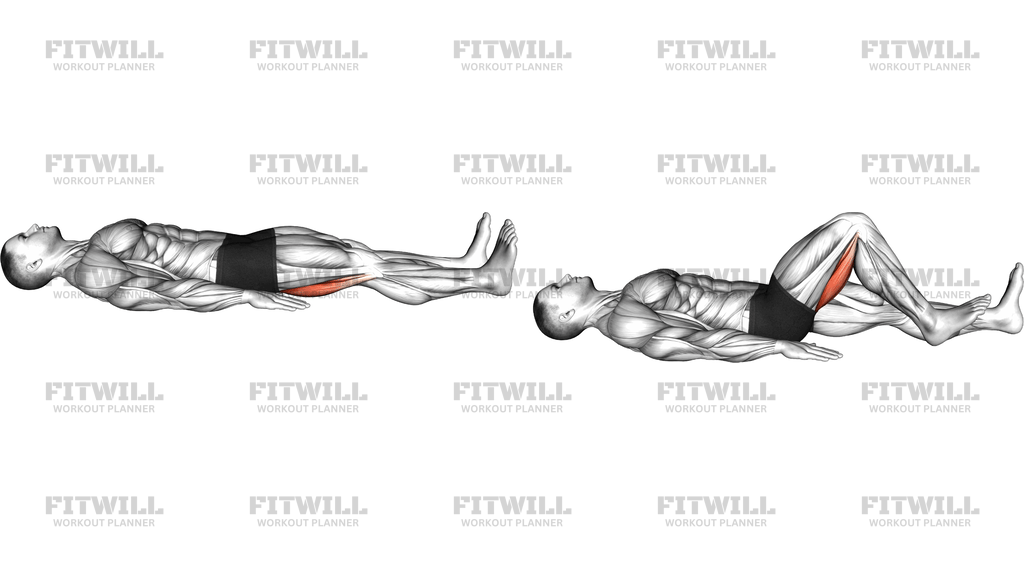
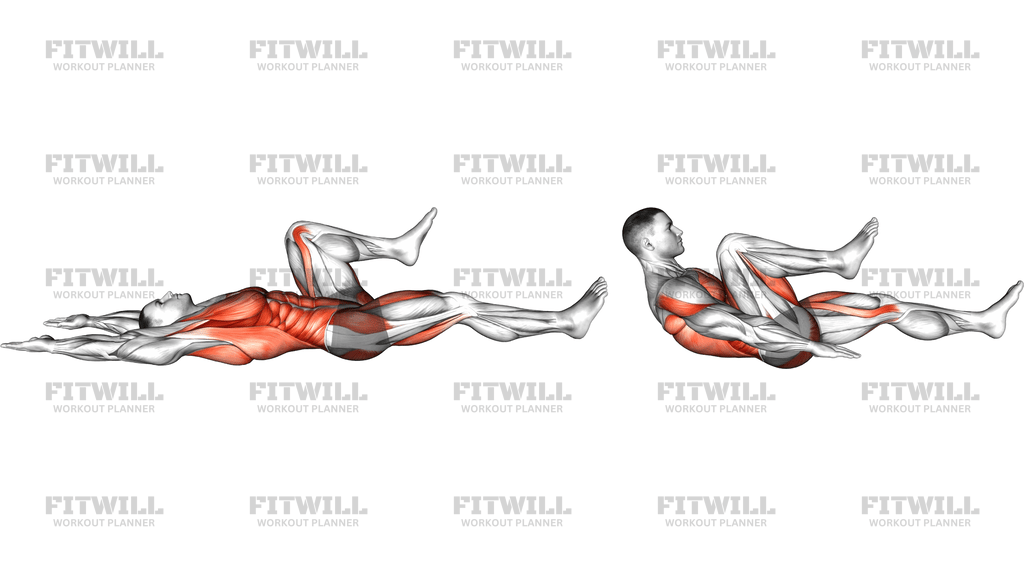
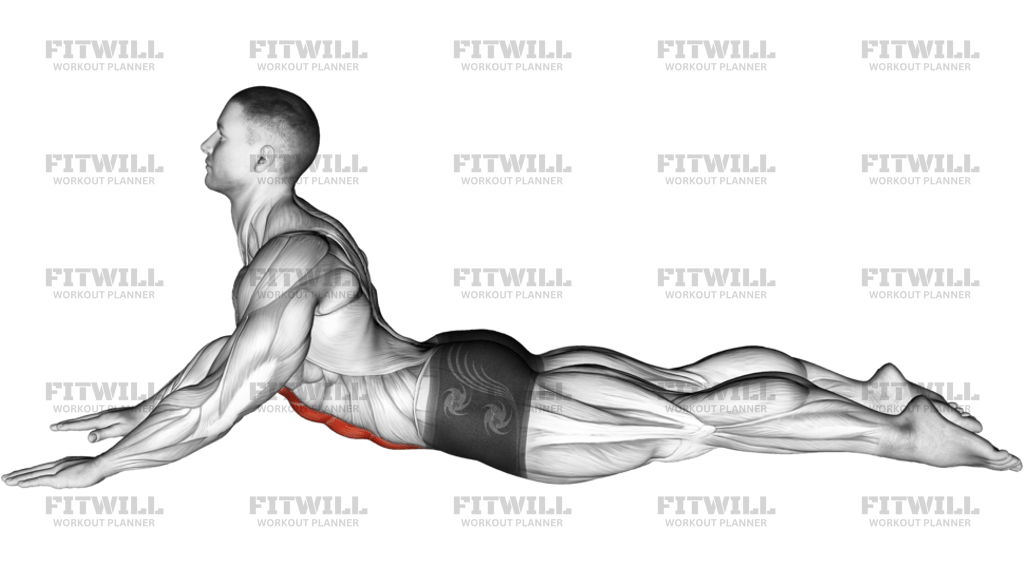
Lying Single Knee Swing
The Lying Single Knee Swing is a supine mobility movement where you draw one knee toward your chest while the opposite foot stays planted on the floor. The hands clasp around the working knee or shin and gently guide it in, lengthening the hip extensors on the moving leg while the planted leg anchors the pelvis. Because only one hip moves at a time, you can isolate each side and notice differences in tightness or range that would be hidden in a two-legged version.
This stretch is especially useful for people who sit for long stretches of the day. Prolonged sitting keeps the hips folded and can leave the glutes and hip region feeling stiff and heavy, and it can contribute to that dull, tight feeling across the lower back. Pulling one knee in while lying down lets the lower back stay fully supported, which makes this a comfortable option for people who find standing or seated hip stretches awkward or who want a gentle way to loosen up before or after training.
The main targets are the glutes and the deep hip muscles on the moving leg, with the hip flexors of the planted leg also working to hold that foot flat and keep the pelvis from tilting excessively. When the knee travels toward the same-side shoulder, the emphasis sits more in the buttock; when you guide it slightly across the body, you add a rotation that reaches the outer hip. The lower back benefits indirectly because a supported, mobile hip takes pressure off the lumbar region during daily movement.
Setup matters more than most people expect. Lying flat on your back with the head relaxed and the non-working foot firmly planted gives the pelvis a stable base, which is what allows the moving hip to truly lengthen instead of the whole body shifting to fake extra range. Keep the lower back in contact with the floor as much as possible, and let the arms do the guiding rather than yanking the knee with momentum.
Execution should feel slow and patient. Draw the knee toward the chest on an exhale, hold the end position where you feel a comfortable, spread-out sensation through the hip and buttock, then lower the leg back down with control before switching sides. Avoid forcing the thigh past the point of comfort; the stretch should ease off slightly as you hold, not bite harder.
You will see this movement used in warm-ups before lower body training, in cool-downs after running or cycling, in rehab-adjacent settings where gentle hip mobility is needed, and as a simple evening routine for desk workers. It requires nothing but a bit of floor space and a mat or carpet, which makes it one of the easiest hip mobility drills to keep in a daily routine.
Fitwill
Log Workouts, Track Progress & Build Strength.
Achieve more with Fitwill: explore over 9600 exercises with images and videos, access built-in and custom workouts, perfect for both gym and home sessions, and see real results.
Start your journey. Download today!




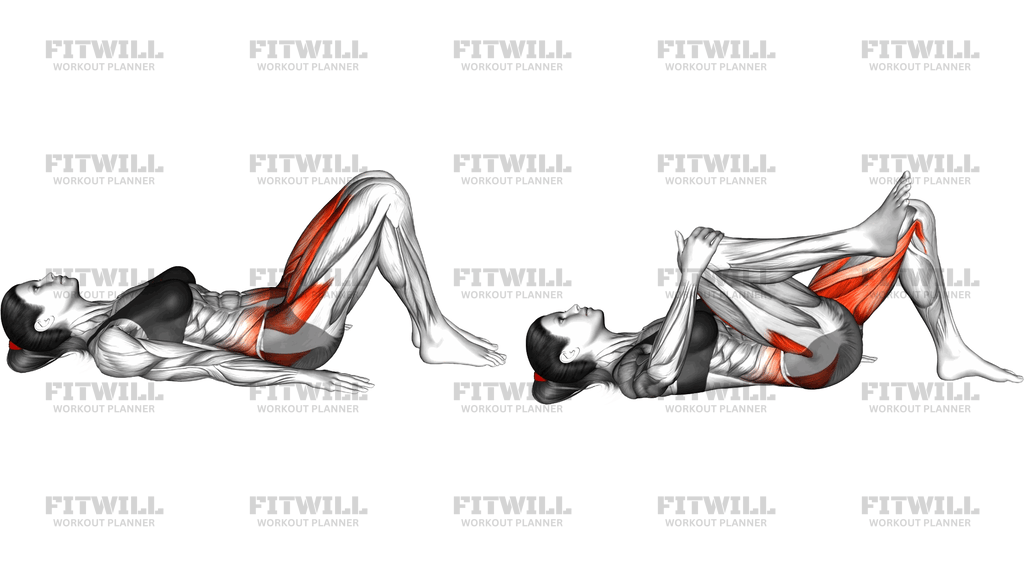
Instructions
- Lie on your back on an exercise mat with your head relaxed, arms resting at your sides, and both knees bent with feet flat on the floor about hip-width apart.
- Pick the leg you will move first, then lift that foot off the floor and clasp both hands around the back of the thigh, the knee, or the shin, whichever lets your shoulders stay relaxed.
- Keep the opposite foot flat on the floor with the knee bent; this planted leg is what keeps your pelvis steady throughout the stretch.
- Brace lightly and keep your lower back in contact with the mat so the movement comes from the hip, not from the spine rounding or the pelvis rolling up.
- Exhale and gently pull the knee toward your chest, guiding it with your arms until you feel a comfortable stretch through the buttock and back of the hip.
- For a slightly different emphasis, guide the knee a little toward the opposite shoulder to reach the outer hip, or keep it straight up toward the same-side shoulder to focus on the glute.
- Hold the end position for 20 to 30 seconds, breathing steadily and letting the tension melt a little on each exhale rather than forcing the knee closer.
- Release slowly, lower the foot back to the floor, and re-settle the pelvis before switching to the other leg.
- Complete 2 to 3 repetitions per side, or one longer hold per side if you are using this as a cool-down.
- To finish, draw both knees in briefly or roll to one side and press yourself up, rather than snapping straight up from the stretched position.
Tips & Tricks
- If your shoulders creep up toward your ears as you pull, lower your hands to the back of the thigh instead of the shin; the stretch comes from the hip, not from how hard you grip.
- A common mistake is letting the planted foot slide or the planted knee fall outward, which lets the pelvis rotate and steals tension from the hip you are stretching; press that foot down deliberately.
- If your lower back lifts off the mat as the knee comes in, you have pulled past your available range; back off until the tailbone stays heavy.
- Keep the neck and jaw relaxed. Tension in the face usually means you are pulling harder than the tissue needs.
- Breathe out as the knee travels in. Holding your breath tends to make the glutes guard and shortens the range you can comfortably reach.
- If the buttock sensation is sharp or travels down the leg, reduce the angle or ease off entirely; a stretch should feel like length, not nerve symptoms.
- Use a slow tempo on the way down as well as the way up. Dropping the leg quickly skips half of the mobility benefit.
- For desk workers, doing one round in the morning and one in the evening usually works better than one long session once a week.
- If your hip flexor at the front of the planted leg cramps, shorten the planted knee angle slightly by sliding the foot closer to your hips.
Frequently Asked Questions
Which muscles does the Lying Single Knee Swing stretch?
The main targets are the glutes and deep hip muscles of the moving leg, with the hamstrings and lower back region contributing depending on your angle. The hip flexors of the planted leg work statically to hold the foot flat and steady the pelvis.
Should I pull the knee toward my chest or toward the opposite shoulder?
Toward the chest emphasizes the glutes and back of the hip, while guiding it slightly toward the opposite shoulder adds rotation that reaches the outer hip. Doing both angles gives you the most complete coverage.
Is the Lying Single Knee Swing good for beginners?
Yes, it is one of the most beginner-friendly hip stretches because the floor supports your spine and you control the intensity entirely with your arms. Start with short 15 to 20 second holds and stay well within a comfortable range.
Why does my lower back lift off the floor when I pull the knee in?
That usually means you are pulling past your current hip range, so the pelvis rolls up to compensate. Reduce how far you draw the knee in and focus on keeping the tailbone heavy against the mat.
Can I do the Lying Single Knee Swing for lower back stiffness?
Many people use it as a gentle way to loosen the hip and lower back area after long sitting, and the supported position keeps pressure off the spine. If you have a diagnosed back condition, check with a qualified professional before adding any new stretch.
How long should I hold each knee pull?
Twenty to thirty seconds per rep works well, with two to three reps per side. In a cool-down, a single longer hold of 45 seconds per side is also effective.
Should I do this stretch before or after a workout?
Short, gentle holds work well in a warm-up to prepare the hips for squats, lunges, or running. Longer holds are better saved for after training or in the evening, since extended static stretching is more of a cool-down tool.
My hamstring on the moving leg feels tight instead of my glute. Is that wrong?
Not wrong, just a different emphasis depending on how bent the knee is and how close the thigh comes to the chest. Keeping the knee more bent shifts the sensation toward the buttock; a slightly straighter leg brings more hamstring in.
What can I use if I don't have an exercise mat?
Any firm but comfortable surface works, such as carpet or a folded towel. The main requirement is that your spine feels supported enough to relax completely.
Should I do both sides even if one hip feels much tighter?
Yes, always stretch both sides, and you can give the tighter side an extra hold or two. Stretching only the stiff side tends to create an imbalance in how your hips feel during training.