Side Lying Thoracic Open Book
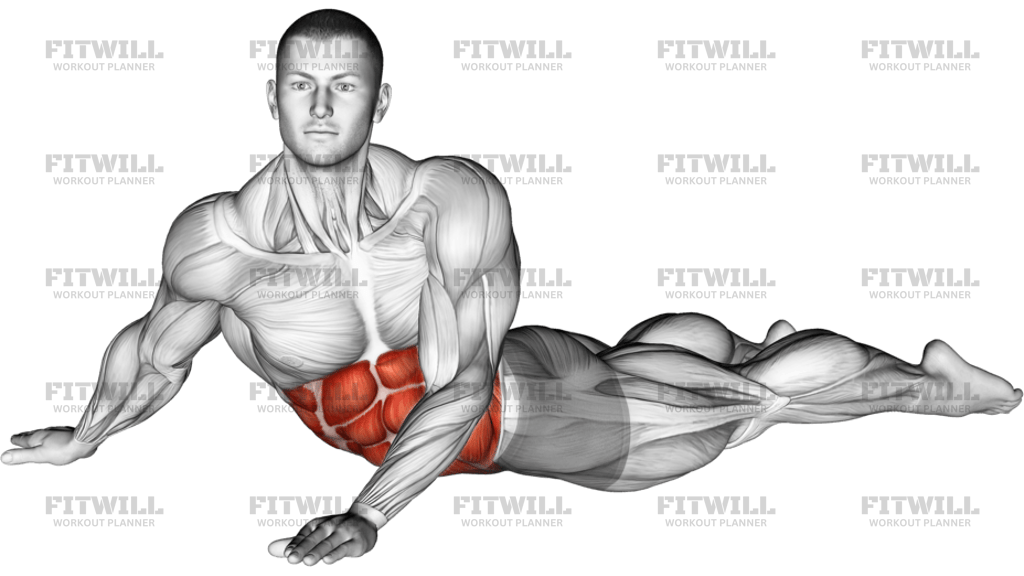
The Side Lying Thoracic Open Book is a rotational mobility drill performed on the floor. You lie on your side with both knees bent and stacked, extend both arms straight out in front of you at shoulder height, and then slowly sweep the top arm up and over your body until it reaches the floor behind you, following the arm with your eyes. The movement resembles opening a book from its spine, which is where the name comes from.
This exercise primarily improves rotation through the thoracic spine, the section of your upper back between the shoulder blades, while also lengthening the chest and front shoulder muscles and engaging the obliques to keep the pelvis steady. Because the knees stay pinned together and on the floor throughout, the lower body acts as an anchor that forces the rotation to come from the mid back rather than the hips or lumbar spine.
It is a valuable drill for anyone who spends long hours sitting, since desk work tends to stiffen the thoracic spine into a rounded, forward posture. It is also widely used by weightlifters before pressing or squatting sessions, by golfers, tennis players, and throwers who need rotational range, and by people recovering stiffness after long days of driving or travel. The floor gives immediate feedback: if your knees drift or your top shoulder cannot relax toward the mat, you know exactly where your limits are.
Setup quality determines everything here. Lie on an exercise mat with a cushion under your head if needed, hips and knees bent close to ninety degrees, and knees stacked directly on top of each other. Start with both arms extended together at shoulder height, palms together. From there, take a breath, then begin sweeping the top arm up and open, letting the head and upper back rotate with it while the knees never lose contact.
Execution should be slow and quiet, more like a stretch held with breathing than a repetition counted for effort. Pause for one to two breaths when the top arm and shoulder settle toward the floor, then reverse the path and bring the arm back to meet the bottom hand. Expect the range to be larger on one side than the other at first; that asymmetry is normal and usually improves with consistent practice.
Keep the effort comfortable. You should feel a broad stretch across the chest and a rotational pull through the mid back, never sharp pain in the shoulder, neck, or lower back. If the shoulder complains, bend the moving arm slightly or reduce how far the arm travels. One to two minutes per side before upper body training or as an evening unwind is plenty for most people.
Fitwill
Log Workouts, Track Progress & Build Strength.
Achieve more with Fitwill: explore over 9600 exercises with images and videos, access built-in and custom workouts, perfect for both gym and home sessions, and see real results.
Start your journey. Download today!




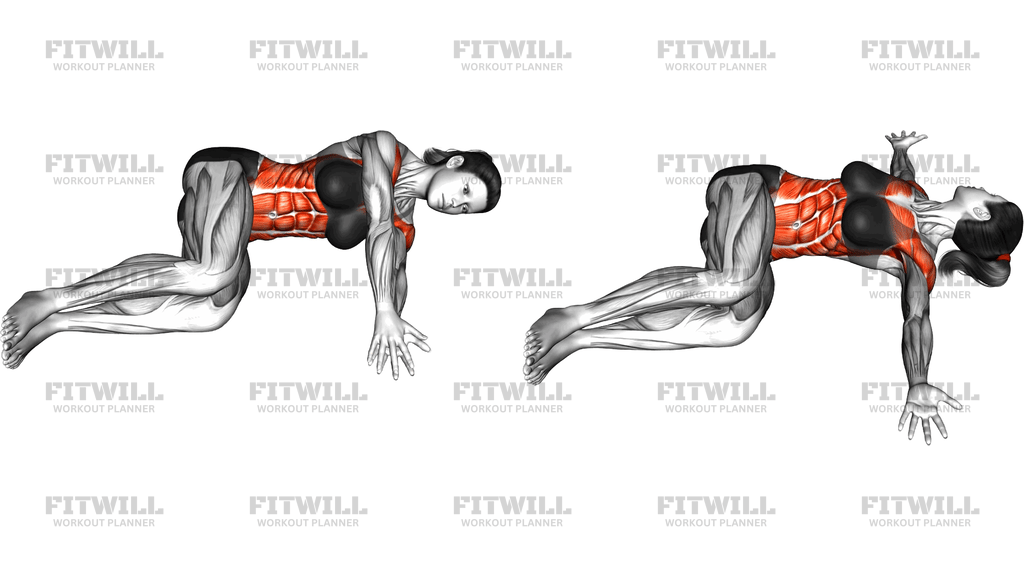
Instructions
- Lie on your side on an exercise mat with your hips and knees bent to roughly ninety degrees and both knees stacked directly on top of each other.
- Extend both arms straight out in front of your chest at shoulder height, palms pressed together, and rest your head on the mat or a small cushion with your neck in line with your spine.
- Gently brace your core and press your knees firmly into each other so the pelvis stays square and the lower body stays anchored.
- Inhale, then slowly sweep the top arm up toward the ceiling, letting it lead the rotation like the cover of a book opening.
- Continue the arc, allowing your head, upper back, and top shoulder to rotate with the arm until it reaches toward the floor behind you.
- Keep both knees glued together and on the mat the entire time; if they lift, stop and back off the range slightly.
- Exhale as the arm settles, and hold the open position for one to two slow breaths, feeling the stretch across the chest and mid back.
- Reverse the path with control, tracing the arm back until the hands meet again in front of your chest.
- Complete the desired number of slow repetitions or holds on one side, then roll over and repeat on the other side.
Tips & Tricks
- If your knees keep separating or lifting off the mat, reduce the arc of the arm rather than letting the pelvis rotate; the knee contact is what keeps the stretch in the thoracic spine instead of the lower back.
- Let your eyes follow the moving hand. This small cue encourages the upper back and neck to rotate together and often adds comfortable range without forcing anything.
- Avoid pushing the top arm to the floor with force. Gravity does the work; your job is to guide the arm and breathe so the chest and shoulder can relax into the position.
- If the floor position bothers your top shoulder or the shoulder pinches, bend the moving elbow slightly or stop the arm at the point before discomfort begins.
- A small pillow or folded towel under the head keeps the neck from side-bending to reach the mat, which prevents neck ache during longer holds.
- Holding your breath is the most common mistake in this drill. If you notice you are bracing, exhale slowly and let the ribs settle before continuing the arc.
- Compare sides and spend an extra repetition or two on the stiffer side, but do not chase symmetry in a single session.
- Use this before bench pressing, overhead pressing, or golf and tennis practice, when the mid back and chest need rotational freedom rather than after heavy loading when the tissues are fatigued.
Frequently Asked Questions
What muscles and areas does the Side Lying Thoracic Open Book target?
It targets thoracic spine rotation while stretching the chest and front shoulders, and the obliques work to hold the pelvis still as the upper body rotates.
Why do my knees have to stay together during the Open Book?
Keeping the stacked knees in contact anchors the pelvis so the rotation comes from the mid back instead of the hips or lower spine, which is the whole point of the drill.
Is the Side Lying Thoracic Open Book suitable for beginners?
Yes, it is a low-load floor stretch that most beginners can perform safely. Start with a smaller arc and shorter holds, and let range improve gradually over weeks.
How long should I hold each repetition of the Open Book?
Pause for one to two slow breaths at the open position, or hold for fifteen to thirty seconds if you prefer static stretching. Either approach works when done consistently.
One side opens much farther than the other. Is that a problem?
Side-to-side differences in thoracic rotation are very common, especially in people with dominant throwing or swinging patterns. Give the stiffer side a bit more gentle volume and reassess over several weeks.
My top shoulder cannot reach the floor. Should I force it down?
No. Pushing into end range aggressively can irritate the shoulder joint. Let gravity and relaxed breathing do the work over time, and stop the arm wherever the stretch feels productive.
When is the best time to do the Side Lying Thoracic Open Book?
It works well as part of a warm-up before pressing, squatting, or rotational sports, or as a standalone mobility break after long periods of sitting.
Can I do this stretch if I have lower back discomfort?
The locked pelvis position actually spares the lower back, but if rotating provokes your symptoms, reduce the range or consult a qualified professional before continuing.
What can I use instead if I cannot lie on the floor?
A seated thoracic rotation against a wall or a quadruped thread-the-needle offers a similar rotational stretch, though neither anchors the pelvis as effectively as the side-lying open book position.
How many repetitions should I do per side?
Five to eight slow repetitions or two to three holds of twenty to thirty seconds per side is a practical dose, whether used in a warm-up or a dedicated mobility session.