Double Pulsing Switching Squat Stance
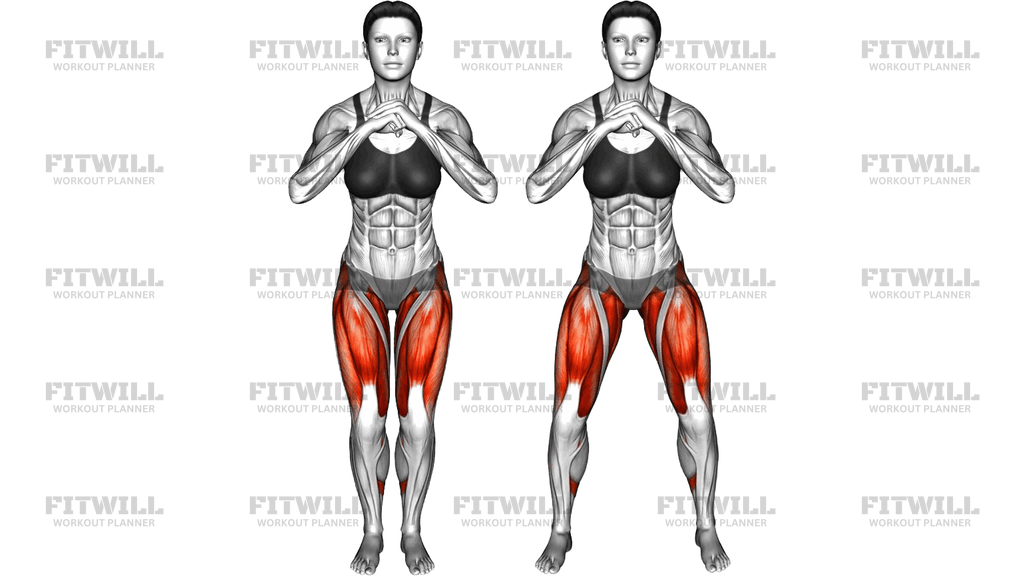
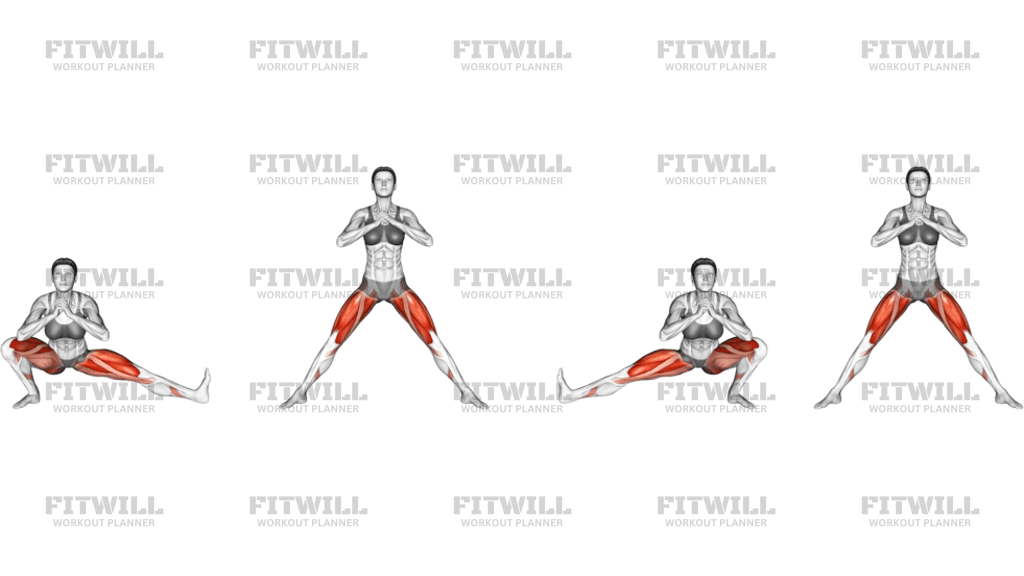
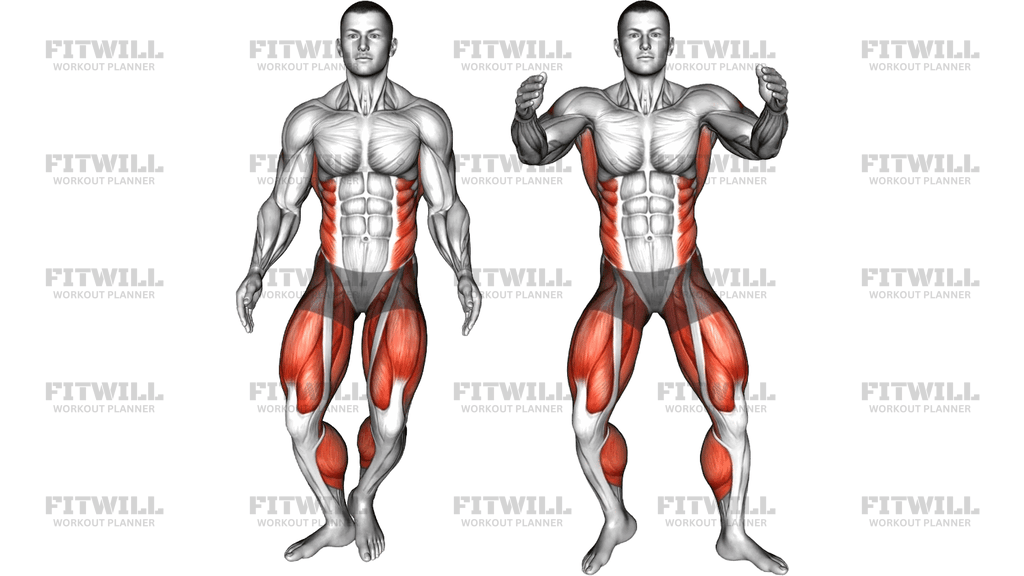
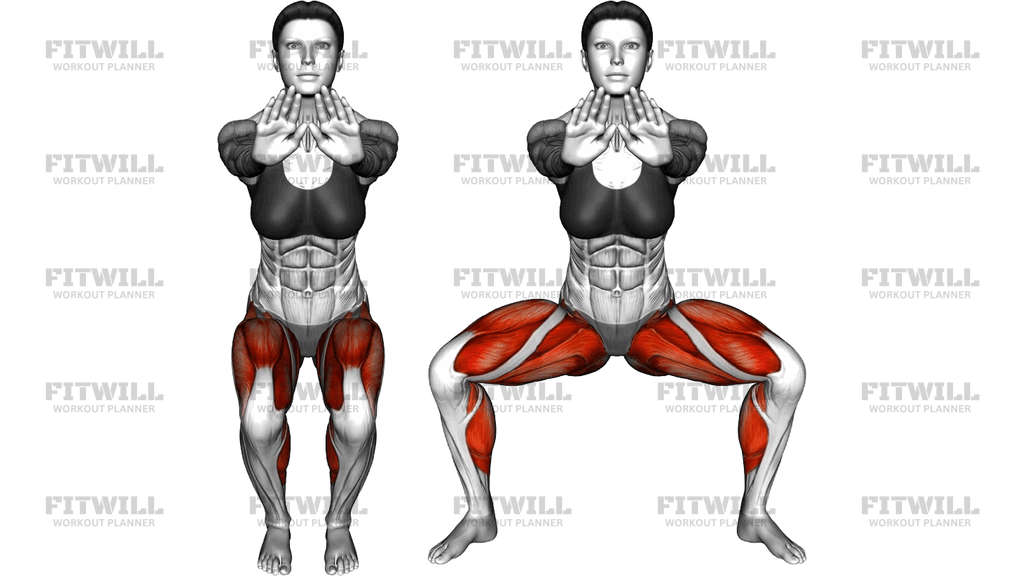
The Double Pulsing Switching Squat Stance is a bodyweight squat variation that combines two ideas into one drill: small half-range pulses performed at the bottom of the squat, and deliberate switching between two distinct foot positions. You squat down with a narrow stance, pulse twice in the low position, then reset your feet into a wide sumo stance, pulse twice again, and continue alternating. Because each stance stresses the hips differently, you work the quadriceps and glutes from narrow positioning while the adductors on the inner thighs take on heavy demand during the wide stance portion.
The pulses are what make this exercise harder than it looks. Instead of standing fully up between reps, you stay loaded in the bottom third of the squat and drive up only a few inches before lowering back down. That constant tension means the thighs never get a rest, the glutes stay switched on, and the muscles spend far more time under load than they would in a standard set of full squats. The switching element adds coordination and balance work, since every stance change forces you to reorganize your base from the ground up.
This movement suits anyone training legs without equipment: at home, in a hotel room, or as a finisher at the end of a lower-body session. It is also a practical teaching tool for squatters. Moving between a narrow and a wide stance in the same set makes differences in hip comfort, depth, and knee tracking immediately obvious, which helps you learn which stance fits your body best for heavier squatting later.
Setup matters here because the two stances only work if they are genuinely different. The narrow stance should have the feet roughly hip-width apart with the toes pointed mostly forward, while the wide stance needs the feet well outside shoulder width with the toes turned out at an angle. If the two positions drift toward each other, you lose the adductor emphasis of the wide stance and the quad-dominant feel of the narrow stance. Keeping the hands at chest height throughout, as in a defensive or prayer position, helps you stay upright and keeps attention on the lower body.
Execution should stay rhythmic but controlled: descend, pulse twice with small, precise up-and-down movements, rise to standing, reset the feet to the other stance, descend again, and repeat. The most common errors are pulsing so large that it becomes a full rep, letting the knees cave inward during the wide stance, and rushing the stance switches so the feet land sloppy. Slowing the switches and keeping the pulses short and crisp fixes all three.
Because the load is your bodyweight, safety comes down to joint positions rather than external weight. Keep the heels glued to the floor, let the knees travel over or slightly outside the toes, and brace the trunk before each descent. If depth is limited by mobility, work to a comfortable depth rather than forcing the thighs parallel, and build range gradually over time.
[ Workout Log & Planner ]
Put your next workout in Fitwill
Keep your plan and training log ready when you are.


Instructions
- Stand tall with your feet about hip-width apart and toes pointing forward for the narrow stance, arms relaxed, then raise both hands to chest height with palms facing out or pressed together.
- Brace your core lightly, pull your shoulders back, and shift your weight evenly across both feet so you feel balanced from heel to toe.
- Push your hips back and bend your knees to lower into a squat, stopping once your thighs approach parallel or reach your comfortable maximum depth.
- From the bottom position, pulse twice: drive up only a few inches, then lower back down to the same depth, keeping the movement small and controlled.
- After the second pulse, stand all the way up and step or jump your feet out to a wide stance, well outside shoulder width, with toes turned out roughly 30 to 45 degrees.
- Lower into the wide-stance sumo squat, keeping the knees pushed out over the toes and the chest tall, then perform two pulses at the bottom the same way.
- Stand up, return your feet to the narrow hip-width position, and continue alternating stances for the desired number of rounds.
- Exhale as you drive up through each pulse and when standing fully, and inhale as you descend into each new stance.
- Keep your heels flat on the floor in both stances; if the heels lift in the wide stance, turn the toes out a little more or reduce the width slightly.
- Between sets, stand and shake out the legs briefly, then reset your foot positions deliberately before starting the next set.
Tips & Tricks
- Keep the pulses genuinely small — three to five inches of travel. If you rise halfway up each time, you turn a tension drill into ordinary partial squats and lose the constant load on the thighs.
- Match your depth every pulse. In the wide stance especially, the second pulse tends to drift shallower than the first; touch the same bottom position twice before standing.
- Watch the knees during the sumo portion. They should track out over the toes; if they cave inward, consciously drive the knees out and think about spreading the floor with your feet.
- Do not rush the stance switch. Land the new foot position deliberately with your weight balanced before descending, or your first pulse in each stance will start off-axis.
- Keep the torso angle similar in both stances. The narrow stance tempts you to lean far forward; keep the chest up and hands at chest height to stay upright.
- If the wide stance bothers your hips or knees, reduce the width slightly rather than abandoning it — a moderately wide stance with toes turned out still trains the inner thighs well.
- Distribute weight across the whole foot. Heels lifting off the floor usually means the stance is too wide or the toes are not turned out enough.
- Breathing rhythm helps here more than in a heavy squat: one breath cycle per pulse keeps you from holding tension in the neck and shoulders.
- If your thighs start shaking near the end of a set, that is normal for pulse work — but if you lose knee position or depth, end the set rather than grinding out sloppy reps.
- Add this as a finisher after main leg exercises, or perform it slow and fresh as a warm-up to groove squat positions before loading a barbell.
Frequently Asked Questions
What muscles does the Double Pulsing Switching Squat Stance work?
The quadriceps and glutes do most of the work in both stances, while the adductors on the inner thighs are strongly involved during the wide-stance portion. The calves and deep core help stabilize you through the pulses and stance switches.
Why does this exercise use two different stances instead of one?
A narrow stance biases the quads and allows a more upright torso, while a wide sumo stance shifts demand toward the glutes and inner thighs. Alternating trains the legs from two angles in a single set and helps you discover which stance feels best for your hips.
What exactly counts as a pulse in the Double Pulsing Switching Squat Stance?
A pulse is a small up-and-down movement of a few inches performed at the bottom of the squat without standing up. You complete two pulses in each stance before rising to switch your feet.
Is the Double Pulsing Switching Squat Stance suitable for beginners?
Yes, because it is bodyweight only and the depth is self-selected. Beginners can start with fewer pulses per stance, use a shallower depth, or hold onto a sturdy support while learning the stance switches.
Should I jump or step when switching between stances?
Either works. Step the feet out and in if you want a controlled, low-impact set; use a small jump switch if you want to add a coordination and conditioning element. Always land the new stance with balanced weight before descending.
Why do my heels want to lift during the wide stance?
That usually means the stance is wider than your hips currently allow or the toes are not turned out enough. Narrow the stance slightly and angle the toes out 30 to 45 degrees so the heels can stay planted.
How many reps should I do of the Double Pulsing Switching Squat Stance?
Count rounds rather than single squats — one round equals a double pulse in the narrow stance plus a double pulse in the wide stance. Two to four sets of 8 to 12 rounds works well as a finisher, or fewer rounds as a warm-up.
What is the most common mistake in this exercise?
Making the pulses too large so they become full partial reps, which removes the constant tension that makes the movement effective. Other frequent errors are knees caving inward in the wide stance and rushing the foot switches.
Can I substitute the Double Pulsing Switching Squat Stance if squatting hurts my knees?
Try reducing depth, narrowing the wide stance, or performing the pulses in a comfortable partial range first. If discomfort persists in a pain-free range, choose a different hip-dominant movement such as glute bridges and consult a qualified professional.
Do I need any equipment for this movement?
No, it is entirely bodyweight, with the hands simply held at chest height for balance. An exercise mat is optional if you are training on a hard surface and want foot comfort.