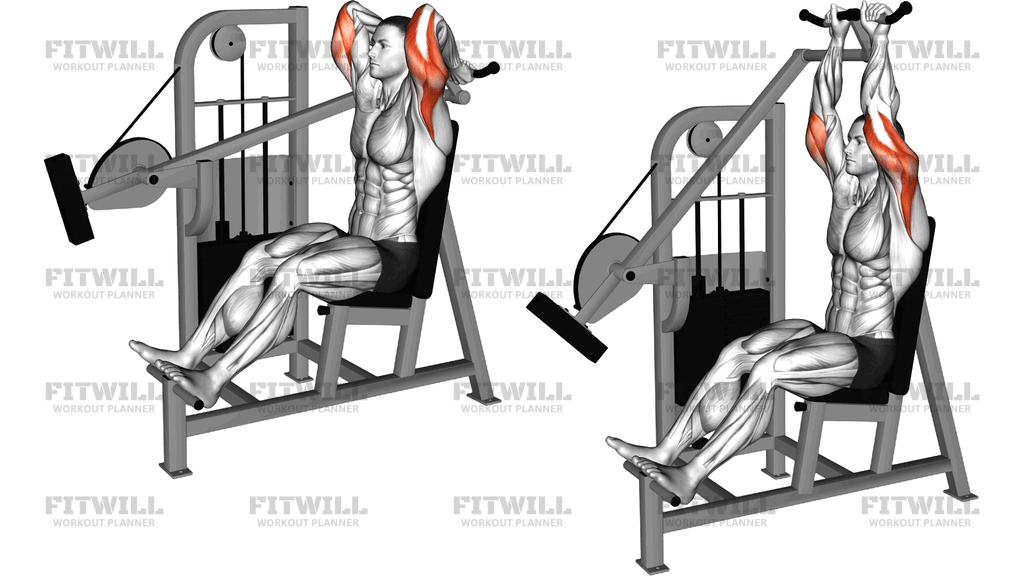
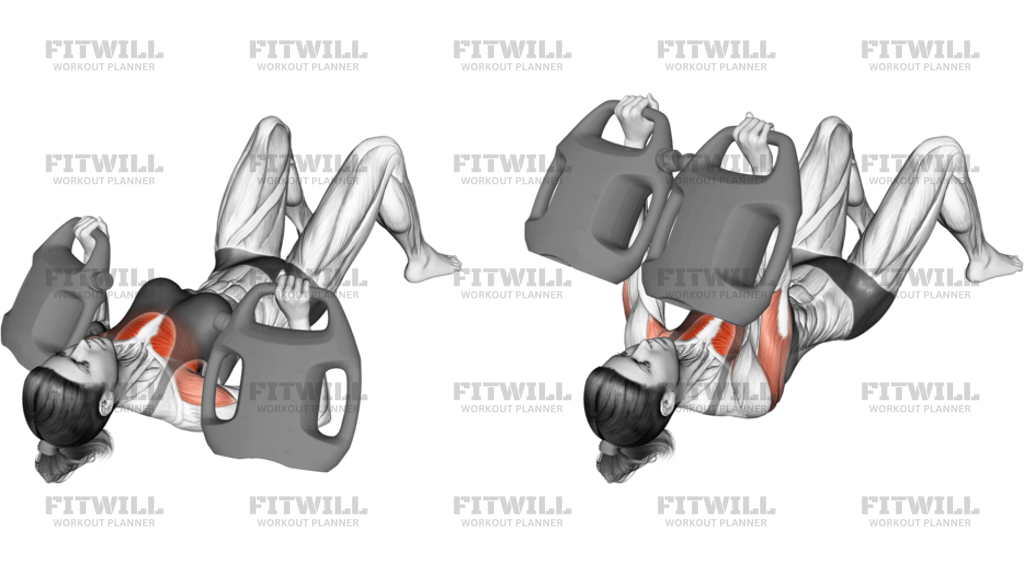
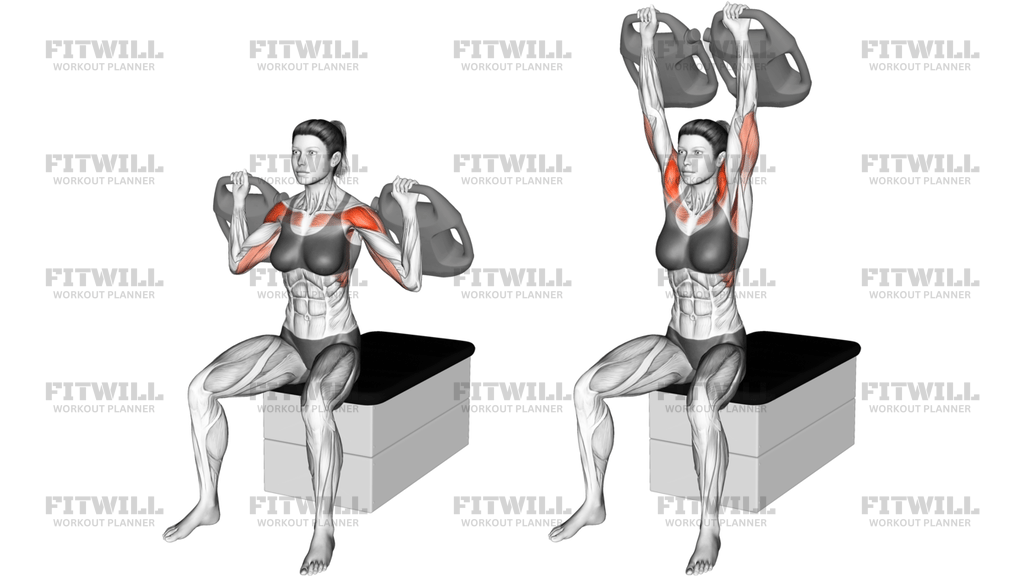
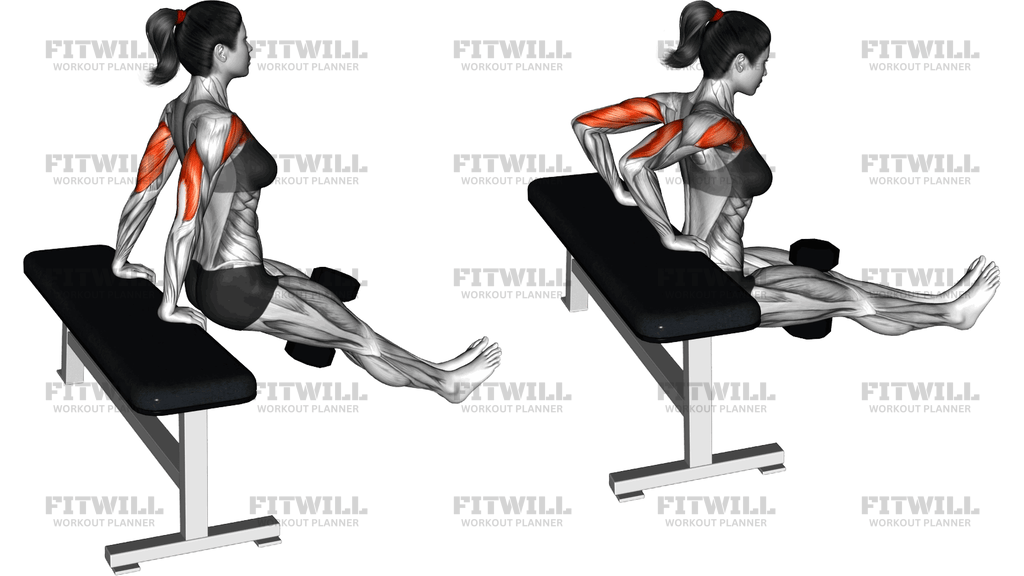
Weighted Plate Incline Triceps Extension
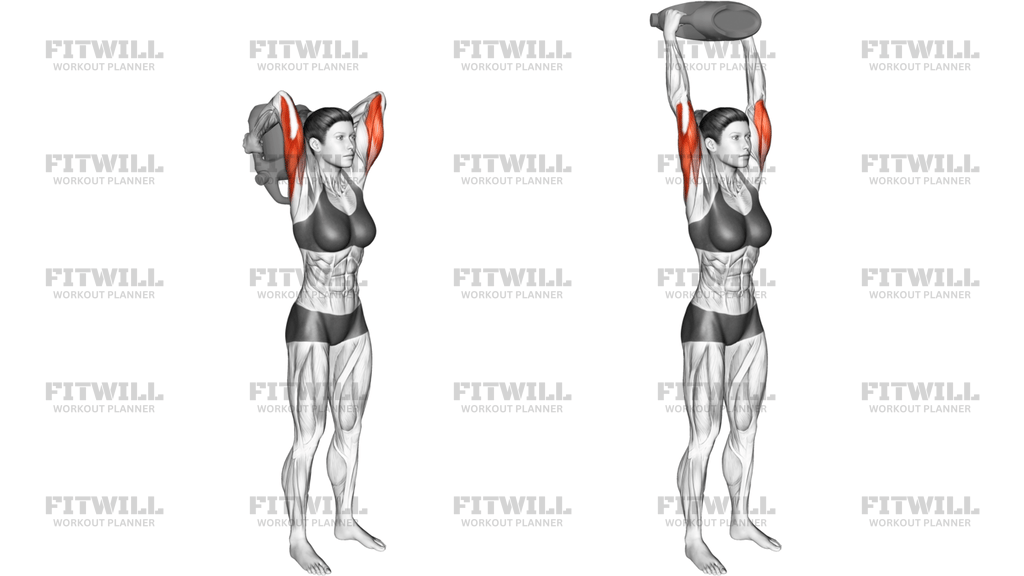
The Weighted Plate Incline Triceps Extension is an overhead triceps movement performed while reclined on an incline bench, using a weight plate gripped between both hands instead of a dumbbell, barbell, or cable. You lie back against the pad, press the plate toward the ceiling with straight arms, then bend at the elbows to lower the plate behind your head before extending back up. Because the bench puts your torso on an incline and your arms travel overhead, the long head of the triceps works through a long, stretched range that pressing movements alone rarely hit.
The plate is what makes this variation interesting. A flat plate forces your hands close together on either side of the rim, which locks the elbows in near the ears and keeps the movement honest. There is no handle to hide behind and no bar path to drift; if one arm starts doing more work, the plate visibly tilts and you know it. The compact, centered load also feels easier on the elbows than a heavy dumbbell overhead, since the weight sits right between the hands rather than hanging below your grip.
This exercise is a strong choice for lifters who want bigger arms, because the long head makes up most of the triceps mass and only fully lengthens when the shoulder is flexed and the elbow is bending at the same time. The incline position does exactly that. It is also useful for people training in a minimalist gym or at home, where a single adjustable plate may be all the equipment available beyond a bench.
Setup quality decides whether this movement feels smooth or awkward. The bench angle should be high enough that your torso is inclined but your arms can still travel straight overhead without scraping the pad. Planting your feet flat and keeping your lower back against the bench gives you a stable base, because an overhead extension with an unstable torso quickly turns into a lower-back exercise. Keep the elbows pointing up and slightly inward throughout, not flaring wide, so the triceps do the work instead of the shoulder joints absorbing the load.
To execute it well, control the lowering phase for two to three seconds and let the plate travel behind the top of your head rather than straight back over your face. Extend to a comfortable lockout without jamming the elbows hard, then begin the next rep with the elbows staying put. A common use case is as the third or fourth movement in an arm session, where moderate weight and strict position beat chasing a heavy plate overhead with compromised form.
Safety comes down to load selection and grip. Choose a plate you can hold securely with your fingers wrapped around the rim or through the center hole, and stop the set the moment your grip or elbow position starts to slip. Because the plate ends up directly over your face on the way down, never train this movement to failure with sloppy reps; rack the plate under control at the end of every set.
[ Workout Log & Planner ]
Put your next workout in Fitwill
Keep your plan and training log ready when you are.


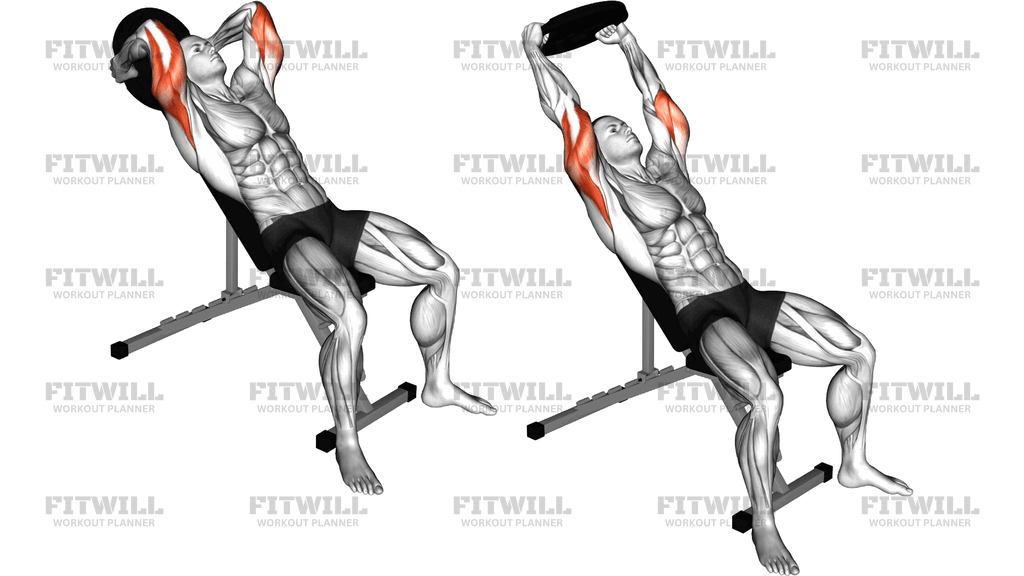
Instructions
- Set an incline bench to roughly 45-60 degrees and sit back against the pad with your feet flat on the floor about hip-width apart.
- Hold a weight plate with both hands, gripping the rim on opposite sides so the plate sits flat between your palms at chest level.
- Press the plate straight up until your arms are fully extended over your upper chest, then squeeze your elbows in toward each other and slightly behind your ears.
- Brace your core and press your lower back gently into the bench so your torso stays fixed against the pad.
- Bend only at the elbows and lower the plate in a controlled arc behind the top of your head until you feel a solid stretch across the back of your upper arms.
- Keep your upper arms vertical and close to your head during the descent; let the elbows move, not the shoulders.
- Extend your elbows to press the plate back up along the same arc until your arms are straight over your shoulders again, stopping short of a hard elbow lockout.
- Exhale as you press up and inhale slowly as you lower the plate behind your head.
- Complete your reps, then bring the plate back to your chest with bent elbows before sitting forward to rack it safely.
Tips & Tricks
- If the plate tilts during the rep, one arm is taking over; lighten the load and re-center the plate between your palms before continuing.
- Lowering the plate toward the back of your head instead of straight behind your ears usually means your elbows are drifting forward and shortening the long-head stretch.
- If your lower back arches off the bench, the weight is too heavy or your brace is loose; reset your ribcage down and reduce the load.
- Use a plate with a grip-friendly rim or run your hand through the center hole alongside a smaller plate if your fingers start to open near the end of a set.
- A towel folded over the rim of a smooth metal plate can double your grip security on higher-rep sets when your hands get sweaty.
- Do not rush the stretch position behind your head; bouncing the plate there transfers tension away from the triceps and can irritate the elbows.
- Keep your neck relaxed and eyes forward rather than craning to watch the plate, which strains the upper traps and throws off your arm path.
- Set the bench angle so your arms clear the pad behind you; if the bench is too upright, the plate will catch on your shoulders or the top of the bench.
- The incline position fatigues stabilizers fast; keep reps in a controlled 8-15 range rather than testing single-rep strength with a plate overhead.
Frequently Asked Questions
Which muscles does the Weighted Plate Incline Triceps Extension work?
The triceps are the primary movers, with the long head doing most of the work because the shoulder is flexed overhead while the elbow extends. The forearm muscles also work hard to hold and control the plate.
Why use a weight plate instead of a dumbbell for this incline extension?
A plate grips flat between both hands, which pulls your elbows close together and keeps the arm path tight near your ears. It also spreads the load evenly between the hands, which many lifters find more comfortable overhead than a single dumbbell.
What bench angle works best for the Weighted Plate Incline Triceps Extension?
Somewhere around 45-60 degrees works for most people. The key is that your arms can travel straight overhead and behind your head without the plate hitting the pad or your shoulders.
Is this exercise safe for beginners?
Yes, provided you start with a light plate and learn the elbow path before adding weight. Beginners should prioritize keeping the upper arms still and vertical rather than chasing heavy loads overhead.
How do I stop the plate from slipping out of my hands?
Grip the rim with your fingers wrapped fully around the edge, or thread your hands through the center hole if the plate design allows it. If your grip still gives out before your triceps, reduce the weight or fold a towel over the rim.
What is the most common mistake on this movement?
Letting the elbows flare outward or drift forward, which turns a triceps stretch into a shoulder-dominant press. Keep the elbows pointed up and slightly inward throughout every rep.
What can I substitute if I don't have an incline bench and plates?
A dumbbell or EZ barbell overhead extension on an incline bench is the closest match, and a cable rope overhead extension works if you only have a cable station. The plate version simply offers a tighter two-hand grip with minimal equipment.
Should my elbows stay pointing at the ceiling the whole time?
Your upper arms stay roughly vertical and near your ears while only the forearms move. Some natural drift at the bottom is fine, but the shoulders should never lift off the bench to help press the plate.
How many sets and reps should I do?
Two to four sets of 8-15 controlled reps suits most arm programs, since the long-head stretch is demanding and heavy singles offer little benefit here. Keep at least one solid rep in reserve rather than training to a grinding failure.