Bottle Weighted Two Arms Kickback
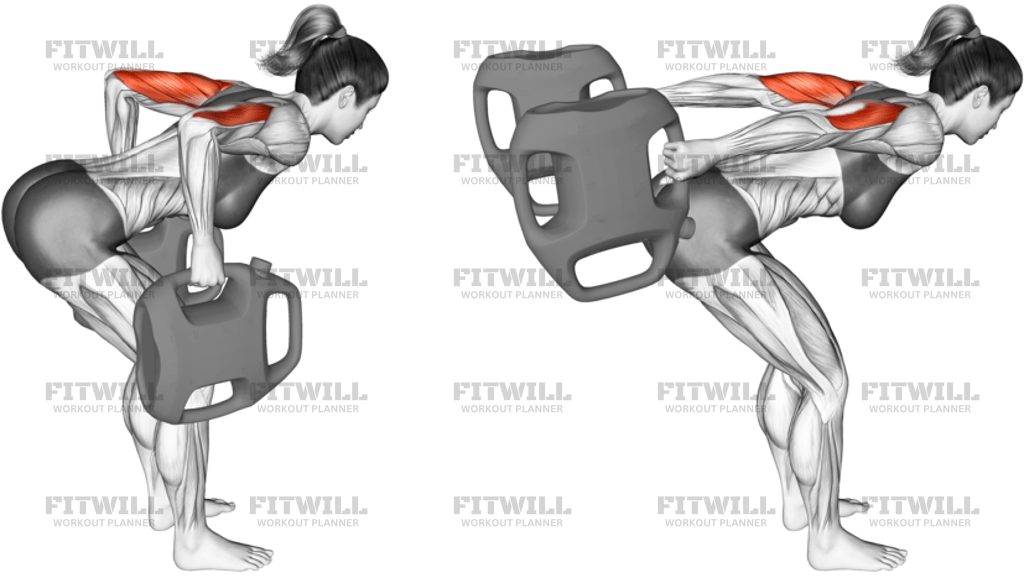
Bottle Weighted Two Arms Kickback is a bent-over triceps isolation exercise built around a strict hinge and a short, controlled elbow extension. It works best when the torso stays fixed and the upper arms stay pinned close to the ribs, so the movement comes from the back of the upper arms instead of from swinging the shoulders or straightening the spine. Because the load is usually light and the range is small, the exercise is most useful as accessory work for cleaner triceps tension rather than as a heavy strength lift.
The setup matters more here than on many other arm exercises. Hinge forward with a soft bend in the knees, keep the chest long, and bring the torso close to parallel with the floor so the triceps can work without the shoulders taking over. Hold a bottle-style weight or other small handheld load in each hand, let the elbows sit high and tucked, and start with the forearms bent so the handles are close to the body. That starting angle gives you a consistent path for every rep and makes it easier to feel whether the upper arms are staying still.
Each repetition should feel like a smooth hinge of the forearms around fixed elbows. Extend both arms back until they line up with the torso, squeeze the triceps for a brief moment, then lower the weights slowly to the bent starting position without letting the shoulders roll forward. Breathing should stay steady and deliberate: exhale as you press back, inhale as you return, and keep the neck relaxed so the upper back does not tense up and steal the work. If the load forces the torso to lift or the elbows drift away from the body, the weight is too heavy for this movement.
Bottle Weighted Two Arms Kickback is useful when you want direct arm work after presses, push-ups, or overhead lifting, especially if you want to finish a session with focused triceps tension and very little equipment. It can also be a practical home variation because it only needs light handheld resistance and a few feet of space to hinge properly. The best sets usually use controlled repetitions, a short pause at full extension, and enough discipline to keep the same torso angle from the first rep to the last.
Keep the range honest and the rep quality high. The exercise should feel smooth, not explosive, and the triceps should finish the set before the lower back or grip starts compensating. A lighter load, a firmer hinge, and slower lowering phase usually produce better results than chasing a heavier bottle and losing the line of the movement.
[ Workout Log & Planner ]
Put your next workout in Fitwill
Keep your plan and training log ready when you are.


Instructions
- Hinge forward with your feet about hip-width apart, knees softly bent, and your torso nearly parallel to the floor.
- Hold a bottle-style weight or small handheld load in each hand with your palms facing in and your elbows tucked close to your sides.
- Set your shoulder blades down and back, keep your neck long, and fix your upper arms so they stay level with your torso.
- Bend both elbows so the weights start near your hips and the forearms are angled forward beneath you.
- Exhale and extend both forearms straight back until your arms line up with your torso and the triceps fully contract.
- Pause briefly at the end of the kickback without shrugging, leaning up, or letting the elbows flare away from your body.
- Inhale and lower the weights slowly until your forearms return to the bent starting angle.
- Keep the torso and upper arms still for every rep, and reset the hinge before the next set if your back starts to round or rise.
Tips & Tricks
- Choose a much lighter load than you would use for curls; this movement punishes swinging immediately.
- If your torso keeps rising, bend your knees a little more and shorten the set before fatigue changes the hinge.
- Keep the elbows glued near your ribs so the triceps finish the rep instead of the rear shoulders.
- Do not let the hands travel past a loose straight line behind the body; overreaching usually turns the rep into a shoulder swing.
- A slow lowering phase matters here because it keeps tension on the triceps and reduces momentum.
- If your lower back feels the set, raise your chest slightly, re-hinge at the hips, and reduce the load.
- Use higher reps, usually around 10-20, because the exercise works best with clean control rather than heavy loading.
- If one side finishes early, match the slower arm instead of forcing the stronger side to speed up.
- A neutral wrist helps when the bottle handle or grip feels awkward, especially at the top of the rep.
- Stop the set as soon as the elbows start drifting wider or the shoulders begin to shrug forward.
Frequently Asked Questions
What muscle does Bottle Weighted Two Arms Kickback target most?
It mainly targets the triceps, especially when you keep the upper arms locked in place and extend only at the elbows.
Can beginners perform this exercise?
Yes, beginners can use Bottle Weighted Two Arms Kickback with very light loads as long as they can hold the hinge without rocking the torso.
How heavy should I train Bottle Weighted Two Arms Kickback?
Use a load that lets you keep the elbows tucked and the torso fixed; if you need to swing the weights back, it is too heavy.
What is a common mistake to avoid in Bottle Weighted Two Arms Kickback?
The biggest mistake is turning the kickback into a body swing by lifting the chest, flaring the elbows, or shortening the hinge.
How many repetitions are usually recommended for Bottle Weighted Two Arms Kickback?
Moderate to higher reps are usually best, because the exercise is meant to build controlled triceps tension rather than heavy overload.
Should I feel Bottle Weighted Two Arms Kickback in my shoulders too?
A little shoulder stabilization is normal, but the main burn should stay in the back of the upper arms. If the shoulders take over, reduce the load and fix the hinge.
Can I include Bottle Weighted Two Arms Kickback in a full-body routine?
Yes, it fits well as a small accessory movement after bigger presses, rows, or lower-body work.
How can I progress Bottle Weighted Two Arms Kickback over time?
First improve the hinge and tempo, then add small amounts of load only if the elbows stay fixed and the lower back stays quiet.