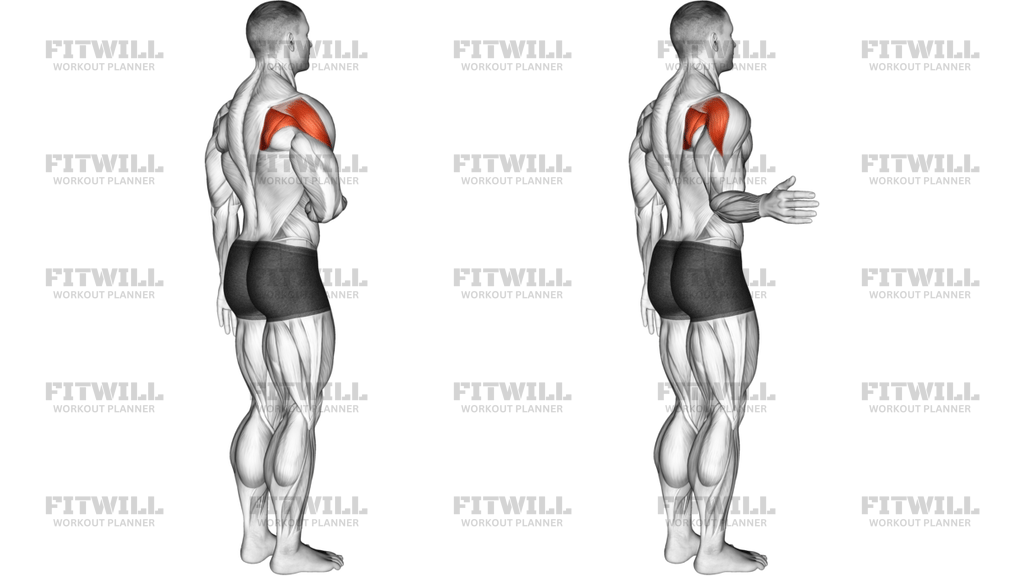
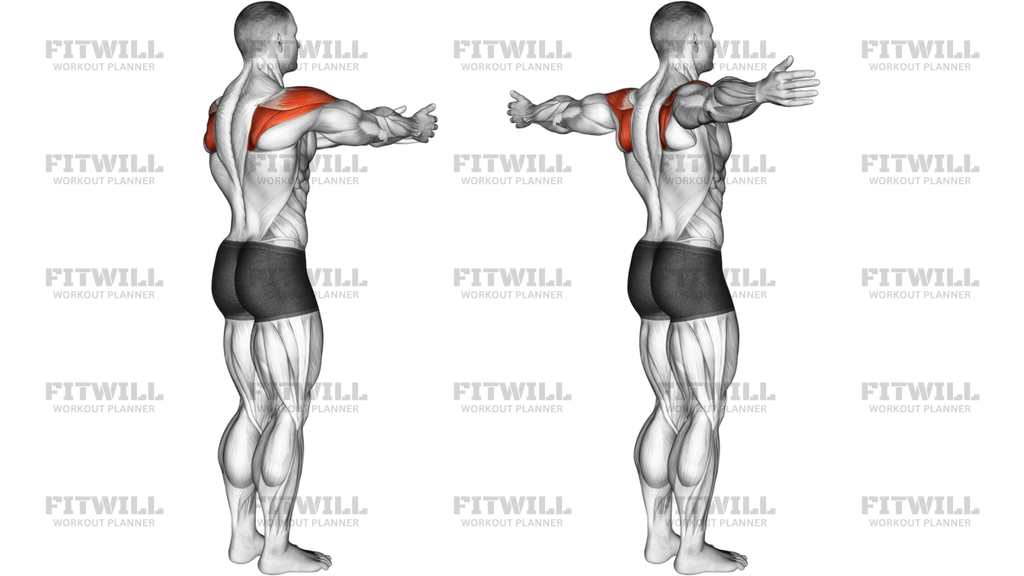
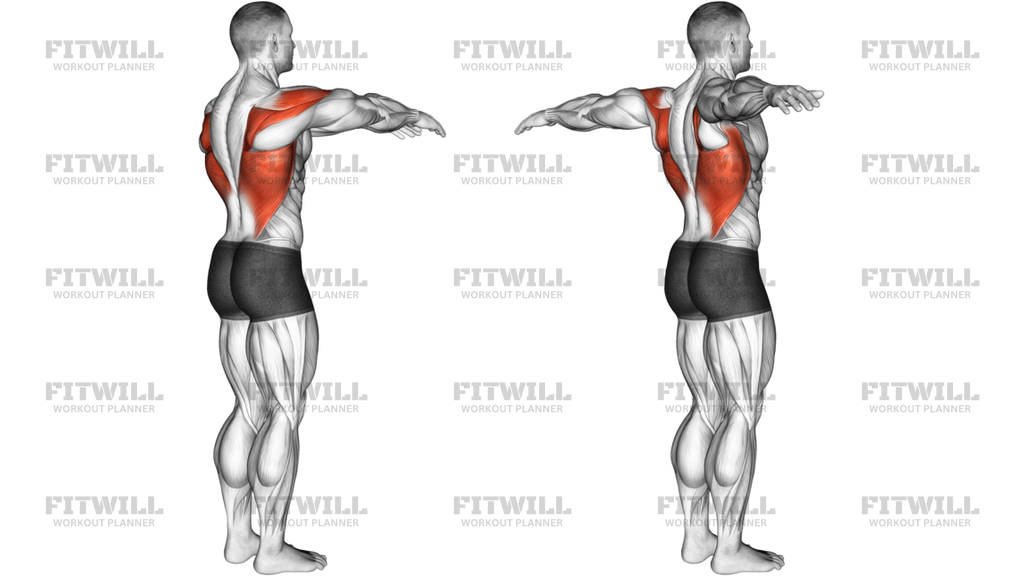
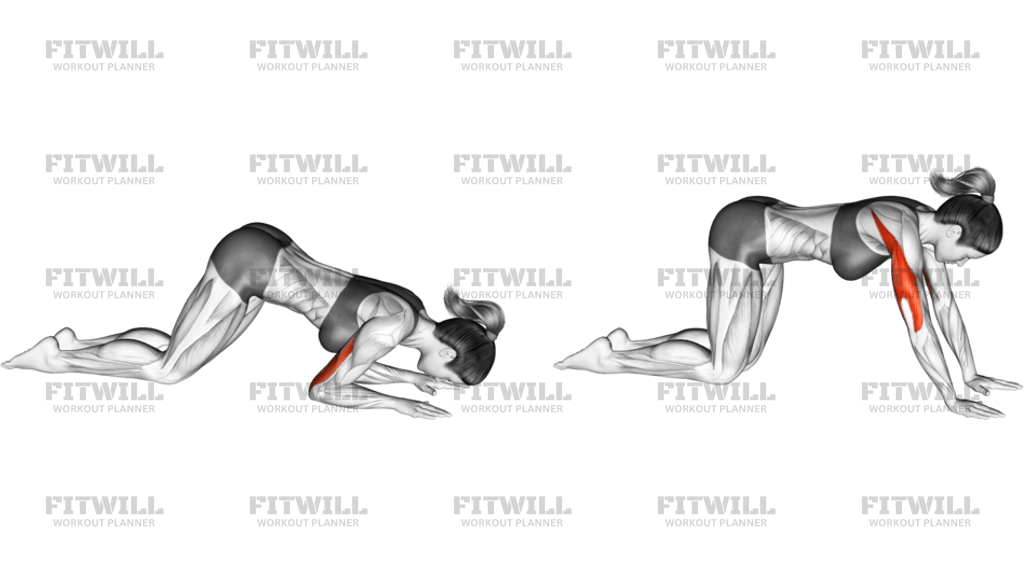
Backkick Triceps Extension
The Backkick Triceps Extension is a standing bodyweight movement that combines an overhead triceps extension with a controlled leg kick behind you. You start with your feet in a wide stance and your arms raised overhead with elbows bent, then straighten your arms as you sweep one leg back, before returning to the start and alternating sides. Because it links an upper-body pressing action with a lower-body kick, it trains coordination and rhythm as much as raw strength.
The main target is the triceps, which work hard to straighten the elbows against the position of the arms overhead. The front shoulders assist in holding and moving the arms, while the quads, inner thighs, and glutes stay active throughout to keep you balanced in the wide stance and to power the backkick. Your core works quietly the entire time to stop your torso from leaning or twisting as the leg moves.
This exercise suits people who train at home without equipment, warm-up sequences, circuit and bootcamp-style workouts, or anyone who wants to groove the overhead extension pattern before loading it with a dumbbell or band later. Because the resistance comes from your own body position and control, the challenge is more about timing, balance, and clean elbow extension than maximum force, so it scales well for beginners while still giving experienced trainees a conditioning option when reps are kept brisk.
Setup matters more than it looks. A stance that is too narrow makes the backkick feel wobbly, while arms that drift forward steal work away from the triceps. Set your feet wider than hip width, stack your ribs over your hips, and keep the upper arms close to your ears so the elbows point forward rather than flaring out. From there, the extension is a clean straightening of the elbows, not a shrug or a lean.
To execute it well, brace your midsection, extend both arms fully overhead, and as the elbows lock out, drive one leg straight back behind you with the toes reaching away, squeezing the glute at the top of the kick. Return the foot to the floor with control, bend the elbows back to the start, and repeat on the other side. Keep the movement smooth and alternating, like a deliberate, slow-motion combination rather than a flail.
A few practical points will keep it safe and effective: move within a range where your low back stays neutral during the kick, avoid hyperextending the elbows at lockout, and slow down if your balance breaks. If you feel the movement in your shoulders rather than your triceps, your upper arms are probably drifting forward, so bring the elbows back in line with your head.
[ Workout Log & Planner ]
Put your next workout in Fitwill
Keep your plan and training log ready when you are.


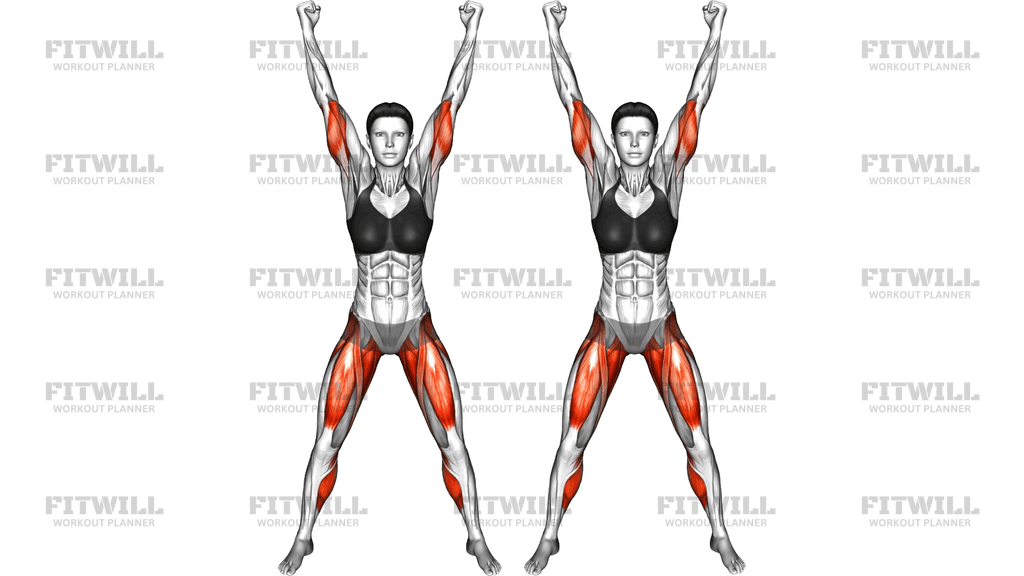
Instructions
- Stand with your feet wider than hip width, toes turned out slightly, and your weight spread evenly across both feet.
- Raise both arms overhead and bend your elbows so your hands hang behind or beside your head, upper arms close to your ears, fists loosely clenched.
- Brace your core and stack your ribs over your hips so your torso is upright before you start moving.
- Inhale, then as you exhale, straighten both elbows fully overhead, keeping the upper arms still and pointed at the ceiling.
- At the moment your arms reach full extension, sweep one leg straight back behind you, squeezing the glute and reaching the toes away while your torso stays tall.
- Pause briefly at the top with the arms locked out and the leg lifted, without arching your lower back or leaning forward.
- Lower the leg back to the floor with control, then bend the elbows to bring the hands back behind your head.
- Repeat the extension and backkick on the opposite leg, alternating sides for the desired number of reps.
- Keep your breathing steady, exhaling on the kick and extension, inhaling as you reset between reps.
- Finish the set by bringing your feet back to hip width and lowering your arms slowly rather than dropping them.
Tips & Tricks
- If your elbows flare out to the sides, your shoulders take over the work; keep the upper arms hugging your ears so the triceps do the extending.
- The most common mistake is turning the backkick into a big low-back arch. Limit the kick to the height you can reach while your torso stays vertical.
- Do not snap the elbows into a hard lockout rep after rep; extend fully but stop just short of slamming the joint, especially overhead.
- If you wobble when the leg lifts, shorten the kick and widen your stance slightly before progressing to a bigger range.
- Keep the working foot flexed and the leg mostly straight during the kick; a bent, floppy leg turns the move into a hamstring curl instead of a glute-driven backkick.
- Tempo is your friend here. Since there is no external load, slowing the extension to two seconds up and two seconds down makes the triceps work harder without adding weight.
- Avoid shrugging as the arms straighten; if your shoulders creep up toward your ears, relax the traps and think of pressing the hands toward the ceiling.
- Look straight ahead, not up at your hands. Tilting the head back with the arms overhead can pull your ribs forward and strain the neck over long sets.
- Warm up the shoulders and elbows with a few arm circles and easy extensions before your first set, since the overhead position loads both joints right away.
Frequently Asked Questions
What muscles does the Backkick Triceps Extension work?
The triceps are the primary mover, extending the elbows as the arms straighten overhead. The front shoulders assist, while the quads, inner thighs, and glutes stabilize the wide stance and power the backkick.
Is the Backkick Triceps Extension good for beginners?
Yes. Because it uses only bodyweight, beginners can start with a small kick and a partial elbow extension, then build range and speed as balance and strength improve.
Why is a wide stance used in the Backkick Triceps Extension?
The wide stance gives you a stable base so the kicking leg can move without tipping your hips side to side. It also keeps the adductors and quads engaged throughout the set.
Can I add weight to the Backkick Triceps Extension?
You can hold a light dumbbell or a resistance band with both hands behind your head to load the triceps, but master the bodyweight version first, since adding load overhead while balancing on one leg raises the difficulty quickly.
My lower back aches during the backkick. What should I change?
You are probably kicking too high and arching to reach further. Reduce the height of the kick, tighten your core before each rep, and keep your ribs stacked over your hips.
How does the Backkick Triceps Extension differ from a regular overhead triceps extension?
The standard version is usually done seated or standing with a dumbbell or band and isolates the arms, while this variation adds an alternating leg kick, turning it into a balance and coordination exercise that also recruits the glutes and legs.
How many reps should I do of the Backkick Triceps Extension?
For warm-ups and conditioning, 10 to 20 alternating reps per side at a controlled pace works well. For more triceps-focused work, slow the tempo and keep the sets shorter with crisp extensions.
Should the kicking leg be straight or bent?
Keep it mostly straight with the toes reaching back, so the glute drives the movement. A sharply bent knee shifts the work toward the hamstrings and changes the exercise.
Can I do the Backkick Triceps Extension every day?
As a low-load bodyweight movement it is generally fine to use frequently for warm-ups or active recovery, but if your elbows or shoulders feel sore, give them a rest day between harder sessions.
What can I substitute if the balance is too hard?
Hold a wall or sturdy chair lightly with one hand, do the extension and kick on the same side as your support, or split the movement into arm extensions and backkicks separately before combining them.