Seated Overhead Triceps Extension
The Seated Overhead Triceps Extension is a single-arm movement performed sitting upright on a bench or sturdy chair, with one arm raised straight overhead and the elbow bending to lower the forearm behind the head before pressing back up to full extension. Because the shoulder is flexed overhead, the long head of the triceps is placed in a stretched position, which is exactly what makes this variation worthwhile compared to pushdowns or extensions done at your side.
The triceps make up most of the upper arm's size, and the long head is the largest of its three parts. It crosses the shoulder joint, so it only gets fully lengthened when the arm is overhead. That makes this exercise a smart addition for anyone chasing arm development, as well as for people who want stronger arms for pressing movements like push-ups, bench presses, and overhead work. The seated position matters here: sitting down removes the temptation to swing, lean, or turn the movement into a standing press, forcing the triceps to do the work.
Setup is straightforward but worth getting right. Sit tall on a bench or chair with feet flat on the floor, brace your midsection, and raise one arm directly overhead with the upper arm close to your ear. The elbow points forward and stays pointed there for the whole set. From that position, bend only at the elbow to lower the forearm behind your head, then straighten the arm back up without letting the upper arm drift.
Because this version is typically done without added weight, the focus is on deliberate tempo and a full, controlled range rather than heavy loading. Slow lowerings and strong, complete lockouts at the top give the triceps plenty of stimulus. Once one arm finishes its set, switch sides so both arms get equal work.
The most common issues are elbows flaring outward, the upper arm drifting forward away from the ear, and the lower back arching as fatigue sets in. Keep your ribs stacked over your hips and let the elbow alone be the hinge. If the shoulder feels pinched at the bottom, shorten the range slightly rather than forcing the forearm deeper behind the head.
This exercise suits beginners learning to feel the triceps work, trainees without equipment who want a focused arm movement, and lifters using it as a strict burnout or warm-up finisher. It also carries over well to everyday pushing strength and helps build the lockout portion of pressing exercises.
[ Workout Log & Planner ]
Put your next workout in Fitwill
Keep your plan and training log ready when you are.


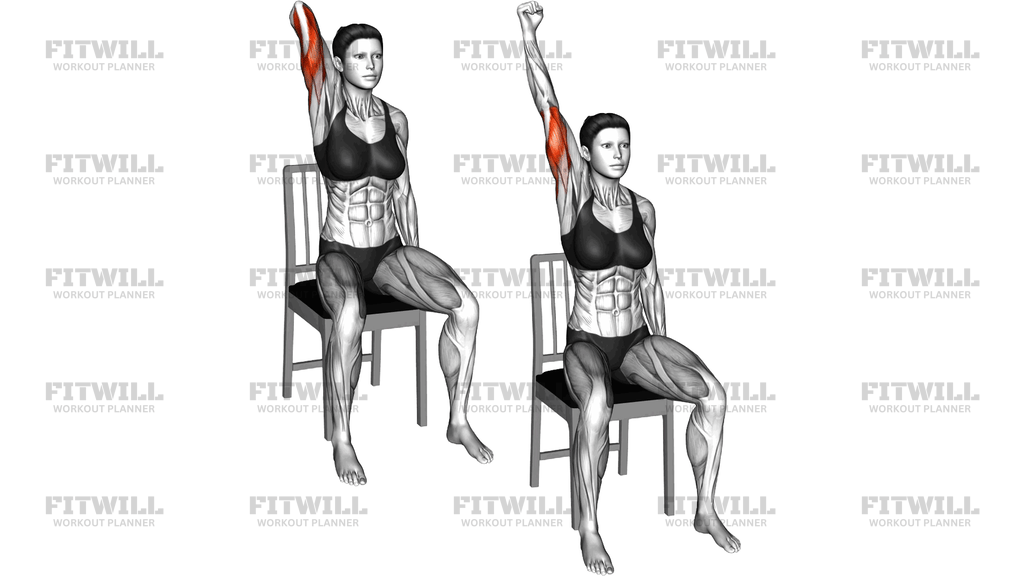
Instructions
- Sit on a bench or sturdy chair with your feet flat on the floor, about hip-width apart, and your spine tall with shoulders relaxed.
- Brace your abdominal muscles and draw your ribs down so your lower back is not arching before you even start moving.
- Raise your working arm straight overhead, keep the upper arm vertical and close to the side of your head, and make a fist with your hand.
- Bend your elbow to lower your forearm slowly behind your head, keeping the upper arm pointing up and your elbow facing forward the whole time.
- Lower until you feel a comfortable stretch along the back of your upper arm, stopping before the shoulder forces your elbow to flare or drop.
- Press your hand back up by straightening the elbow until your arm is fully extended overhead, squeezing the triceps at the top.
- Exhale as you press up and inhale as you lower the forearm behind your head.
- Complete all reps on one arm, then lower the arm, reset your posture, and repeat on the other side.
Tips & Tricks
- Keep your working upper arm within a hand's width of your ear; if it drifts forward, the shoulder takes over and the triceps stretch disappears.
- Use a two-to-three-second lowering phase. The temptation with a light or bodyweight version is rushing reps, which cuts off the stretch that makes the overhead position valuable.
- If your elbow wants to flare out to the side, think about pointing it toward the wall in front of you throughout the set.
- Watch your lower back: as the arm tires, people arch and push the ribs forward. Sit tall and tighten your abs to keep your torso stacked.
- The top of each rep is where the triceps fully shorten. Extend completely rather than stopping at 90 percent of the way up.
- If the bottom position bothers your shoulder, lower only halfway instead of forcing the forearm deep behind your head.
- Grip your fist firmly and keep your wrist straight; a floppy wrist makes the top position harder to control than it needs to be.
- Do your weaker arm first and match its rep count with the stronger arm so the difference between sides does not grow.
Frequently Asked Questions
Which muscles does the Seated Overhead Triceps Extension work?
It primarily targets the triceps, with particular emphasis on the long head because the arm-overhead position stretches it. The shoulder and upper back muscles work to hold your arm in place while your core keeps your torso upright.
Why is the overhead position better for the long head of the triceps?
The long head crosses the shoulder joint, so it only lengthens fully when the arm is raised overhead. This stretched position is something pushdowns and standing extensions at your side cannot provide.
Can beginners do the Seated Overhead Triceps Extension?
Yes, and the seated single-arm version is actually a good starting point because it requires no equipment and little coordination. Begin with a short range and a slow tempo, and stop if the shoulder feels strained.
Why should I do this exercise seated instead of standing?
Sitting removes your legs and lower body from the equation, which prevents you from leaning back or using momentum to press the arm up. It keeps the workload on the triceps where it belongs.
How far behind my head should I lower my forearm?
Lower until you feel a solid but comfortable stretch along the back of the upper arm, and no deeper. Forcing extra depth with a flaring or dropping elbow shifts stress onto the shoulder joint.
What is the most common mistake in this exercise?
Letting the upper arm drift forward and away from the ear, usually when the arm gets tired. The elbow becomes the hinge and the upper arm stays vertical, so cue yourself to keep it pointed at the ceiling.
How many reps and sets should I do?
Since the resistance is light, aim for 10 to 20 controlled reps per arm for 2 to 3 sets. If you cannot feel the triceps working, slow the lowering phase down before adding anything else.
Can I substitute the Seated Overhead Triceps Extension with pushdowns?
Pushdowns train the same muscle, but they do not stretch the long head the way an overhead position does. If overhead work bothers your shoulder, pushdowns are a reasonable alternative, but ideally you would use both.
Is it safe for my elbows or shoulders?
For most people yes, provided the elbow stays pointed forward, the range stays comfortable, and there is no pain or pinching. Move within a pain-free range and reduce the depth if the shoulder complains.
Should I do both arms at the same time?
Working one arm at a time makes it easier to keep the upper arm vertical and spot differences between your sides. Finish all reps on one side, reset your posture, then match the work on the other arm.