Roll Ball Side Lying Inner Thigh Active
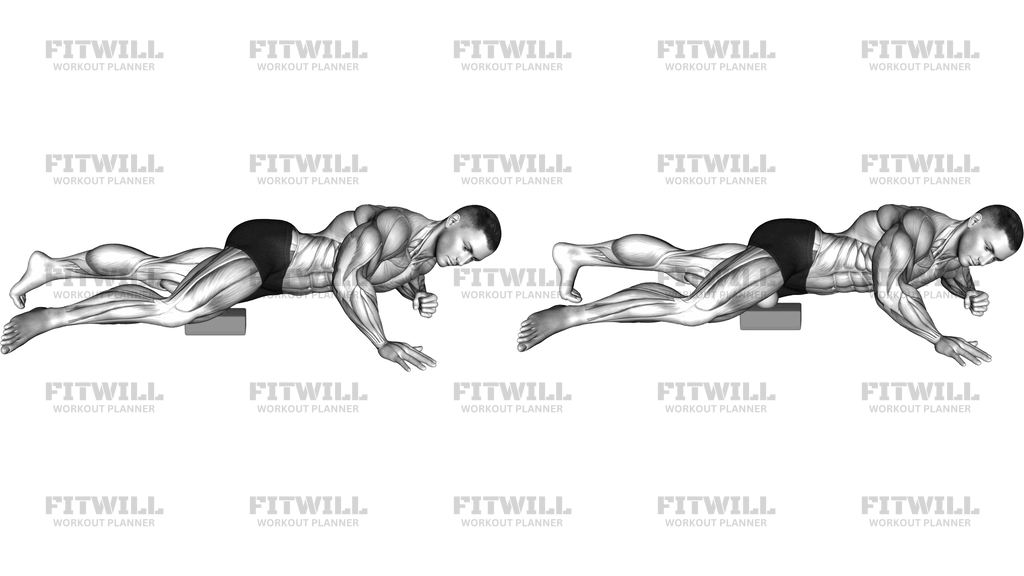
Roll Ball Side Lying Inner Thigh Active is a side-lying movement where you position a small ball under the inner thigh of your top leg and actively lift and lower that leg against it. Unlike a passive rolling release where the ball simply does the work, the active version asks the inner thigh muscles to control the leg as it moves on and off the ball, combining soft-tissue pressure with deliberate muscle engagement. You prop yourself on your lower forearm and brace through the floor side of your body, which also challenges trunk stability throughout the set.
This exercise is useful for anyone whose inner thighs feel chronically tight or sticky during squats, lunges, or side-to-side movements. The combination of pressure and active movement is often more effective for regaining comfortable hip range than static stretching alone, because the adductors are being asked to lengthen and shorten under control while the ball provides localized feedback. It fits well into a warm-up before lower-body training or into a cooldown on recovery days.
The main muscles at work are the adductors along the inner thigh, with the outer hip and glutes of the bottom leg stabilizing you against the floor. Because you are lying on your side and supporting yourself on one forearm, the deep core and obliques also work quietly to keep your spine stacked and your hips from rolling backward. The effort is low-load but high-awareness, so the quality of each repetition matters far more than speed or force.
Setup is what makes or breaks this drill. The ball needs to sit at the right spot along the inner thigh, and the block or pad underneath it provides the height so your leg has something to press down into and lift away from. If your body is not stacked properly, your hips will drift and the pressure will smear across the thigh instead of staying on the target line. Take a moment before each set to align your shoulder, hip, knee, and ankle.
To execute it well, lower the inner thigh of your top leg onto the ball with control, let the leg briefly accept your weight, then actively lift the leg back up without letting your torso rotate. Work slowly along slightly different spots of the inner thigh from set to set rather than grinding on one tender point. Expect a working, sometimes mildly uncomfortable sensation, but back off if you feel sharp pain, tingling, or numbness anywhere in the leg.
[ Workout Log & Planner ]
Put your next workout in Fitwill
Keep your plan and training log ready when you are.


Instructions
- Lie on your side on an exercise mat and prop your upper body on your lower forearm, elbow placed directly under the shoulder.
- Bend your bottom leg slightly for a stable base and stack your hips and shoulders so your torso does not lean forward or back.
- Place the rollball on top of a small block or pad beside your lower thigh, positioned so it will sit under the inner thigh of your top leg.
- Straighten your top leg so the inner thigh rests over the ball, with the ball roughly midway between your groin and knee.
- Brace your core lightly and press your bottom shoulder and hip into the floor to lock your torso in place.
- Slowly lower the top leg down, letting the inner thigh sink onto the ball and briefly press into it.
- Actively lift the top leg back up toward the ceiling, pulling the inner thigh away from the ball without rotating your hips.
- Breathe out as you lift the leg and inhale as you lower it back onto the ball.
- Complete all repetitions on one side, then roll onto the other side and repeat with the opposite inner thigh.
- Between sets, shift the ball slightly up or down the inner thigh to reach a different line of tissue.
Tips & Tricks
- If your hips keep rolling backward as the leg lowers, think about driving the top hip slightly forward while the leg descends.
- A ball that is too firm turns this into a pain-tolerance test; start with a softer ball and only progress firmness once you can relax into the pressure.
- Avoid dropping the leg onto the ball. The lowering phase should take two to three seconds so the adductors lengthen under control instead of bracing against impact.
- If your supporting shoulder fatigues before your inner thigh does, place your top hand on the floor in front of you for light support.
- Keep the pressure along the fleshy inner thigh and away from the back of the knee and the groin crease, where nerves and vessels sit close to the surface.
- Small pulsing lifts near the end range work well once you are warm, but only after you can perform full slow repetitions without hip rotation.
- If the ball keeps sliding off the block, wedge it lightly against your inner thigh before starting so it stays put during the set.
- Reduce the height of the block under the ball if the drop from lifted leg to ball feels like a strain rather than controlled work.
Frequently Asked Questions
Which muscles does Roll Ball Side Lying Inner Thigh Active target?
The primary target is the adductors on the inner thigh, which both lengthen onto the ball and actively lift the leg away from it. The outer hip stabilizers and obliques work to keep your side-lying position steady.
What makes this version active instead of a normal ball release?
In a passive release you simply rest your weight on the ball and roll. Here you actively lower and lift the leg, so the inner thigh muscles control the movement onto and off the ball, building lengthening control along with the pressure.
Why is the ball placed on a block or pad in this setup?
The block raises the ball so your top leg has to travel down onto it and back up, giving the inner thigh a real working range. Without the height, the leg would just rest against the floor and the active lift would be lost.
Is this exercise suitable for beginners?
Yes, the load is minimal and the position is easy to control. Beginners should use a softer ball, keep the range small, and focus on keeping the hips stacked before adding repetitions.
How many repetitions should I do per side?
Start with 8 to 12 slow controlled lifts per side, or work for about 30 to 45 seconds. You can perform two to three sets, shifting the ball slightly between sets to cover different areas of the inner thigh.
What is the most common mistake with Roll Ball Side Lying Inner Thigh Active?
Rolling the hips backward as the leg lowers onto the ball, which turns it into a partial hip rotation instead of an inner thigh movement. Keep your top hip stacked over the bottom hip for every repetition.
What can I use if I do not have a rollball?
A small, firm yoga ball or a rolled towel shaped into a mound on top of a pad can substitute. You need something with enough give to sink into slightly but enough height for the leg to lift away from it.
When should I do this exercise in my workout?
It works well as a warm-up drill before squats, lunges, or any lateral movement, since it primes the inner thighs for lengthening under load. It also fits as a cooldown finisher on lower-body days.
Is it normal to feel discomfort when the leg presses into the ball?
A firm pressure sensation or mild working ache in the inner thigh is normal. Sharp pain, tingling, or numbness down the leg is not, so reduce the pressure or move the ball to a different spot if that occurs.
Can I do this exercise every day?
Because the load is low and there is no heavy muscle damage involved, daily practice is generally fine. If the inner thigh feels persistently sore after sessions, scale back the volume or the firmness of the ball.