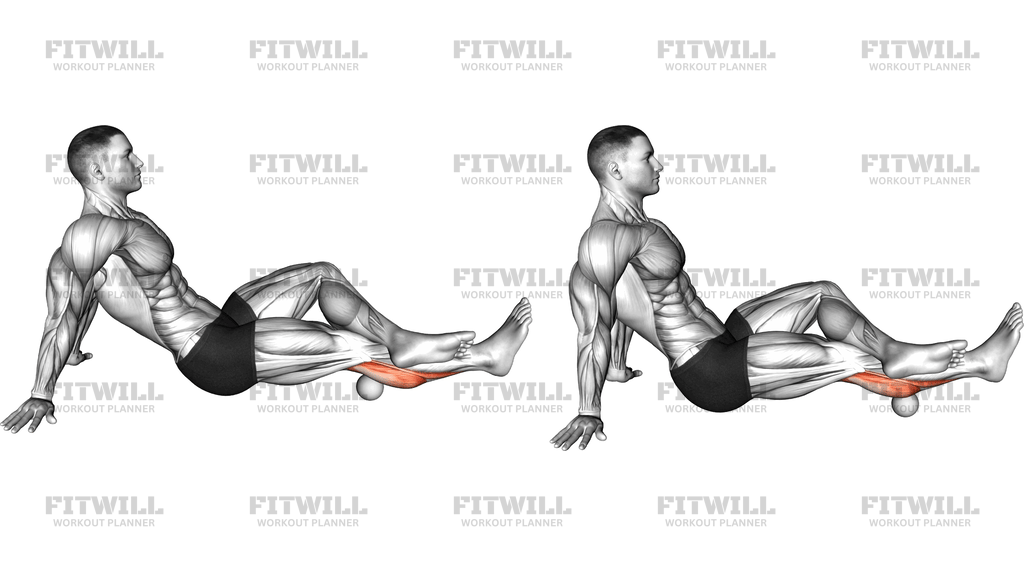
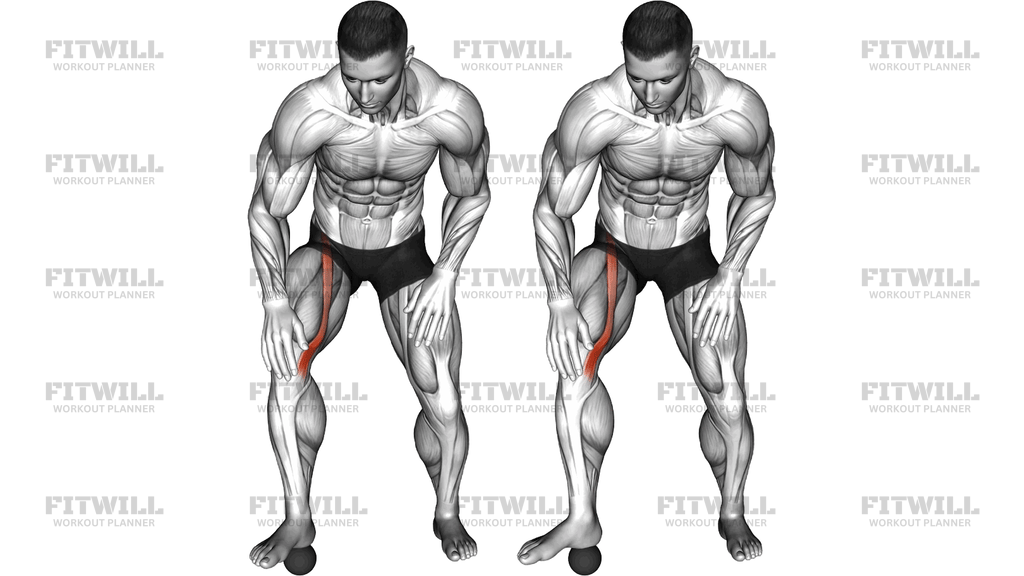
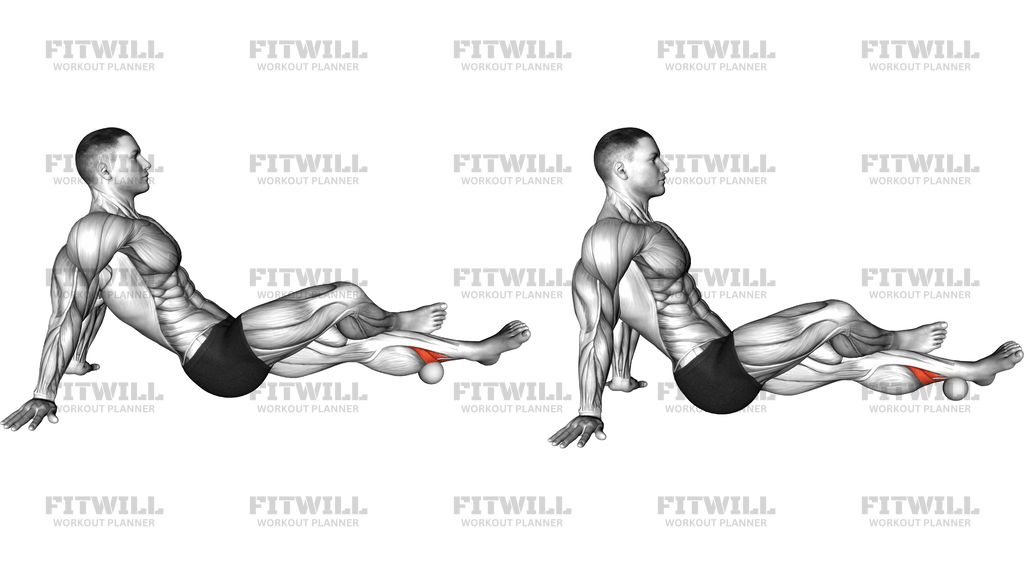
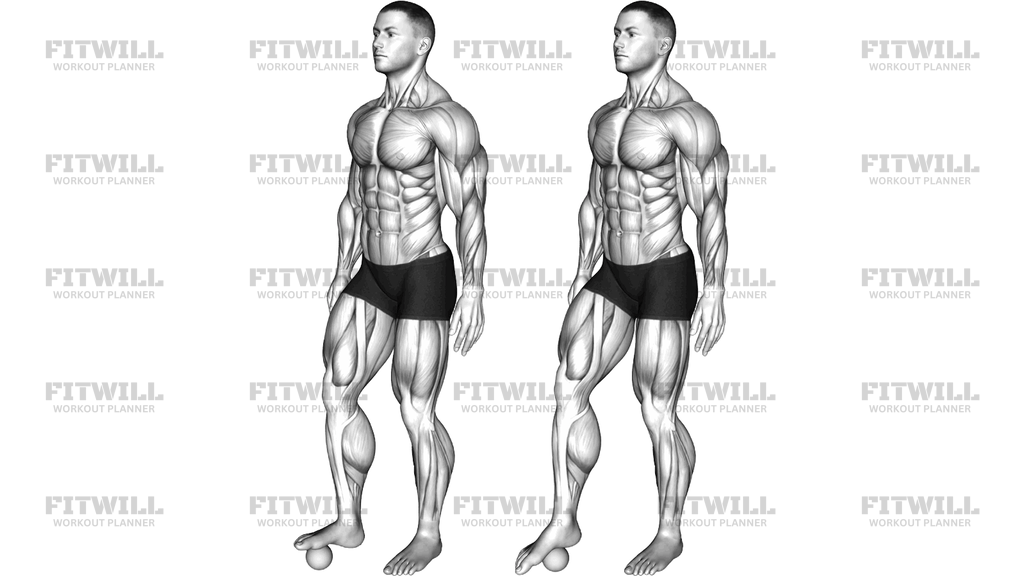
Seated Pronation Supination Foot
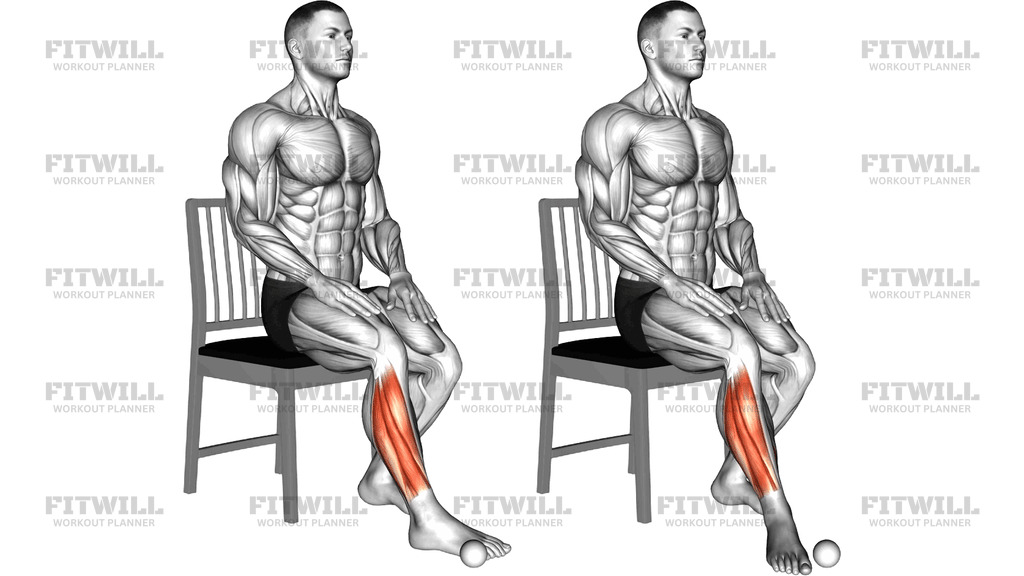
The Seated Pronation Supination Foot is a small, deliberate foot and ankle exercise performed from a chair or bench with a small ball under the working foot. Instead of moving at the knee or hip, all of the action comes from rolling the ankle inward and outward — turning the sole of the foot toward and away from the midline of the body — while the ball provides a rolling contact point under the forefoot. It looks minimal, but it trains some of the most neglected muscles in the lower body.
The highlighted work happens in the lower leg, specifically the tibialis posterior and tibialis anterior on the inner and front aspects of the shin, and the peroneus longus along the outer lower leg. These muscles control how your foot lands, absorbs load, and pushes off with every step. When they are weak or uncoordinated, the ankle tends to collapse inward or roll outward under load, which shows up as poor balance, unstable footing on uneven ground, and general foot fatigue during long walks or runs.
Setup matters more here than in most exercises because the range of motion is so short. Sit tall on a stable chair or bench with both feet flat to start, then place the ball under the forefoot of the working leg. Your knee stays bent roughly ninety degrees and points straight ahead, and your hands rest on your thighs for balance. If your torso is slouched or your knee drifts in and out of alignment, you will substitute with the hip and lose the precise ankle work the exercise is designed to produce.
To perform it, press the forefoot lightly into the ball and roll it slowly toward the inside of your body by turning the sole inward, then reverse and roll it toward the outside by turning the sole outward. The ball simply gives you a smooth, low-friction surface so the foot can tilt fully in each direction. Keep the movement slow enough that you can feel the muscles along the shin and outer calf switching on and off — a couple of seconds each way is a good pace. Breathing stays relaxed and continuous throughout.
This exercise is a practical addition for runners, hikers, people returning from ankle sprains once cleared for exercise, older adults working on balance, and anyone who spends long hours on their feet. It also suits desk workers, since it requires nothing more than a chair and a ball and can be done between tasks. Because there is no external load, the main variables are tempo, range, and repetitions, making it easy to scale from gentle activation to a more demanding endurance set.
Keep the pressure into the ball light to moderate — this is a control exercise, not a strength grind. Stop short of any pinching at the front of the ankle or sharp discomfort along the shin, and work within a range where the heel or toes do not need to slam down at the ends. Two to three sets of ten to twenty controlled rolls per foot, a few times per week, is enough for most people to notice steadier ankles.
[ Workout Log & Planner ]
Put your next workout in Fitwill
Keep your plan and training log ready when you are.


Instructions
- Sit upright on a stable chair or bench with your feet flat on the floor, knees bent to about ninety degrees, and hands resting on your thighs.
- Place a small ball under the forefoot of your working foot so the ball sits beneath the ball of the foot and toes, with light downward pressure.
- Point your working knee straight ahead and keep your weight evenly distributed through your hips; do not lean toward the working side.
- Brace your core lightly and relax your shoulders so the only moving joint is the ankle of the working foot.
- Slowly press the forefoot into the ball and roll it toward the inside of your body, turning the sole of the foot inward and letting the outer edge of the foot rise slightly.
- Pause briefly at the fully turned-in position, feeling the muscles along the inner shin and calf engage.
- Reverse direction smoothly and roll the ball toward the outside of your body, turning the sole outward and letting the inner arch side tilt down slightly.
- Continue alternating inward and outward rolls at a steady two-second pace per direction, breathing normally throughout.
- Complete your repetitions on one foot, then lift the foot off the ball, place it back flat on the floor, and switch to the other side.
Tips & Tricks
- Keep the knee of the working leg pointing straight forward the entire time — most people let it swing inward during supination and outward during pronation, which steals work from the ankle.
- Use lighter pressure than feels necessary. Pressing hard into the ball locks the foot up and turns a control drill into a foot-crushing grind.
- If the ball slides away from you, work on a textured floor or place a mat under the ball rather than chasing it with your toes.
- Slow the tempo down before increasing reps. Fast flipping back and forth uses momentum instead of the tibialis posterior and peroneals.
- Your heel may lift or pivot slightly as the foot turns — that is fine — but avoid lifting it so much that the ball shoots out from under the foot.
- Watch your toes: curling or gripping with them is a common compensation when the ankle muscles tire. Keep the toes relaxed and long.
- The two directions rarely feel equal. Spend an extra set on the stiffer or weaker direction instead of only training the side that moves easily.
- If you feel pinching at the front of the ankle or a sharp pull along the shin, reduce the range at that end of the motion rather than forcing through it.
Frequently Asked Questions
What muscles does the Seated Pronation Supination Foot work?
It primarily targets the ankle stabilizers — the tibialis posterior and tibialis anterior along the shin and the peroneus longus on the outer lower leg. The soleus and small intrinsic foot muscles assist to control the rolling motion.
Why is a ball used under the foot in this exercise?
The ball creates a smooth, low-friction contact point under the forefoot so the sole can tilt fully inward and outward without the skin gripping the floor. It also gives you instant feedback — the ball only rolls if you are actually moving the ankle.
Is the Seated Pronation Supination Foot suitable for beginners?
Yes. It is performed sitting down with no external load, so beginners can learn the two ankle directions with very little risk. Start with gentle pressure into the ball and a short, comfortable range before expanding.
How many repetitions should I do per foot?
A common starting dose is two to three sets of ten to twenty full inward-outward rolls per foot. Because the goal is muscular control and endurance rather than maximum strength, higher repetitions with slow tempo work well.
My foot cramps when I roll the ball inward — what should I do?
Cramping in the arch or inner shin usually means the tibialis posterior is working in a range it is not used to. Reduce the pressure into the ball, shorten the range slightly, and build up gradually over a few weeks.
Can I do the Seated Pronation Supination Foot without a ball?
Yes, you can perform the same inward and outward ankle turns with the bare foot on a smooth floor or towel, though the floor adds friction and slightly limits the roll. A rolled towel or any small, soft ball works as a substitute.
How is this different from ankle circles or calf raises?
Ankle circles move the foot through all directions without loading a specific plane, and calf raises mainly train the calves through push-off. This exercise isolates the rotational pronation and supination plane, which directly trains the muscles that keep the arch and ankle from collapsing inward or rolling outward.
Should my heel stay on the floor during the exercise?
The heel can pivot and lift slightly as the foot turns, which is natural, but it should not lift so far that the ball escapes from under the forefoot. Keep the contact light and controlled so the ball stays within a small area.
Is this exercise safe after an ankle sprain?
It is commonly used in ankle rehabilitation because of its low load and controlled range, but you should only begin it once your healthcare provider or physical therapist has cleared you for movement, and you should stay within a pain-free range.