Roll Ball Seated Hamstrings Active
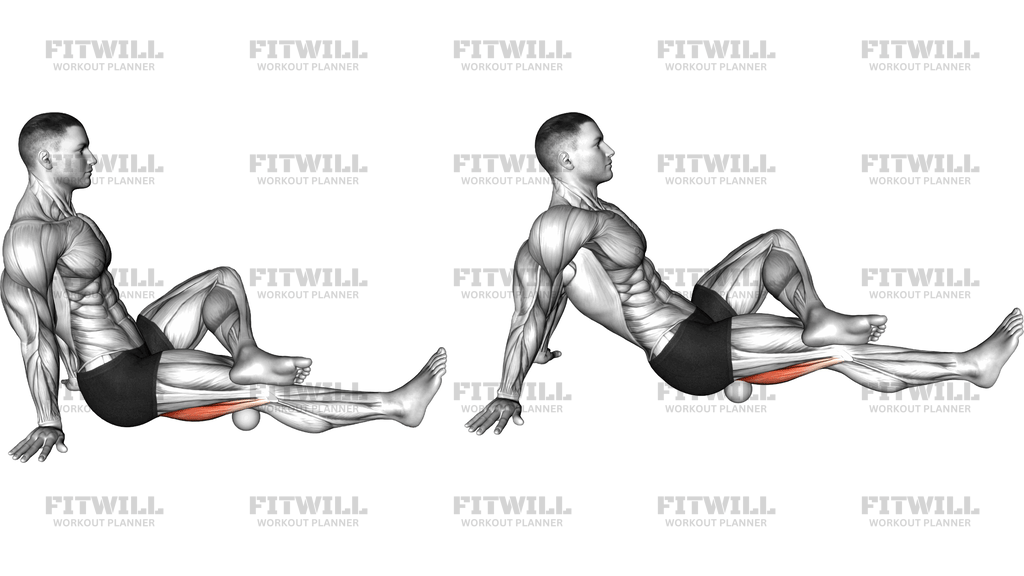
Roll Ball Seated Hamstrings Active is a self-massage drill that uses a small ball to release tension in the back of the thigh. You sit on the floor with your hands planted behind you, place the ball under one hamstring just above the knee, cross your other ankle over the top of that leg to add pressure, and then either roll the ball along the hamstring by moving your body or keep the ball in place and slowly bend and straighten the knee. The crossed-leg setup is what makes it work: without the extra body weight pressing the thigh down into the ball, the ball simply slides around instead of sinking into the tissue.
This is a useful drill for anyone whose hamstrings feel heavy, tight, or tender after training or long periods of sitting. Runners and sprinters often gravitate toward it because the hamstrings take a beating at high speeds, and the distal hamstring just above the knee is a spot that rarely gets attention from ordinary stretching. Lifters recovering from a heavy deadlift or leg day can also use it as part of a cool-down to ease the sore, denser feel in the back of the thigh.
The key distinction of the active version is that the muscles themselves do some of the work. Instead of passively lying over the ball, you slowly extend and flex the knee while the ball stays pinned under the hamstring. That combination of pressure plus movement tends to reach the tissue more effectively than static pressure alone, and it also gives you a moment-to-moment read on where the tightest fibers are. As the knee travels through its range, you will feel the sensation sharpen on specific spots, which tells you exactly where to slow down and linger.
Setup matters more than most people expect. The ball should sit on soft hamstring tissue, not directly on the back of the knee joint, and your torso angle controls how much weight you load onto it. Sitting more upright increases pressure; leaning back onto your hands and taking weight off the ball eases it. Because you are supporting yourself on straight arms behind you, keep your shoulders comfortable and let your hips do the small movements rather than dragging yourself around with your arms.
Work slowly and stay on the muscle belly between the glute fold and just above the back of the knee. A couple of minutes per leg is plenty, and you can repeat it daily if the area feels tight. If you hit a genuinely painful point, reduce the pressure by uncrossing the leg or leaning back, rather than forcing through it. The goal is a tolerable, releasing kind of pressure, not a wince.
[ Workout Log & Planner ]
Put your next workout in Fitwill
Keep your plan and training log ready when you are.


Instructions
- Sit on the floor with your legs out in front of you and place a small ball under one thigh, just above the back of the knee, so your body weight rests on it.
- Cross your opposite ankle over the top of the working leg to press the thigh down into the ball, and plant both hands on the floor slightly behind your hips with fingers pointing outward.
- Lean back until you feel firm but tolerable pressure from the ball into the hamstring, keeping your torso relaxed and your shoulders down away from your ears.
- Brace lightly through your trunk so your lower back stays neutral while your arms support your weight.
- To roll, walk your hands and shift your hips a few centimeters at a time so the ball travels up the hamstring toward the glute fold, then work back down.
- For the active component, pause with the ball on a tense spot and slowly straighten and bend the knee through a comfortable range, letting the hamstring move over the ball.
- Breathe steadily throughout, exhaling as the knee extends and avoiding any breath-holding when the pressure intensifies.
- When you find a particularly tender area, slow the knee movement down and make two or three small passes over it instead of rushing past.
- Skip the back of the knee joint itself and stay on the muscle tissue above and below it.
- Finish the leg by uncrossing the ankle, lifting the thigh off the ball, and resetting the ball to a fresh spot or switching legs.
Tips & Tricks
- Start just above the back of the knee rather than on it. Placing the ball directly on the joint line is uncomfortable and does nothing for the hamstring itself.
- The crossed ankle is your pressure dial. If the sensation is too sharp, uncross the leg; if you barely feel the ball, cross the ankle and sit a little more upright.
- A hard ball on a hard floor is an aggressive combination. If the pressure is overwhelming, do the first sessions on a mat or with a slightly softer ball.
- The active knee bends are the point of the exercise. If you only roll back and forth, you miss the effect of the hamstring gliding over the ball as it lengthens and shortens.
- Watch your arms. Supporting yourself on locked, shrugged shoulders for minutes at a time creates more neck and shoulder tension than the release is worth, so keep the elbows soft and shoulders low.
- Rotate your leg slightly inward and outward across sets. The hamstring has strands along the inner and outer back of the thigh, and small rotations bring the ball onto different ones.
- Do not chase pain. A 5 or 6 out of 10 pressure sensation is productive; anything that makes you hold your breath or guard the leg usually just makes the tissue more protective.
- If your hands or wrists tire before the hamstring does, rest briefly and resume, or finish the leg in a second, shorter bout rather than dropping your torso angle and losing pressure.
- Expect the tender spots to change day to day. After hard training they will be closer to the glute fold; on easier days the distal hamstring near the knee is often the sensitive area.
Frequently Asked Questions
Which muscles does Roll Ball Seated Hamstrings Active target?
The ball works the hamstrings along the back of the thigh, with the outer hamstring (biceps femoris) usually picking up the most direct pressure. Depending on where you position the ball, the upper calf and tissue around the back of the knee also get some contact.
Why do I cross my other ankle over the working leg in Roll Ball Seated Hamstrings Active?
The crossed ankle stacks your body weight onto the working thigh so the ball presses firmly into the hamstring instead of sliding out. Without it, most people cannot generate enough pressure to affect the tissue.
What does the 'active' part of Roll Ball Seated Hamstrings Active mean?
It means you actively bend and straighten the knee while the ball stays pinned under the hamstring, so the muscle moves over the ball. This is different from a passive version where only your body rolls across the ball.
Is this exercise suitable for beginners?
Yes. The setup is simple, the pressure is fully adjustable through your torso angle and the crossed leg, and the worst-case outcome of doing it gently is temporary soreness. Beginners should start with lighter pressure and shorter bouts to learn what a productive sensation feels like.
How long should I spend on each hamstring?
One to two minutes per leg is a solid working dose. If you are working several tender spots with active knee movement, you can go slightly longer, but there is little benefit in grinding on the same area for many minutes.
Should the ball go on the back of the knee?
No. Place it on the soft hamstring tissue just above the knee crease. Nerves and blood vessels pass behind the knee, and pressing a ball directly on the joint line is uncomfortable and unproductive.
What is the most common mistake with Roll Ball Seated Hamstrings Active?
Rolling too fast with too much weight and skipping the active knee movement. Fast, aggressive rolling tends to make people brace and guard, while slow passes with the knee bending and straightening give the tissue time to release.
My wrists ache from supporting myself behind me. What can I do?
Lean further back so less weight sits through your arms, spread your fingers and point them slightly outward, or take short breaks between bouts. You can also do the active knee movement with a lighter torso angle, since the ball keeps working even with reduced pressure.
Can I substitute anything if I do not have a ball?
A foam roller works for the same area, though it covers a broader section of the hamstring and applies less focused pressure. A firm bottle or a rolled towel inside a bag can stand in for a ball in a pinch, as long as it is smooth and hard enough not to deform under your leg.
Is Roll Ball Seated Hamstrings Active safe after a hamstring strain?
Not without clearance from a physiotherapist or doctor. Fresh or healing strains are usually irritated by direct deep pressure, so get professional guidance before working the injured area with a ball.