Bent Over Lower Leg Rotation
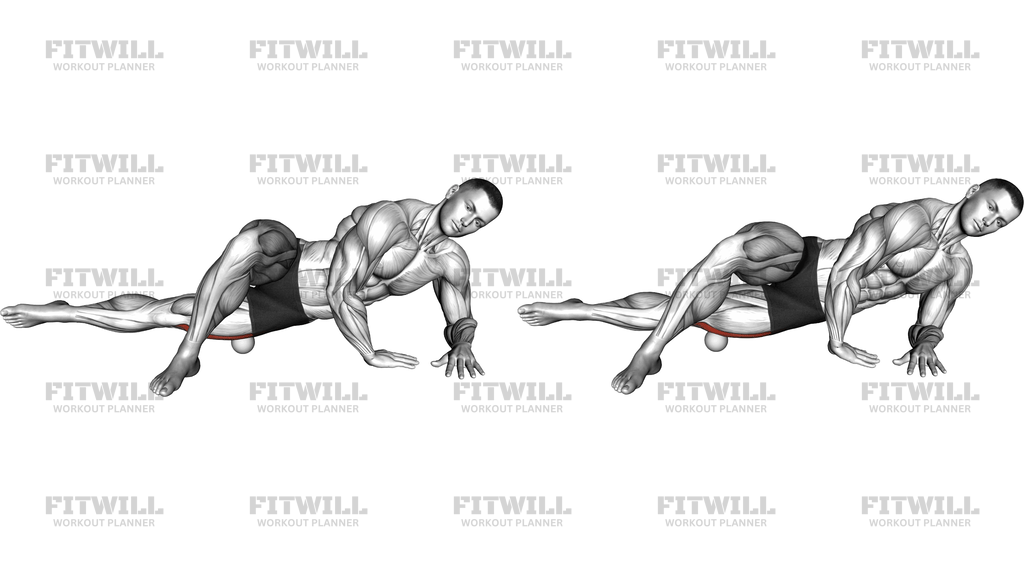
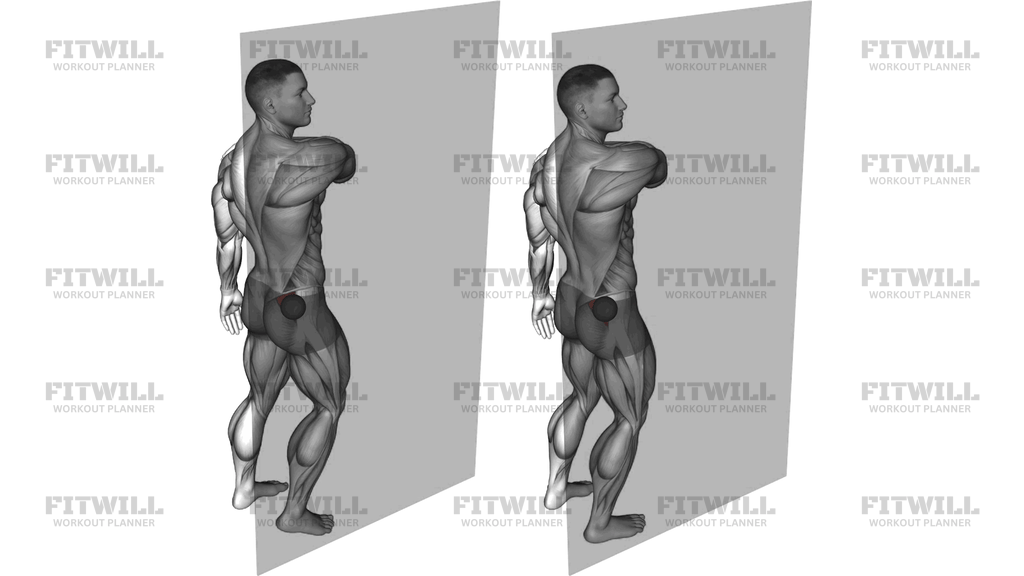
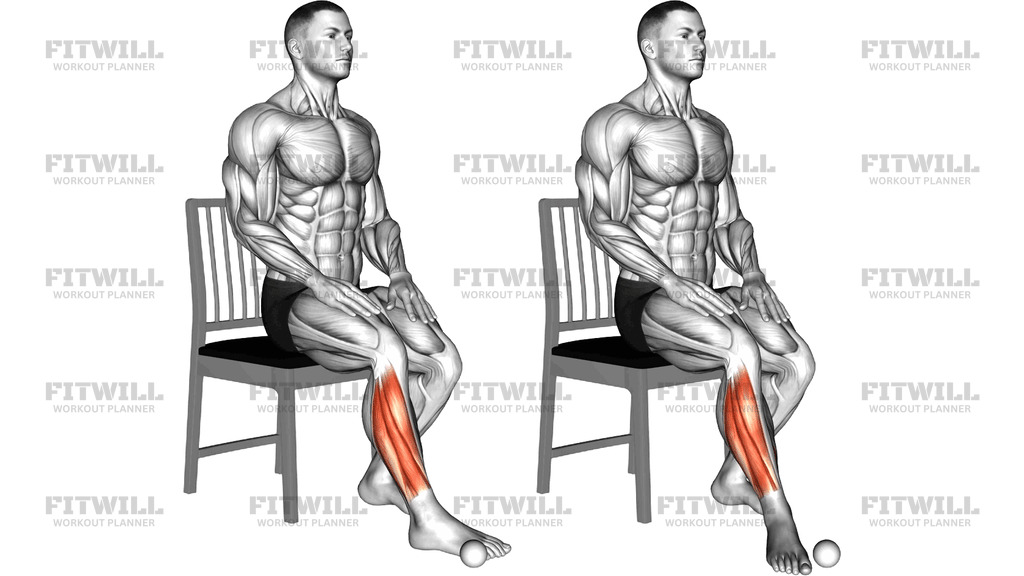
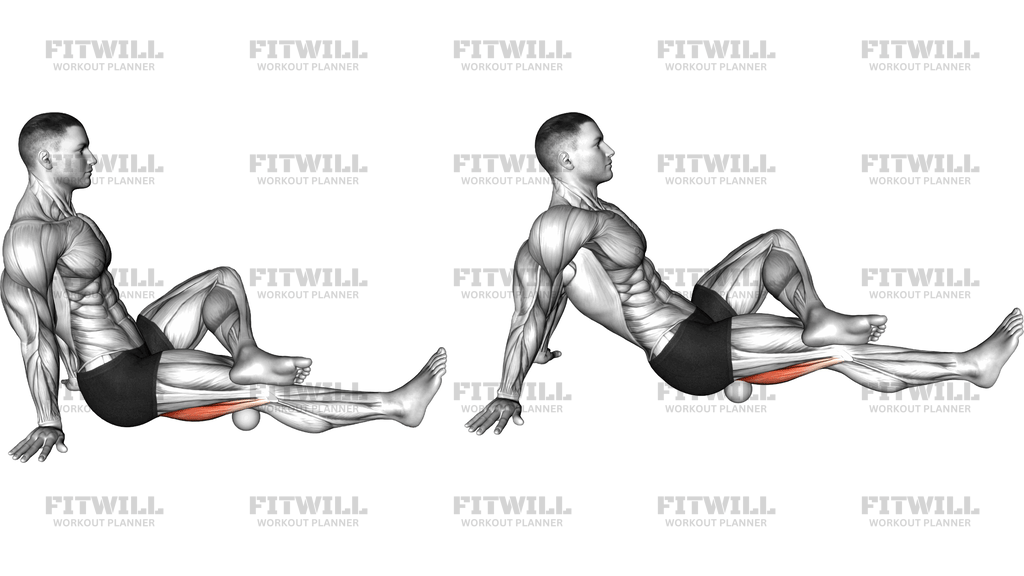
The Bent Over Lower Leg Rotation is a simple ground-contact drill that trains rotational control of the lower leg and foot. You set up in a hip hinge with both hands braced on your knees, place the ball of one foot on top of a small ball, and then rotate that lower leg so the toes sweep inward and outward while the ball rolls under the forefoot. Because the bent-over position takes most of the load off the working leg, you can focus entirely on the twisting motion happening at the hip, knee, and ankle without worrying about balance or added weight.
The muscle highlighted most in this drill is the tensor fasciae latae on the outer hip, which helps drive and control rotation of the thigh, but the movement also asks a lot of the muscles that steer the shin and foot. The calf group, the peroneal muscles along the outside of the lower leg, and the small stabilizers around the ankle all work to keep the foot planted and the rotation smooth. That makes this a useful activation exercise before squats, lunges, or running, where controlled rotation of the lower leg matters more than most people realize.
Setup matters here more than it looks. The bent-over stance with hands on the knees is not just a way to lean forward; it anchors your upper body so the rotation travels down the chain instead of being absorbed by your torso. Placing the forefoot on a ball removes friction, letting the toes turn freely while the heel stays light on or near the floor. If the ball is too small, too soft, or positioned too far back toward the arch, the foot wobbles and the rotation becomes sloppy.
To execute it well, keep the working knee softly bent and pointing in roughly the same direction as your toes throughout. Turn the foot outward as far as you can control, then inward, letting the ball roll under the ball of the foot. The motion should come from the hip and the rotation of the shin, not from scraping the foot side to side at the ankle alone. Keep the reps slow and the range honest — a smaller arc performed cleanly beats a big sweeping twist that rolls your whole body around.
This drill fits well in warm-ups, in rehab-style lower leg routines, and as a teaching tool for people whose knees or ankles collapse inward when they squat, jump, or run. It needs no strength, no load, and only a small ball and enough floor space to stand comfortably, so it is easy to use almost anywhere.
[ Workout Log & Planner ]
Put your next workout in Fitwill
Keep your plan and training log ready when you are.


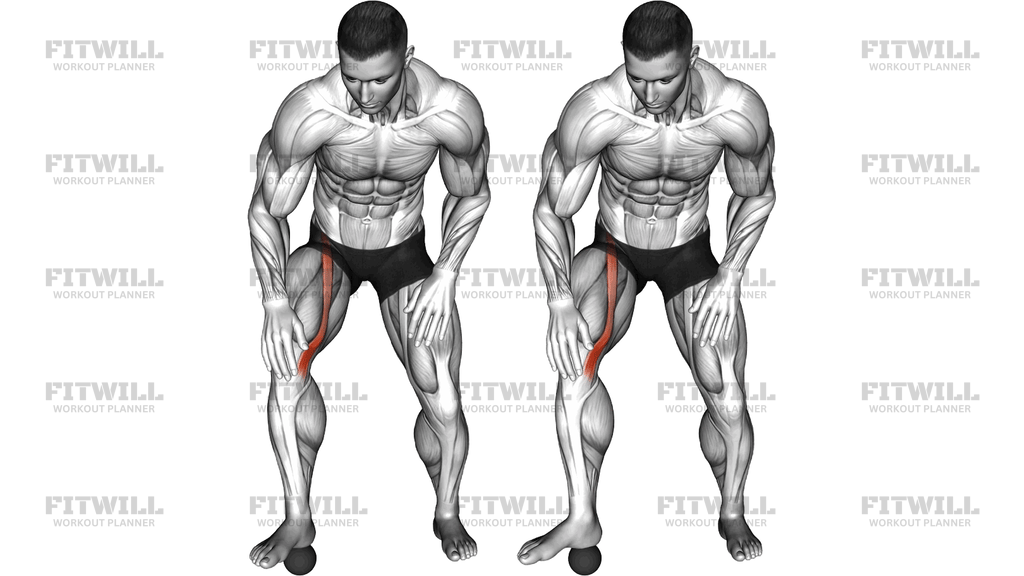
Instructions
- Stand with your feet about hip-width apart, then hinge forward at the hips until you can rest both palms firmly on your knees with your back flat and your weight shifted slightly toward the balls of your feet.
- Slide the ball of one foot on top of a small ball placed on the floor beneath your forefoot, so your toes rest on the ball while your heel stays light on the ground.
- Bend the working knee slightly and keep it stacked over the middle of your foot, then brace your core to keep your torso from twisting during the movement.
- Rotate the working leg outward so your toes turn away from your body, letting the ball roll under the forefoot as the lower leg turns.
- Pause briefly at the outer end of the rotation, then reverse direction and rotate the lower leg inward until your toes point across your body as far as you can control.
- Continue moving smoothly between internal and external rotation, keeping the heel relaxed and the motion driven by the hip and shin rather than the foot alone.
- Breathe steadily throughout, exhaling as you rotate and inhaling as you return through the middle of the arc.
- Complete all repetitions on one side, then step the foot off the ball, stand up slowly, reset your bent-over position, and switch to the other leg.
Tips & Tricks
- The most common mistake is twisting from the ankle only, which turns this into a foot scrape instead of a leg rotation — think about turning your whole thigh and knee so the shin follows.
- Do not let the knee of the working leg drift inward as you rotate; if it collapses, reduce the range and rebuild the arc gradually.
- Keep only a light touch on the ball of the foot. Pressing down hard flattens the ball and stops it from rolling, which jams the movement.
- If your hamstrings or lower back complain in the hinge, bend your knees a little more and shorten the forward lean rather than rounding your back to reach your knees.
- The heel should stay relaxed but roughly in place. If your whole foot slides side to side across the floor, you are rotating from the hip too aggressively instead of pivoting on the ball.
- Start with a small arc of rotation and expand it over sessions; forcing end-range twists with a cold lower leg is the fastest way to make this drill feel unpleasant.
- Keep your shoulders level and your hips square to the front. If one side of your torso drops, your hands are pushing unevenly into your knees.
- A slightly firmer ball rolls more predictably than a very soft one, which tends to squish and throw the foot off line mid-rep.
Frequently Asked Questions
What muscles does the Bent Over Lower Leg Rotation work?
The Bent Over Lower Leg Rotation primarily targets the tensor fasciae latae on the outer hip, which drives and controls rotation of the leg. The calves, the peroneal muscles on the outside of the lower leg, and the ankle stabilizers work to steer the foot as the ball rolls underneath it.
Why is the Bent Over Lower Leg Rotation performed with hands on the knees?
Resting your hands on your knees anchors the upper body and takes your body weight partly off the working leg. This lets you focus on clean rotation of the shin and hip without having to balance on one leg at the same time.
Can beginners do the Bent Over Lower Leg Rotation?
Yes, it is actually a good beginner drill because it uses no load and a short range is perfectly acceptable. Beginners should start with a small arc of rotation and a slow tempo, then expand the range as the motion feels controlled.
What kind of ball should I use under my foot for the Bent Over Lower Leg Rotation?
A small, firm ball about the size of a tennis ball or slightly larger works best. A very soft ball compresses under the forefoot and stops rolling smoothly, which makes the rotation feel jerky.
Should my heel stay on the floor during the Bent Over Lower Leg Rotation?
Your heel should stay light on or near the floor and act as a pivot point while the ball of the foot turns on the ball. If your entire foot slides across the floor, the rotation is coming from the hip in too large a sweep rather than the shin turning over a planted heel.
Is the Bent Over Lower Leg Rotation a good warm-up exercise?
Yes, it works well before squats, lunges, running, or any activity that demands controlled knee and ankle alignment. A set of eight to twelve slow rotations per side is enough to wake up the outer hip and lower leg stabilizers.
What is the most common mistake in the Bent Over Lower Leg Rotation?
The most common mistake is flicking the foot side to side at the ankle instead of rotating the whole lower leg from the hip. If your toes are moving but your knee and thigh stay completely still, you are missing the point of the drill.
Can I substitute the Bent Over Lower Leg Rotation if I do not have a ball?
You can perform the same rotation with the ball of your foot directly on a smooth floor, though the added friction makes the movement feel less fluid. A folded towel under the forefoot is another option that lets the foot pivot with less resistance.
Is the Bent Over Lower Leg Rotation safe for my knees?
When performed slowly with the knee tracking over the foot and without forcing end-range rotation, it is generally a low-stress drill. If you have a current knee injury or recent surgery, check with a qualified professional before adding rotational lower leg work to your routine.