Roll Ball Outside Thigh Tractus Iliotibialis Stret
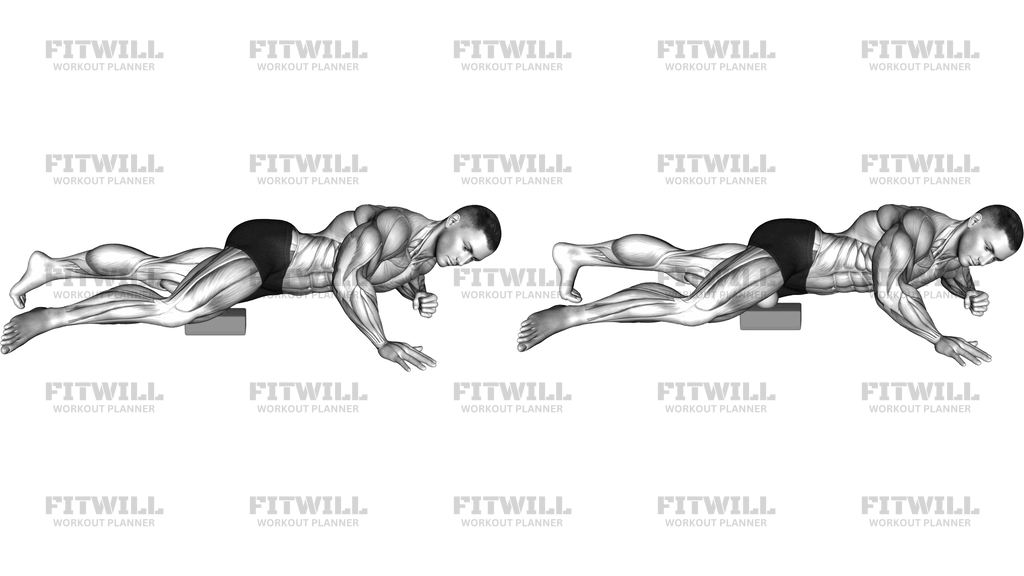
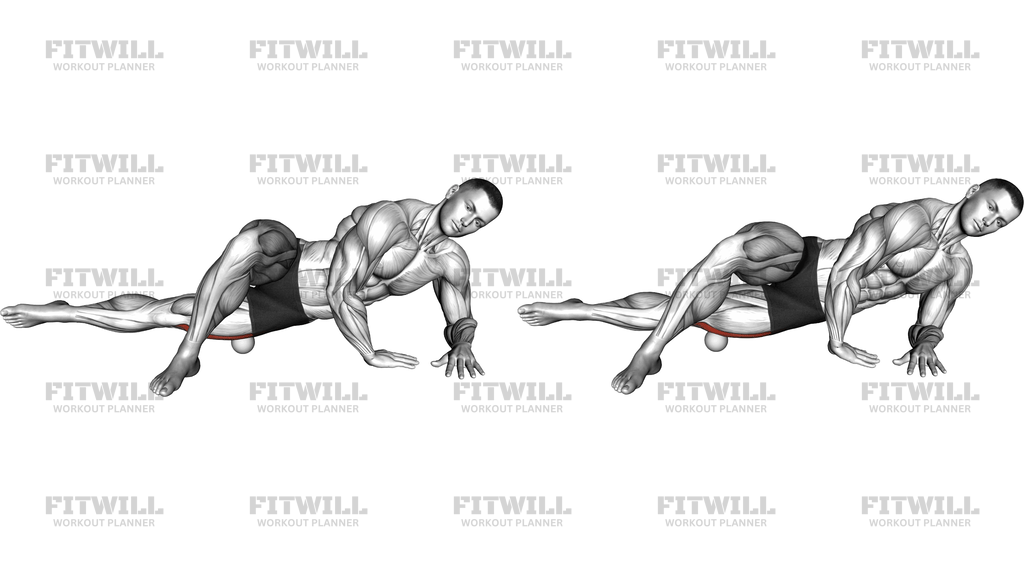
The Roll Ball Outside Thigh Tractus Iliotibialis Stretch is a self-myofascial release drill that targets the entire lateral line of the thigh, from the outside of the hip down to just above the knee. You lie on your side with a small roll ball placed under the outer thigh, prop yourself up on your forearm and supporting hand, and use your arms and bottom leg to drive your body back and forth so the ball travels along the iliotibial band. The two poses shown side by side represent the two ends of that rolling path: one with the ball low near the knee, one with it high toward the hip.
This area takes a lot of daily load. The tensor fasciae latae and the iliotibial band it feeds into help stabilize the hip every time you walk, run, cycle, squat, or climb stairs, and repetitive work can leave the outer thigh feeling dense, tender, or tight. Runners and cyclists are the most obvious candidates, but anyone who sits long hours or trains lower body frequently will notice the difference after releasing this line. Because a ball is smaller and harder than a foam roller, the pressure is more concentrated, so you can work into spots a broad roller tends to skip over.
The setup is what makes or breaks the drill. Your body should form a fairly straight line from shoulder to ankle, with the bottom leg extended and the ball stacked under the outer thigh, not tucked under the hip bone or rolled onto the front of the thigh. Supporting yourself on the forearm with the elbow under the shoulder, and placing the top hand on the floor in front of you, gives you precise control over how much weight you load into the ball. The more you collapse into the shoulder or let the hips sag, the less control you have and the more likely you are to roll over a tender spot too hard.
Execution is slow and deliberate. Move in short passes of a few centimeters, pausing for several slow breaths on the most tender spots and letting the tissue ease before continuing. Keep the work above the kneecap and below the hip bone; rolling directly over the knee joint or the greater trochanter is uncomfortable and serves no purpose. If the pressure is too intense, take more weight through the supporting arm or bend the bottom knee and press the foot into the floor to lighten the load.
Two to four minutes per side, usually after training or on recovery days, is enough for most people. Expect it to feel uncomfortable rather than painful; sharp, burning, or radiating sensations are a signal to come off the spot immediately. This drill complements stretching rather than replacing it, and pairing it with side-lying hip stretches and glute work usually gives the outer thigh the best long-term result.
[ Workout Log & Planner ]
Put your next workout in Fitwill
Keep your plan and training log ready when you are.


Instructions
- Place a roll ball on an exercise mat and lie on your right side so the outside of your right thigh rests on top of the ball, starting with it just above the knee.
- Extend your bottom leg in line with your torso and stack or stagger your feet, then prop your upper body on the right forearm with the elbow directly under the shoulder and place the left hand flat on the floor in front of you.
- Press lightly into the supporting hand and forearm to lift some of your body weight off the ball, and brace the trunk so your hips do not sag toward the floor.
- Begin rolling the ball up the outside of the thigh by pulling with the arm and pushing with the bottom foot, moving the ball a few centimeters at a time toward the outside of the hip.
- When you find a tender spot, stop on it and hold for five to ten slow breaths, letting the pressure ease before moving on; avoid rolling directly over the knee joint or the bony point of the hip.
- Work through the whole lateral line from just above the knee to just below the hip bone, then roll the ball back down in the same slow, controlled passes.
- Exhale as you settle onto tender areas and keep breathing steadily throughout; holding your breath increases tension and makes the tissue resist the pressure.
- After the final pass, take full weight off the ball, sit up, and switch sides so the ball sits under the left outer thigh, and repeat for the same amount of time.
- Keep the movements slow the entire time; the goal is sustained pressure on the tissue, not fast friction over it.
Tips & Tricks
- If the pressure feels too sharp, bend the bottom knee and plant that foot on the floor; this shifts weight into the lower body and off the ball without changing your position.
- The most common mistake is letting the hips drop toward the mat, which flattens the contact angle and pushes the ball toward the front of the thigh; think ribs up, hips level.
- Do not let the shoulder collapse as you fatigue; if your supporting arm gives out, finish the side in a shorter set rather than grinding through with a hunched shoulder.
- Avoid the instinct to roll straight over the greater trochanter at the side of the hip; the tissue you want sits just below and behind that bony point.
- Small passes beat long sweeps with a ball; because the contact area is so small, long fast rolls usually just skate over the spots that need the most time.
- If a spot feels unbearable, come off it and work the tissue slightly above or below instead; direct pressure on the most painful point is not required for a release.
- Keep the ankle of the top leg relaxed and the top foot resting on the floor or against the bottom heel so the leg does not drift forward during the roll.
- A firmer ball increases intensity but a slightly softer one is often better when you are new to this drill, since you can stay on it long enough for the tissue to settle.
- Do this after training or on rest days rather than right before heavy squatting or running, since aggressive release work can temporarily reduce force output.
Frequently Asked Questions
What does the Roll Ball Outside Thigh Tractus Iliotibialis Stretch actually target?
It applies direct pressure to the iliotibial band and the tensor fasciae latae along the outer thigh, with some carryover to the lateral quad and the outer hip muscles. The goal is to reduce tension and tenderness in that lateral line, not to build strength.
Is rolling the iliotibial band with a ball safe?
For most people yes, as long as you stay above the knee joint and below the hip bone and keep the pressure tolerable. If you have sharp pain, swelling, or symptoms that radiate down the leg, stop and get the area assessed before continuing.
Can beginners use a roll ball on the outer thigh, or should they start with a foam roller?
Beginners often do better starting with a softer ball or a foam roller, because the concentrated contact of a ball can be intense on unconditioned tissue. Once you can tolerate the foam roller comfortably, the roll ball gives you more precision.
How long should I spend on each side?
One to three minutes per side is enough for most people. Longer sessions tend to leave the tissue bruised and irritated rather than looser.
Why do I need to support myself on my forearm during this drill?
The forearm support lets you regulate exactly how much body weight presses into the ball. Pressing up with the arm lightens the load, and lowering toward the floor increases it, so you can scale intensity moment by moment.
Can I roll directly over the outside of the knee where the band passes?
No, keep the ball above the kneecap. The band attaches near the knee and rolling over the joint line is uncomfortable and adds nothing, so stop the path just above the lateral side of the knee.
Should I stop and hold on sore spots or keep rolling?
Do both: roll in short passes, and when you hit a tender area, pause there for five to ten slow breaths until the sensation fades. Holding gives the tissue time to relax under sustained pressure, which constant motion does not.
What can I use if I do not have a roll ball?
A standard foam roller on the outer thigh is the closest substitute, and a tennis or lacrosse ball can work in a pinch. The foam roller spreads the pressure over a wider area, so you may need slightly longer on each side.
Will this drill fix a tight iliotibial band on its own?
It can ease tension and soreness in the area, but lasting change usually also needs work on hip strength and control, particularly the glutes, plus attention to training volume. Treat the ball as one part of the plan, not the whole solution.
Is it normal for the outer thigh to feel bruised the next day?
Mild tenderness can happen, especially when you are new to the drill or used a hard ball. If the area feels genuinely bruised, cut back on time and pressure next session, and let a couple of days pass before repeating.