Dynamic Half Child Pose
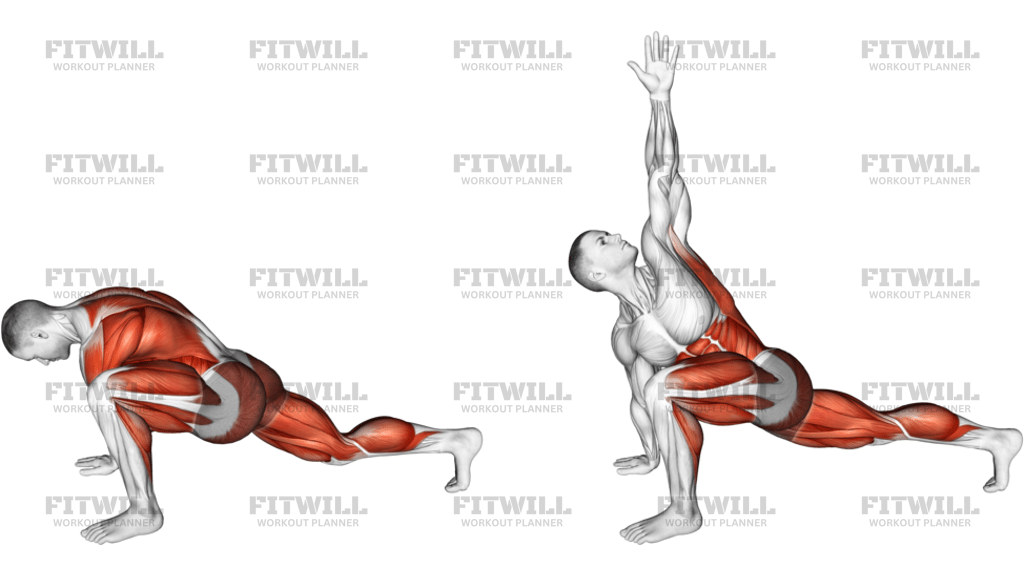
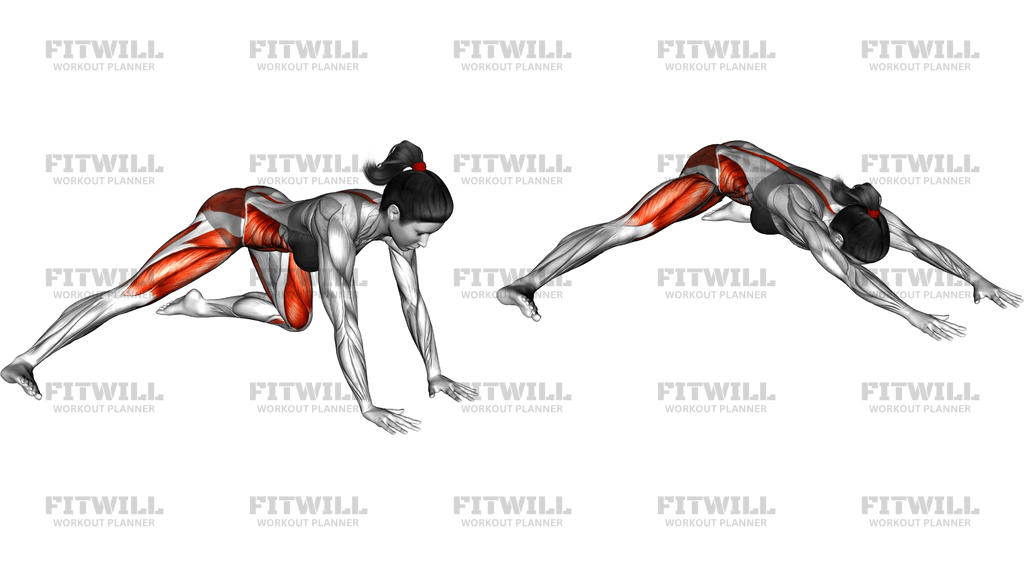
Dynamic Half Child Pose is a flowing mobility drill that moves you between a kneeling half-child position and a long, extended reach forward. You start on hands and knees with one knee tucked underneath your body and the other leg stretched straight behind you, then rock your hips back toward the tucked heel while your arms stay planted. From there, you slide or shift forward and lengthen both arms out in front of you so the extended leg reaches long behind and your chest sinks toward the floor. The result is a two-way stretch: the tucked-leg side opens the front of the hip and thigh, while the reach forward lengthens the lats, shoulders, and entire back line of the extended leg.
Because it is dynamic rather than a static hold, the position is repeated in a smooth rhythm for a set number of repetitions on one side before switching. This continuous back-and-forth movement warms the hip flexors, quads, glutes, and hamstrings while gently mobilizing the lower back, which makes it a good fit for the first ten minutes of a workout or as part of a cooldown. Runners, cyclists, and anyone who spends long hours sitting tend to benefit most, since tight hip flexors and a stiff mid-back are exactly the limitations this pattern addresses.
The setup matters more than it looks. Your hands should be directly under your shoulders with fingers spread, and the tucked knee should sit roughly in line with or slightly behind your navel, not far off to the side. If the knee is placed too far forward under the chest, the stretch becomes cramped and the front of the knee takes pressure it does not need; too far out to the side and you lose the hip opener entirely. A folded towel or thin pad under the kneeling knee makes the drill comfortable enough to repeat for full sets.
To execute it well, think of the movement as a wave rather than two separate poses. Exhale as you press the floor away and rock your hips back until you feel a stretch along the front of the hip and thigh of the tucked leg. Inhale as you glide forward, letting your chest drop between your outstretched arms and the extended leg reach fully back with the top of the foot down. Keep the movement quiet and controlled; if you have to yank or bounce to get deeper, reduce the range. Aim for eight to twelve smooth repetitions per side, pausing only briefly at the deepest point of each direction.
Common use cases include pre-run warm-ups, yoga-inspired mobility circuits, desk-worker hip routines, and rehabilitation-style programs where the hips need loaded-free movement without impact. Because both hands and one knee stay in contact with the floor, the drill is low-load and joint-friendly, but it still requires enough wrist and shoulder tolerance to bear weight on straight arms. If your wrists complain, make fists and bear weight on your knuckles or place your hands on a low bench instead.
Two safety points are worth remembering. First, never force the tucked knee toward the floor or twist it inward; the knee is a hinge and the stretch should come from the hip, so back off immediately if you feel pinching at the knee joint itself. Second, keep the ribs and lower back long rather than sagging into an arch as you reach forward — the goal is length through the hips and spine, not extra extension in the lower back.
[ Workout Log & Planner ]
Put your next workout in Fitwill
Keep your plan and training log ready when you are.


Instructions
- Place an exercise mat on the floor and come onto hands and knees, with your hands under your shoulders, fingers spread, and knees under your hips.
- Tuck your left knee underneath your body so it sits slightly behind your navel, and slide your right leg straight back with the top of the right foot resting on the mat.
- Settle your weight evenly between both hands and the tucked left knee, then brace your core lightly so your lower back is long rather than sagging.
- Exhale and press your palms into the floor as you rock your hips back toward your left heel, feeling a stretch along the front of the left hip and thigh.
- Pause for one breath at the back position, keeping the right leg long and the right knee pointing down, not flared outward.
- Inhale and glide your chest forward and down between your hands, extending both arms fully in front of you while the right leg reaches even longer behind.
- Let your chest sink toward the mat at the front position so the lats, shoulders, and the back of the right leg lengthen together.
- Reverse the motion smoothly, drawing the hips back toward the tucked heel as the arms press the floor away, completing one full repetition.
- Continue the back-and-forth flow for 8-12 controlled repetitions, inhaling on the forward reach and exhaling on the rock back.
- Finish the set, bring both knees under your hips, and switch sides so the right knee is tucked and the left leg extends back.
Tips & Tricks
- If your tucked knee feels pinched rather than stretched, shift that knee an inch further back under your body so the fold comes from the hip, not compression at the knee joint.
- Keep your weight in the fingertips and the base of the palms instead of collapsing into the heels of your hands; sinking into the wrists is the most common reason this drill becomes uncomfortable.
- The extended leg should stay active, with the kneecap pointing down and the leg reaching long. A lazy, bent extended leg turns the front position into a floor flop and kills the hamstring and lat stretch.
- If rocking back feels jerky, narrow your hands slightly and slow the tempo; the movement should feel like sliding on rails, not hopping between two poses.
- Place a folded towel under the kneeling knee if the mat alone is too thin — a distracted knee makes you rush the repetitions and shorten the hip stretch.
- Avoid letting the lower back arch hard when you reach forward. Think ribs down and chest heavy; the stretch should register along the sides of the back and the front of the hip, not as strain in the lumbar spine.
- Breathe with the rhythm of the movement instead of holding your breath at the deep points; the exhale on the rock-back is what lets the hip settle further.
- If wrist discomfort limits you, do the same flow with your fists closed and weight on the knuckles, or elevate your hands on a low step or bench.
- Start with a smaller range on your first few repetitions and grow the reach each rep; diving straight to full depth on a cold hip is where most people strain something.
Frequently Asked Questions
What muscles does the Dynamic Half Child Pose stretch?
The tucked-leg side targets the hip flexors and quads, especially as you rock back toward the heel. The forward reach adds length to the lats, shoulders, and the hamstrings and glutes of the extended leg.
Is the Dynamic Half Child Pose good for beginners?
Yes, it is low-load and body-weight based, so most beginners can perform it right away. Start with a smaller range of motion and fewer repetitions, and use a pad under the kneeling knee for comfort.
Why does one knee stay tucked under my body instead of both?
The half-child position leaves one leg extending long behind, which lets you stretch the front of the tucked hip while simultaneously lengthening the back line of the extended leg. Both knees tucked would only give you the classic child pose and skip the leg reach.
Should I hold each position or keep moving?
Keep moving. This is a dynamic drill, so the value comes from repeating the back-and-forth flow for 8-12 repetitions. If you want a static stretch, pause a few breaths in the deepest position at the end of your set.
How many repetitions should I do per side?
Eight to twelve smooth repetitions per side works well as a warm-up drill. Complete all repetitions on one side before switching, so the tucked hip gets a full, uninterrupted set.
My knee hurts when I tuck it under — what should I change?
Move that knee slightly further back toward your hip so the fold comes from the hip joint rather than compression at the knee, and make sure the knee is not twisted inward. If discomfort persists, skip the tucked position and substitute a kneeling hip flexor stretch with the back knee down instead.
Can I do the Dynamic Half Child Pose before running or lifting?
Yes, it is one of its best uses. The dynamic rhythm raises temperature in the hip flexors, quads, and hamstrings and mobilizes the lower back without fatiguing anything, which suits it to the start of a session.
Do I need any equipment for this exercise?
No equipment is required beyond a comfortable surface, which is why an exercise mat is the usual choice. A folded towel under the kneeling knee is an optional addition for sensitive knees.
How is this different from a regular Child Pose stretch?
A regular child pose tucks both knees and is usually held still. Dynamic Half Child Pose keeps one leg reaching long behind and moves you rhythmically between two positions, so it trains hip flexor and hamstring length through motion instead of a single static hold.
How far forward should my chest sink during the reach?
Only as far as you can lower it while keeping both arms long and your lower back free of strain. The chest does not need to touch the floor; a moderate sink with a long spine gives a better stretch than forcing the torso flat.