Lying Half Butterfly Raise
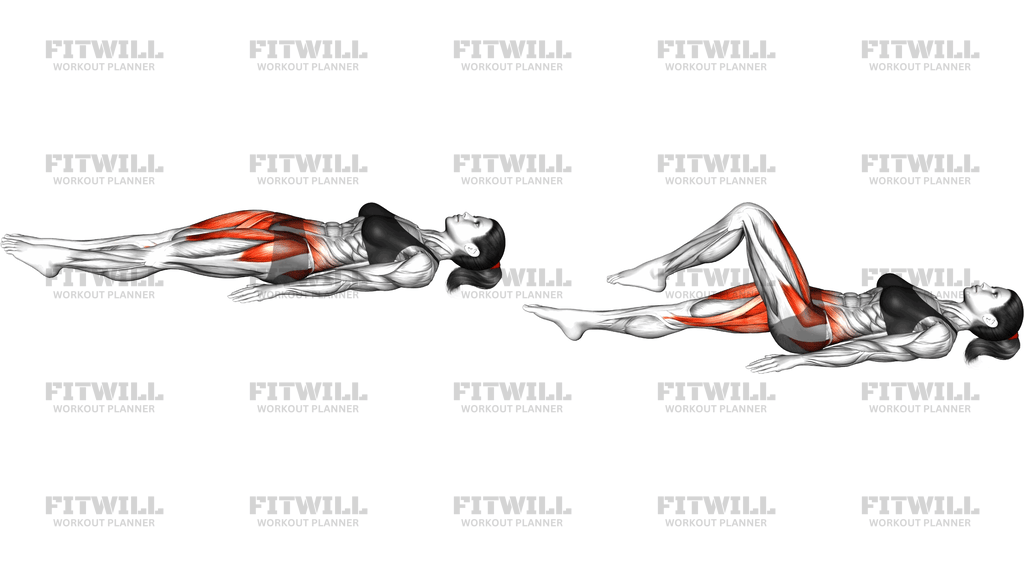
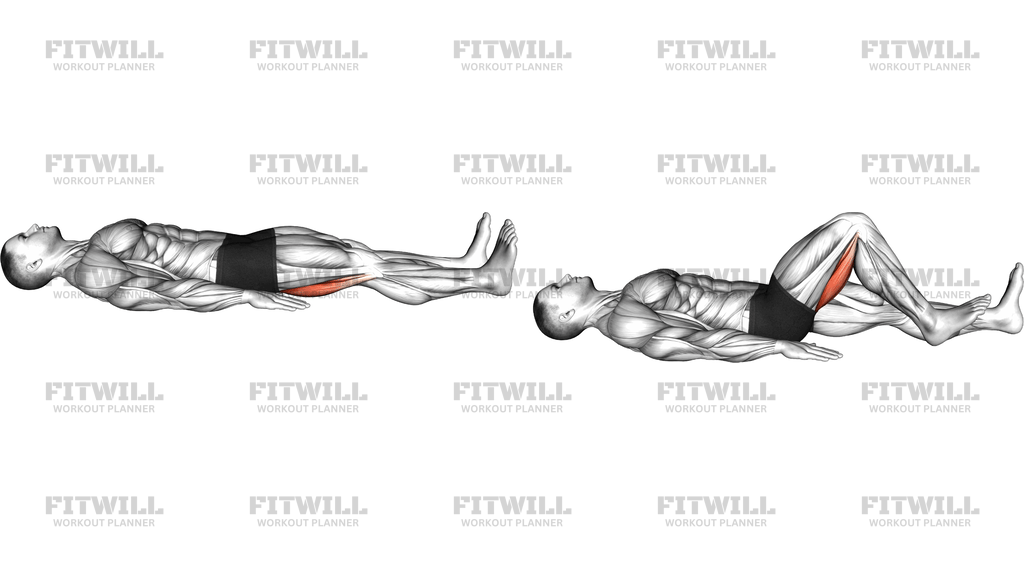
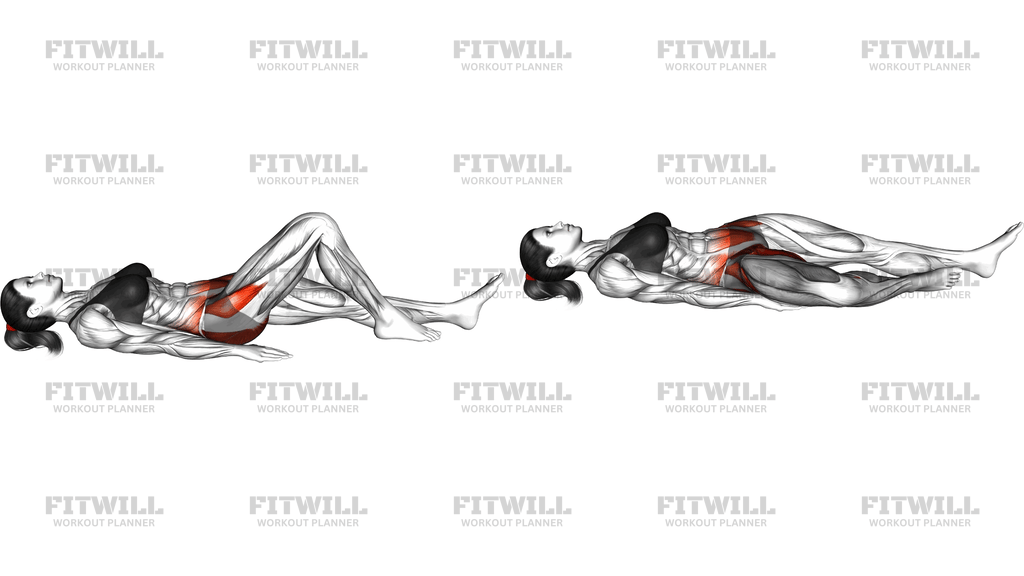
The Lying Half Butterfly Raise is a floor-based hip exercise performed on your back, where one leg stays extended along the mat while the other knee is bent and rotated outward into a half-butterfly position, then raised upward under control. The turned-out knee is the defining detail: instead of lifting the leg in a straight line like a standard lying leg raise, the knee travels up and slightly outward, which shifts a good portion of the work into the hip flexors and the muscles that rotate and stabilize the hip.
The main movers are the hip flexors at the front of the hip, particularly the iliopsoas, along with the adductors on the inner thigh, which help control the leg as the knee opens outward. The lower abdominals work isometrically the entire time to keep your pelvis from tipping and your lower back from arching off the floor. Because only one leg moves at a time, this version is also noticeably easier on the spine than double-leg raises, making it a smart choice for people who feel traditional leg raises in their lower back.
Setup matters more than it looks. Your lower back should stay in contact with the mat for the whole set, and the extended leg should rest heavy on the floor rather than drifting upward. If the pelvis tilts or the ribs flare, the abs stop doing their stabilizing job and the hip flexors start pulling on the lumbar spine instead. Slowing the tempo and keeping the range honest fixes most of that.
To execute it well, think of the raise as coming from the hip, not from kicking the foot. The bent knee opens outward as it lifts, holds briefly near the top, and lowers back down with a slow, deliberate return so the leg is placed on the mat rather than dropped. Breathing stays steady: exhale on the lift, inhale on the way down.
This exercise fits well into warm-ups for squatting and running, glute and hip activation circuits, postpartum or return-to-training progressions, and general core-and-hip routines. It requires nothing but a mat and a little floor space, and because it trains one side at a time, it also exposes left-to-right differences in hip mobility and control that bilateral exercises tend to hide. Keep the reps smooth and controlled rather than chasing height, and the movement rewards you with better hip awareness and cleaner leg mechanics in bigger lifts.
[ Workout Log & Planner ]
Put your next workout in Fitwill
Keep your plan and training log ready when you are.


Instructions
- Lie on your back on an exercise mat with both legs extended and your arms relaxed at your sides, palms facing down.
- Bend one knee and rotate it outward to the side so the knee points away from your body, keeping the other leg straight and heavy on the floor.
- Gently press your lower back toward the mat and brace your abdominals to set your pelvis in a neutral position before moving.
- From this half-butterfly position, raise the bent leg by driving the knee up toward your chest, letting the knee stay wide and rotated outward as it travels.
- Lift only as high as you can without your lower back peeling off the mat or your hips rolling to one side.
- Pause for a beat at the top of the raise, feeling the front of the hip and inner thigh working together.
- Lower the leg slowly back toward the starting position, resisting gravity on the way down instead of letting the leg fall.
- Exhale as you raise the knee and inhale as you lower it, keeping your breath continuous rather than holding it.
- Complete all repetitions on one side, then switch legs, rechecking that your lower back is flat before starting the second side.
Tips & Tricks
- If your lower back arches as the knee lifts, stop the raise lower down; the point where your back stays flat marks your true working range.
- Keep the foot of the working leg relaxed. Pointing or flexing the foot hard usually means you are kicking from the knee instead of lifting from the hip.
- The straight supporting leg tends to drift upward as the working leg tires. Anchor it by pressing the heel and back of the thigh into the mat.
- Do not force the knee wider outward. A moderate turn-out is enough; cranking the knee open trades control for range you cannot support.
- If you feel pinching at the front of the hip at the top, reduce the height of the lift slightly rather than pushing through the pinch.
- Tempo is the loading tool here. A two-second lift, one-second pause, and two-second lower will challenge the hip flexors more than fast, bouncy reps.
- Place your hands flat on the floor beside you for feedback; if you feel them bearing weight or your torso twisting, the hips are rotating instead of staying square.
- If one side lifts noticeably higher or smoother than the other, start every set with your tighter side and match the reps with the looser side.
Frequently Asked Questions
What muscles does the Lying Half Butterfly Raise work?
The primary work comes from the hip flexors at the front of the hip, with the inner thigh adductors assisting as the knee rotates outward. The lower abdominals stabilize the pelvis throughout, and the glutes on the supporting side help keep the hips square.
Why is one knee bent outward instead of keeping both legs straight?
The half-butterfly knee position shortens the leverage of the leg and rotates the hip, which makes the raise easier on the lower back while loading the hip flexors and adductors through a slightly different line than a straight-leg raise.
Is the Lying Half Butterfly Raise suitable for beginners?
Yes, it is one of the more accessible lying hip and core exercises because only one leg moves and the bent knee reduces leverage. Beginners should focus on keeping the lower back flat rather than lifting the knee high.
How many reps should I do?
Eight to twelve controlled repetitions per side works well for activation and strength, and two to three sets is plenty. If the reps get fast or your lower back starts arching, end the set.
My lower back lifts off the mat during the raise. How do I fix it?
Lower the height of the lift, brace your abdominals before each rep, and slow the lowering phase. If it still happens, place a small towel under the hips or bend the supporting leg with the foot flat to help settle the pelvis.
Can I substitute another exercise if I have no mat?
Any firm but padded surface such as carpet or a folded towel works fine. The movement only needs enough cushioning for your spine and shoulder blades to rest comfortably.
Should I feel this in the inner thigh or the front of the hip?
Both are normal. The front of the hip usually dominates, while the inner thigh works as the knee rotates outward. Sharp sensation in the groin joint itself is a signal to reduce the range.
How is this different from a regular lying leg raise?
A regular leg raise moves the leg in a straight line with straight knees, which is harder on the lower back and more abdominal-dominant. The half-butterfly version bends one knee outward, targeting the hip flexors and adductors with less spinal load.
Is it safe to do every day?
Because it is a low-load, body-weight movement, most people can include it frequently, such as in daily warm-ups or mobility routines. Still, if the front of the hip feels irritated after sessions, give it a rest day and rebuild with a shorter range.