Jaw Stretch
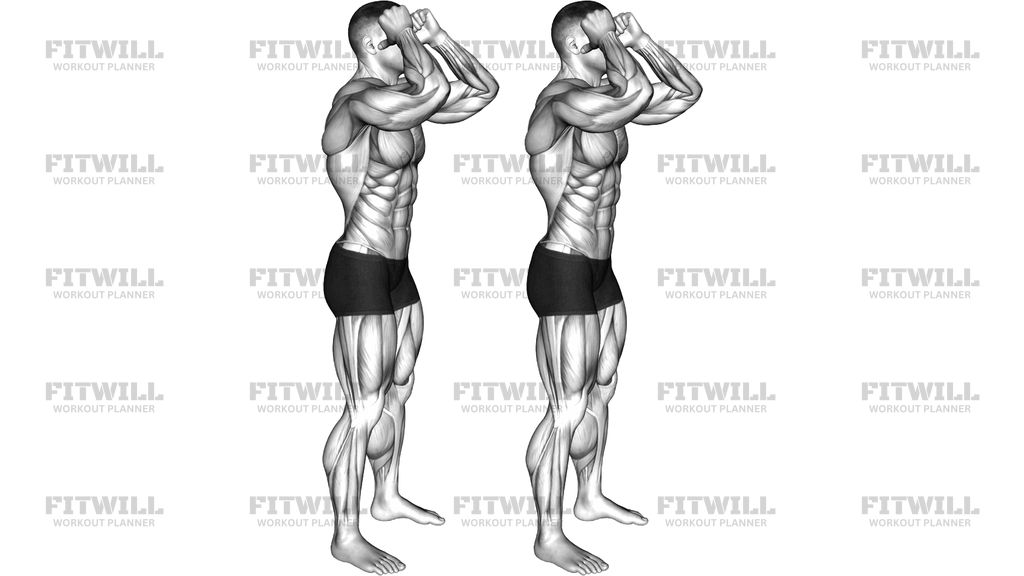
The Jaw Stretch is a simple, self-directed mobility drill for the muscles that move the jaw, primarily the masseter and temporalis on the sides of the face along with the smaller muscles around the temporomandibular joint. You stand upright and use your own hands to guide or assist the jaw into a comfortable opening or side-to-side stretch, holding the position so the tissues around the joint can relax. Because no equipment is required, it can be done almost anywhere, which makes it easy to fit into a warm-up, a cool-down, or a short midday reset.
This stretch is most useful for people who carry tension in the jaw. Long hours at a desk with a clenched or forward-headed posture, night-time grinding, stress-related clenching, and heavy lifting with a locked jaw can all leave the jaw muscles feeling tight or fatigued. While it is not a treatment for jaw disorders, a gentle regular stretch can help the area feel looser and more comfortable, and it pairs well with neck and upper trap mobility work since these regions often hold tension together.
Setup matters more than it might seem for such a small movement. Keep your head stacked over your shoulders rather than jutting the chin forward, stand or sit tall, and let your shoulders drop away from your ears. Your hands act only as guides, applying light pressure at the chin or along the jawline. If you force the jaw open quickly or press hard, the muscles reflexively guard against you, which defeats the purpose of the stretch.
To execute it well, place your fingertips or knuckles lightly on the lower jaw and slowly part your lips and teeth, letting the mouth open to the first point of mild stretch rather than the widest possible gape. Breathe slowly through the hold, and let the jaw hang with as little muscular effort as possible. Slow, unhurried breathing signals the chewing muscles to let go, which is where most of the benefit comes from.
Common use cases include desk workers relieving accumulated jaw tension, lifters and athletes who unknowingly clench during exertion, and anyone pairing jaw mobility with neck stretches as part of a posture-focused routine. Keep every rep well inside a pain-free range, avoid clicking or deviating the jaw to one side, and stop if you feel sharp discomfort at the joint. Small, consistent doses work better than aggressive sessions.
[ Workout Log & Planner ]
Put your next workout in Fitwill
Keep your plan and training log ready when you are.


Instructions
- Stand or sit upright with your head level and your ears stacked over your shoulders; let your arms hang relaxed before starting.
- Raise your hands and place your fingertips or knuckles lightly on the lower jaw, just below the mouth, with your elbows lifted to roughly face height.
- Relax your shoulders down away from your ears and take one slow breath in through your nose to settle your posture.
- Allow the jaw to open slowly, using your fingertips only to guide the movement, until you feel a mild stretch along the jawline and in front of the ears.
- Hold the open position for 15 to 30 seconds, breathing slowly and steadily through your nose.
- Keep the opening straight down without letting the jaw slide left or right or produce clicking.
- Close the mouth slowly and with control, letting your teeth meet gently rather than snapping shut.
- Repeat for 3 to 5 repetitions, deepening the opening slightly only if the first reps feel completely comfortable.
- For a variation, use your hand to gently guide the jaw a small distance to one side, hold, then repeat on the other side.
Tips & Tricks
- A common mistake is pushing the mouth open aggressively with the hands; the fingers should guide, not force, or the jaw muscles will tense up defensively.
- Watch for chin jutting. If your head drifts forward as you open the mouth, reset with the back of your head against a wall until the position feels natural.
- If you notice clicking or the jaw deviating to one side, reduce the opening height until the movement stays straight and quiet.
- Clenchers often hold tension in the tongue too; let the tongue rest lightly against the roof of the mouth during the hold to deepen the release.
- Do this stretch after periods of concentrated work or heavy lifting when you tend to clench, rather than only during workouts.
- Keep the stretch intensity at a two or three out of ten. A stronger sensation is not a better stretch for the jaw.
- Pair the Jaw Stretch with slow neck rotations or upper trap stretches, since tight neck muscles and tight jaw muscles frequently appear together.
- If sitting at a desk, support your lower back so your ribcage stays tall; slumping makes it harder to keep the head neutral during the hold.
Frequently Asked Questions
Which muscles does the Jaw Stretch target?
It mainly targets the masseter and temporalis muscles that close the jaw, along with the smaller muscles around the temporomandibular joint. The stretch also encourages relaxation of the tongue and surrounding facial muscles.
Is the Jaw Stretch suitable for beginners?
Yes, it is one of the simplest stretches to learn because it uses no equipment and a very small range of motion. Beginners should simply focus on slow breathing and keeping the opening gentle and pain-free.
Should I use my hands during the Jaw Stretch?
Hands are optional guides. Light fingertip contact on the lower jaw helps control the speed and path of the opening, but the jaw should still do the moving, not the hands.
How far should I open my mouth during the Jaw Stretch?
Open only to the first point of a mild, comfortable stretch, which is usually well short of your maximum gape. A depth of about two to three finger-widths is enough for most people.
Why does my jaw click when I do the Jaw Stretch?
Clicking can happen if you open too far or let the jaw drift off its natural path. Reduce the opening height and keep the movement straight; if clicking continues or comes with pain, check with a healthcare professional before continuing.
How often should I perform the Jaw Stretch?
One or two short sessions per day, each with 3 to 5 held repetitions, is a practical routine. Small frequent doses work better than one long, aggressive session.
Can the Jaw Stretch replace treatment for jaw clenching or grinding?
No, it is a comfort and mobility exercise, not a medical treatment. If you grind your teeth at night or have persistent jaw pain, use the stretch as a complement to professional care, not a substitute.
What can I do instead of the Jaw Stretch if my hands are busy or the position is uncomfortable?
You can perform the same movement hands-free by simply relaxing the jaw open slowly and holding, letting gravity and relaxation set the range. Side-to-side gliding with an open mouth is another simple variation.
When is the best time to do the Jaw Stretch?
It works well during breaks from desk work, after stressful periods when you notice clenching, or alongside neck and shoulder stretching in a cool-down. Doing it when the muscles are already relaxed makes the hold more effective.