Lever Seated Single Arm Shoulder Press
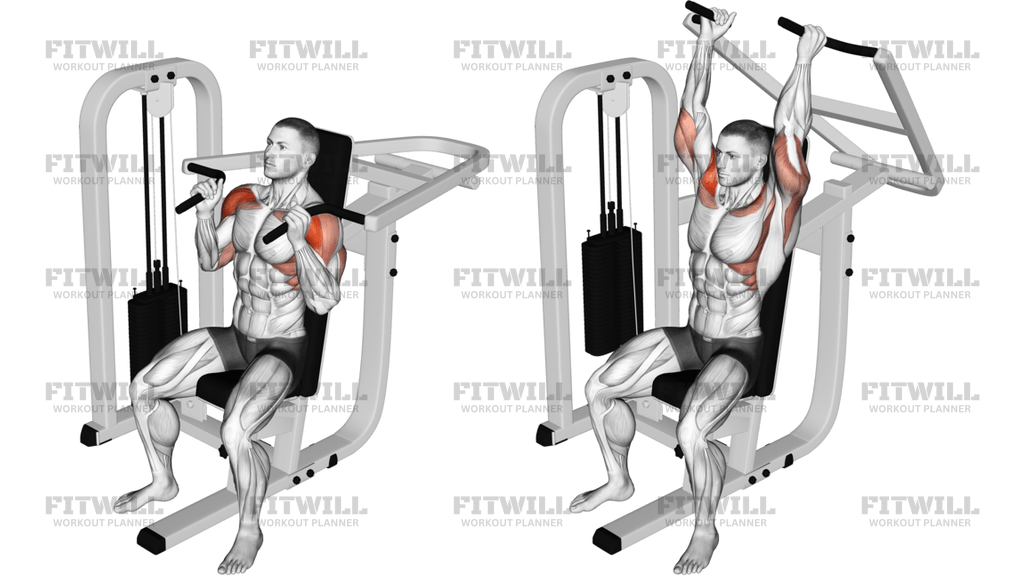
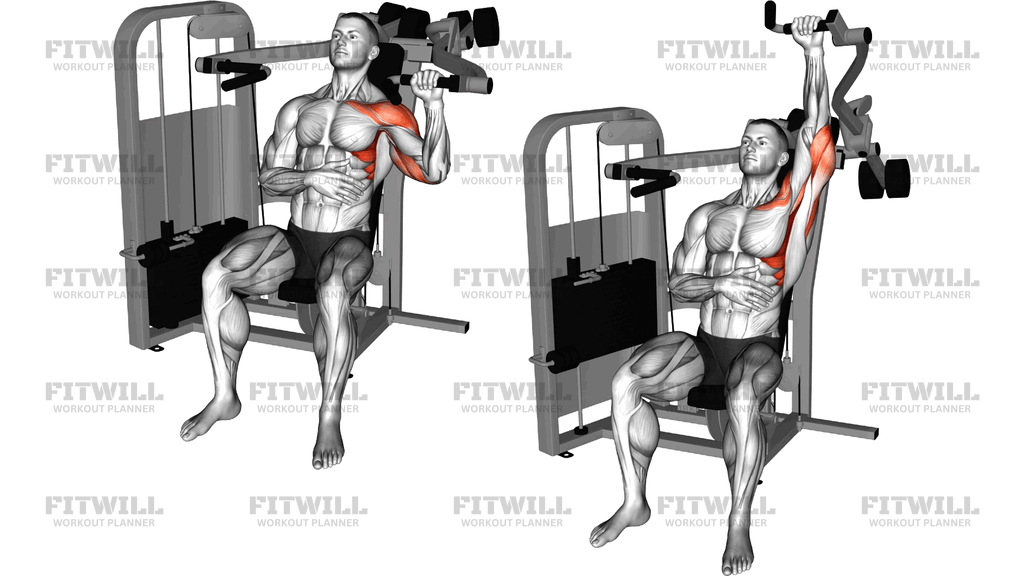
The Lever Seated Single Arm Shoulder Press is a machine-based overhead press performed one side at a time on a plate-loaded or selectorized leverage machine. You sit upright against the machine's back pad, grip the single handle at roughly ear height with one hand, and press the lever straight up until your arm is extended overhead. The free hand typically rests on your stomach or ribcage, which helps you stay aware of any torso rotation as you work.
Because each arm works on its own, this exercise exposes and corrects side-to-side strength differences that often hide behind barbell or two-handle machine presses. If your left shoulder press lags behind your right, the weak side has to catch up rather than coasting on the stronger arm's contribution. It is especially useful for lifters rehabilitating back to pressing after an injury to one arm, athletes in sports with unilateral overhead demands like throwing or racket sports, and anyone whose dominant hand tends to take over in symmetric lifts.
The primary muscles worked are the deltoids, with strong involvement from the front and side heads of the shoulder during the press. The triceps extend the elbow to finish each rep, the upper traps assist near the top, and the core works isometrically to stop your trunk from twisting toward or away from the moving arm. Since the machine fixes the lever's path, you can concentrate fully on pressing hard and owning the position instead of stabilizing a free weight.
Setup quality determines everything here. Adjust the seat so the handle sits at about ear or mid-ear height when your elbow is bent, keep your back, shoulders, and hips square against the pads, and plant your feet flat on the floor. If the seat is too low, the handle starts below your shoulder and strains the joint at the bottom; too high and you lose range of motion at the top.
To execute well, brace your trunk, press the handle up in a straight vertical line without letting your shoulder shrug excessively or your torso lean sideways, and lower the lever under control until your elbow returns to the starting height. Work one side for all planned reps, rest briefly, then match the rep count exactly on the other side rather than going to failure on the second arm. Start with a lighter weight than you would use for a two-arm machine press, since single-arm loading places more demand on your trunk and stabilizers.
[ Workout Log & Planner ]
Put your next workout in Fitwill
Keep your plan and training log ready when you are.


Instructions
- Sit on the leverage machine's seat and place your back, shoulders, and hips squarely against the back pad with your feet flat on the floor.
- Adjust the seat height so the machine's single handle lines up at about ear height when your elbow is bent to roughly 90 degrees.
- Grip the handle firmly with one hand, keeping your wrist straight and stacked directly over your elbow.
- Place your free hand on your stomach or ribcage to monitor whether your trunk stays square during the set.
- Brace your core and keep your ribs stacked over your hips before starting the press.
- Exhale as you press the lever straight up until your working arm is fully extended overhead, without shrugging the shoulder toward your ear.
- Pause briefly at the top with the arm locked out and the shoulder still packed down.
- Inhale as you lower the lever under control until your elbow returns to the starting height near your ear.
- Complete all planned repetitions with one arm, then reposition and perform the same number of reps on the other side.
- After your final rep, release the handle and let the lever settle safely onto its rest before standing up.
Tips & Tricks
- A common mistake is leaning your torso away from the pressing arm to help move the weight; keep your back against the pad and use your free hand on your ribs as a rotation check.
- Do not start with the handle below your shoulder line, since the deep stretch position under machine load can irritate the shoulder capsule; raise the seat if the lever starts too low.
- Keep the pressing path vertical and close to your head's midline; letting the handle drift forward turns it into a different press and loads the lever off its intended track.
- Match reps exactly between sides, starting with your weaker arm, so the strong side does not quietly accumulate more volume.
- If your shoulder shrugs hard at lockout, lighten the load; the upper traps should assist, not take the rep over.
- Avoid bouncing the lever out of the bottom position; a brief pause at the starting height keeps tension on the deltoid and removes momentum from the machine's mechanics.
- Grip the handle with a full fist and a neutral-to-slightly-angled wrist rather than bending the wrist backward, which is a frequent cause of forearm discomfort on leverage handles.
- Choose a weight you can press for the same clean set on both arms; if one side grinds while the other flies, the load is too heavy for unilateral work.
Frequently Asked Questions
What muscles does the Lever Seated Single Arm Shoulder Press work?
The deltoids, particularly the front and side heads, are the primary movers. The triceps extend the elbow at lockout, the upper traps assist near the top, and the core stabilizes your trunk against the one-sided load.
Why press one arm at a time instead of using both handles on the machine?
Working one arm at a time reveals and closes strength gaps between sides, and the asymmetric load forces your core to resist rotation, adding an anti-rotation challenge you do not get from a two-arm press.
Is the Lever Seated Single Arm Shoulder Press suitable for beginners?
Yes, it is actually a good beginner press because the machine guides the movement path and the seat back pad removes much of the balance demand. Start light and learn to keep your torso square before adding load.
How high should I set the seat for this exercise?
Set the seat so the handle sits at about ear height with your elbow bent to roughly 90 degrees. If the handle starts below your shoulder, raise the seat; if you cannot reach a full lockout, lower it slightly.
Why does my torso twist when I press with one arm?
The off-center load creates a rotational pull, and a weak or unbraced core lets your trunk follow it. Rest your free hand on your ribs, lighten the weight, and consciously press your back into the pad on every rep.
Can I use this exercise if I have shoulder pain with barbell overhead pressing?
The fixed lever path and supported back often make it more comfortable than free-weight pressing, but pain during pressing should not be pushed through. Reduce the range so the handle starts no lower than shoulder height, and consult a qualified professional if discomfort persists.
What can I substitute if my gym has no leverage shoulder press machine?
A seated single-arm dumbbell shoulder press on an upright bench is the closest match, or a single-arm cable press from a low-to-mid pulley while seated on a bench. Both preserve the unilateral, supported character of the movement.
How do I breathe during the Lever Seated Single Arm Shoulder Press?
Exhale as you press the lever up and inhale as you lower it. Avoid holding your breath through the set, especially since the one-sided load already challenges your trunk stability.
Should I let my shoulder shrug at the top of the press?
A small amount of trap involvement at lockout is normal, but a hard shrug means the load is too heavy or the shoulder is hiking to finish the rep. Keep the shoulder packed down and control the top position.