Lever Decline Single Arm Chest Press
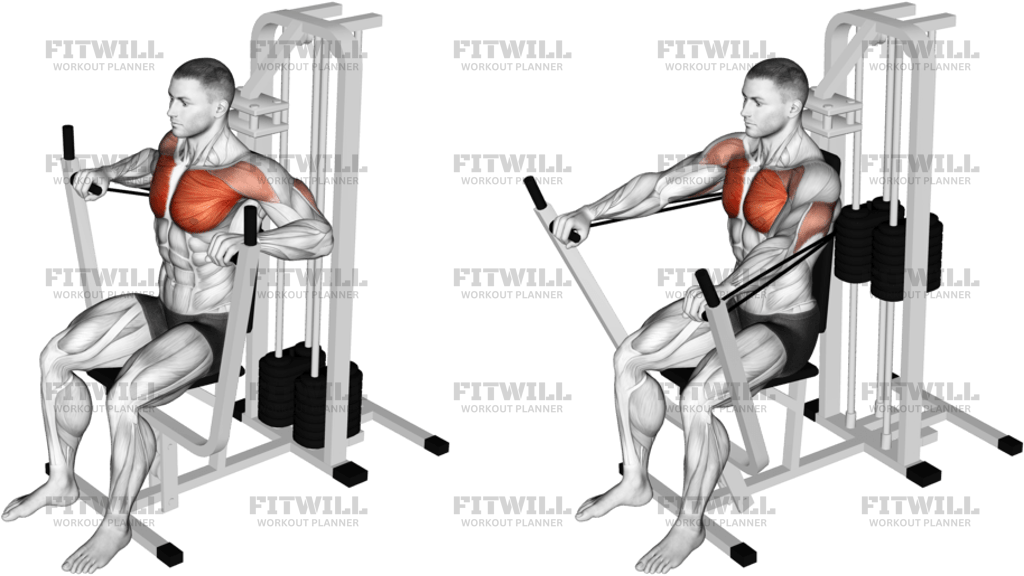
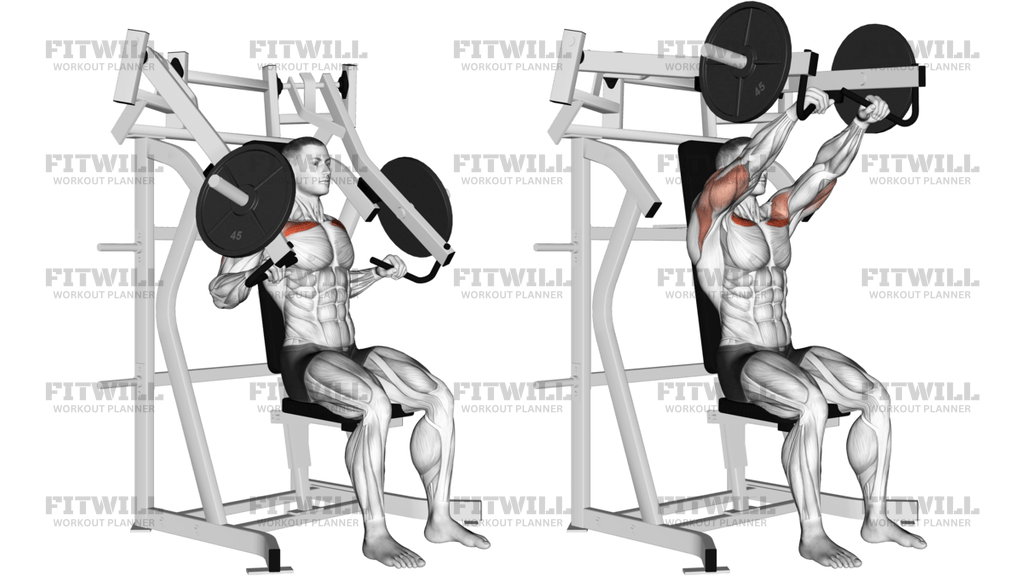
The Lever Decline Single Arm Chest Press is a plate-loaded machine exercise performed seated in a leverage press unit with a declined seat angle, pressing one handle at a time across the front of your body. The angled seat tilts your torso back and positions the arm path so the pressing motion travels down and slightly across, which biases the sternal head of the pectoralis major — the lower and outer portion of the chest — while the front delts and triceps assist throughout the range.
The single-arm setup is the defining feature. Because one arm works while the other stays quiet, each side has to produce force on its own, which makes this a strong choice for lifters who want to even out left-to-right differences in chest strength or size. The machine's lever arm also provides a fixed, guided path, so you can focus entirely on pressing hard and feeling the chest work instead of stabilizing a free weight. That combination makes it useful for intermediate and advanced lifters chasing detail and symmetry, and equally approachable for beginners who are still learning what a proper chest contraction feels like.
Setup matters more than most people expect on this machine. The declined seat puts you in a reclined position with your hips tucked lower than your shoulders, and your back needs to stay planted against the pad for the entire set. If you slide forward on the seat or let your head drift forward as you press, the angle that targets the lower chest changes and the front delts start taking over. Adjust the seat so the handle lines up roughly with mid-chest or slightly below, and keep your working hand aligned with that nipple-to-lower-pec line, not up near your collarbone.
Execution is straightforward but deserves attention. Brace your trunk, press the handle forward and slightly down in a smooth arc until the working arm nears full extension without locking the elbow hard, then resist the lever all the way back to the start with the elbow traveling close to your torso. The free hand can rest across your abdomen or on your thigh for balance. Controlled lowering is where much of the benefit lives — the lever arm is heavy on the return, and letting it crash back is the most common way people waste this exercise.
Expect to use moderate loads compared to a two-arm press, since each arm handles the full resistance alone and your torso has less counter-force to brace against. Program it as a secondary chest movement after heavier pressing, typically two to four sets of eight to fifteen reps per side, matching reps left and right to keep the workload even.
[ Workout Log & Planner ]
Put your next workout in Fitwill
Keep your plan and training log ready when you are.


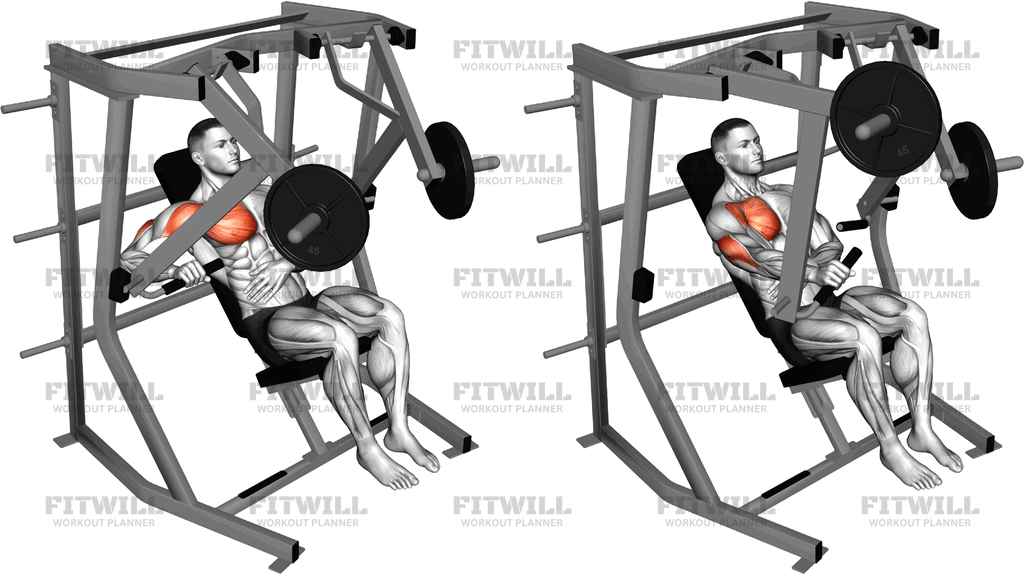
Instructions
- Load the weight plates onto the machine's lever arm and adjust the seat so that when you sit back against the pad, the handle lines up with mid-chest or just below it.
- Sit down with your hips low on the declined seat, plant both feet flat on the floor, and press your entire back, shoulders, and head against the back pad.
- Grip the handle with one hand at chest height, elbow bent and tucked close to your torso, and place your free hand across your abdomen or on your thigh.
- Brace your core and pull your shoulder blades slightly down and back so your chest stays proud without your ribs flaring up toward the ceiling.
- Exhale and press the handle forward and slightly down along the lever's path, extending your arm until it is nearly straight but not jammed at the elbow.
- Squeeze your chest at the end of the press for a brief moment, keeping the handle in line with your lower pec rather than letting it drift toward your shoulder.
- Inhale as you slowly let the lever return, controlling the weight back until you feel a comfortable stretch across the lower chest with the elbow near your ribs.
- Complete all reps on one side, then reposition your other hand onto the handle and match the same rep count and tempo on the opposite arm.
- After your final rep, guide the lever fully back to rest, release the handle, and stand up carefully from the seat before unloading the plates.
Tips & Tricks
- If your shoulder rolls forward at the start of the press, you are reaching too far back on the return — shorten the range slightly so your elbow stops just short of pulling behind your torso line.
- Watch that the handle stays at lower-pec height; if you feel the work collecting in the front of your shoulder, the seat is usually set too low or you are angling the press upward.
- Do not let your body rotate toward the pressing arm as the lever moves — the temptation grows as the weight gets heavier, and twisting shifts tension off the chest and into the torso.
- Keep your head against the pad through the whole rep; pushing your head forward is a common cue that the load is too heavy for the working arm.
- Because the machine's lever drops the weight quickly on the return, count a two- to three-second lowering phase to keep tension on the chest instead of letting gravity do the work.
- Start with your weaker arm first and match its rep count with the stronger side rather than doing more reps on the side that feels better.
- Grip the handle firmly but not strangulation-tight — a white-knuckle grip tends to recruit the forearm and biceps and can make the press feel jerky.
- If your lower back arches off the pad during heavy sets, reduce the load slightly or re-brace before each rep rather than pressing with your spine extended.
Frequently Asked Questions
What muscles does the Lever Decline Single Arm Chest Press work?
The primary mover is the lower portion of the chest, specifically the sternal head of the pectoralis major. The front delts and triceps assist, and your core works lightly to keep your torso square against the pad on the single-arm side.
Why does the Lever Decline Single Arm Chest Press use one arm instead of both?
Pressing one arm at a time forces each side of the chest to do the full work independently, which exposes and corrects side-to-side strength imbalances. It also lets you focus on the contraction of one pec at a time, which many lifters find easier to feel.
Is the declined seat angle important on this machine?
Yes. The declined seat reclines your torso so the lever's press path crosses your lower chest, which shifts emphasis toward the sternal head of the pec. If you sit too upright or slide forward on the seat, the exercise starts acting more like a standard press with less lower-chest bias.
Can beginners do the Lever Decline Single Arm Chest Press?
Absolutely. The guided lever path removes the balance demands of a free weight, so a beginner only has to worry about seat height, back contact, and a controlled press. Start light to learn the path before adding meaningful load.
How heavy should I go on the Lever Decline Single Arm Chest Press?
Use notably less weight than you would on a two-arm machine press, since one arm carries the entire load and you have less torso bracing against it. Pick a load you can lower under control for all reps without your body rotating or your head lifting off the pad.
What is the most common mistake on this exercise?
Rushing the return. The lever arm accelerates the weight back toward you, and people often let it slam into the stretch position, which strips tension from the chest and can yank the shoulder. Control the eccentric for two to three seconds on every rep.
What can I substitute if my gym has no leverage press machine?
A single-arm dumbbell decline press on a decline bench is the closest match, followed by a single-arm cable press set at lower-chest height with the cable angled upward toward your hand. Both preserve the one-arm, lower-chest emphasis.
Should I lock out my elbow at the end of each press?
Extend fully but stop just short of a hard, jammed lockout. Pressing to a soft lockout keeps tension on the triceps and chest, while snapping the elbow shut under load puts unnecessary stress on the joint.
How does the Lever Decline Single Arm Chest Press fit into a chest workout?
Treat it as a secondary pressing movement after your main compound press, using two to four sets of eight to fifteen reps per side. It pairs well with fly variations if your goal is rounding out the lower and outer chest.
Is it safe for the shoulders compared to free-weight decline pressing?
For most people it is gentler on the shoulders because the fixed lever path prevents the erratic bar paths and deep uncontrolled stretches that can irritate the joint. Still, keep the elbow near your ribs and avoid pulling the handle back past a comfortable chest stretch.