Standing Wide Stance Punch
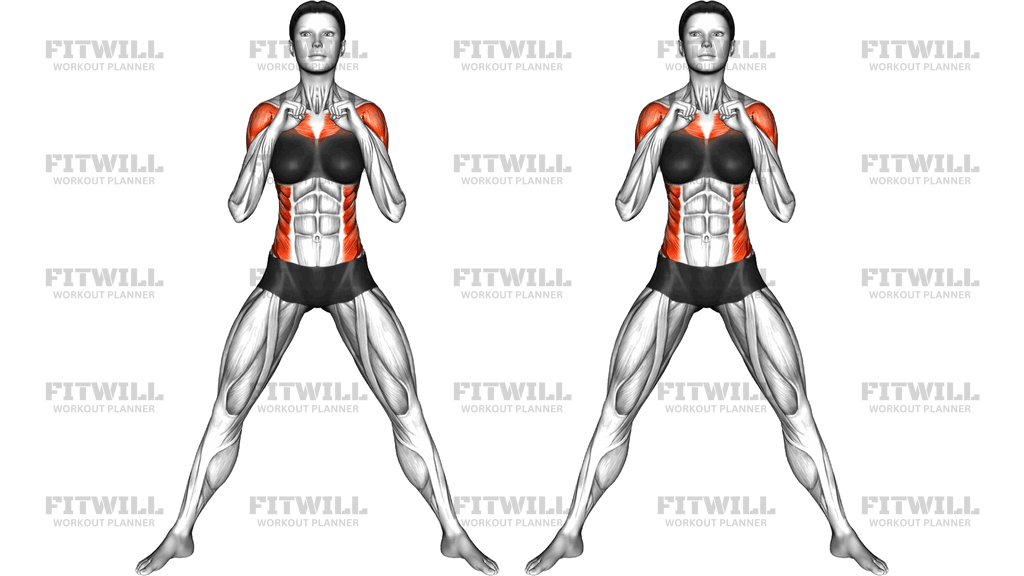
The Standing Wide Stance Punch is a bodyweight striking drill that combines a stable, widened lower-body base with straight punches thrown from a guarded position. You stand with your feet spread well past shoulder width, toes turned slightly out, knees softly bent, and both fists raised to chin height. From there, you extend one arm forward in a controlled punch, retract it, and alternate sides while keeping your torso upright and your legs quiet.
The wide stance is what separates this from a standard shadowboxing punch. By spreading the feet, you lower your center of gravity and build a tripod of support through both legs and hips, which forces your core to brace and transfer force from the ground up through the fist. The legs themselves stay mostly isometric, so the quads, glutes, and inner thighs work to hold the position while the shoulders, chest, and triceps drive the punching arm.
This movement suits beginners learning the feel of a punch from a balanced base, general trainees who want a shoulder and core drill without equipment, and anyone using combat-style conditioning in a circuit. Because there is no impact on a bag and no load on the joints, it is easy to scale: slow it down for muscle control, or speed up the tempo for a conditioning effect.
Setup matters more than most people expect. A stance that is too narrow turns the drill into an arm-swinging exercise with little core involvement, while a stance so wide that the knees collapse inward puts stress on the hips and knees. Aim for roughly one and a half shoulder widths, weight distributed evenly across both feet, and a slight forward tilt of the pelvis so the lower back stays neutral.
Executed well, each punch extends fully at shoulder height with the palm rotating down, the opposite fist staying glued near the chin, and the ribcage staying stacked over the pelvis. The most common error is letting the torso lean or rotate excessively toward the punching side; a small amount of hip rotation is natural and desirable, but the head and spine should stay centered between the feet.
As with any striking-pattern drill, treat the warm-up seriously. Loose, unhurried arm circles and a few slow-motion punches before the working set prepare the shoulder joints for repeated extension. Stop the set as soon as the punches start drifting lower or the guard hand drops, because fatigue quickly degrades the pattern and reduces the value of the exercise.
Fitwill
Log Workouts, Track Progress & Build Strength.
Achieve more with Fitwill: explore over 9600 exercises with images and videos, access built-in and custom workouts, perfect for both gym and home sessions, and see real results.
Start your journey. Download today!




Instructions
- Stand with your feet about one and a half shoulder widths apart, toes angled slightly outward, and your weight spread evenly across both feet.
- Soften your knees into a shallow, sustainable bend and engage your thighs so the legs hold the stance without locking.
- Raise both fists to chin height with elbows tucked close to the ribs, forming a guard position, and pull your shoulders down away from your ears.
- Brace your abdominal wall as if expecting a light tap to the stomach, and keep your chest lifted and spine tall.
- Exhale as you extend one arm straight forward at shoulder height, rotating the fist so the palm faces down at full extension.
- Keep your opposite fist pressed near your chin and let only a small, controlled rotation come from the hips and ribcage.
- Inhale as you retract the punching arm along the same straight line back to guard, without letting the elbow flare wide.
- Immediately punch with the other arm, establishing a steady rhythm of alternate straight punches.
- Continue for your target number of repetitions or time interval, then bring both feet back to hip width and shake out the shoulders to reset.
- If you lose the stance or your guard drops, pause, re-establish the wide base and fist position, and resume rather than rushing the remaining reps.
Tips & Tricks
- If your punches drift downward as the set progresses, it usually means the front delts are fatiguing; shorten the set rather than letting the arm path drop below shoulder height.
- A common mistake is punching across the body's midline. Imagine a track directly in front of the punching shoulder and let the fist travel along it.
- Do not let the knees cave inward in the wide stance. Think of gently screwing the feet into the floor to keep the knees tracking over the toes.
- Keep the recoil deliberate. Snatching the fist back before full extension shortens the range and cheats the triceps and chest out of the finish.
- If you feel the movement in your neck, you are likely hiking your shoulders. Reset the guard with the shoulder blades pulled gently down and back.
- Breathe with the punches rather than holding your breath: short exhale on extension, inhale on retraction. Holding your breath in the wide stance raises tension in the neck and jaw.
- The rear fist is not dead weight; pressing it actively against the chin reinforces posture and keeps the torso from over-rotating toward the punching side.
- For a conditioning version, keep the same wide stance and form but increase the tempo slightly; for a strength-control version, add a one-second pause at full extension.
- If the wide stance strains your inner thighs or hips, narrow it incrementally until you can hold the position for a full set without the knees twisting.
Frequently Asked Questions
What muscles does the Standing Wide Stance Punch work?
The front of the shoulders drives the punch, supported by the chest and triceps as the arm extends. The wide stance keeps the quads, glutes, and inner thighs working isometrically, while the abs and obliques brace and control the small torso rotation.
Why use a wide stance instead of a normal shoulder-width stance for punches?
The wider base lowers your center of gravity and makes the legs and hips hold a static position, turning the drill into a combined upper-body and stance-stability exercise. It also challenges the core to keep the torso centered between the feet as you punch.
Is the Standing Wide Stance Punch suitable for beginners?
Yes, it is a low-impact, no-equipment drill that teaches the basic straight punch from a stable base. Beginners should start with slow, deliberate punches and a stance they can hold comfortably before increasing speed or volume.
Should I hold light dumbbells to make the Standing Wide Stance Punch harder?
Adding weights to a fast punching pattern places repeated braking forces on the shoulder joint, so it is not recommended. Increase difficulty with tempo, pauses at full extension, or longer sets instead of external load.
How wide should my feet actually be?
A practical starting point is about one and a half shoulder widths, with toes turned slightly out and knees tracking over the toes. If you feel pinching in the hips or the knees twisting in, narrow the stance until you can hold it cleanly for a full set.
How much should my torso rotate with each punch?
A small, natural rotation from the hips and ribcage helps the punch feel smooth, but your head and spine should stay centered between the feet. If your shoulders swing noticeably to the punching side, tighten the brace and reduce the rotation.
What can I substitute if standing with a wide stance bothers my knees?
Perform the same straight punches from a seated position on a bench or from a staggered stance that feels comfortable, keeping the guard and arm path identical. You lose some stance-stability work but keep the shoulder and core pattern.
Is this a cardio exercise or a strength exercise?
It can serve both purposes. Slow reps with a pause build shoulder and core control, while faster continuous punching in the wide stance raises the heart rate and works as conditioning. Choose the tempo based on your goal for the session.
How many punches should I do per set?
For control, start with 10 to 16 slow alternating punches per set. For conditioning, work in timed intervals of 20 to 40 seconds and stop as soon as the punches drop below shoulder height or the guard hand falls away from the chin.
Do I need to warm up before this exercise?
Yes, a brief shoulder warm-up is worthwhile because the movement involves repeated arm extension. A set of arm circles and a few slow-motion punches at half speed prepares the shoulders and lets you settle into the stance before working tempo.