Lever Lying Decline Chest Press (Plate Loaded)
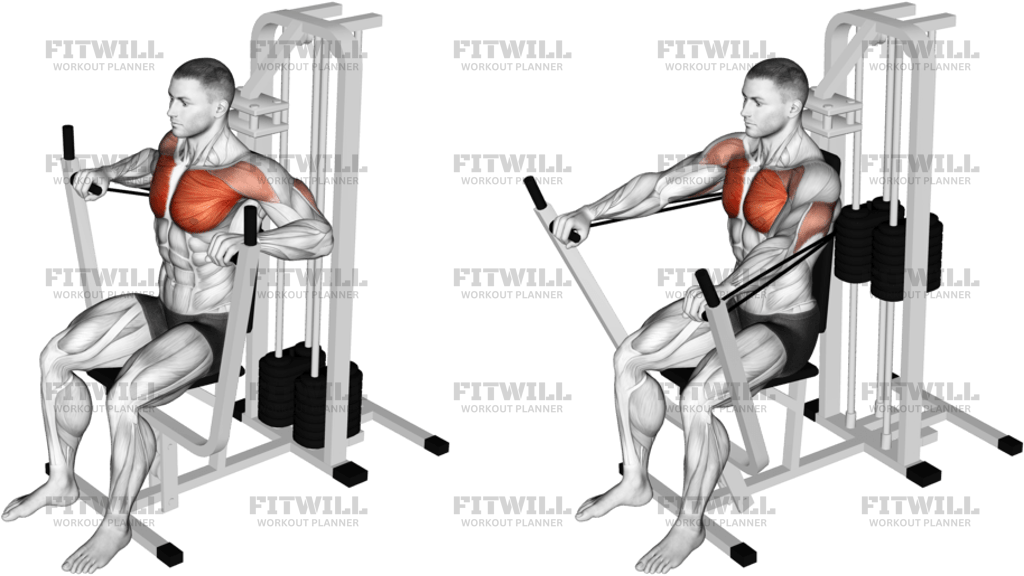
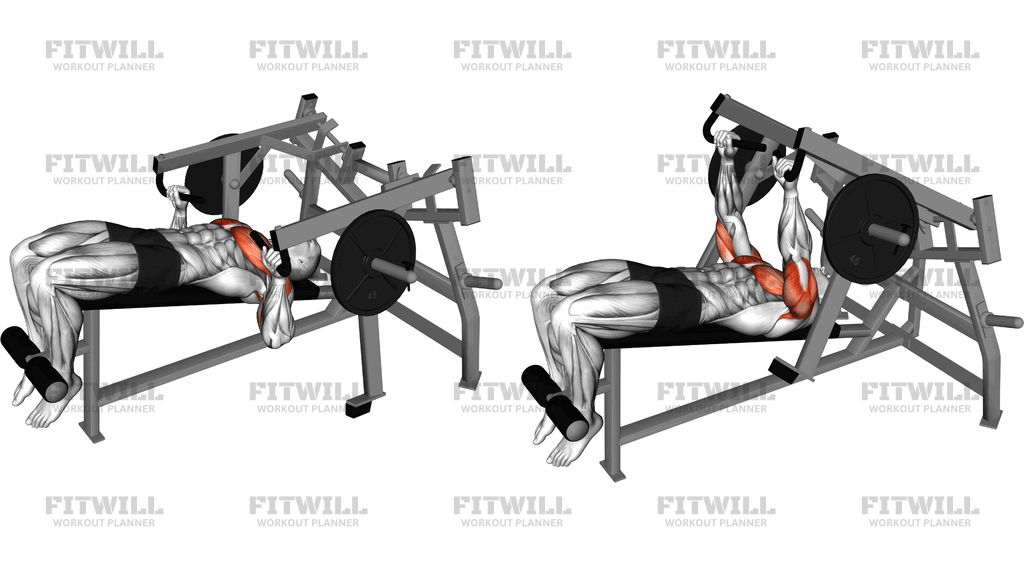
The Lever Lying Decline Chest Press (Plate Loaded) is a machine-based pressing movement performed on your back with your body angled slightly head-down and your legs secured under padded rollers. You press two independent handles from chest level up toward the ceiling, driving the machine's lever arms against weight plates loaded on the side pegs. Because the lever arm travels along a fixed arc, the machine guides the press while your chest and triceps supply the force, making it one of the more forgiving ways to train a decline pressing angle.
The decline angle is what sets this exercise apart from a standard chest press. Pressing from a head-down position shifts the emphasis toward the lower portion of the chest, the sternal part of the pectoralis major, while the front shoulders and triceps assist throughout the push. If you want to add decline pressing work but find free-weight decline barbell setups awkward or intimidating, this machine handles the logistics for you: the bench angle is fixed, the rollers hold your legs, and the handles won't wobble or drift sideways.
Setup matters more than people expect on machines like this. Because the bench is declined, your torso tends to slide toward the head of the bench under load, so anchoring your ankles firmly under the rollers is what keeps your hips and shoulders in a stable position. Your head and upper back should stay in contact with the pad, and the handles should start roughly at mid-chest or lower-chest level. If the seat or pad position is adjustable, take the time to line the handles up with your lower chest rather than letting them float up near your neck.
Execution is straightforward: grip the handles firmly, press them up and slightly toward each other until your arms are extended over your lower chest, then lower with control until your elbows are just below the plane of your torso. The fixed path means you can focus entirely on squeezing the chest and driving through the press instead of stabilizing the weight. That makes this a strong choice for building pressing strength safely, working around shoulder discomfort from flat barbell pressing, or finishing a chest session with focused lower-chest work.
One practical point worth remembering: the plate-loaded design lets you make small jumps in resistance, but the lever arm's own weight can still surprise you on the first rep. Always load at least a modest plate on each side, move the handles out to the start position deliberately, and never let the weight slam back onto the rest hooks mid-set. Keep the descent slow and stay in control all the way through.
[ Workout Log & Planner ]
Put your next workout in Fitwill
Keep your plan and training log ready when you are.


Instructions
- Load the plates onto the machine's weight pegs on both sides, starting lighter than your flat press numbers while you learn the lever's feel.
- Sit onto the decline bench, lie back so your head and upper back rest on the pad, and hook your ankles securely under the foot rollers so your body cannot slide down the decline.
- Grip the two handles with a firm overhand grip, positioning them in line with your lower chest, and lift them off the rest hooks with your elbows slightly below shoulder level.
- Brace your core and press your lower back gently into the pad; keep your shoulders back and down rather than rolling forward.
- Press the handles up and slightly inward in a smooth arc until your arms are nearly straight over your lower chest, without locking your elbows hard.
- Pause briefly at the top and feel the chest squeeze before starting the descent.
- Lower the handles under control until your elbows travel just below torso level and the plates approach, but do not rest on, the stack.
- Exhale as you press up and inhale slowly as you lower the weight.
- Complete all reps without letting the handles crash onto the hooks, then re-rack them deliberately at the end of the set before unhooking your ankles.
Tips & Tricks
- The most common mistake on a decline machine press is letting your hips slide toward the head of the bench during the set; re-anchor your ankles under the rollers before every set to prevent this.
- If your shoulders feel pinched at the bottom, shorten the descent so your elbows stop at torso level instead of dropping far below it.
- Do not flare your elbows straight out to the sides; keeping them at roughly 45 degrees to your torso matches the machine's arc and eases stress on the shoulder joints.
- Because the lever arms add their own resistance, test the first rep of any new plate load slowly rather than pressing with full force.
- Avoid bouncing the plates off the pegs at the bottom; the momentum takes work away from the lower chest and can pull your shoulders off the pad.
- Keep your head resting on the pad throughout the press; lifting it to watch the handles rounds the neck and destabilizes your press.
- A grip that is too narrow shifts work toward the triceps and off the chest; set your hands so your forearms stay roughly vertical at the bottom of the press.
- Push the handles slightly toward each other at the top of each rep to finish the contraction, since the independent arms let you add that squeeze.
- If one arm lags behind the other, slow down and match the two handles by feel; the independent levers will expose side-to-side strength differences a barbell hides.
Frequently Asked Questions
What muscles does the Lever Lying Decline Chest Press (Plate Loaded) work?
It primarily targets the lower chest, specifically the sternal portion of the pectoralis major, with the triceps and front shoulders assisting on every press. The anchored leg position also keeps your core lightly engaged to stabilize your torso on the decline.
Why are my legs secured under rollers on this machine?
The decline angle makes your body tend to slide head-ward as you press, so the rollers anchor your ankles to keep your hips and shoulders in place. This lets you focus on pressing without constantly repositioning your torso.
Is the Lever Lying Decline Chest Press (Plate Loaded) good for beginners?
Yes, it is one of the more beginner-friendly decline pressing options because the fixed lever path removes the balance and safety concerns of a free-weight decline barbell press. Start with a light plate load to learn the lever's arc before adding weight.
How is this different from a flat machine chest press?
The head-down bench angle changes the press direction so the resistance moves through the lower portion of the chest rather than the middle. Many lifters feel it more in the lower pec line and less in the front shoulders compared with a flat press.
Where should the handles start at the bottom of the press?
The handles should line up roughly with your lower chest, and your forearms should stay close to vertical when your elbows are at the bottom position. If the handles sit near your neck, reposition yourself on the pad before pressing.
Can I use this machine if flat barbell pressing bothers my shoulders?
Many lifters find the fixed arc and supported decline position more comfortable than free-weight pressing, especially when they limit the bottom range to elbow level. Ease in with light loads and stop any movement that causes sharp shoulder pain.
What is the most common mistake on the Lever Lying Decline Chest Press (Plate Loaded)?
Sliding down the declined pad because the ankles are not locked firmly under the rollers is the top issue, followed by bouncing the plates at the bottom of each rep. Both reduce chest work and add unnecessary stress to the shoulders.
What can I substitute if this machine is not available?
A decline barbell or dumbbell press on a decline bench trains the same region, and a cable press from a low-to-high angle is another solid option. You will need to stabilize the weight yourself, so start with lighter loads than you use on the machine.
How should I breathe during the press?
Exhale as you press the handles up and inhale slowly as you lower them back down. Avoid holding your breath through the full set, especially as the loads get heavier.
How many sets and reps should I do for lower chest development?
Because the machine supports the weight, it works well in the moderate to higher rep range, commonly 3 to 4 sets of 8 to 15 reps. Use it as a main decline movement or as a finisher after heavier free-weight pressing.