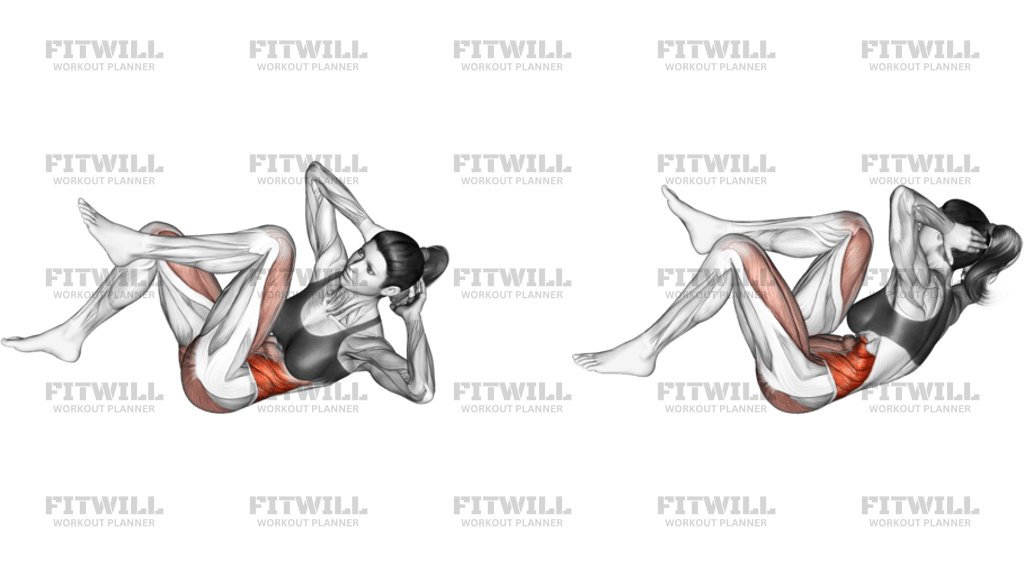
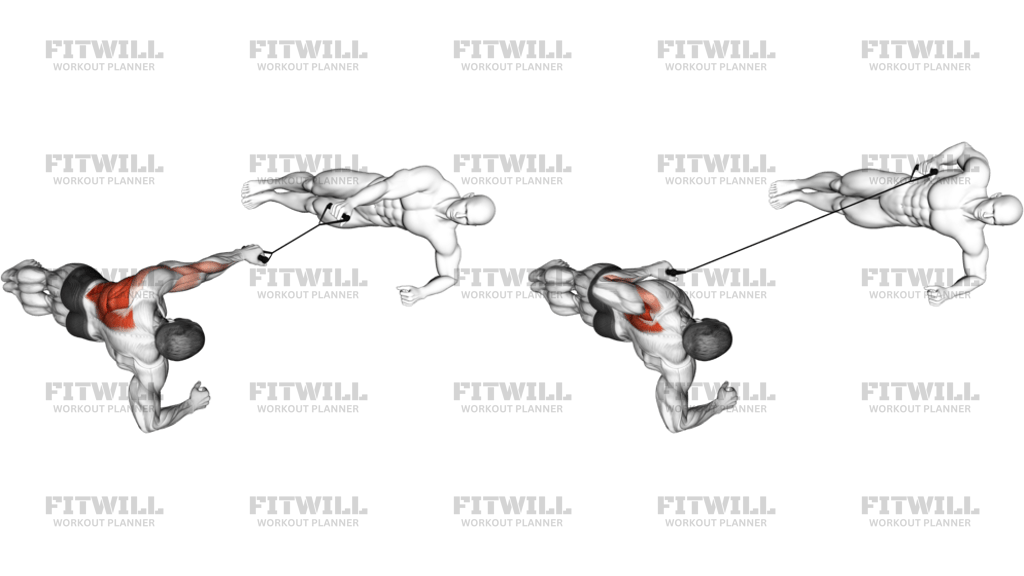
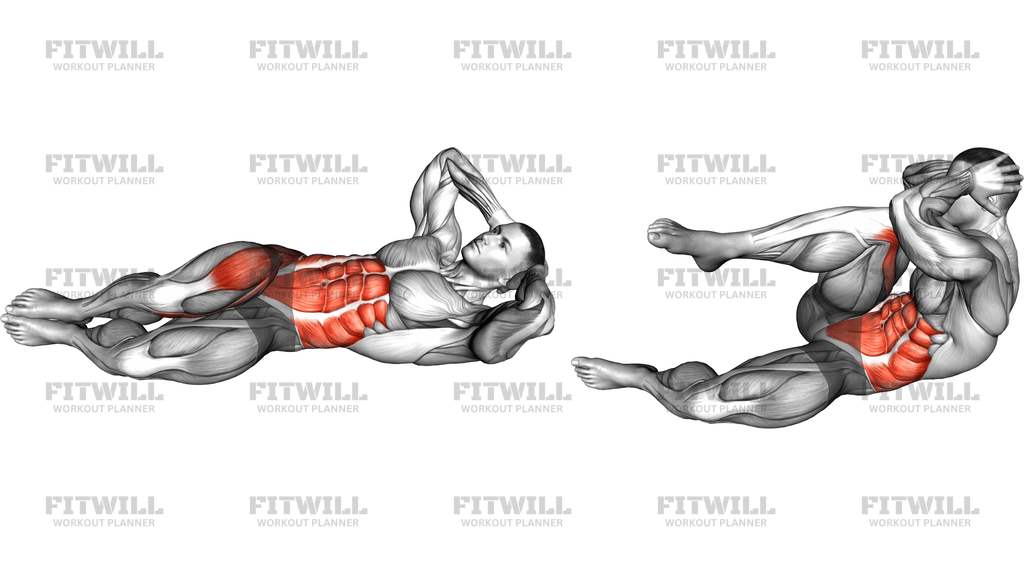
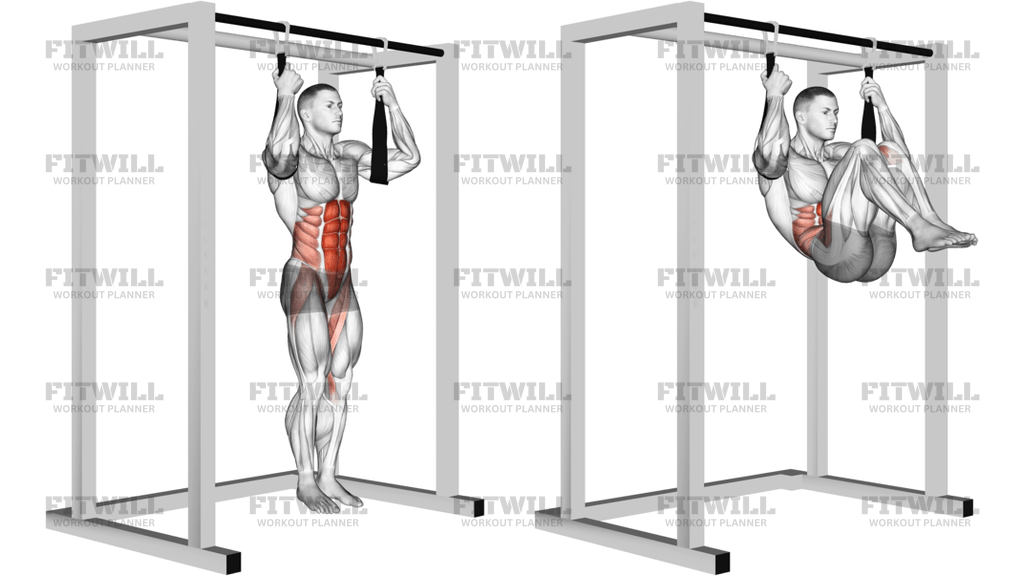
Sitting Lotus Pose Hip Horizontal Rotation Side Be
The Sitting Lotus Pose Hip Horizontal Rotation Side Bend is a seated mobility and stretch exercise that combines a cross-legged lotus position with a lateral bend over one side of the body. You sit with your legs crossed and tucked, extend one arm up and over your head, and lean sideways until you feel a clear stretch running down the flank of your torso and into the outer hip of the folded leg. It is a simple body-weight drill that requires nothing more than a patch of floor or an exercise mat.
This movement is useful for anyone who spends long hours sitting, because the side-bending position lengthens the obliques, quadratus lumborum, and the lateral hip muscles that often become stiff and shortened in a chair. It also places a gentle rotational demand on the hips while the legs are locked in the lotus fold, which makes it a common warm-up or cool-down choice in yoga sessions, martial arts classes, and general flexibility routines.
The primary targets are the obliques on the lengthened side of your waist, along with the deep lateral core. On the underside, the glutes and outer hip structures of the crossed leg are stretched passively as your weight settles over them, while the top-side hip stabilizes to keep you balanced. Because the lotus position fixes your lower body in place, every degree of lean has to come from the spine and hips rather than from shuffling your legs, which is exactly what makes the stretch so specific.
Setup matters here more than in most standing stretches. If your pelvis is not level before you begin, one side will cheat and you will feel the movement in your lower back instead of along your side. Sit tall at first, root your sitting bones evenly, and only then start the lean. The arm should reach up and over in line with your ear, not forward, so the bend stays purely lateral.
To execute it well, think of lengthening before you bend: grow tall through the spine, then arc the upper arm over like a rainbow until you feel tension along the ribs and hip. Hold the end position with slow, steady breathing rather than forcing a deeper lean. The return should be just as controlled as the descent, using your side muscles to pull you upright instead of collapsing back.
This is a low-load stretch, so the main safety concerns are minor ones: avoid cranking into the bend with a locked lower back, skip the lotus fold if your knees or ankles complain about it, and use a simpler crossed-leg position whenever the full pose is not available to you. Consistency over weeks matters far more than depth on any single day.
[ Workout Log & Planner ]
Put your next workout in Fitwill
Keep your plan and training log ready when you are.


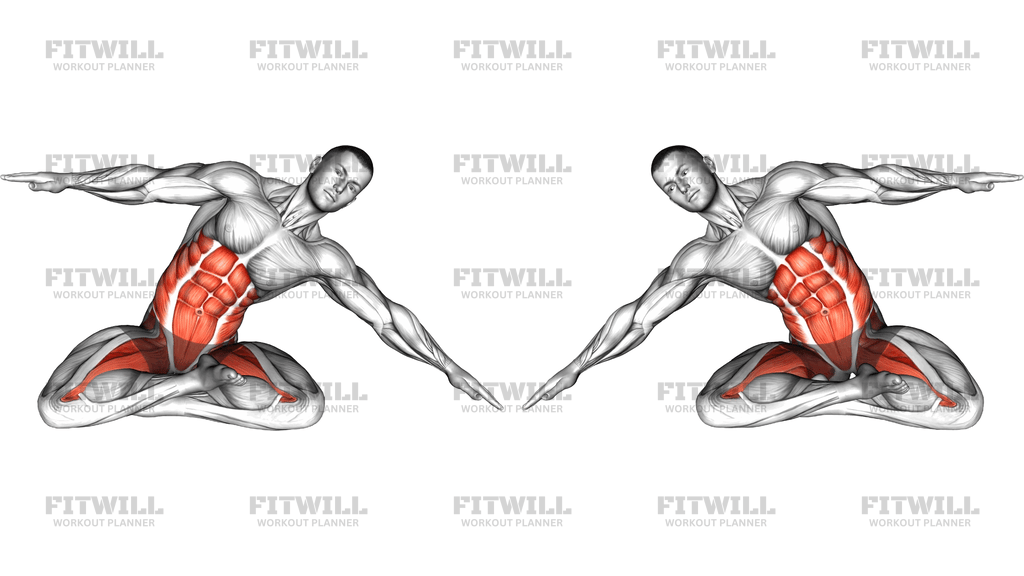
Instructions
- Sit on an exercise mat or firm floor and fold your legs into a lotus or simple cross-legged position, resting each foot on the opposite thigh or shin.
- Place your hands lightly on your knees, sit up tall, and square your pelvis so both sitting bones carry even weight.
- Extend your right arm straight out to the side and overhead, keeping it in line with your ear, and rest your left hand on the floor beside your left hip for light support.
- Brace your core gently and lengthen through the crown of your head before any leaning begins.
- Bend sideways to the left in a smooth arc, letting the right arm travel up and over as your ribs on the right side open and lengthen.
- Continue until you feel a firm stretch along the right side of your waist, ribs, and outer hip, and hold the position for 20 to 30 seconds with slow breathing.
- Keep your shoulders stacked over your pelvis and both hips heavy on the floor; do not let your chest rotate toward the floor.
- Return upright by contracting the obliques on your right side, lowering the arm as you come back to center.
- Reset your posture, then repeat the same sequence leaning to the right with the left arm overhead.
- Complete 2 to 3 holds per side, re-crossing your legs or switching the top leg between sets if it helps you stay comfortable.
Tips & Tricks
- If your knees ride high off the floor in the lotus fold, sit on a folded towel or the edge of a cushion so your pelvis tips slightly forward and your hips release.
- The most common mistake is bending forward instead of sideways; watch that your chest stays facing the front and the movement travels purely through the side of your body.
- Do not push the arm past your ear toward the back of the room, as this turns the stretch into a spinal twist and steals tension from the obliques.
- Keep the hand on the floor for balance only; if you lean your body weight into it, you lose the active control that makes the stretch effective.
- If you feel pinching along the underside of your ribs, shorten the range slightly and focus on exhaling fully, which lets the ribs settle before you go deeper.
- Any sharp pulling where the thigh meets the pelvis usually means the leg fold is too aggressive; switch to a simpler cross-legged position and rebuild from there.
- Breathe into the stretched side rather than holding your breath at the end range, as each exhale typically releases a little more tension.
- Warm hips bend better than cold ones, so a few gentle hip circles or an easy walk before this stretch will improve your side-bend range noticeably.
- Switch which leg is crossed on top between sets; the folded leg shapes the stretch on each side more than most people expect.
Frequently Asked Questions
Which muscles does the Sitting Lotus Pose Hip Horizontal Rotation Side Bend target?
The main targets are the obliques and deep lateral core on the lengthened side of your waist, with supporting involvement from the quadratus lumborum and lower back. The outer hip and glutes of the folded leg are stretched passively while you lean over them.
Is the lotus position required for this exercise?
No. Lotus gives the most secure base, but a simple cross-legged sit works well and is safer if you have tight hips or sensitive knees. The side bend itself is the priority, so use whichever leg fold you can hold comfortably.
Can beginners do the Sitting Lotus Pose Hip Horizontal Rotation Side Bend?
Yes, as long as they use an easy cross-legged position and accept a shorter range of lean. Beginners often get a better stretch from a modest bend held with steady breathing than from forcing depth.
Why does my lower back take over instead of my waist during the side bend?
This usually happens when the pelvis tilts or shifts before the lean starts, letting the lumbar spine collapse sideways. Re-square your sitting bones, lengthen through the crown of your head, and start the bend from the ribs rather than the waist crease.
How long should I hold each side bend?
Aim for 20 to 30 seconds per side, repeating for 2 to 3 rounds. Long, calm holds with relaxed breathing work better for this position than quick pulses.
Should I lean toward the side of my overhead arm or away from it?
You lean away from the overhead arm, so that arm arcs up and over as the opposite side of your waist lengthens. If your right arm is up, you bend to the left.
What can I substitute if sitting on the floor is uncomfortable?
Sit on a firm chair with your feet flat and perform the same lateral bend with one arm overhead. You lose the hip fold, but you keep the oblique and lateral trunk stretch.
When is the best time to use this stretch?
It works well after workouts, long sitting periods, or as part of a yoga-style cool-down when the muscles are already warm. Cold, pre-workout stretching in this position is usually less comfortable and less productive.
Is it normal to feel this stretch more on one side than the other?
Yes, most people have a noticeably tighter side, especially around the waist and outer hip. Work each side to its own comfortable end range rather than matching depth between the two.
Are there any safety concerns with the lotus fold in this exercise?
The knees and ankles take the stress if you force the leg position, so back off to a simpler cross-legged sit if you feel joint pressure. Never bounce into the side bend, and keep the descent and return controlled throughout.