Standing Alternate Leg Lift Lat Pulldown
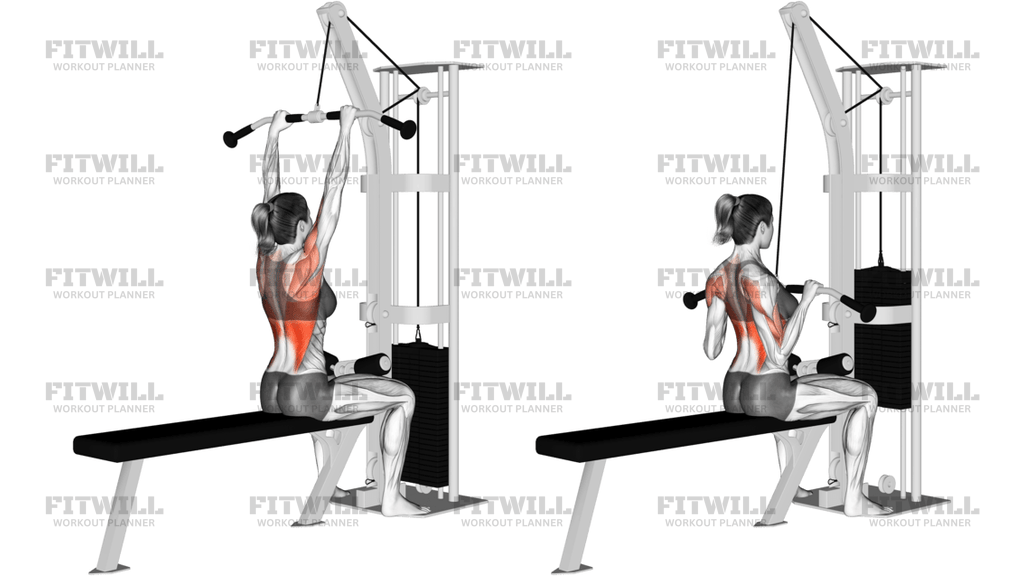
The Standing Alternate Leg Lift Lat Pulldown combines two jobs into one movement: pulling a cable down from overhead while driving one knee up from a standing position. You start with both arms extended overhead in a wide V, gripping two cable handles, then pull one handle down toward your shoulder as the opposite leg lifts. Each rep then switches sides, so the left arm pairs with the right leg and vice versa. It is essentially a lat pulldown and a standing knee raise stitched together, which is why the trunk has to work the entire time.
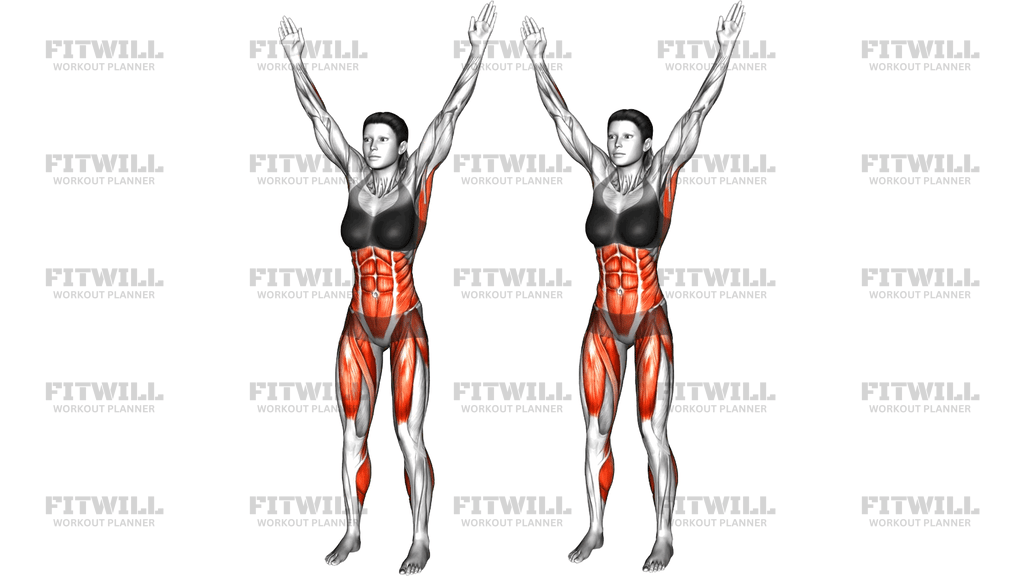
This is a useful exercise for anyone who wants lats, core, and hip flexors trained together instead of in isolation. Because you are standing with no seat or backrest behind you, every pull and every leg lift has to be stabilized by your abs, obliques, and the muscles around your hips. That makes it popular in general strength training, in athletic conditioning where pulling and knee-drive patterns overlap, and in circuits where a single station needs to cover a lot of ground. The highlighted musculature in the movement pattern reflects this emphasis: the abdominal wall and hip flexors work alongside the lats on every rep.
The setup matters more than in a seated pulldown because there is nothing supporting your torso. Stand tall with feet roughly hip-width apart, a handle in each hand, and arms stretched overhead in a wide V. Weight should stay centered over the whole foot, ribs stacked over the pelvis, and a light brace in the stomach before anything moves. If the load is too heavy, the first thing to break is usually the torso — you will lean back and turn a controlled pulldown into a body-swing, which takes work away from the lats and dumps stress on the lower back.
Execution is a matter of coordination more than strength. Pull one handle down until your elbow ends up near your ribs on that side, and at the same time lift the opposite knee up toward waist height without leaning your torso. Control both the arm and the leg back to the start, then repeat on the other side. Keep the non-working arm reaching steadily overhead rather than letting it drift, since it anchors the pattern and keeps tension on the opposite lat.
A practical coaching note: treat this as a moderate-load, quality-of-movement exercise. A weight that lets you complete smooth, matched arm and leg reps will do far more for you than a heavy pulldown weight that forces you to rock your hips. If balance is the limiting factor early on, slow the tempo down before you lighten the load, and expect the standing version to feel noticeably harder than the same pulldown done seated.
[ Workout Log & Planner ]
Put your next workout in Fitwill
Keep your plan and training log ready when you are.


Instructions
- Set two single handles on a dual cable machine at the highest position, or use the wide arms of a lat pulldown station, and take one handle in each hand.
- Stand facing the machine with feet hip-width apart, arms extended overhead in a wide V, and take a step or two back so the cables have light tension with your arms still reaching up.
- Stack your ribs over your pelvis, brace your stomach lightly, and let your shoulders settle down away from your ears before starting.
- Exhale and pull the right handle down until your right elbow comes alongside your ribs, keeping the wrist neutral and the shoulder driving down.
- As the right arm pulls, lift the left knee up toward waist height, keeping your torso upright and your weight centered over the standing leg.
- Pause briefly at the bottom of the pull with the knee lifted, feeling the lat on the pulling side and the hip flexor on the lifting side.
- Lower the left leg with control and let the right arm rise back to the overhead V position without letting the handle slam back.
- Repeat the same timing on the other side, pulling the left handle while the right knee lifts.
- Breathe out on the pull and leg lift, breathe in as you return to the top, and complete all reps with smooth alternation before letting go of the handles.
- Reset your stance and brace at the top of every few reps if you notice yourself leaning back or drifting off balance.
Tips & Tricks
- The most common mistake on this exercise is leaning the torso back as the handle comes down; if your shoulders pass behind your hips, drop the weight until you can stay stacked.
- Keep the non-working arm actively reaching overhead rather than slack — if that elbow drifts down, the opposite lat loses tension and the cable path changes.
- Lift the knee to about waist height, not as high as possible; driving the knee past your comfort range usually forces the lower back to arch.
- Match the arm and leg timing — pulling and lifting should start and finish together, not as two separate actions stapled onto each other.
- If you find yourself rocking side to side as you alternate, narrow the movement slightly and slow the return; the standing position should stay quiet and controlled.
- Grip the handles firmly but do not squeeze so hard that your forearms fatigue before your lats; a relaxed but secure grip keeps the focus on the pull.
- Because you are standing rather than seated, expect to use less weight than a normal lat pulldown — compare effort by movement quality, not by the stack number.
- Keep the knee lifting straight up in front rather than swinging out to the side, so the hip flexors do the work instead of momentum.
- If your shoulders feel pinched at the top of the V, widen your grip slightly or let the arms sit a touch forward of your ears instead of directly behind them.
Frequently Asked Questions
What muscles does the Standing Alternate Leg Lift Lat Pulldown work?
The lats do the pulling, while the hip flexors lift the knee and the abs and obliques stabilize your upright torso the whole time. The biceps and upper back assist on the pulling side.
Why lift the opposite leg instead of the same-side leg?
Pairing the right arm with the left knee creates a cross-body pattern that challenges the obliques and trunk control, similar to how natural running and climbing movements are coordinated.
Is the Standing Alternate Leg Lift Lat Pulldown suitable for beginners?
Yes, but start with a light weight and focus on staying upright while the arm and leg move together. Beginners who can do a seated pulldown and a standing knee raise separately can usually learn this quickly.
Why does it feel harder than a seated lat pulldown with the same weight?
There is no seat or backrest supporting you, so your core and hip stabilizers must hold your torso still while the cable pulls. Most people need to reduce the load they would use seated.
How high should I lift my knee during this exercise?
Aim for roughly waist height, or wherever your thigh reaches while your torso stays upright and your lower back stays neutral. Lifting higher than that usually just arches the back.
What is the most common mistake with this movement?
Leaning back as the handle comes down, turning the pulldown into a torso swing. Fix it by dropping the weight slightly and bracing before each pull.
What can I use if my gym does not have dual cable handles overhead?
A single handle on one side of a cable machine works if you alternate arms, or you can use a wide pulldown bar and focus on the leg lift while pulling straight down. The cross-body timing is harder with a bar but the core demand remains.
Should I keep the non-working arm fully extended the whole time?
Yes, keep it reaching overhead with light tension on the cable. Letting it drop slackens the opposite lat and changes the stabilization demands on your trunk.
Is this exercise safe for the lower back?
When done with an upright torso, a light brace, and a weight you can control, it places normal, manageable demands on the trunk. Stop leaning back or arching, and reduce the load if you feel strain in your lower back.
How many reps should I do per side?
Eight to twelve controlled reps per side works well for strength and coordination. Prioritize matched arm-and-leg timing over reaching fatigue.