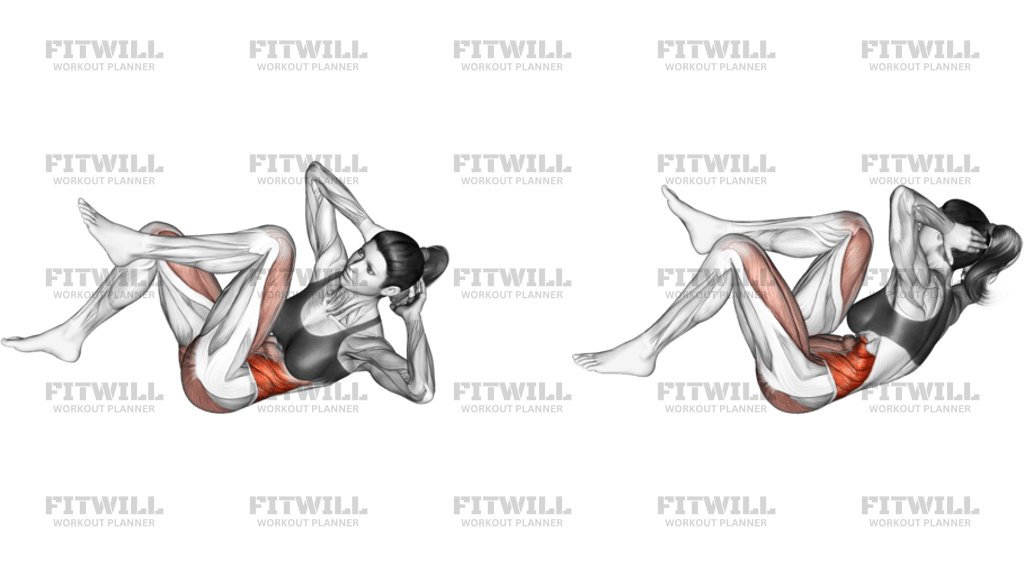
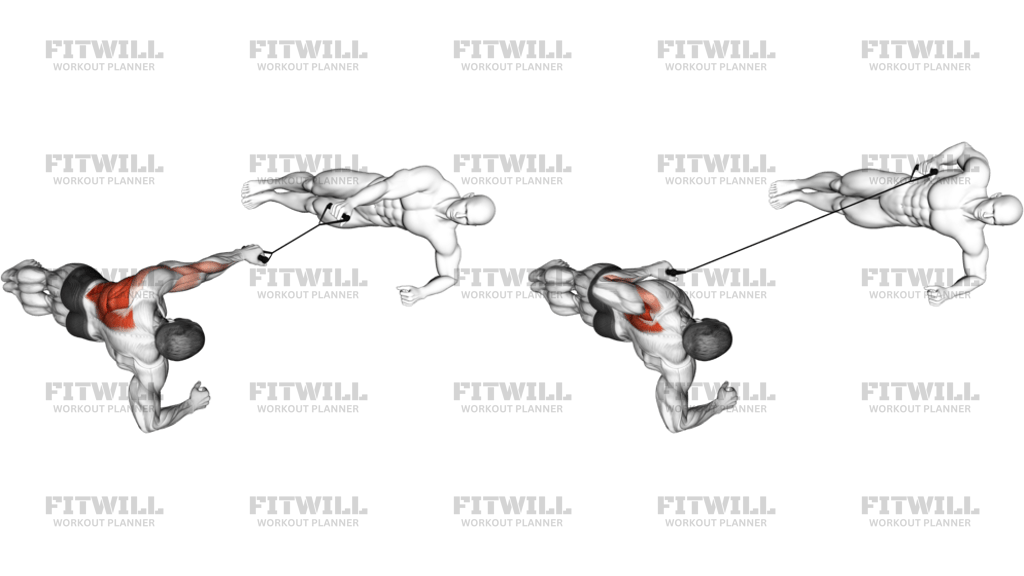
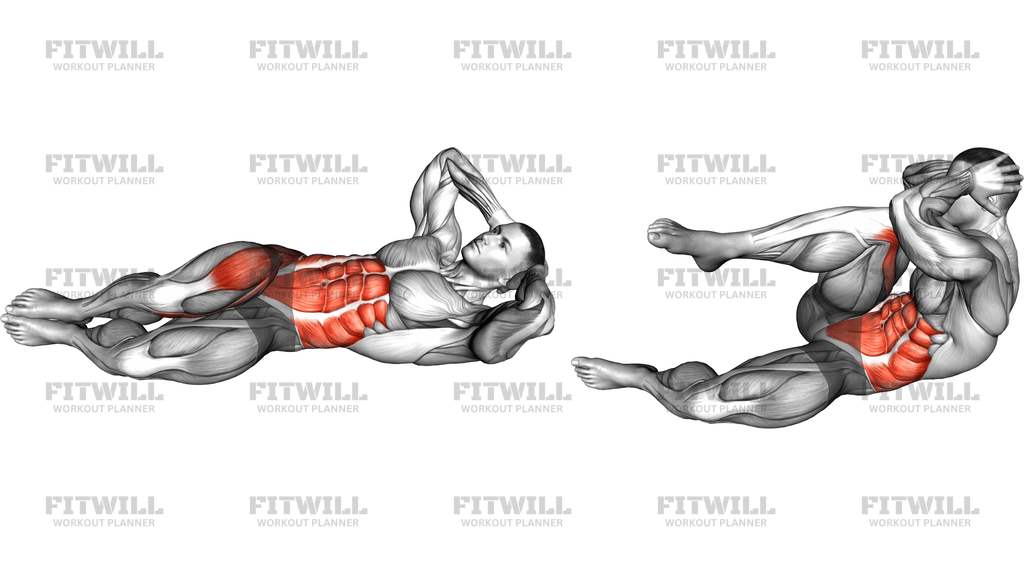
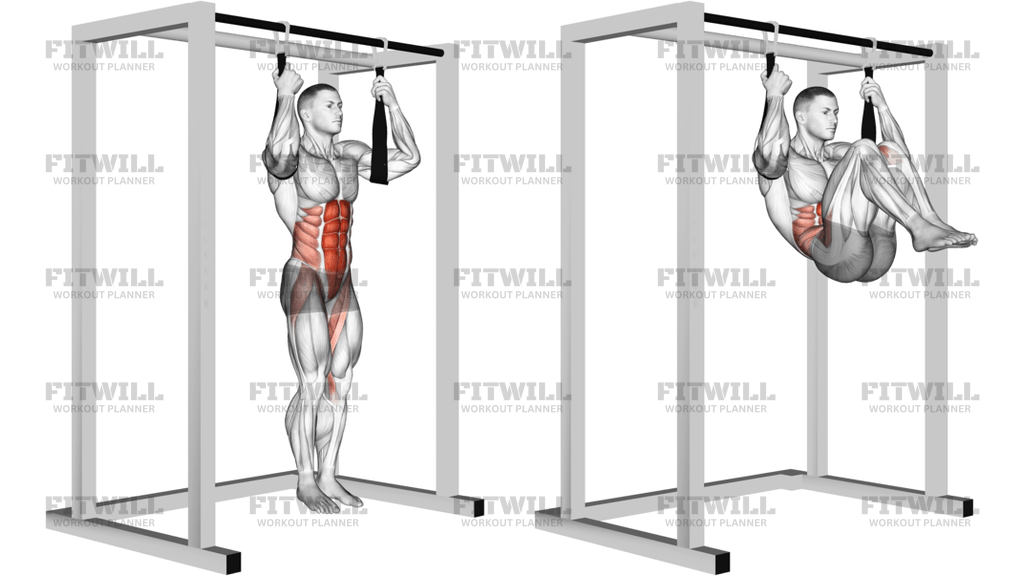
Alternate Obliques Pulse Twist Side Reach
The Alternate Obliques Pulse Twist Side Reach is a standing, body-weight core exercise that combines a forward lean, a rotational twist, and a reaching pulse to one side, then repeats on the other. You start tall with your hands resting on your waist, hinge slightly forward from the hips, and drive one elbow or hand down and across toward the opposite thigh while the torso rotates and side-bends. Because each rep is a small pulsing movement at the end range, the obliques stay under continuous tension instead of getting a break between full repetitions.
This movement is a good fit for people who want to train the sides of the waist without lying on the floor or loading the spine with external weight. It suits beginners learning to feel rotational control, and it also works as a warm-up or finisher for more experienced lifters, since the pulse format raises local endurance in the obliques and the muscles along the hip and lower-back region. Anyone who sits a lot and wants to restore comfortable rotation through the trunk will find the pattern useful.
The primary work comes from the obliques on both sides, as one side contracts to pull the twist while the other controls the return. The deep core stabilizes the trunk through the lean, the hip flexors and quadratus lumborum assist the side-bend and reach, and the legs work quietly to keep you balanced in a staggered, soft-knee stance. Done well, the movement trains rotation and anti-rotation at the same time, which is closer to how the trunk actually works in daily life and sport.
Setup matters because a standing twist gives you nowhere to hide. Feet stay about hip-width to slightly wider with soft knees, the hinge comes from the hips rather than rounding the lower back, and the ribs stay stacked over the pelvis. If the lean or the twist comes from collapsing the chest or swinging the arms, the obliques stop doing the work and the lower back picks up slack it does not want.
To execute it, brace the abs lightly, hinge forward a few degrees, then pulse one hand down and across the body toward the opposite knee or outer thigh, letting the torso rotate and the shoulder travel with it. Pull back to the leaned position under control, then repeat the pulse on the other side, alternating for the desired number of reps. Keep the pulses crisp but not bouncy, and let the breath stay rhythmic rather than holding it.
You will see this exercise used in core circuits, standing abs blocks, and low-impact home routines. Because it requires no equipment and little space, it travels well, and because each side works alternately, it also exposes and helps correct a left-right difference in rotational strength or comfort.
[ Workout Log & Planner ]
Put your next workout in Fitwill
Keep your plan and training log ready when you are.


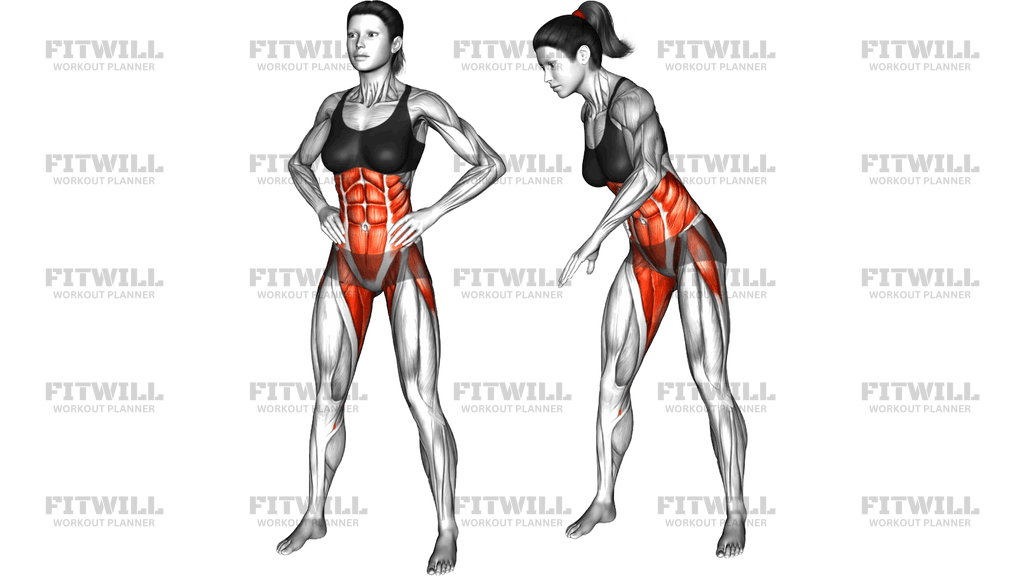
Instructions
- Stand with your feet about hip-width apart or slightly wider, knees soft, and place both hands lightly on your waist or hips.
- Hinge forward from the hips a few degrees so your torso leans ahead of vertical, keeping your back long and your ribs stacked over your pelvis rather than rounding.
- Brace your abs lightly as if preparing for a light push to the belly, and keep your neck relaxed with your gaze a step or two ahead of your feet.
- Pulse one hand down and across your body toward the opposite knee or outer thigh, letting the torso rotate and side-bend so the elbow leads the movement.
- At the bottom of the pulse, squeeze the oblique on the working side briefly instead of swinging through the position.
- Pull the hand back to your waist with control, feeling the opposite oblique slow the rotation on the way back.
- Repeat the pulse on the other side, alternating left and right for even reps or time.
- Exhale as you pulse down and across, inhale as you return to the leaned position.
- Between sets, stand fully upright, roll the shoulders, and reset your stance before hinging forward again.
Tips & Tricks
- If your lower back aches instead of your waist, you are probably hinging too far forward; reduce the lean until you feel the work shift into the sides of your trunk.
- A common mistake is swinging the arm across without rotating the torso. The elbow should travel with the ribs, not slice across in front of a still chest.
- Do not let the hips sway sideways as you twist. Picture your pelvis glued between two walls while only the ribs and shoulders rotate.
- Keep the knees soft the whole time. Locking them out during the forward lean pulls on the hamstrings and makes the pulse feel jerky.
- Slow the return phase down rather than the pulse. Most people snap back up, which wastes the half of the rep where the obliques control the rotation.
- If balance wobbles when you cross the midline, widen your stance slightly and press the big toes into the floor to steady yourself.
- Match the range on both sides. If one reach is noticeably shorter, work to the range of the stiffer side for a few sessions instead of chasing depth on the loose side.
- Keep the pulses small and deliberate. Big, fast swings turn this into momentum practice, and the obliques stop being the limiting factor.
Frequently Asked Questions
Which muscles does the Alternate Obliques Pulse Twist Side Reach work?
The obliques on the sides of the waist do the main work of twisting and side-bending, while the deep core, hip flexors, and the muscles of the lower back assist and stabilize. The legs stay active to keep you balanced in the standing stance.
Is this exercise suitable for beginners?
Yes. It is body weight only, needs no floor work, and the range is easy to scale. Beginners should start with a smaller forward lean and shorter pulses, focusing on feeling the waist work on each side.
Why do my arms feel this more than my waist?
That usually means the arm is swinging across while the torso stays still. Let the ribs and shoulders rotate together with the hand, and think of the arm as an extension of the trunk rather than the driver of the movement.
How far forward should I hinge during the Alternate Obliques Pulse Twist Side Reach?
Only a few degrees past upright, just enough to free up the rotation. If your chest drops or your lower back rounds, you have hinged too far and the obliques lose their line of pull.
How many reps should I do per side?
Ten to fifteen controlled pulses per side is a solid starting point, or twenty to thirty seconds of continuous alternating reps. Because it is an endurance-focused movement, moderate reps with clean form beat a small number of fast swings.
Can I do this exercise if twisting hurts my lower back?
Reduce the lean and the depth of the twist first, and keep the pelvis quiet so the rotation comes from the ribs. If discomfort persists rather than simple effort, it is worth checking the movement with a qualified professional before continuing.
What can I use if I want a harder version of this movement?
You can hold a light weight plate, dumbbell, or medicine ball at the waist or in the reaching hand, which adds load to the twist. Slowing the return phase or pausing for two seconds at the bottom of each pulse also increases the demand without any equipment.
Should my feet stay planted during the twist?
Yes. Keep the feet flat and pointing forward with soft knees, and let the rotation happen through the trunk. Twisting the feet or letting the heels lift usually signals that the range is coming from momentum rather than the waist.
Do I need a mat or any equipment for this exercise?
No, the movement is performed standing with body weight only. A mat is optional if you are on a hard or slippery surface and want more grip under your feet.
How is this different from a standard standing twist?
A standard standing twist usually swings the arms side to side with the torso upright, which is more of a warm-up. Here you hold a slight forward lean and pulse into an end-range reach, which keeps the obliques loaded through the whole set instead of letting them relax between positions.