Standing Hands Up Side Crunch
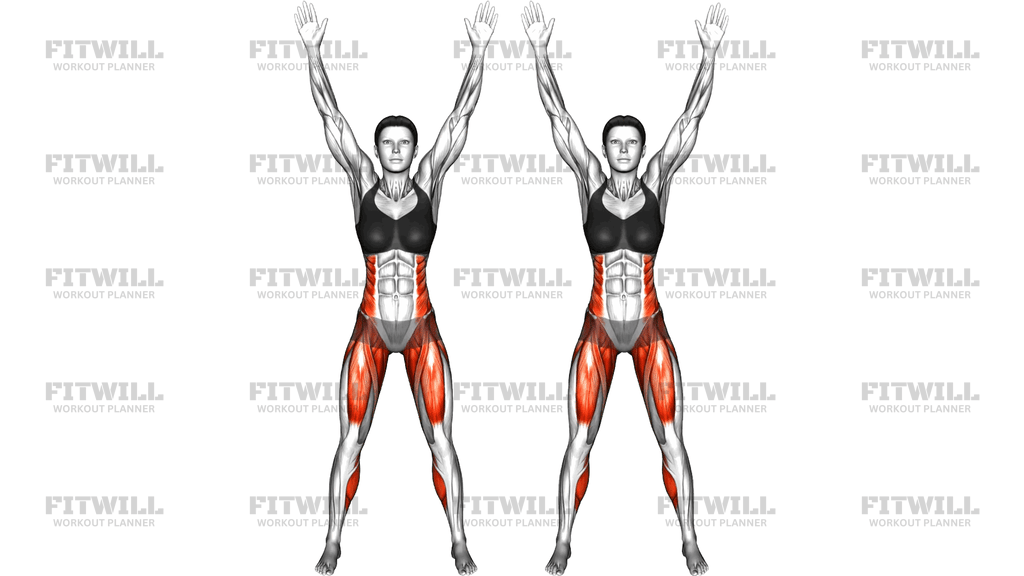
The Standing Hands Up Side Crunch is a bodyweight core exercise performed with both arms extended straight overhead while you bend sideways from the waist to crunch one side of your trunk at a time. Because your arms reach upward, every side bend travels through a longer lever and a taller arc, which makes the obliques work harder than they would in a standard standing side crunch with hands at your sides. The highlight of the movement is the waist: the external and internal obliques on the side you crunch do the pulling, while the opposite side absorbs a controlled stretch.
This exercise suits anyone who wants to train the sides of the waist without equipment or floor work. It is a practical choice for home workouts, warm-ups before heavier lifting, or finishers at the end of a session. Because it is done standing, it also asks your legs and hips to stabilize you, so you get a mild balance and stability demand alongside the trunk work. People who spend long hours seated often find the overhead reach doubles as a welcome lengthener for the lats and the sides of the torso.
The setup matters more than it looks. A stance about hip-width to shoulder-width apart gives you a stable base, and planting your feet fully against the floor stops the hips from swaying as you bend. Keeping the arms overhead and close to the ears keeps the lever long and the arc consistent; if the arms drift forward, the crunch shortens and the shoulders take over work that belongs to the waist. The bend itself should come from the trunk, folding toward one side as if your ribcage were an arch being drawn down toward your hip, not from simply tipping the shoulders or pushing the hip out.
To execute it well, brace your trunk lightly, reach tall, then crunch sideways until you feel a strong contraction along the side of your waist. Pause briefly at the bottom, then pull yourself back to vertical using the same side, rather than flopping back with momentum. Complete your repetitions on one side or alternate sides, depending on your preference, and keep the movement tempo slow enough that you can feel the obliques doing the work on both the way down and the way up.
Common use cases include circuit training, ab-focused supersets, and low-impact core sessions where jumping or flexing on the floor is not desirable. It also pairs well with standing rotations and forward crunches to cover the waist from multiple angles. As a safety note, keep the bend in the frontal plane, straight to the side, and avoid twisting or rounding forward, which shifts stress away from the obliques and toward the lower back. If you feel pinching in the hip or lower back, shorten the range slightly and focus on a crisper squeeze at the top of the crunch.
Fitwill
Log Workouts, Track Progress & Build Strength.
Achieve more with Fitwill: explore over 9600 exercises with images and videos, access built-in and custom workouts, perfect for both gym and home sessions, and see real results.
Start your journey. Download today!




Instructions
- Stand with your feet hip-width to shoulder-width apart, toes pointing forward, and distribute your weight evenly across both feet.
- Raise both arms straight overhead with your palms facing forward or inward, upper arms close to your ears, and keep a soft bend in the knees.
- Brace your trunk lightly and lengthen through the spine so you feel tall before any movement begins.
- Keeping your hips level and facing forward, bend straight sideways to the right, drawing your right ribcage down toward your right hip while both arms stay extended.
- Continue the side bend until you feel a firm contraction along the right side of your waist and a stretch along the left side.
- Pause for a moment at the bottom of the crunch without letting your torso rotate or lean forward.
- Pull yourself back up to a tall standing position using the muscles on the working side, avoiding momentum.
- Exhale as you crunch down to the side and inhale as you return upright.
- Repeat on the same side for your target reps, then switch sides, or alternate left and right crunch per repetition.
- Reset your stance and overhead reach at the start of each set so the arms stay aligned with your ears throughout.
Tips & Tricks
- If your lower back aches during the crunch, reduce the depth of the side bend; the obliques respond to a controlled squeeze, not maximum range.
- Watch for the hip on the stretching side pushing outward, a common compensation that shortens the crunch. Keep both hips squared and let the trunk do the folding.
- Keep the arms glued near your ears. If your elbows flare forward mid-rep, the lever shortens and the shoulders steal work from the waist.
- Avoid holding your breath. The overhead position makes breathing feel tighter, so use steady exhales on each crunch to keep the trunk working without bracing rigidly.
- Move at about a two-count down and a one-count up. Rushing side crunches while standing almost always turns them into a hip sway rather than a spinal side bend.
- Press your whole foot into the floor, especially the big-toe side, to stop your ankles from rolling as your center of gravity shifts sideways.
- If balance feels shaky, widen your stance slightly or stand near a wall with a fingertip nearby for confidence until the pattern feels natural.
- To progress the exercise, add a brief two-second hold at the bottom of each crunch or slow the return phase, rather than bending deeper.
Frequently Asked Questions
Which muscles does the Standing Hands Up Side Crunch work?
The obliques on the side you crunch are the primary movers, with the opposite obliques and the quadratus lumborum controlling the stretch. The arms' overhead position also lightly engages the shoulders and upper back to keep the reach stable.
Why are the hands kept overhead in this exercise instead of at the sides?
Raising the arms lengthens the lever, so the side of the waist has to move more mass through a taller arc, making each crunch noticeably harder. It also encourages a longer, cleaner side bend from the ribs rather than a shallow shoulder tip.
Is the Standing Hands Up Side Crunch good for beginners?
Yes, it is beginner-friendly because it uses no equipment and the range is easy to scale. Start with a shallow bend and focus on feeling one side of the waist contract before increasing depth or reps.
Should I alternate sides or finish all reps on one side?
Both approaches work. Alternating sides per rep keeps you symmetric in real time, while finishing one side then the other makes it easier to notice and correct a side-to-side strength difference.
How do I stop my hips from swaying during the crunch?
Set your feet hip-width to shoulder-width apart, brace lightly, and consciously keep both hips facing forward as you bend. Pressing evenly through both feet gives the hips a stable base so the fold happens at the waist.
Can I add resistance to the Standing Hands Up Side Crunch?
Once bodyweight reps feel easy, hold a light dumbbell or small weight in one or both hands overhead to lengthen the lever further. Add load gradually, since a long overhead lever magnifies any bending stress on the spine.
What can I substitute if standing is uncomfortable?
A standing side bend with hands overhead can be swapped for a seated or kneeling side crunch, or a side-lying oblique crunch on a mat. These versions keep the same side-bending pattern while removing the balance demand.
How many reps and sets should I do?
Two to three sets of 10 to 15 controlled crunches per side is a solid starting point. Because the obliques handle daily stabilizing work, moderate reps with a deliberate tempo tend to work better than fast, high-rep swinging.
Is it safe to bend sideways with arms overhead if I have lower back sensitivity?
If you have lower back sensitivity, keep the bend shallow, move slowly, and stay in a pain-free range, stopping if symptoms appear. It is sensible to check with a qualified professional before adding loaded or deep side bends to your routine.
Will this exercise reduce fat around my waist?
No exercise targets fat loss in a specific area, and the Standing Hands Up Side Crunch is no exception. Its value is strengthening and conditioning the obliques, which contributes to trunk control and posture.