Lying Overhead Arm Extension
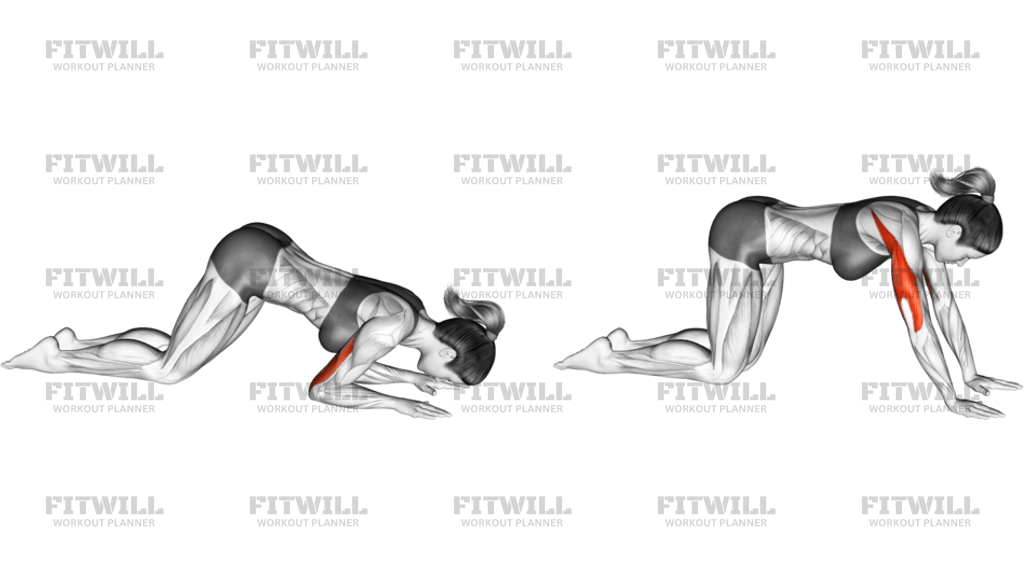
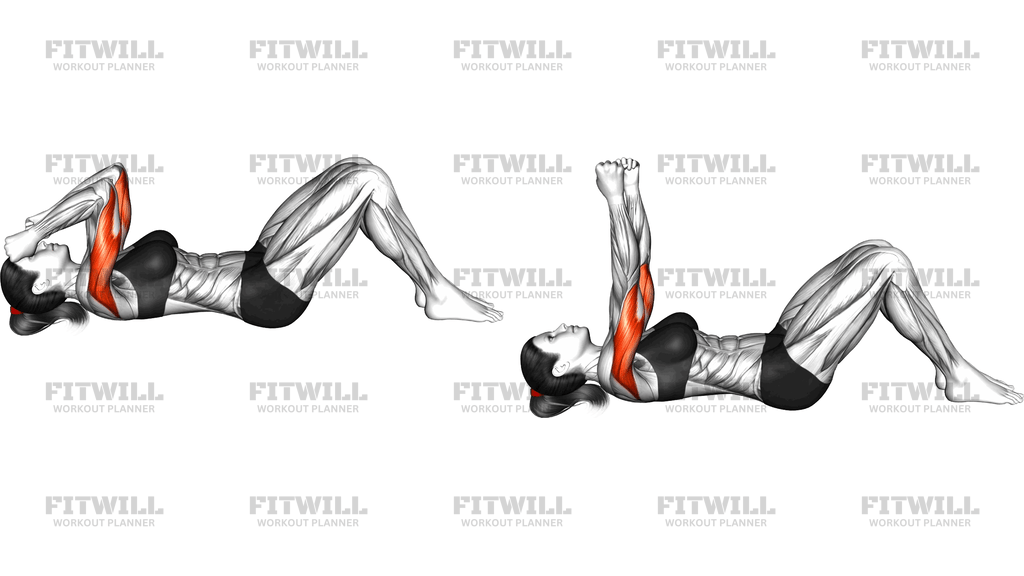
The Lying Overhead Arm Extension is a bodyweight triceps exercise performed on the floor with your knees bent and feet flat. From your back, you flex the elbows so the forearms fold back over your head, then press the arms straight up toward the ceiling until the elbows are fully extended. Because the upper arms stay vertical and fixed throughout, the triceps do nearly all of the work as they extend the elbow joint.
This movement is especially useful for people who train at home without equipment, since your own arm and body position provide everything the exercise needs. It also suits lifters who want to isolate the triceps without loading the elbows with a dumbbell or barbell, and it works well as a burnout or high-repetition finisher after pressing exercises like push-ups or bench presses.
The triceps brachii, particularly the long head, is the primary muscle at work here. The long head crosses the shoulder joint, so the overhead-style position of the folded forearms places it in a stretched state at the bottom of each rep. Your front shoulders help stabilize the upper arms, and your core stays lightly engaged to keep your ribs down and lower back settled against the floor while the arms move overhead.
Setup matters more than it looks. Lying on the floor with knees bent keeps your torso anchored, which prevents the arching and body english you often see in standing triceps extensions. Press your lower back gently toward the ground and keep the upper arms perpendicular to the floor for the entire set. If the elbows drift forward or flare out, the exercise turns into a partial press and loses much of its triceps focus.
To execute it well, bend the elbows slowly and deliberately, letting the forearms travel back toward the floor behind your head without letting the upper arms move. Pause briefly at the bottom where you feel the triceps stretch, then drive the hands up by squeezing the triceps until the elbows are straight but not locked hard. The return should take about as long as the lift, keeping constant tension on the muscle.
Aim for controlled sets of ten to twenty repetitions. If you want more resistance, you can hold a light weight or a water bottle in your hands, but master the bodyweight version first and confirm that your elbows stay pointed at the ceiling and your shoulders stay relaxed throughout every rep.
[ Workout Log & Planner ]
Put your next workout in Fitwill
Keep your plan and training log ready when you are.


Instructions
- Lie on your back on an exercise mat with your knees bent and feet flat on the floor, hip-width apart.
- Point your upper arms straight up toward the ceiling, then bend your elbows so your forearms fold back over your head; you can clasp your hands or keep them in loose fists.
- Gently draw your lower back toward the floor and brace your abdominal muscles so your torso stays quiet while the arms move.
- Keep the upper arms vertical and fixed; only the forearms should travel during the exercise.
- Slowly lower the forearms backward by bending the elbows further, until you feel a stretch along the back of the upper arms.
- Pause for a moment at the bottom, keeping the elbows pointed at the ceiling rather than letting them flare outward.
- Press the forearms back up by squeezing the triceps until the elbows are fully extended, with the hands reaching toward the ceiling.
- Exhale as you extend the arms, and inhale as you lower them back over your head.
- Complete the set, then rest your arms by your sides and shake out the elbows and shoulders before the next set.
Tips & Tricks
- The most common mistake is letting the upper arms swing forward as you lower, which turns the extension into a pressing motion; check that your elbows stay stacked over your shoulders for every rep.
- Do not chase depth by forcing the forearms all the way to the floor behind your head. Go only to the point where you feel a comfortable triceps stretch without shoulder pinching.
- Keep the elbows from flaring outward. If they drift wide, consciously squeeze them toward each other as if holding an invisible ball between the upper arms.
- Avoid hyperlocking the elbows at the top. Finish the rep with a firm triceps squeeze rather than snapping the joint straight.
- If your ribs flare and your lower back lifts as the arms travel overhead, exhale and think about pulling your belly button toward your spine before each rep.
- Move slower at the bottom half of the rep. The stretch position is where the long head of the triceps works hardest, and rushing it is where most of the benefit is lost.
- If your wrists feel strained, loosen your grip and keep the hands relaxed instead of clenching your fists tightly through the set.
- Place the exercise after compound pressing work in your session rather than before it, so tired triceps do not compromise your heavier lifts.
Frequently Asked Questions
Which muscles does the Lying Overhead Arm Extension target?
The triceps brachii is the primary muscle, with the long head working especially hard because the forearms fold back overhead into a stretched position. The front shoulders and core contribute mainly as stabilizers.
Why are my knees bent and feet flat during this exercise?
Bending the knees with feet flat anchors your lower body and helps keep your lower back settled against the floor. This prevents arching and rocking while the arms move overhead.
Is the Lying Overhead Arm Extension suitable for beginners?
Yes. Because it uses only your bodyweight on the floor, beginners can learn the elbow-only movement pattern safely. Start with a shorter range of motion and fewer repetitions, then build up as control improves.
Can I do the Lying Overhead Arm Extension without an exercise mat?
You can, but a mat or soft surface makes the floor position more comfortable for your spine, head, and elbows. Any non-slip surface, such as carpet, works if you do not have a mat.
My elbows drift forward as I lower. Is that a problem?
Yes, drifting elbows shift work away from the triceps and turn the movement into a partial press. Keep the upper arms pointing straight up at the ceiling and reduce your range until you can hold that position.
How is this different from a dumbbell lying triceps extension?
The path and body position are the same, but without external load the resistance comes from the muscular effort of extending the elbows, so it is generally gentler on the joints. Many people use the bodyweight version to learn form before adding weight.
Should I feel a stretch behind my shoulder at the bottom of the Lying Overhead Arm Extension?
A mild stretch along the back of the upper arm is normal because of the overhead forearm position. If you feel pinching in the shoulder joint itself, shorten the range or reduce how far back the forearms travel.
How many repetitions should I perform?
Because the load is limited, higher repetitions work well, typically ten to twenty controlled reps per set. Focus on a slow lowering phase and a strong squeeze at full elbow extension.
Can I add resistance to the Lying Overhead Arm Extension?
Yes. Once the bodyweight version feels easy, hold a light dumbbell, water bottle, or similar object in both hands and keep the same elbow path. Increase the load only while your upper arms stay vertical and stable.