Sled 45 Degrees One Leg Press
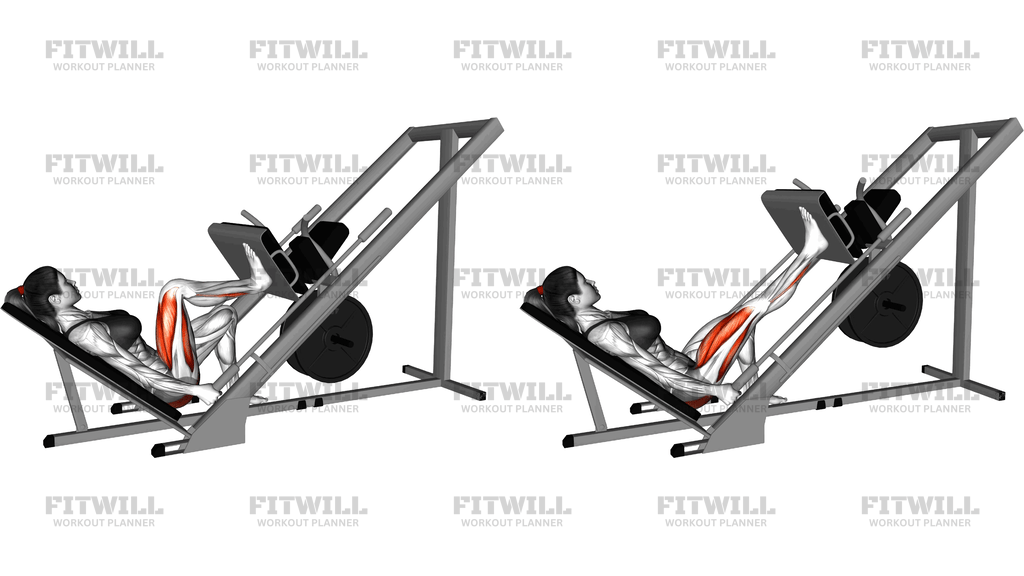
Sled 45 Degrees One Leg Press is a single-leg pressing exercise on an angled sled machine that emphasizes the quads while also challenging the glutes, hamstrings, and trunk to keep the pelvis steady. Because only one leg is doing the work, the movement is useful for building leg strength without letting the stronger side take over. The sled track gives you a guided path, but the quality of the rep still depends on how well you place the foot, control knee travel, and keep the pelvis from twisting under load.
The setup matters more here than in a two-leg press. The working foot should be flat and high enough on the platform to let the knee bend without the heel lifting, while the non-working leg stays relaxed and out of the way. Your lower back and hips should stay in contact with the pad as you lower the sled, and your torso should remain quiet rather than curling forward at the bottom. If the sled is loaded too heavily or the foot is too low, the knee usually collapses inward or the pelvis tucks before the target leg can do the work.
Use the descent to find tension, not just depth. Lower the sled with control until the knee reaches a deep but pain-free bend and the working thigh comes close to the torso without the hips peeling off the pad. From there, drive through the whole foot and press the sled back up along the same track. Keep the knee aligned with the toes, avoid bouncing out of the bottom, and finish each rep with the leg extended but not locked hard into the joint.
This version is especially useful when you want to train one leg at a time, reduce left-right strength differences, or get extra quad work without balancing a free-weight squat pattern. It can fit well in a lower-body strength day, accessory block, or rehab-informed program when the goal is controlled unilateral loading. The machine still rewards discipline: clean foot placement, steady breathing, and a smooth return under control usually matter more than adding plates.
If you have knee or hip limitations, start conservatively and use a shorter range until the track feels smooth and repeatable. The exercise should feel demanding in the working leg, but not unstable in the low back or pelvis. When the rep quality stays high, the single-leg sled press becomes a strong way to build quad size, leg drive, and side-to-side control without needing to balance the load yourself.
[ Workout Log & Planner ]
Put your next workout in Fitwill
Keep your plan and training log ready when you are.


Instructions
- Adjust the sled seat so your hips and lower back stay supported, then place one foot flat on the platform and tuck the other leg out of the way.
- Set the working foot high enough on the platform that your heel stays down and your knee can travel in line with your toes.
- Hold the machine handles lightly if available and brace your trunk before you unlock the sled.
- Lower the sled slowly by bending the working knee and hip until you reach a deep, pain-free position.
- Keep the pelvis square on the pad and let the knee track over the middle toes as you descend.
- Drive through the whole foot to press the sled back up along the same 45-degree path.
- Stop just short of locking the knee hard at the top so the working leg stays under tension.
- Reset your breathing, then repeat all reps on one leg before switching sides.
Tips & Tricks
- Keep the working foot high enough that the heel does not pop up as the knee bends; that usually shifts stress away from the knee and into the leg.
- Let the sled come down far enough to load the quads, but stop before your low back rounds or your hips tuck off the pad.
- If one side is stronger, match the weaker side’s range of motion and tempo instead of letting the stronger leg chase extra depth.
- Press through the center of the foot and big toe, not just the toes, so the knee stays stacked and the foot does not roll inward.
- Use a smooth lowering phase; dropping into the bottom makes the sled feel heavier and usually reduces quad tension.
- Keep the free leg relaxed and out of the press path so it does not help drive the sled upward.
- Choose a load that still lets you pause briefly near the bottom without your pelvis shifting on the seat.
- If your knees feel irritated, move the foot slightly higher on the platform and shorten the bottom range before adding load.
Frequently Asked Questions
What does the 45-degree one-leg sled press work most?
The quads do most of the work, with the glutes and hamstrings helping to stabilize and drive the sled.
Should my working foot be high or low on the platform?
A slightly higher foot placement is usually easier on the knees and helps keep the heel down during the descent.
What should I do with the other leg?
Keep the non-working leg relaxed and tucked out of the press path so it does not help drive the sled.
How deep should I lower the sled?
Lower only as far as you can keep your lower back and hips planted on the pad without pain or twisting.
Can beginners use this single-leg leg press?
Yes, if they start with a light load, a controlled tempo, and a shorter range of motion until the movement feels stable.
Why does my pelvis lift at the bottom?
The sled is probably coming too far down for your current hip mobility or load, so shorten the range and keep the back glued to the pad.
What is the biggest mistake on this machine?
Letting the knee cave inward or bouncing out of the bottom instead of controlling the sled through the whole rep.
How should I breathe during reps?
Inhale as you lower the sled, then exhale as you press it back up.