Switching Shoulder Rotation Stretch
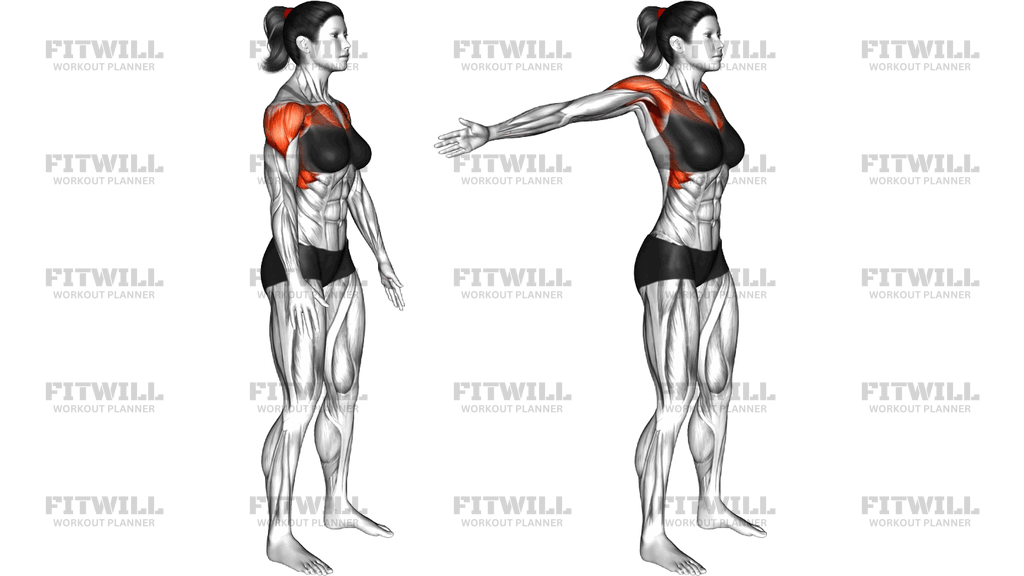
The Switching Shoulder Rotation Stretch is a standing, dynamic mobility drill where you lift one arm straight out to your side at shoulder height and rotate the shoulder so the hand sweeps up and back, then down and across, before switching to the other arm. It requires no equipment and very little space, which makes it one of the easiest ways to wake the shoulders up before pressing, pulling, throwing, or swimming.
The movement targets the deltoids as the prime movers of the arm, but the real value is in what gets stretched along the way. As the hand rotates up and behind you, the chest and front shoulder lengthen; as the hand rotates down and inward, the rotator cuff and rear shoulder take the stretch. Rotating back and forth in a smooth rhythm moves the shoulder joint through its rotational range under light, self-controlled load, which is exactly what stiff shoulders usually need first thing in a warm-up.
This drill suits anyone who spends long hours at a desk with rounded shoulders, lifters about to bench or overhead press, and racket or throwing athletes who need the shoulder ready for rapid rotation. Because it is done standing with the arm unsupported, it also gently challenges the muscles that hold the shoulder blade steady, so you are training control of the range, not just borrowing it.
Setup matters more than it looks. Stand tall with feet about hip-width apart and your ribs stacked over your pelvis. If you lean your torso backward or shrug the working shoulder toward your ear, you fake extra rotation at the cost of the actual shoulder joint. Keep the arm at shoulder height, elbow straight but not locked, and let the rotation come from the shoulder itself rather than twisting the spine or bending sideways.
To execute it well, think of the hand as the far end of a slow windshield wiper. Lead with the palm, sweep the hand up and back until you feel a mild stretch across the chest, pause for a beat, then reverse and let the hand rotate down and inward until the back of the shoulder gently lengthens. The motion should be continuous and unhurried, never forced into a pinching or sharp end range.
A practical protocol is five to ten controlled rotations per side, alternating arms, for one to two rounds. If one shoulder feels noticeably tighter, spend a few extra repetitions on that side, but keep the range honest. Stop and reassess if you feel pinching in the joint, and reduce the height of the arm or the size of the rotation before continuing.
Fitwill
Log Workouts, Track Progress & Build Strength.
Achieve more with Fitwill: explore over 9600 exercises with images and videos, access built-in and custom workouts, perfect for both gym and home sessions, and see real results.
Start your journey. Download today!




Instructions
- Stand upright with your feet hip-width apart, weight evenly distributed, and your arms relaxed at your sides.
- Raise your right arm straight out to the side until it is level with your shoulder, elbow extended but soft, palm facing forward.
- Draw your shoulder blade down your back so the shoulder sits away from your ear, and brace your trunk lightly to keep your torso still.
- Rotate at the shoulder so your hand and palm sweep upward and backward, feeling a mild stretch across your chest and front shoulder.
- Pause briefly at that turned-out position without letting your torso lean back or your ribs flare.
- Reverse the rotation smoothly, letting the hand travel down and inward until the palm faces behind you and the back of the shoulder lengthens.
- Continue rotating up and back, then down and in, for five to ten controlled repetitions on the right arm.
- Switch to the left arm and repeat the same rotations, matching the rhythm and range of the first side.
- Breathe steadily throughout, inhaling as the hand sweeps up and exhaling as it rotates down, and avoid holding your breath.
- When finished, lower the arm to your side, roll both shoulders once or twice, and reset your posture before the next round.
Tips & Tricks
- If you feel a pinch at the front of the shoulder when the hand rotates up and back, lower the arm slightly below shoulder height before rotating rather than pushing through it.
- A common mistake is turning this into a torso twist — watch that your chest stays facing forward the whole time so the rotation actually happens at the shoulder.
- Keep the working arm at shoulder height throughout; letting it drift upward turns the drill into a shrug and loses the rotational stretch.
- Move slower than feels necessary for the first few repetitions; rushing makes the shoulder skip through the exact mid-range you are trying to open up.
- If your shoulder blade hikes toward your ear, place your opposite hand on the working side's collarbone area as a reminder to keep that side of the neck long.
- Match the range between sides by counting reps and using the same hand speed, not by forcing the tighter arm further.
- Use this before pressing, pulling, or throwing rather than as a deep static stretch after training — its rhythm is meant to prepare the joint, not cool it down.
- If standing balance is an issue, widen your stance slightly or stand near a wall, but avoid leaning on the support with the working side.
Frequently Asked Questions
Which muscles does the Switching Shoulder Rotation Stretch work?
The deltoids move the arm through the rotation, while the chest, front shoulder, and rotator cuff muscles are stretched as the hand sweeps up and back, then down and in. The muscles steadying the shoulder blade work isometrically to keep the arm at shoulder height.
Is the Switching Shoulder Rotation Stretch good for beginners?
Yes. It is performed standing with no equipment, the range is self-selected, and the motion is slow and easy to control. Beginners should simply use a smaller rotation and stop short of any pinching sensation.
How high should my arm be during the Switching Shoulder Rotation Stretch?
Aim for the arm level with your shoulder, as that position gives the rotation its full effect on the chest and shoulder. If you feel joint pinching, drop the arm a few inches and rotate through that lower range instead.
Why does my torso twist when I rotate my arm?
That is the most common compensation — the spine borrowing range that the shoulder lacks. Keep your chest facing forward and imagine the rotation happening around a straight line from your shoulder to your hand.
Should I feel a stretch in my chest during the Switching Shoulder Rotation Stretch?
Yes, when the hand rotates up and back the chest and front shoulder lengthen, which is one of the main benefits. The stretch should be mild and comfortable, not sharp or burning.
How many repetitions should I do per side?
Five to ten controlled rotations per arm works well, repeated for one or two rounds. If one side feels tighter, add a few extra reps there rather than forcing a bigger range.
Can I do the Switching Shoulder Rotation Stretch as a warm-up before bench pressing?
It is a good early warm-up drill because it takes the shoulder through rotation before you load it. Follow it with band work or light pressing to complete your shoulder preparation.
What can I use if I cannot raise my arm to shoulder height?
Perform the same rotation with the arm slightly lower, still keeping the elbow straight and the torso still. The drill remains effective at a reduced height, and you can progress upward as comfort allows.
Is it normal for one shoulder to rotate further than the other?
Some side-to-side difference is very common, especially if you favor one arm in sport or daily tasks. Work each side within its own comfortable range and let the tighter side gradually catch up instead of forcing symmetry.
When should I avoid the Switching Shoulder Rotation Stretch?
Skip it if you have an acute shoulder injury, recent dislocation, or sharp pain with rotation, and follow the guidance of a qualified professional in those cases. Mild stretch discomfort is acceptable; joint pinching is not.