Sitting Triceps Extension On A Chair
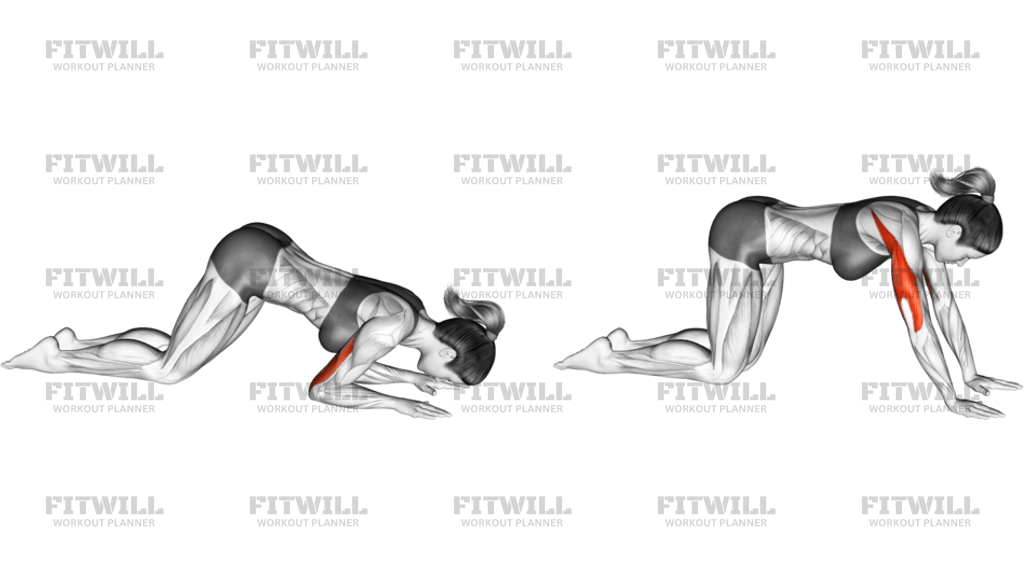
The Sitting Triceps Extension On A Chair is an overhead bodyweight triceps exercise performed from an upright seated position. You sit tall on a sturdy chair with your feet flat on the floor, clasp your hands together, raise both arms straight overhead, and then bend your elbows to lower your clasped hands down behind your head before pressing back up to full extension. Because you are working against the resistance of your own arm weight and muscular control rather than a dumbbell or cable, the movement is gentle on the joints while still demanding real effort from the triceps, especially at the point where the elbows are deeply bent.
This is one of the most accessible overhead triceps movements you can do. It suits beginners who have never trained their arms directly, people exercising at home or in an office without equipment, older adults who want to maintain arm strength for daily pushing tasks, and anyone rehabbing back into overhead training after time away from lifting. Since it requires nothing more than a stable chair, it fits easily into hotel-room workouts, desk-break routines, and warm-ups before heavier pressing or extension work.
The primary muscle at work is the triceps brachii, the three-headed muscle on the back of the upper arm responsible for straightening the elbow. The overhead position places a meaningful stretch on the long head of the triceps, which crosses the shoulder joint, so you are training the muscle through a longer range than you would in a standard pushdown. Your shoulders and the muscles of your upper back work isometrically to keep your arms overhead and your torso upright, and your core quietly contributes to holding a tall seated posture.
Setup matters more than most people expect. Sitting upright with your back away from the chair back, ribs stacked over your hips, and feet planted gives your shoulders a stable base to work from. If you lean back, arch your lower back, or let your head drift forward as the hands drop behind you, the triceps lose tension and the shoulders pick up work they should not have to do. Keeping the elbows pointed forward and roughly shoulder-width apart throughout the descent keeps the stress on the arm rather than the joint.
To execute the exercise well, think of the elbows as hinges and the forearms as the only moving segments. Lower the hands slowly behind your head until you feel a comfortable stretch along the back of the arms, pause briefly, then drive the hands upward by squeezing the triceps until the elbows are fully straight with the arms framing your ears. The return up should take about as long as the lowering phase; rushing it turns a targeted triceps exercise into a vague arm swing.
A few practical points will keep this safe and productive. Use a chair that will not tip or slide, and sit on the front portion of the seat so your posture stays tall. Move only into a depth that feels like a stretch, not a pinch, at the shoulder or elbow. If your shoulders complain about the overhead position, narrow your hand width slightly or reduce the range rather than forcing the elbows wide.
[ Workout Log & Planner ]
Put your next workout in Fitwill
Keep your plan and training log ready when you are.


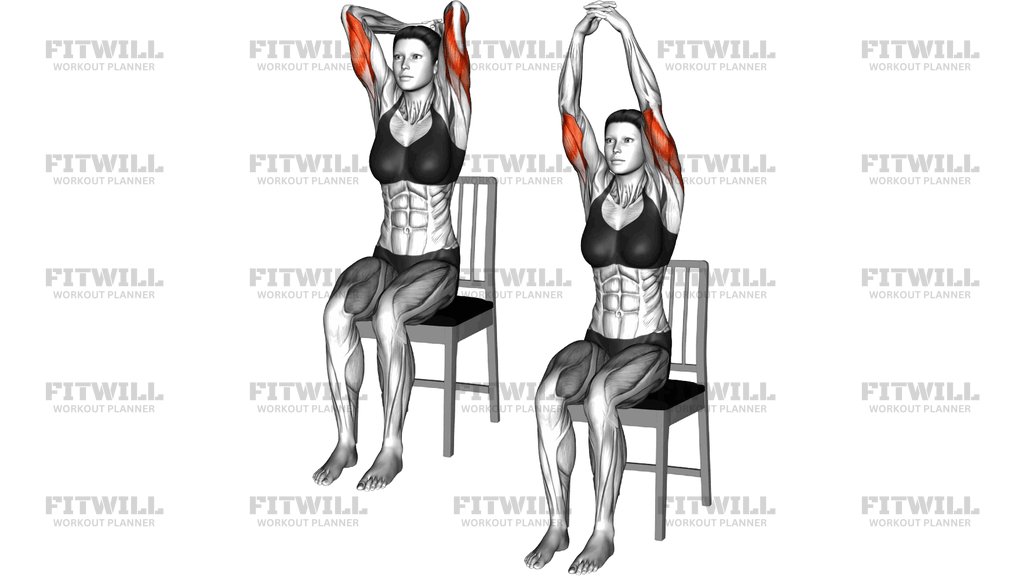
Instructions
- Sit on a sturdy, non-slip chair with your feet flat on the floor about hip-width apart and your weight on the front half of the seat.
- Sit tall without leaning against the backrest: stack your ribs over your hips, relax your shoulders down, and look straight ahead.
- Clasp your hands together and raise both arms straight overhead so your upper arms are vertical and close to your ears.
- Brace your core lightly and squeeze your shoulder blades gently down to keep your arms supported overhead.
- Bend only at the elbows and slowly lower your clasped hands down behind your head, letting the elbows point forward and stay about shoulder-width apart.
- Continue until you feel a solid stretch along the back of your upper arms, usually when your forearms pass behind your head, without letting the elbows flare outward.
- Pause for a beat in the stretched position, then press your hands back up by straightening the elbows until your arms are fully extended overhead.
- At the top, squeeze the triceps with the arms long and the hands stacked over your shoulders before starting the next rep.
- Exhale as you press up and inhale as you lower behind the head, keeping the breathing steady throughout.
- Complete your set, then lower your arms slowly to your sides and stand up carefully rather than pushing off the chair abruptly.
Tips & Tricks
- Keep your upper arms vertical and fixed beside your ears; if your elbows travel backward and the whole arm tilts, the shoulders take over the work.
- Do not let your lower back arch as the hands drop behind your head. If it does, tighten your abs and shorten the range until you can keep a neutral spine.
- A common mistake is bobbing the head forward to 'meet' the hands. Keep your head still and let the hands move around it.
- Lower for two to three counts on every rep. Because there is no external weight, the slow lowering phase is where most of the training effect comes from.
- If you feel pressure in the elbows, unclasp and re-clasp your hands with a lighter grip so you are not forcing the wrists and elbows into a locked angle.
- Stuck at the bottom? Slightly reduce the depth rather than jerking upward; the stretch should feel strong but never painful.
- Press your feet into the floor during the pressing phase to add stability and stop your torso from rocking on the seat.
- Chair height matters: both feet should rest fully flat. If the chair is too high, your hips tip backward and your posture breaks down.
- To make the exercise harder, slow the tempo further or add a two-second squeeze at full extension instead of adding reps too quickly.
Frequently Asked Questions
Which muscles does the Sitting Triceps Extension On A Chair work?
The triceps on the back of the upper arm do the main work, with the long head receiving an extra stretch because the arms are overhead. The shoulders and upper back stabilize the arms in the overhead position.
Is the Sitting Triceps Extension On A Chair good for beginners?
Yes. Because you are moving only your own arms, the load is modest and the movement is easy to learn from a stable seated position. Beginners should focus on slow tempo and controlled depth before adding repetitions.
Why should I sit rather than stand for this triceps extension?
Sitting removes the tendency to use momentum from the hips and legs, which is common in standing overhead extensions. The chair pins your lower body in place so the triceps have to do the work alone.
How far behind my head should I lower my hands?
Lower until you feel a clear but comfortable stretch along the back of your upper arms, usually when your forearms are behind your head. If you feel pinching at the shoulder or elbow, stop higher and gradually build depth over time.
My elbows flare outward when I lower down. How do I fix that?
Flared elbows mean the arms are losing their vertical track. Cue yourself to keep the elbows pointing forward and roughly shoulder-width apart, and slow the descent so you can feel when they start to drift.
What kind of chair should I use for the Sitting Triceps Extension On A Chair?
Use a stable chair with a flat seat that will not rock, swivel, or slide, and avoid chairs with armrests that restrict your elbows. A dining-style chair works well; do not use one with wheels.
How can I make this exercise harder without equipment?
Slow the lowering phase to four or five seconds, pause two seconds at the stretched bottom, and squeeze hard at full extension at the top. These tempo changes increase time under tension without any added load.
Can I do the Sitting Triceps Extension On A Chair every day?
Since the resistance is light, most people can perform it frequently without issue. Still, allow at least a day between harder sessions so the triceps can recover, especially if you also do pressing or other arm work.
What can I use instead if I do not have a suitable chair?
A sturdy bench, an exercise ball against a wall, or a firm bed edge can replace the seat as long as you can sit upright with both feet flat. You can also perform the same overhead motion standing with a resistance band behind your head.
Should my back touch the chair backrest during the exercise?
No. Keep your back free of the backrest and your torso tall so your core helps stabilize you. Leaning back against the chair reduces triceps tension and encourages an arched lower back as the hands descend.