Sitting Upright Row On A Chair
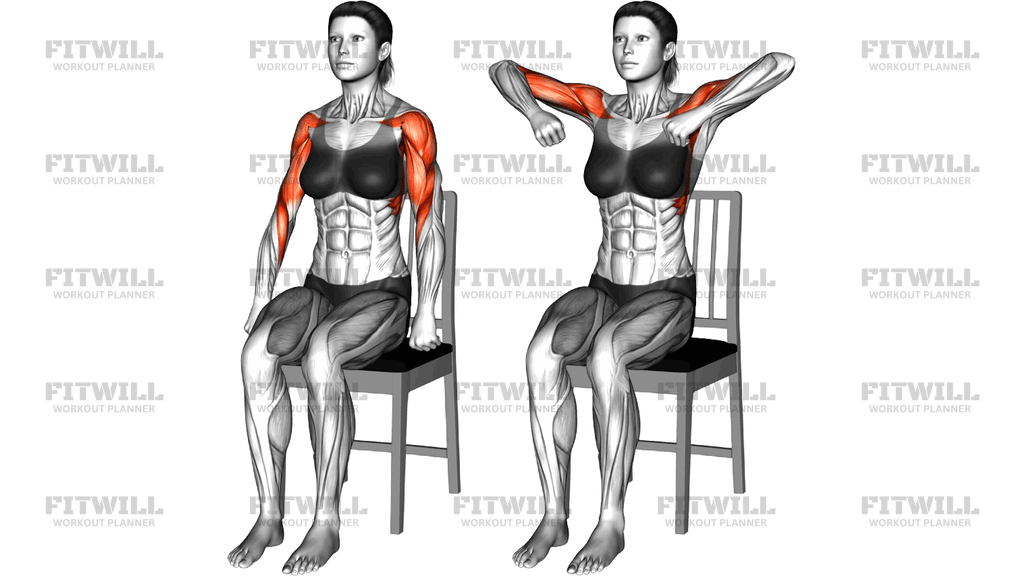
The Sitting Upright Row On A Chair is a seated, bodyweight version of the classic upright row. Instead of pulling a barbell or dumbbells, you sit tall on a chair and lead with your elbows, sweeping your upper arms out and up to about shoulder height before lowering them back down. Because there is no external load, the resistance comes entirely from the weight of your own arms, which makes the movement joint-friendly and easy to regulate.
This exercise works the side shoulders as the primary movers, with the upper traps and the muscles between the shoulder blades assisting as the elbows travel upward. The biceps and forearms help bend and hold the elbows during the lift, and simply staying tall on the chair without leaning back keeps your core quietly engaged. It is a useful pattern for teaching the elbow-led pulling motion before adding any weight to it.
The seated setup is what makes this version appealing. Sitting on a chair removes momentum from the hips and legs, so the shoulders have to do the work on their own. It also makes the exercise accessible for people who have trouble standing for long periods, those recovering general strength after a layoff, older adults, or anyone warming up the shoulder area before pressing or pulling work. Because you need nothing more than a sturdy chair, it fits easily into home routines, office breaks, or travel workouts.
Execution quality comes down to keeping the movement driven by the elbows rather than the hands. Your fists stay relaxed and in front of your body while your elbows rise out to the sides, staying at or slightly above wrist level. Once the elbows reach shoulder height, pause briefly, then lower them under control so the arms hang fully at the start of each rep.
A few practical points keep the exercise safe and effective. Sit upright on the front half of the chair with your feet flat on the floor, and resist the urge to shrug aggressively or rock your torso as the arms rise. Keep the range comfortable — elbows to shoulder height is far enough; pulling higher tends to shift stress onto the shoulder joint rather than the muscles. If you feel pinching at the top, reduce the height of the lift slightly and keep the elbows a touch in front of the shoulder line.
Used consistently, this movement builds shoulder endurance, improves coordination of the shoulder blades, and serves as a low-load stepping stone toward weighted upright rows, lateral raises, and seated rows.
[ Workout Log & Planner ]
Put your next workout in Fitwill
Keep your plan and training log ready when you are.


Instructions
- Sit upright on a sturdy chair with your feet flat on the floor about hip-width apart and your back away from the chair back.
- Let your arms hang straight down at your sides with relaxed hands formed into loose fists, palms facing your thighs.
- Draw your shoulder blades gently down and brace your core so your torso stays still throughout the set.
- Exhale as you bend your elbows and lift them out to the sides, leading with the elbows while your hands stay in front of your body and lower than your elbows.
- Raise until your upper arms are roughly parallel to the floor and your elbows reach shoulder height, forming a wide, bent-arm position.
- Pause for a moment at the top, feeling the work across the side shoulders and upper back.
- Inhale as you slowly lower your elbows back down, straightening your arms until they hang fully at your sides.
- Reset your posture before the next rep, making sure you have not slumped forward or leaned back against the chair.
- Complete your target repetitions with a smooth, even tempo, keeping the chair stable underneath you the whole time.
Tips & Tricks
- Think 'elbows up, hands follow' — if your fists climb above your elbows, the emphasis drifts away from the side shoulders and toward the arms and traps.
- Do not shrug your shoulders toward your ears at the top; keep some length in your neck so the upper traps assist rather than take over.
- Sitting on the front half of the chair prevents you from slouching against the backrest, which tends to round the upper back and shorten the range.
- A slow two-second lowering phase does more for shoulder endurance than rushing the reps, since the arms are the only load in this version.
- If your shoulders pinch near the top, stop the lift slightly below shoulder height instead of forcing the full range.
- Keep your wrists neutral and your fists loose; gripping hard and bending the wrists inward is a common way this exercise turns into an arm-only movement.
- Check that your lower back stays tall rather than arched — leaning back as the elbows rise steals work from the shoulders.
- For a light progression, hold a small water bottle or light dumbbell in each hand once bodyweight reps feel effortless.
Frequently Asked Questions
Which muscles does the Sitting Upright Row On A Chair work?
The side shoulders do most of the lifting, supported by the upper traps and the muscles between the shoulder blades. The biceps and forearms assist as the elbows bend and hold through the raise.
Is this exercise suitable for beginners?
Yes. Because you use only the weight of your arms while seated, it is one of the gentlest ways to learn the upright row pattern before adding dumbbells or a bar.
Why perform the upright row sitting on a chair instead of standing?
Sitting removes leg drive and body sway, so the shoulders have to produce the movement on their own. It also makes the exercise practical for people who prefer or need to train seated.
How high should I raise my elbows?
Raise them to about shoulder height, where your upper arms are parallel to the floor. Going much higher usually adds strain around the shoulder joint without extra muscle benefit.
Should my hands or my elbows lead the movement?
The elbows lead. Your hands stay relaxed and hang below your elbows throughout, which keeps the focus on the shoulders and upper back rather than the arms.
What is the most common mistake with this exercise?
Shrugging the shoulders toward the ears and rocking the torso as the arms rise. Both habits shift work away from the side shoulders — fix them by bracing your core and keeping your neck long.
Can I add weight to the Sitting Upright Row On A Chair?
Yes, once bodyweight reps feel easy you can hold light dumbbells or water bottles at your sides. Increase the load gradually and keep the same elbow-led path.
What can I use if I do not have a suitable chair?
Any stable, armless seat works, such as a bench or exercise box. Avoid chairs with wheels or soft, sinking cushions, which make it hard to keep your torso steady.
Is this exercise safe for shoulder pain?
The low load and seated position make it shoulder-friendly for most people, but if you feel pinching or sharp discomfort, shorten the range or stop and check with a qualified professional before continuing.
How many repetitions should I do?
Because the resistance is light, higher volumes work well — around 12 to 20 controlled reps for two to three sets, focusing on a smooth tempo rather than speed.